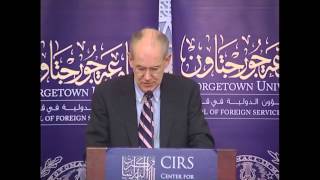
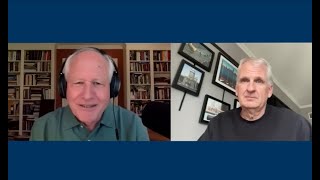
tonight I'm excited to welcome Stephen Kinser to Harvard bookstore to discuss his new book reset Iran turkey and America's future Mr kinzer is a former New York Times foreign correspondent and bureau chief uh he is a frequent contributor to the New York Review of Books and a columnist for the guardian uh he's the author of six previous books including all the Shaw's men and overthrow and he has taught journalism and Foreign Relations at Northwestern and Boston universities in reset Mr ker outlines a drastic shift in American foreign policy in the Middle East uh if we
truly want to promote a peaceful and Democratic Middle East Mr kinzer argues we must turn to the only Muslim countries in the region where democracy is deeply rooted turkey and Iran Publishers Weekly called reset and astute policy prescriptive and kirkus reviews called the book an original unsettling critique I was a thrilled to be here um I spent a lot of wonderful nights uh many centuries ago when I was still in high school hanging around a club 47 and places like that in this neighborhood and uh I always used to drop into this bookstore it's fantastic
that it's still here um the new ownership deserves huge credit uh although you wonder who would buy an independent bookstore in this day and age um nonetheless it's it's fantastic to see that this bookstore is not only still alive but thriving and a a center of intellectual activity in this wonderful community so it's it's really a thrill to be here um I got a better uh welcome here than I got when I W arrived in Iran a couple of weeks ago um since the late unpleasantness uh the uh upheaval after last year's election uh Iran
has essentially stopped giving visas for foreign journalists and most of the ones that live there have been either uh had their visas cut off or they've been somehow pressured into leaving so it's very hard to get into Iran these days if you're a journalist around this time when I was reflecting how I could get back to Iran and try to figure out exactly what's been going on there in the recent months I got an offer from a travel agency in California that I want to be the tour leader for a group of tourists who were
going to Iran so I thought this is a great idea I'm going to accept I've never done this before but uh so I signed up and uh I thought to myself I'm so smart because I'm a journalist going to Iran but I'm going on a tur Visa so I've I've outsmarted them and I'm going to be able to get in uh even though they're not letting foreign journalists in so I got on my plane from Frankfurt we arrive about 2:00 in the morning and uh at the Tran airport when Americans come in they always ask
them to please uh sit over here on this side and then they collect all the American passports and bring them into a particular place where they check them over so I was sitting with about eight or 10 other uh Americans several of whom are on my tour group that I was about to lead and uh after about half an hour a young guy in a uniform came over and said uh very sorry for the delay but uh there's a problem with one passport I immediately knew of course that it was mine uh felt a little
bit like Jonah remember on the boat that they said big storm so there's a one Center on the boat who is it and he knew it was him I I knew it was going to be me and sure enough a few minutes later a guy came over and singled me out and said my boss wants to talk to you so they brought me into this little room where the immigration chief of the airport at whoever runs that office at 4:00 in the morning is sitting and he's got my passport and he's looking at a computer
screen and he says you are a journalist but you are trying to get into Iran on a tourist visa why uh began to dawn on me that maybe I wasn't that much more smarter than them after maybe that's a good lesson for some people in Washington um so I tried to explain of course this is just a big misunderstanding of course I'm only here as a tourist but they were on to me from the beginning and uh he just said we're not letting you in you you got you got to get back on the plane
and go back to Frankfurt and sure enough that's what happened um I had to fly back five hours to Frankfurt there was a flight leaving at that moment for uh gaziantep in Turkey like an hour away and I thought great I'm going to get there it's much more fun place than Frankfurt anyway it's a lot closer so I said why don't you see if you can get me on that flight to De here the uh immigration guy maybe it was the lateness of the hour didn't have a great sense of humor the way I noticed
and uh he said um you've got two choices if you want to get on the flight to Frankfurt and leaves in six hours we're going to give you a pass and you can sit in the first class lounge if you don't want to get on that flight we're going to put you in jail the guy next to him said well it's really not a jail it's just a detention center but it's not very nice so I weighed that for a second or two and decided you know I think I'll take the first class Lounge instead
of the not very nice Detention Center um so I had to go back to Frankfurt and I spent 24 hours there and then there was a series of frantic phone calls and the travel agency was calling their people in Iran finally uh I got a phone call in Frankfurt saying go back to the airport go back to Iran we think you're going to be able to get in today and sure enough I went through the airport and I did get in uh so I had a chance just last month to spend two weeks traveling all
over Iran as a tourist of course I was not able to interview government leaders or opposition figures but I didn't want to do that anyway I didn't find that really an exciting reason to go to Iran uh interviewing government officials is never fun anyway you just have to wait a long time outside their office until someone finally agrees to come out and lie to you I got tired of that a long time ago um what I really wanted to do was talk to ordinary Iranians so what happened to the protest movement you were all on
the streets and then we didn't hear anything after a while what happened um I asked this question to many many people in Iran uh the reception for Americans there is amazing it's really polls show that it's the only Muslim country where most people are pro-american uh and the only country in the Middle East including Israel where most people are pro-american uh you really see that on the streets people are just shrieking when Americans come by but when I asked him about the protest movement I I heard the same thing over and over from people and
it was essentially we tried that and it didn't work they they arrested us and they beat us if we go out again they'll arrest us again and beat us again so we we're not doing that anymore we are going on with our lives and actually in a country that's had about 25 centuries of History it's not an unusual uh reaction for people to think change is going to come but it's just not going to come right now it's going to come at its own pace this is something that's difficult for Americans to grasp we feel
that every problem has a quick solution or if not a quick solution at least a solution even if it's complex you break it down into those little pieces and you figure out what the answer is Iranians are not like this they they don't they don't believe that every problem has a quick solution and they believe that many problems just don't have any solution um there's a psychological as well as a political and historical gap between these countries Americans for example are very results oriented we're always ready to sacrifice principle to get a result Iranians are
exactly the opposite they're happy to sacrifice results in order to defend a principle so I really think that we need some kind of a um emotional translator if we're going to start having uh relations with Iran and negotiations with Iran my my stay there shows me that the society um is remarkably modern and open and Democratic nonetheless because of 30 years of isolation uh not to mention a very tormented history over the last 200 years um we would need some kind of a bridge to help these two very different cultures understand each other right now
I don't see that we're trying to build that bridge because we're not interested essentially in in making a deal after I left uh Iran I went to Turkey anytime I'm within about a thousand miles of turkey I always like to stop there it's not just because of the food but uh there's so much going on in istan buul that I I I can't stay away so uh but of course it was all work preparation for my book tour um in Turkey I was sitting there when the news broke that turkey and Brazil had brokered this
nuclear deal with Iran and uh this was quite a day in Turkey because many people were breathing kind of a big sigh of relief that this escalating crisis over the nuclear issue in Iran suddenly seemed now to have been if not resolved uh at least given an a way out that it seemed to have been calmed but immediately as Dawn began to break in Washington the res the reaction from the US was ex not what the Prime Minister of Turkey had expected or the president of Brazil instead of saying uh thank you so much for
giving us at least the basis for some future negotiation with Iran the reaction was you are undermining our sanctions policy we have decided that we're going to confront Iran we're going to punish Iran we're going to sanction Iran we don't want to talk to Iran you've now muddied the waters and you turkey and Brazil are essentially acting like foolish naive school children who've now been snookered by those crafty Iranians so what everybody in turkey at least had thought might be a breakthrough on the nuclear program actually turned out to be something very different uh I
think what lies behind the uh American reaction uh and the startlingly negative uh rejection of this uh deal that turkey and Brazil tried to strike with Iran is something that's bigger than Iran and bigger than Gaza it has has to do with two different conceptions of the world the the United States is still in the overhang of the past era we're trying to make the past ERA last as long as possible that was an ERA when we ruled when we really were able to uh shape the course of events in the world if we're uh
trying to hold on to something that maybe doesn't exist anymore the Turks are at the other end of the curve they are uh anticipating a new world in which uh other Powers will emerge uh Russia and India and Brazil turkey South Africa and these Powers will also have influence and say in the world so what the Turks are saying to the US is your approach to the Middle East is too confrontational what you want to do is ratchet down the confrontations and try to resolve these Regional problems through diplomacy and negotiation because you don't have
the ability to impose Solutions anymore you should listen to some friends of yours in the neighborhood who share your values and live here know the neighborhood the American attitude is we are not ready to listen to take advice from other people in the neighborhood who think they know what our Middle East policy should be we have figured out what is our Middle East policy and it actually is not only unwelcome but uh downright unfriendly for any country to try to uh resolve our confrontation with Iran through a compromise you are just serving as the tools
of the Iranians when you seek to compromise so we're still in this mindset uh and the uh Turks are trying to promote another alternative turkey's involved in a very interesting foreign policy phase now up until the beginning of uh let's say this over this last decade turkey really had never played a role in global Affairs um now it's very active in the region and it has a lot of assets when it tries to approach the Islamic world first of all of course there's the history of the Ottoman Empire which is gives turkey a certain cultural
and political standing in the Islamic mind uh then there's the example of modern turkey so modern turkey is a thriving democracy and has a booming economy that's the kind of country that most Muslim countries would like to be therefore the example of turkey is a wonderful magnet for us it's kind of a counter m message to the uh reactionary message from the cave about how all Muslims should go back to the 7th Century so uh turkey is a wonderful bridge in this sense however uh in the past turkey's influence was not so welcome uh in
the Middle East for one important reason and that is that as a result of the Ataturk reforms uh that impose such uh militant secularism in Turkey uh in the early part of this Century many people in the Middle East e and in other Muslim countries began to look at Turkey as almost an Infidel country a country that had almost given up on its Muslim faith and therefore it didn't have the credibility to play a political role in the Muslim world but now as a result of the last two elections turkey is ruled by a prime
minister who prays every day and whose wife wears a headscarf so turkey is now even more welcome in the Islamic world than it ever was before this is a great strategic asset for the United States uh turkey can be a wonderful partner for the United States but in order for that to happen the United States has to accept the idea that we would want a partner that that we would want somebody to whisper in our ear and give us a little advice and a little guidance I think if you get to that point you realize
that turkeyy is a very good bet but we're not even at that point yet uh I think the United States still feels we have the correct approach to the Middle East we fix that in Washington and we don't want other countries uh even if they're our Military Allies as turkey is to be uh trying to alter our policy or tell us maybe we ought to change it in this way or that now um in my book I spend about at least the first half of the book telling what I think are some amazing Stories stories
that I wanted to tell because I never read them anywhere uh about how turkey and Iran developed into the very interesting countries of they are now these are the only two democracies uh or the only countries that have been working towards democracy let's put it that way for a hundred years in the entire Muslim Middle East these are countries that uh have had constitutions for a 100 years now whereas the idea of having a republic and a constitution hasn't even dawned on many other countries in the Middle East the struggle for democracy in turkey and
Iran has been uh full of reverses uh certainly the regime that Iran is under Now does not respect those Democratic principles nonetheless these societies are very Democratic and Democratic in a sense that we would recognize uh they are societies where everyone understands what is a parliament what is an election what is a political campaign how should you base your votes not on what is your religion or your race but you want to vote for parties that believe the ideology that you support uh how do you hold political candidates accountable after the ction for what they
said during the campaign these are issues that Turks and Iranians have been assimilating for generations and I really believe democracy can take hold anywhere but only if the People Want it democracy or any other ideology is always going to fail if it's introduced somewhere by a foreign army at the point of a gun but Turks and Iranians decided 100 years ago that that's what they wanted for themselves and the sacrifices they have made for democracy are actually much greater even than we have had to make when I looked at the video of that uh set
of protests last year after the election and saw the amazing courage of these Iranians going out in the streets to protest for fair elections um I asked myself would even Americans be willing to be that brave and fight face people with clubs and guns in order to protest manipulation of an election um that the savagery of the repression in Iran after the election last year uh shocked the world but actually for me even more important even more interesting was the fact of the protest themselves the fact that huge numbers of Iranians are not happy and
will not sit at home when they feel that the election results have not been counted fairly you would never have post-election protests like this in say Egypt everybody in Egypt understands that the elections are going to be stolen that's part of Egyptian political life there are election protests in Saudi Arabia because there are no national elections in Saudi Arabia uh so the election protest showed something very important about what's going on in in Iran now I actually think that under the right circumstances Iran could even Vault over turkey and become the most democratic of all
Muslim countries it doesn't have some of the drags of military rule and nationalist sentiment that turkey has and if you could somehow peel off that layer of U religious rule in Iran uh I see that as a society that on its own has really decided it wants to become Democratic now as the United States casts around for allies in that part of the world we find ourselves in a totally new strategic environment the Cold War has ended now 20 years ago um nonetheless our policies in the Middle East have really not changed in fact that's
the area of the world where there's been the least change probably of any place in the world uh one of the quotes I use in my book uh is from Albert Einstein he was not talking about us Middle East policy but uh this quote I think does apply um he said that the definition of insanity is doing the same thing over and over and expecting different results that's what we're doing with our Middle East policy during the Cold War um we shaped our Middle East policy mainly according to the perceived interests of our two closest
allies in the region uh Saudi Arabia and Israel in Washington the understanding generally was what Saudi Arabia wants Saudi Arabia gets what Israel wants Israel gets traditionally it's been assumed that our uh relationship with Saudi Arabia was based mainly on oil and that our relationship with Israel was based largely on our shared values there's some truth to both of those cliches but there's an that's only part of the story there's another piece of it um during the Cold War the United States had many friends and allies they would stand up at the United Nations and
they would vote for us and they would support us in our political positions but that's all they would do they were countries that wanted to act within the law and above ground and in daylight but the United States also needed help during the Cold War that was covert and semi-clandestine that was where Israel and Saudi Arabia came in I devote a whole section in my book to recounting a lot of these semi SEC operations uh that Saudi Arabia and Israel were involved in helping the United States in our secret Cold War battles uh when for
example the uh Reagan administration wanted to arm the military dictatorship in Guatemala it could not do so because the US Congress had forbidden Aid to Guatemala but Reagan still wanted to get guns to the guat an army so what did he do he got the Israelis to send them the guns and the planes and the boats and uh everything else they needed uh when the US was forbidden by law to AR uh Aid South Africa militarily we got Israel to do it um when we suddenly needed to pay for a force of Commandos to protect
president Mutu in Zer from being overthrown we got Saudi Arabia to pay for it when we needed money for the contras in Nicaragua or the mujahadin in Afghan an Saudi Arabia and Israel were always willing to help so during the Cold War they played a role that wasn't very clear at that time you might argue then that during the Cold War this power triangle or these two relationships us Israel and US Saudi Arabia made sense uh but now in the future we have to look at how we are going to approach this very different strategic
environment uh in the Middle East um I feel that our relationship with Saudi Arabia has become too intrusive and too tight the Arab world is the only region of the whole world that has been bypassed by the Democratic train that's been running around the world these last 20 years who would have thought that we would have seen one day a democratic Poland Democratic Liberia Democratic South Korea Democratic Brazil That's all happened but the Arab world has only been a spectator uh as this Democratic train has has raced around the world part of the reason is
that the United States fears democracy in Arab countries because we're afraid that it will produce some kind of an Islamic alternative uh that's probably a true fear it probably will happen uh nonetheless the longer we put it off the more radical that option is going to be and uh these societies need a chance to work through what what they want to be and what they want to do and how they want to behave and for the United States to be continuing to have a not only a position on every inter Arab dispute but even on
disputes within Arab countries about which faction should be allowed in government and which is too radical this is too intrusive it's it's time for us to let Arabia be Arabia and I'd like to see us loosen our ties with Saudi Arabia partly for that reason if that were to have the effect of making it a little more difficult for us to obtain crud oil from Saudi Arabia I think that would be great um we need a few more kicks to help help us break that addiction as for Israel I do think that it's important for
the US to remain an ally and a supporter of Israel but Israel's longterm survival is best guaranteed by a safe and calm neighborhood it's not going to be able to maintain its dominance by military means forever as long as there's huge numbers of people around it that hate it Israel's always going to be unsafe therefore it should be in the interests of the world and particularly the United States to do whatever will calm that neighborhood and that means a policy a little bit more like the Turkish policy that I've been outlining a little earlier a
little more conciliatory um a little less confrontational and a little more willing to listen to advice from people who live in that region but who also share our values uh now selling turkey as a potential American partner probably got a lot harder in the last couple of weeks uh but it's not such a hard sell I think most Americans understand that turkey is a remarkable country it's a Islamic democracy and that's something we should always be supporting um trying to sell the idea that the US and Iran could one day be potential Partners is a
little bit more of a trick uh actually uh when you look at countries that you want to choose as partners in whatever region of the world you're focusing on I think you're looking for countries that fulfill two criteria first of all you want to have as partners countries that share your long-term strategic goals and second you need something else because just having a government toover relationship or a relationship between the elites of two countries is not the basis for a sound relationship you need to involve the populations that means a good partner is a country
whose Society also shares the values of your Society our values are openness and democracy and tolerance the Society of Iran and the Society of turkey very much Embrace those values much more so than the societies of countries that are our so-called allies like Saudi Arabia and Kuwait and these other countries which are totally unrecognizable for Americans in terms of their society now uh so in what way do uh the long-term strategic interests of Iran parallel those of the United States well first of all I think that Iran shares with Israel uh the certainty that its
long-term security is only guaranteed by a calm neighborhood in an odd way I think you can see a little bit of a comparison between Israel and Iran they're they're the two countries in the world that most of their neighbors don't like and don't trust and they're the two countries in that part of the world that have enemies in the whole world there's lots of people in the world that are very angry at Iran and very angry at Israel and would like to punish them or sanction them one of them or both of them but that
is an emotional response in some ways quite Justified actually there's no important strategic goal of the United States in the Middle East that can be reached without these countries pushing them into corners and sanctioning them and denouncing them and making them feel friendless is is not going to produce the calming of the neighborhood that we need these countries need to be enticed out of their isolation somehow brought into a regional security architecture I think with Iran that process could begin with an offer of unconditional negotiations that's something we've never done with Iran uh our present
policy toward Iran is we want you to negotiate away your nuclear option but it's not realistic to expect Iran to give away the highest card in its diplomatic hand and not get something in return uh I'd like to see an approach to Iran like the one we took with China the very first document that we signed with China is an intriguing one I've gone back to read it now as I'm working on this Iran project it would be a great model for the beginning of us relations with Iran uh that was the Shanghai communic in
that Shanghai communic uh it's there are no agreements included it was too early for that it has three parts the first part was written by the Chinese side everything we don't like about American foreign policy and the way the US treats us then the second part was written by the Americans everything we don't like about China and what China does and the third part is just an agreement that we're going to negotiate on all these issues and not resort to the use of force so essentially it's just an agenda that's what we should do with
Iran let's open the agenda not only to the issues that concern us but to the issues that concern them now what could Iran offer in this relationship first of all Iran has great ability to stabilize Iraq uh actually our invasion of Iraq was one of the great uh greatest gifts we could have ever given Iran we essentially turned over that whole country to Iran uh which we claimed was our enemy as a result in any case Iran has great influence in Iraq many of those Iraqi leaders are Shiites who had to live in Iran for
years during Saddam Hussein dictatorship they're intimately tied with Iran Iran can actually be our ticket out of Iraq our big fear in withdrawing our troops from Iraq is that Iraq will then explode into some hell of violence like we saw several years ago Iran is the best way to avoid that Iran also has a great ability to calm Afghanistan a lot of Afghanistan used to be part of Iran they speak the same language um Iran also has a uh an oil infrastructure that is in a total disrepair it needs tens of billions of dollars of
investment American companies are perfectly uh placed for that um Iran is eager to assure a free flow of energy to the outside world that's another common interest so actually not only are Iran and the United States not faded to be enemies forever but actually they have much more in common than we might think it would probably be difficult to try to reach some Global Accord with this Reg but I think it's worth a try now is this the right moment to approach the Iranian regime considering the way that regime behaves and particularly after the repression
of the demonstrators last year I guess my answer would be no it's not a good moment but there's never going to be a good moment uh the Democratic movement in Iran is in a difficult position it doesn't have any good options the best of the bad options is that that the regime would somehow be drawn out of its anger and its isolation and somehow integrated more into the world and I would like to be sure that any Accord that us and Iran tried to reach uh would have a human rights component in it like the
Helsinki Accord did um so in a sense I guess you could say these negotiations could uh have this uh slogan from Shanghai to Helsinki uh let's start with the idea of a Shanghai communic uh maybe turkey could advise us on on ways to formulate that and let's try to get to some kind of an agreement that would like the Helsinki Accord guarantee the security of all the signatory powers and also the human rights of the people who live in those countries the world needs a big security concession from Iran the world also needs security concessions
from Israel but countries only make security concessions when they feel safe therefore it's in the interest of the world in the United States to try to do whatever possible to make those countries feel safe not to isolate them and and push them away let me just conclude with this uh I've because of the work I've done in the Middle East and the years I lived there developed my own view of how that region could be configured in a more positive way and how maybe the us could reimagine its approach to that region uh I can
understand that some people might have some quarrels with this um or might have other ideas about how the Middle East should look and I'm I'm perfectly willing to accept that what I do insist on though is that we need some big Ideas we're stuck in a terrible foreign policy rut in the Middle East if you don't like this idea that turkey and Iran could be the bridges for the United States to Greater influence in that region come up with something else that's new don't get stuck in this very very narrow spectrum of opinion which is
where US foreign policy is often stuck in the foreign policy establishment The Germ of any original thinking is immediately stamped out as if it could be the beginning of some terrible plague that is going to infect the entire policy process so I'm eager to try to bring the idea of new thinking and uh not being caught in our old ruts uh to to the foreign policy process I remember a story I once read about uh Dorothy Parker um she was making a comment about Katherine heurn and she said uh she runs the gamut of emotions
from A to B that's a little bit like our foreign policy uh we are really caught in a very narrow spectrum of uh of acceptable opinions but actually opportunities are out there if we're only willing to be creative and try to grasp them and not try to find uh new Solutions with old methods that have never produced Solutions up to now uh as I was finishing my book I was trying to come up with a a piy quote that would sum up this whole concept and that would essentially say something like uh free yourselves from
mental slavery let's let's get out let's get out of our uh ruts and try to think more broadly and let's let's take some uh new looks at the Middle East what kind of a class IAL quote could I come up with that would uh kind of encapsulate this uh I've been a Shakespeare lover uh all my life and so I I flashed on one from Shakespeare uh and it's from Hamlet uh he Hamlet says I do not know why yet I live to say this things to do since I have cause and will and strength
and means to do it uh so I thought that was a great quote but then I realized of course Shakespeare not really tied to the Middle East couldn't I find a quote from one of those great Persian poets uh HZ roomi Shams Sadi uh feri and so I was looking through a book of uh roomy's poetry and sure enough I found a poem and I uh I use this line then to to summarize I guess what is my my challenge to the American policy establishment why do you stay in prison when the door is so
wide open thank you uh the Republican guard is an evolving institution and this is something I've seen in other countries where military institutions take on kind of identities of their own the Republican guard is a huge business conglomerate now and uh it has uh great vested interests in preserving the State structure as it now exists um actually they have a financial stake in their survival of the system that's probably even greater than their political stake um as a as a result of this or as a reaction to it members of the Republican Garden have been
happy to join gangs of thugs that want to go out and beat up demonstrators um interestingly enough one of the ways that the Republican guard Rose to this point was uh they made their money as sanctions Busters I have seen this in Yugoslavia and I've seen it in Iraq also when the US imposes sanctions on a country immediately there emerges this new class of criminals they're the sanctions Busters in Iran it's so easy because you just have to Ferry your uh washing machines or TVs or cars or whatever you want right across the Persian Gulf
from Dubai uh those people they have to be they're working illegally because by definition there's an embargo they get very rich poor people suffer the elite gets uh everything it wants and then this new Criminal class emerges as a function of sanctions so in our attempt to uh try to crush what we feel as a hostile regime we actually wind up promoting its most thuggish wings and that's what's happened in Iran so uh I do think that the uh the emergence of the Republican guard as a financial as well as political U guardian of the
regime is is very troubling nonetheless um I do think that the Democratic consciousness of people in Iran um is something that ultimately is not going to be able to be suppressed by military force you know in Iran there are essentially three different alternatives for kinds of government there's three different options there's a secular democracy there's uh Royal dictatorship uh and then there's religious rule so we've just had 30 years of religious rule before that there was 25 years of uh Royal dictatorship and before that was democracy now if the if the cycle is working right
I think uh probably democracy is is do up next and I feel that when the right moment comes uh there will be a national movement that uh even the Republican guard will not be able to suppress with Force so the question was about Gaza and turkey's role and Israel's role how is that going to unfold uh it is interesting that that ship uh that was at the center of all the commotion uh sailed from uh a Turkish port and most of the people on board were Turkish um in some are in some uh media I
have seen this episode portrayed as further proof that turkeyy is turning its back on its old friends uh by trying to make a deal with Iran they turn their back on the US and now by confronting Israel they're trying to break their historic long friendly relationship with that country uh but actually I don't see it that way uh first of all turkey and Israel and before that Turks and Jews have very long history of cooperation at one time most of the Jews in the world were living under ottoman rule they were flooding in there from
places where in Europe where there were pogroms and when they were thrown out of Bavaria when they were thrown out of Spain they all came into ottoman territories where in many the leading uh ottoman diplomats and Court Physicians were Jewish uh turkey was one of the first countries to recognize Israel they had a very good relationship for many years including a military relationship uh I think what's happened in uh turkey now related to Israel is not so much a growing anti-israel sentiment or an islamist feeling it has to do more specifically with what's happening in
Gaza I can tell you from spending time there you you get a different perspective when every single night on your TV you're getting reports from Gaza and you're seeing what life is like there and every episode that happens there is played over and over you know we're isolated from that here in the US probably most of the people in this room have never seen a TV report about what's going on in Gaza I never have um but in in the Middle East and particularly in Turkey they're very close and and it has really angered and
outraged people it has caused a real emotional reaction um you remember that when prime minister erdogan had his blow up with the Israeli president at Davos last year that was not just about Israel in general it was specifically about Gaza and the Turks have a special reason to be angry not just about the occupation but about the invasion that began it and that is that at that moment uh turkey was involved in secret mediation between Israel and Syria and they were shuttling back and forth between Syria and Israel and Israel was saying great we going
to make deal with Syria you're going to help us and then the next day they're invading Gaza everything was destroyed with that Syria initiative and that greatly embarrassed and almost humiliated uh the Turks so I don't find it surprising that this Rising emotion in Turkey uh led to this episode um I I was a little disappointed that the Turkish government didn't do whatever possible to try to calm it down I think maybe the some of the government leaders are obviously Carried Away by some of this emo themselves uh I said earlier that turkey is promoting
a policy of resolving Regional disputes by diplomacy and conciliation I think they might have they left that folder in the drawer when they were planning this operation I would have liked to see them try to avoid the conflict that arose um I don't I don't blame the Turks for that uh but turkey could have handled it better um now uh what's going to happen in Gaza you know I do think that this Turkish organization that sponsored this uh flotilla has succeeded Beyond its wildest dreams because their great goal was let's try to focus some World
attention on Gaza and boy did they succeed they could only have done this with the cooperation of Israel otherwise it wouldn't have worked if the Israelis had landed three diplomats and a guy from the Red Cross on the ship uh nobody would have heard about it as but as a result of what happened that's now a world incident actually now the Israelis are saying they are going to reexamine the conditions of the occupation Egypt has opened up its uh border into uh Gaza so uh the operation has been very successful you know what I would
like to come out of this if something positive could come out of it would be for some self-examination in turkey and particularly in Israel um it goes back to something that I mentioned earlier and that's the question of will Israel be able to secure its long-term Survival by military power alone or in the long run is it really only going to be guaranteed by a calming of tensions in the region this I I I think this is a big question that is actually dividing Israeli Society I was in Israel when I was doing research for
this book and I did sense a growing bifurcation of of opinion you know that of course in Israel uh debate over Israeli policies and whether what Israel does is good or bad is much more intense than it is here there are members of the Israeli Parliament who say things about Israeli policy that no American Congressman could ever get away with saying so it's really something quite remarkable to be in Israel and sense this um there's been a kind of a radicalization on both sides in Israel and I think that's distressing but the my bottom line
is that the hot house environment of Israeli domestic politics has made it impossible politically for any Israeli leader to take the steps that everybody agrees are necessary for peace this is a dilemma that the US has to face when we figure out what are we going to what kind of a relationship do we want with Israel uh for example it's widely agreed that ultimately in a peace settlement with the Palestinians most of the Jewish settlements in the West Bank are going to be abandoned with but no Israeli Prime Minister is ever going to be able
to take that step just given the political climate inside Israel that fact uh and related facts have to make us think about ways that we can Rise Above This and maybe one way is to present the Palestinians and the Israelis with the peace plan that everybody knows is out there and try to insist on it and give the Israeli and Palestinian leaders the chance to say I hate this but they're forcing it on us it's not only interesting to me that uh we get a particular view of Gaza but what's even more interesting to me
is what what a difference there is between the view that we get of it and the view that other people get of it and I think it's that uh difference that causes these huge uh uh cleavages in perceptions of the world some countries are understanding the world through their own media other countries media is totally different you think they're reporting on a different planet so the question was about Europe and the European Union what role could Europe play uh in persuading the US to change its policies actually um the European Union uh is part of
the reason why turkey has emerged the way that it has you know turkey has been banging on the door of the European Union for a long time now and it's only been in the last few years that several of the most prominent European leaders have essentially slammed the door in turkey's face they've made clear no matter what you do you're not getting into Europe if the EU had not done that uh might turkey have had a different geopolitical preoccupation might it have been working right now to Anchor itself in the European project much more deeply
and devoted its kind of geopolitical energy to that rather than to its Middle East project I I think very possibly interestingly enough of course it was the United States that kept urging the EU to take turkey you can imagine the European countries are not so happy it's like uh the EU saying to America you know why don't you open your border with Mexico you take them all uh so we were saying to the Europeans you you take all the Turks um but uh I think that although uh that I I really feel that Europe is
hitting way below its weight in world affairs Europe doesn't really have a political impact in the world comparable to what it could have I actually believe that although turkey's been very successful in projecting its influence turkey has an upper level of how influential it can become by itself in the world but turkey with Europe can really become kind of a global power and Europe also with turkey suddenly becomes a much more potent Force it's right in the region where the world's problems are and it's making a positive effort to promote u a country that is
supposed to be by its success attracting other Muslim countries over to this approach to to life so the I understand Europe is going through a terrible identity crisis and European Union has a lot of problems of its own nonetheless it's not in the long-term interest of Europe to push turkey away and we're starting to see some of the reasons why that's true and that's new you know first of all to talk about the first question was about resources and America's uh determination to protect its access to resources um it's probably true that that's still a
guiding principle of American uh World policy we we we want to have access to the resources we think we need and we want to have access to them on terms that we decide are fair um nonetheless although that is a reasonable calculation for foreign policymaking it also leads us to ask what kinds of policies actually will guarantee us access to resources in the future uh just uh confronting countries that are not cooperating and giving you resources on your terms is not necessarily going to produce the result that you want um I in fact Iran's access
to huge oil and gas resources is just another good reason for us to maintain good relations with them um so the the fact that the us is going to continue to need resources for the long-term future um is not decisive what's decisive is when we think about what's the best way that we can assure our continued access to them and that's something that I think changes as americ America's at least relative power in the world declines um as for America's support for uh moderate Islam and turkey uh I've heard a lot of different versions of
this I really think that the rise of the current ruling party in Turkey was a result of Dynamics inside Turkey um it was about in the 1980s that uh the Turkish economy was opened up and that uh these family conglomerates based in Istanbul as know were suddenly challenged by these U Young Turks can we call them that from out in the provinces and um next thing you know there was a an entire new class of uh Pious conservative businessmen who were active in the world and wanted to be part of Europe it's very odd uh
situation I'd say unique in the world that a party with its roots in Islamic politics actually became the number one pro-european party in Europe I'm sorry in turkey and I think think uh this actually doesn't mean the Triumph of Islamic politics in a way it means the end of Islamic politics that's what's happened in turkey that you don't need a separate islamist alternative in Turkey anymore because the political system is open to everybody in Egypt Islamic politics still exists and that's totally separate from the politics of Parliament and elections because that part politics is not
open to the islamists turkey's political system is much healthier and the fact that the majority of people is able or the the largest group of people let's say is able to place in power a government that reflects what they want uh is something that I think we should uh we should sheer and not worry about uh okay well so one question was about the nuclear issue uh and the possible possibility of a nuclear-free Middle East um actually uh one of my fantasies is uh I have a speech I'd like to write for president amadin Jad
he hasn't been uh in contact with me about this but I have I have a speech for him and what I'd like him to say is Iran is willing to accept any form of inspection no matter how intrusive and any kind of restriction on its nuclear program as long as all other countries in the Middle East agreed to accept the same policies actually there's a u there's a precedent for this in Latin America you know Brazil and Argentina at one time had very Advanced nuclear weapons programs and they finally signed a treaty in Mexico and
established a nuclear free zone in Latin America and that has held ever since there's never been a nuclear weapons power emerging in Latin America so uh I think that would be something that'd be very positive but again it's not realistic to expect either country to give up uh what it considers to be an important defensive system unless it feels safe if it feels under threat they're not willing to do that so that then should be our goal um and your first question was about whether uh Iran became kind of a ready-made Boogeyman for us it
is kind of curious that Americans don't like to be just against uh an ideology or a concept or a country or a regime we we really like an individual we we like a person that we can focus our anger on um we've had gone through a whole series of these we had Gaddafi and we had Castro and Ma Tong and so forth uh and certainly imag is like Central Casting as the perfect Boogeyman I truly believe that uh amadin Jad understands that he's largely unpopular in his own country and he knows that there's only one
way he can become the hero of all Iranians and maybe of all Muslims in the Middle East and that is to be attacked in any country people gather behind their leader when they're attacked we saw that here after 911 when Bush's uh approval ratings were in the 90s it's a logical reaction um and I believe that amadin is trying to calculate what's the craziest thing I can say what's going to make them the craziest maybe I'll say there was no Holocaust and I'm building nuclear bombs uh it's working so we're playing very much into his
hands um our basic problem with Iran is as you suggest our policy is essentially an overhang of emotion emotion is always the enemy of wise statesmanship we are still angry at Iran they took away our sha they imprisoned our diplomats for all those months then they have worked assiduously and sometimes very violently to undermine our influence all over the world and we have this feeling like they've they've popped us they've hit us several times and we haven't hit them back and until we hit them back we're not going to sit down at the table with
them this emotion has the effect of making it difficult for us to see what's in our own self-interest uh I saw a a shocking interview with the person who wrote that speech of the axis of Evil um and the interviewer said to the speech writer oh how did Iran get into the axis of Evil with two of the world's most heinous dictatorships uh Saddam Hussein and and North Korea how did you ever fit Iran in there and he had an amazing answer which I had to read over about three times to be sure I wasn't
hallucinating he said well actually it started out with just two uh Iraq and North Korea but somebody wrote in the margin you can't have two for an axis it takes three so we had to put in another country oh Iran would be a good one that's how our policy gets made um well so the L latter question was why did this uh Uprising after the election last year not succeed the way that the El the uprising of the late 70s succeeded um I I think uh one of the key things that I was certainly able
to see in my trip there last month is that uh the demonstrations against the Sha in the late 70s really reached into every corner of society every social strata was involved the uh green movement this current movement in Iran has not managed to broaden its appeal Beyond a certain educated Elite don't forget that uh having a political movement supported by a religious establishment which is what happened in the late 70s has a built-in advantage and that is there's a clergyman in every village they're everywhere that's the person that's there when you're born when you have
your troubles when you're married when you die that's a person you feel close to you don't have that phenomenon going on now um and I think most Iranians realize that and that's one reason why I think that movement has gone into a form of hibernation although I think we're going to see a little bit more uh activity this coming weekend when the anniversary is celebrated you question was about what happened to the Obama reset of foreign policy with Iran in particular yeah um now I'm a little bit out of my depth here because that's a
question for some kind of a Beltway Insider um I actually know a lot about the politics of many countries but the United States is not one of them uh it's certainly true that during the campaign some of us had the idea that there was going to be some uh profound reassessment of the whole Imperial project um and that obviously hasn't happened it's clear that Obama has become is either joined or been subsumed by um the quicksand of the foreign policy establishment uh in Washington it must be a very potent establishment to be able to do
that to be able to force people so many people into its its mold but I would add a few other observations first of all I don't think the President Obama has ever devoted serious long-term thought to questions of geopolitics and foreign policy he's never had to he's never had a job where that was part of what he had to think about he had to think about a lot of domestic issues when he was a state senator in Illinois uh but never about foreign policy uh second let's face it the poor guys had a few other
projects to take care of um so it's reasonable for him to say Iran just didn't make it up to the front of my desk on the other hand it is an escalating crisis it's not just kind of percolating on the back burner it's getting more serious every day um and I guess my last point would be that uh we're not at the end of the show yet um we still might see could it be maybe even after an election uh some kind of a change if we can wait that long um I can imagine just
imagining the political environment in Washington that there could be people telling President Obama or President Obama could be telling himself a president from the Democratic party cannot afford to be seen going and embracing some guy who's being described in the American Press as a holocaust denying tinpot dictator this would kill the Democrats for another generation just like uh Vietnam did uh in a previous era so uh I think they're probably political considerations as well um there's tremendous if I can put it this way this is probably a contradiction in terms there's a tremendous momentum behind
inertia there's a there's a tremendous desire to stick with what you have and what you know uh that's nowhere uh more clear than in foreign policy and in foreign policy it's nowhere more clear than in our policy towards the Middle East the potent lobbies in Washington are able to influence our policies uh in ways that are very profound and politicians are open to that kind of influence uh I do think that the events of recent weeks however have made clear that our policies in that part of the world aren't working that their failure is only
leading to the escalation of Crisis which in turn leads to the growth of looming threats to the West that are festering in those refugee camps in so many places in that part of the world I think there's a growing realization that our policies aren't working we haven't really gotten to the point of figuring out what might be an alternative and that's what I'm doing here thank you good night