A month after his election, Pope Leo I 14th has already made it clear that this pontificate will not be like the others. He has touched on explosive issues with words that have not been heard in years. If you think you know where the church is going, you might be surprised.
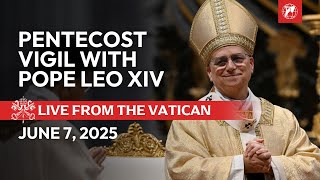
Watch the video until the end. Just a month has passed since Pope Leo I 14th appeared on the lodier of blessings. It was May 8th and in St.
Peter's Square between enthusiasm and bewilderment many were wondering who this man dressed in white with the calm gaze and the red mosetta on his shoulders really was. He is not a cover pope. He does not seek slogans.
He does not cultivate theatrical gestures. And yet in 30 days he has already shuffled the cards. He did not make revolutions but he changed the tone.
And today in the ecclesial world where even a clear word can seem like a subversive act, changing the tone is perhaps the most countercurrent act of all. Leo I 14th does not need to declare turning points. It is enough for him to speak like a Catholic.
This is enough today to appear new. A month is not long of course, but it is enough to recognize the first signs of a pontificate that does not align, does not apologize, does not disguise itself. A pope who for now does not promise ethical reforms but who has already started again from what matters clarity doctrine fidelity to the language of truth and precisely for this reason despite his sobriety he is shaking up the palace like few before him.
In the subtle game of papal legacies, Leo I 14th is moving with a wisdom that surprises even those who had underestimated him. He has not burned bridges with Francis, but has begun to build new ones. He has not denied the recent past, but has not remained a prisoner of it.
He is a man who knows the church and therefore knows where to put his feet. It was clear from his first actions. He quoted Pope Francis several times in his initial homalies.
He went to pray at his tomb. He spoke openly of cidality as if to reassure those who feared a brutal return to before. Yet there is no doubt that something has changed.
Because if the words were familiar, the way of using them was no longer so. Already at his first appearance, Leo I 14th wore the red Monzetta, which Francis had abandoned, a small gesture only for those who do not know the weight of signs. He has also recently begun wearing white trousers under his cassich, a detail that may seem minor, but which in the muffled world of Vatican liturgies says a lot.
It is not a question of nostalgia nor of an aggressive rupture. It is the return to a visible form of authority, of identity, of a church that is not afraid to show itself for what it is. Leon's independence is not declared.
It is acted out without proclamations, without moral excommunications, without fiery tweets. But the signals are unmistakable. It is not a question of doing the opposite of Francis, but of recovering what had been set aside, integrating it with a personal, sober, and firm vision.
This is the new style. neither modernist nor restorationist, but profoundly Catholic. During his homaly for the Jubilee of families, Leo I 14th uttered a phrase that in other times would have seemed ordinary.
Today, however, that handful of words was enough to make the palaces tremble. The Pope said, "Marriage is not an ideal, but the measure of true love between a man and a woman. No preamble, no accommodating formula, no pastoral discernment, just the truth spoken clearly.
The result, a jolt. Because for years, the church has been oscillating between the language of compromises and semantic tricks, between footnotes, flying interviews, and ambiguous texts. The simple way of speaking about serious things had been lost.
And precisely on a theme like the family, which in recent pontificates has been at the center of attention between doctrine and openness, Leo has chosen the most daring path to say what the church has always believed without fear of being misunderstood. But he didn't stop there. He defined marriage as the cannon of love between a man and a woman.
Total faithful fruitful love. Not one option among many. Not an ideal to be looked upon with melancholy, but the concrete form of Christian love, the trench where civilization is built.
And again, he has clearly excluded any ambiguity about other forms of union, carefully avoiding any wink at the fluid lexicon of the world. In these words, there is much more than a moral position. There is a vision of man, a conception of freedom as a gift and not as a whim, a lucid denunciation of the individualistic drifts that empty relationships.
And above all, there is the courage to put the family back at the center, not as a symbol, but as the supporting structure of the church and society. So far, there have been no official announcements or concrete measures. Yet in certain ecclesial circles, a change of climate has been perceived.
Not a turning point, but a different focus. Leo I 14th did not speak about the Latin mass, but neither did he give any signs of hostility. He did not confirm tradition custodes, but neither did he publicly defend it.
In a time when silence can be as strategic as a statement, his is a silence that leaves open a possibility. The lurggical form he has chosen so far is sober, orderly, free from those modern constraints that had alarmed a part of the clergy and the faithful. It is little, but enough to say that the door, at least for now, is not barred.
However, sooner or later, Leo the 14th will have to take an explicit position on the liturgy as on the broader ecclesial level because the other big issue even more imminent is that of cidality. So far, the pope has recalled the theme with respect towards Francis's approach, but it is not yet clear which vision he will adopt. Will it continue along the assembly line with documents written by several hands and a flexible ecclesiology?
Or will it mark a new phase in which the sinned will return to being a consultation and not co-management? The time for choices will come soon and it will be there that we will understand whether this apparent opening towards traditionalists will be confirmed by real gestures or will remain only a pause in the process of marginalization experienced in recent years. For now, all we can say is this.
There is no hostility, but there are no certainties either. The door is a jar. It will be up to Leoni to decide whether to actually open it.
In just one month, Pope Leo I 14th has given back to the church something that seemed lost. The courage of clarity, no sensational gestures, but clear words, strong symbols, and a direction that does not need to be shouted. If the morning is a good indicator of the day, this pontificate has begun on the right foot.
Sober, Catholic, decisive. Now we await the proof of the facts. What do you think?
If you liked the video, comment. Amen. God bless you.