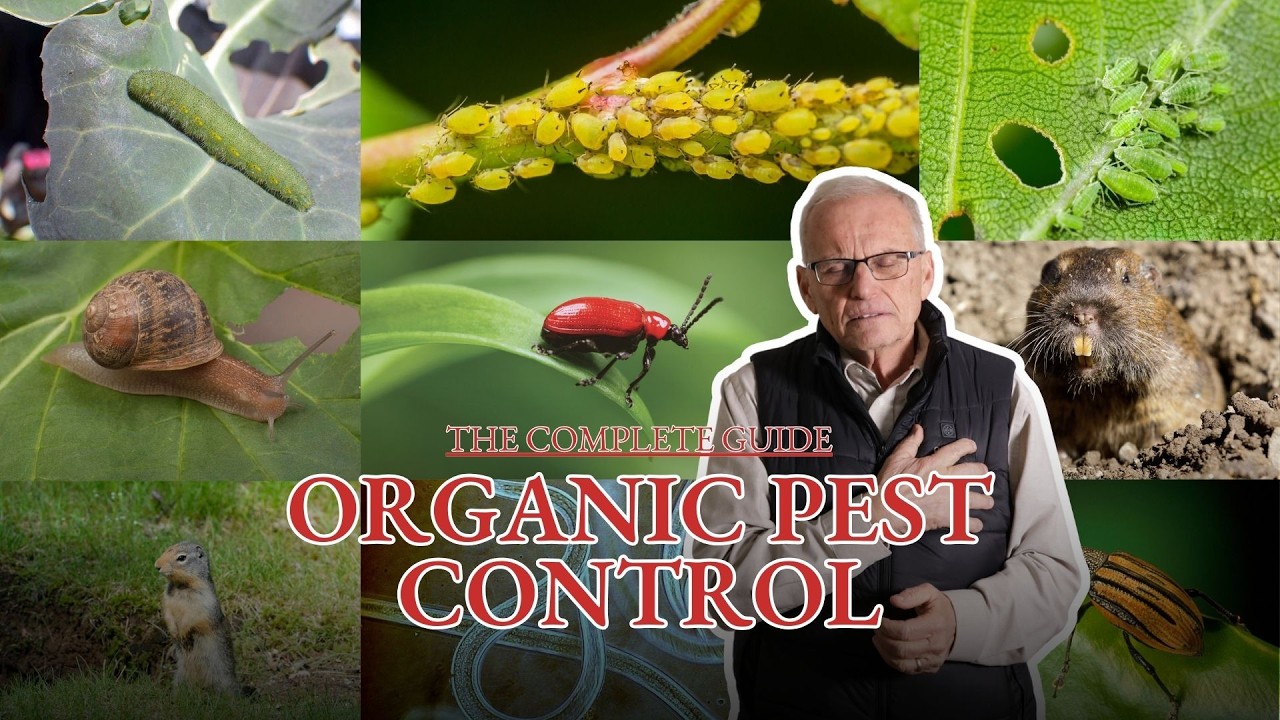
almost every day I'm asked questions about pests and there's a wide range of pests in those questions I'm going to try to mention every single one I get questions about and how to best address them organically so in a healthy way that's good for our environment good for the soil good for us I'm John Valentino this is Chip Valentino he's my vice president in charge of pest suppression I've been working in this field now for 46 years so I have some suggestions for you particularly regarding organic control if you're watching for a specific Pest and
don't want to watch this whole fantastic video then you can refer below which will direct you to specific chapters we could you know go get the traffic control and put it should filming and progress I we don't have to explain it we just block the road they don't know what it's called and a lot of times they don't know what it looks like but you notice when your flowers bloom then there's something eating the flowers and that's Rose Weevil pretty frustrating and mostly prevalent on white and yellow roses now if you don't want to have
Rose Weevil um plant deeply colored roses and you won't have Rose Weevil I think the best way to address Rose Weevil is to apply beneficial nematodes early in the spring I recommend that you get them uh from Aro and they have got a pretty good description on there of which ones to buy there's different species but beneficial nematodes for a rose Weevil is is pretty darn effective plus beneficial nematodes are really interesting because that's really what we're trying to build in the soil that's one of the higher life forms of beneficial microbes so while we're
building bacteria and fungi and protozoa then right above all of those are beneficial nematodes and they can keep your plant safe from almost everything the whole point of using our products and using things like earthworm castings and compost is they're all around building the soil and the soil is the most effective and efficient way to keep your plants healthy if in the meantime while you're building it you have a problem with a pest or two or three our philosophy is let's address that pest in the most beneficial way for the soil possible so we can
get rid of the pest without damaging the soil maybe even improving the soil Rose s flies row slugs those are most likely the same thing they could be in different stages of the development you can use the beneficial bacteria based organic pesticide called spinosad different brands you can get that have spinosad in it and also beneficial nematodes are effective again in the early spring why not apply beneficial nematodes then you can address Rose Weevil Rose slugs and saw flies we will be talking about quite a few different products and you can reference those products in
the description below so the most harmless way to get rid of aphid and white flying the first thing to try is with a blast of water sometimes that'll work especially if it's not a major infestation my favorite way is not a very easy way but it's fantastic for soil and that is to use our blend around the root ball and then on top of the blend use about 2 in of a earthworm casting like worm Gold Plus tremendously effective for a white fly and aphid if you're trying to just immediately kill some aphid with something
you spray on our uh enviral repel 40 works pretty well number of oils and Botanicals in there one of the main active ingredients that's really effective is garlic oil but it's not as good a long-term solution as improving the soil and addressing it with worm Gold Plus as with most test problems it's not absolutely necessary that your garden be entirely free of aphid and white fly a little bit here and there isn't going to hurt anything in fact many excellent gardeners consider it a plus because it can attract beneficials like ladybugs and parasitic wasps which
brings up a point of why we're doing organic control of aphid and white fly we not only want to not damage the soil but we also don't want to damage the ecosystem because in many cases including this one one of the best ways to control aphid and whitefly is with beneficials we don't want to be damaging those which a lot of chemical products do and so you end up with this kind of antiseptic ecosystem grubs SL Japanese beetles it's really the same thing although most people call them grubs although many people call them Japanese Beatles
I think this might be right up there with one of the most asked questions is grubs in their lawn eating the roots there are ways of controlling grubs and eradicating grubs that are good for the soil and that's what we want to do we want to continue to build the soil one that is a little bit overlooked is the beneficial bacteria BT basilis thuringiensis that's usually signified with a capital b and a small T and there's a lot of brands of BT that you can buy but it's really pretty darn effective maybe my favorite and
most effective way uh and also best for the soil is beneficial nematodes again and I like to get them from arbo Organics does very good job of long-term kind of permanent uh control of grubs in Japanese beetles also a popular one that is used widely is called milky spore that's not a brand that's a product and there are a couple of Brands those three products is what I focus on not necessarily all of them but I would start with the beneficial nematodes and it might make the other two necessary Lily beetle is a problem that
I actually haven't encountered here in central California but uh many people have asked about it one of the most effective treatment is the beneficial bacteria based product called spinosad spinosad is available in several different products but you you can search spinosad to kill Lily Beetle and you'll come up with several products um that I think do a good job most kinds of beetles can be eradicated with basilis theingi insis again that's the beneficial bacteria that's not damaging to your soil it's an organic product in addition to BT or basilis theingi insis you can use again
beneficial nematodes and you would apply those in early spring if you know you're going to have a problem of lots of different types you can be applying beneficial nematodes while you're building the soil in a way that encourages beneficial nematodes Rabbits go for squirrels moles vs throw in a deer one of the things I do is search for the scram products with the name of the offender right in front of a deer scram or gopher scram I've had good success with it and those scram products work by the scent they repel these pests instead of
Killing Them obviously there are ways to kill all of these things but the scram products are one of my favorite ways another interesting thing specifically for vs and I don't know why it only works on Vols but very effective on voles is our nourished biosol that's again the scent of it plus you can do a great job of fertilizing your soil and your plants you'll be spreading the products on the perimeter of these areas because you want to try to keep the offending varmints out of that area you just strategic in where you put it
based on where you think the animals are coming in or where they're creating the problem if they're creating the problem in your vegetable garden you can apply it all around your vegetable garden have a common sense strategy session with yourself and determine where you want to apply a lot of times when we're in and out of yards we're only applying them once many times chip what are you barking at many times with one application it cures the problem but sometimes I will recommend that it'd be reapplied every couple of months or so rats can be
a real problem there's some excellent uh pepperment products online that you can use as a repellent also a product I've used with some success is these ultrasonic rat repellers uh so you plug them into an outlet and they emit an anti-rat wavelength that makes rats Scurry on down the block I actually used that at my house and um seemed to work pretty well well cabbage worms are enir repel 40 works pretty well and a BT billus theingi insis which is a beneficial bacteria works well also and that's available in different brands unfortunately the weekly application
is probably going to be necessary so if we neglected to mention your most horrible pest I put it in the comments below and we will address it in a future video the absolute best way I'm not even going to mention another product because this is so good at controlling and eradicating thrip back to the most mentioned way to eradicate pests is beneficial nematodes those are tiny little microscopic guys and you put them in water it's best to do it late at night or very early in the morning where not exposed to a lot of sunlight
and then you just spray it on either with a spray tank or hos in sprayer or whatever you prefer that's my number one uh recommendation and I don't have enough one if you're in climates like we are in you might only have to apply them once if you're in climates with really cold weather cold weather can um impact the population of beneficial nematodes and so you might have to reapply like early every spring what we're trying to do with our whole program is build soil that can maintain a level of population of beneficial nematodes I
think people shy away from using beneficial nematodes because of the name and it sounds like uh something they don't want because they could be associated with the destructive nematodes so nothing's more frustrating than having bad nematodes nematodes that eat the roots of your plants the traditional ways of treating bad nematodes is with more and more toxic chemicals and that usually renders the soil pretty much useless even if you get rid of the bad nematodes it damages the soil so severely bad nematodes are best controlled by good nematodes and that's why building your soil with complex
soil life is the way to avoid bad nematodes all our products that's the whole point is we're going to build it with life that can get rid of the bad nematodes good nematodes are are the way to go and applying them early morning late evening in water fairly easy process maybe as often as once a year in the early spring fusa mites similar to mites in general don't have a lot of great Organic Solutions but the best is uh insecticidal soap which if you search online insecticidal soap is usually recommended right after water for almost
everything it's considered you know one of the most non-toxic ways of trying to organically treat things our Rose and soil Defender works pretty well on fuchsia mites also and those are really my only two recommendations to treat them in an organic way usually ants aren't a primary problem they're a secondary problem problem they are a problem because they eat say the waste of aphid or the waste of white flies or the waste of other insects if you get rid of the aphid and the white fly and other problem insects usually the ants will go away
so that's that should be the first thing you try to see what you think the ants are feeding on the waste of what and then get rid of that problem if you can't figure out what they're feeding on and why they're there you can use spinosad which is a beneficial bacteria also I've had a lot of experience using our envir repel 40 you know we've got a number of things in there but we've got lots of garlic in there and that is an excellent way to kill ants when I'm trying to kill ants with our
enviral repel 40 I use a strong mixture of it I go a little beyond the label rate and it does a good job not only killing them but I don't see a return slugs along with slugs is snails sometimes they're considered the same the most common way which is not a bad way I in my opinion is the product Sluggo which is omry approved and organic and you know non unharmful for pets if you research slugs there's a whole controversial Aura surrounding them because a slug here and there is kind of like an aphid here
and there not necessarily bad it feeds part of what you want to feed to have an effective well-rounded ecosystem so it's not like we want to kill every slug but when slugs start to be destructive they're eating all your plants then you have to do something so to find a slug here and there I would probably ignore it so the first line of defense with most people is Sluggo which is you know widely available and easy to find and easy to apply but there's another solution that it works probably better than Sluggo and that's back
to beneficial nematodes now it takes a certain species so you have to research the species of beneficial nematode specifically for Slugs some people in their Garden are just overridden with slugs in a way that makes gardening impossible and in that case I think the beneficial nematodes are the way to go if you have a slightly higher than normal amount of slugs that are doing marginal damage the slugo is probably a good way to go if you have very little damage then I'd leave this slugs be and not worry about them there used to be a
man here in Fresno who is deceased now but he used to raise snails and go and be available to go in people's Gardens and pull out the snails and it was part of his process of raising snails and he sold snails to restaurants as escaro and did different creative things with snails and uh he said that there's certain music that snails like what he told me is their favorite song of his snails was I Just Called to Say I Love You by Stevie Wonder so if you don't want snails I'd say don't play that song
so Chip and I have concluded our uh video on organic treatment for pests and we hope you liked it please like it if you did and subscribe if you're not already subscribed and encourage other people to watch our videos and we just want to say we love [Music] you that's the parts the snails really like SS just need a little love yeah why are we killing [Music] him as you might imagine Ralph was a character