your first thought is that the trees don't look familiar there are no towering Pines shedding their needles or red leafed Maples swaying gently in the breeze you can't see any spiky looking palms or Acorn covered Oaks either instead the trees around you have leaves that are shaped like tongues longer than they are wide and gently rounded or slightly pointed at the tip today we call these leaves glossopteris and they're an important clue in figuring out where and when you are their presence means you're probably in gondwana the southern part of Pangia and you're probably in
the perian period the Final Act of the Paleozoic Era dark times are ahead for now though this place is calm the ground under your feet is damp with horse tails and ferns poking up here and there you're on a flood plane in what will eventually be the kuu Basin of South Africa at the moment around 253 million years ago it's a seasonally wet landscape crisscrossed by Meandering rivers and ephemeral streams but it won't stay that way as you take a deep breath of the cold humid air you notice strange creatures in the distance moving towards
you they are big approaching a small hippo in size and kind of stocky shuffling along with an odd semi sprawling gate and as they draw closer it becomes obvious that these are not like any animal you've seen before they have a pair of Tusk like canine teeth and an otherwise toothless almost turtle-like beak that they use to feed on tough vegetation and they're not furry or hairy but they're not scaly either their skin looks kind of like the skin of an elephant tough and textured they are members of the largest species of lystrosaurus one of
the many kinds of distant mammal relatives called therapsids that thrived in the peran and while they're just one of the many strange creatures roaming the ancient kuu landscape at this time some of the other species in their genus will go on to become the most common vertebrates on land outnumbering the others by a lot but first they will have to survive what's to come on the distant northern part of Pangia in what's now Siberia almost as far away from where you stand as it is possible to get on the supercontinent big changes are taking place
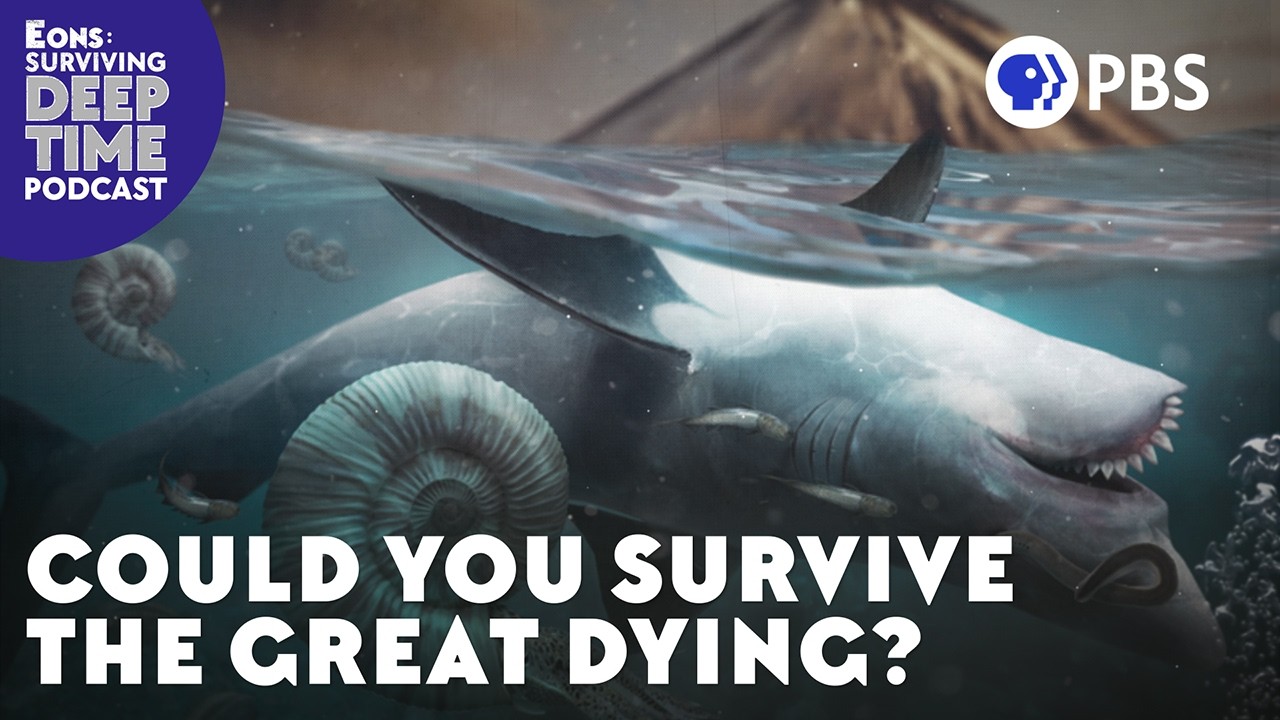
deep within the earth a massive volcanic event is beginning one that will transform the world forever it will last for hundreds of thousands of years and spew enough lava to cover an area almost the size of Europe and it will happen in just the right place to burn through huge deposits of coal releasing tons of additional carbon into the atmosphere along with other greenhouse gases and toxic Mercury the world's climate will warm catastrophically at the Equator the temperature of the ocean will reach 40° C and much of the Marine realm will become anoxic losing its
ability to hold oxygen and support life something like 90% of species in the ocean will go extinct along with up to 70% of all vertebrate species on land and while these figures sometimes differ today we know this event as the great dying the biggest mass extinction of all time some lerosa will make it through along with the ancestors of the Dinosaurs the stars of our planet's next geological era and somewhere another lineage from a different branch of the therapsid family tree than lystrosaurus is biting their time a small unassuming little creature that will eventually lead
to us they had the adaptations they'd need to survive along with a healthy dose of luck to make it through but would [Music] you hello and welcome to eon's surviving deep time a podcast that gives you a human eye view of what trying to survive in the past might have looked like I'm CI Moore one of the hosts of PBS eons a YouTube channel about the history of life on Earth and I'm here with Blake de pastino world of my co-host to figure out if we would have been dead or thriving if we were dropped
into the mass extinction at the end of the peran period also known as the great dying all right Blake are you ready to get living in the great dying Kelly how long have we been doing this right how long have you been working together seven I think it'll be seven years in June yeah yeah and do you remember when we launched this the the YouTube show mhm in the freaking arena in Anaheim as you me and Hank an arena of 5,000 people I was so nervous that I don't even remember like what I said or
did I am more nervous today about this than I was on that day I got a bad feeling about this drop you know what I'm saying yeah yeah this is going to be a tough one this is this is definitely going to be a tough one I got bad feeling about this drop well we've talked about the great dying quite a bit on eons so what's one thing that you know about the peran period everything died at the end of it it's like you know uh is it MC Beth it's the the skull guy right
everything dies at the end yeah so the biggest mass extinction of all time mm so not fun I don't like the looks of those Liberian traps one bit right now I'm telling you it's going to be bad news yes that what I know about it but also like all this dope stuff was happening in the peran like you open talking about plant life and I actually don't like recollect I don't have a lot of atand knowledge about uh Botanical life from this period uh but like vertebrates were like just really kicking it you know oh
yeah the the critters of this time period were they don't get enough respect really they don't you got your synapsids mhm and then you got your therapsids those stem m are like living their best lives and then this happens it just seems unfair they get snuffed out at the end of it yeah definitely as cool and as weird as the dinosaurs and these guys came first so oh for sure they're so cool yeah yeah yeah and Pangia right I'm all for Unity you know but like parts of that place were just not not habitable yeah
yeah so like we're in gandana land gondwana land yeah so we're on gandana so the w part means land so if you say gondwana land you're know that gond land land interesting okay like the Los Angeles Angels yeah yeah yeah yeah exactly yep so you just have to yeah say gandana so you've got all the continents basically smooshed together in Pangia this giant supercontinent it's surrounded by a super ocean panthalassa and sprinkled throughout that ocean as well as the paleotethys ocean which was kind of in the middle of the sea shape um you had some
bigger free floating chunks but basically everything is all smooshed together we're both in Missoula Montana right now which makes this really easy to kind of try to visualize where we would have been so being in Missoula Montana we would have been on the North westish Coast of Pangia on that sea because I had to do a Google Image Google Image search but like North America is basically that whole chunk of the sea right and so right right now we are Northwest in Northwestern North America and so that chunk of land that real estate was on
that Coast yep although we're not on the coast we're not on the coast ye we're on the coast in the perian not anymore because we get mountain building and all sorts of stuff that happens after this oh um so we're by Coastal we yes right now love that for us Missoula would have almost had beachfront property in the per period hey hey hey hey that's okay I'm not mad at that I'm not mad how far well okay we're gonna talk about climate in a bit and that's my my main worry about this whole Endeavor well
actually I have a lot of concerns I I have multiple concerns about this Expedition but climate is one of them so from here on out you're G to be in the driver's seat you're driving this hypothetical time travel that we're gonna do okay if you're back in the late peran what are you most worried about so we have a couple of categories you can choose from we have atmosphere climate temperature water food animal hazards and environmental hazards the actual Max Extinction I mean yeah don't make me choose you know um like I said I don't
like the way the soarian traps are looking at us right now yes but like my most of so there's plenty of stuff to eat plants and I'm think we're on land right so plants animals the seas are terribly hot hot right like hot tub hot if not hotter I think my main concern would be well have the eruptions started you know like I don't know where to begin where I'm not an outdoorsy person call you know this about me like if I'm out of Wi-Fi range for like more than 30 minutes I get the bends
right okay like nitrogen bubbles you know so let's let's let's just start off hard let's let's just go with the environmental hazards the the actual Extinction event yeah CU you touched on lot of a lot of just bummers that happen during time my first question is could we breathe like if the if the eruptions have already started there's so much CO2 it leads to all like warming sea levels start to rise uh ocean acidification uh and oxic events uh like more than hit the trifecta but like my concern is we open our Gizmo and is
is it going to be breathable I mean there are vertebrates right and they can ther regulate because that's kind of a new uh invention so I'm assuming we're okay but like how long do we have right so it looks like the uh amount of oxygen during the peran where we're going to be at in the late peran is about 15% compared to today's 21% so it's breathable but it's going to feel like being in like ASP in Colorado so if you're not used to high altitude maybe not try to work too hard because you might
get a little Maybe altitude sickness but really it's going to be low oxygen sickness in so I think I mean Missoula is not as high as Aspen is like in the valley we're only at like 3,200 or something like that feet yeah that sounds about right yeah so I think we would feel it but I don't think we're gonna suffocate okay yeah and then like what is the um temperature on land it's generally warm yeah it's it's generally warm broad tropical belt with strong monsoonal climates um and because of this giant super continent we had
extreme continentality so Continental uh conditions prevailed so we got real hot summers and cold Winters so like being in the middle of the United States today so it's generally warm with seasons and monsoons but yeah it was definitely a high average temperature and maybe like a broad semiarid belt around like the more humid Equator so you'd have like some deserts okay yeah yeah which leads me to my next problem which is the terrible heat and then also the land mass and the unequal distribution of moisture I guess if we're in the northwest coast if we're
if we're near the ocean hopefully we're okay but like how much water is there available right us yeah so we are actually in gandana we are where South Africa will be today well what will become South Africa today so yeah not in Missoula right we're not in Missoula but just like an example of where we are today in Missoula in the grand scheme of Pangia but for this hypothetical time travel we're actually going to be South and we're going to be real far south okay of of the Equator towards the very very tip of Pangia
and down there it kind of depends on the time of year we're going to find enough water because if we get there the KW Basin at this time is kind of set on a flood plane and so there's evidence of seasonal streams so if we were there during the monsoon season there's going to be tons of water and we could collect rain water we could get fresh water but if we happen to show up in the winter time when it's drier that might get a little trickier huh okay so we got to like track osaurus
and follow it to whatever water source it's using that's what I would do yep that's a good that's a good option yeah they're all over the place and we know they lived and they lived through these dry climates and so where did they go what they do Okay so we've we've kind of covered that we're going to be able to breathe that lower oxygen than today it's going to be kind of like being at high altitude it's it's hot it's it's very hot it's warmer than we're used to high average temperatures we got a strong
monsoonal regime there's a lot going on today there it doesn't seem to be because of this heat there doesn't seem to be any ice caps and probably higher sea levels so the climate is just going to be hot and we're going to have a little bit lower oxygen but um we'll be able to find water as long as we're there in the summer and if we show up in the winter it might be a little tougher but we're going to follow lystrosaurus so do you wanna do you want to jump in and and talk about
the mass extinction and how all this stuff rolls together yeah like what I have so many questions you know I there are a lot of hypothesis right about what caused it and most of the stuff that I've heard about or you know read about as has to do with volcanism U just because there are so many effects that kind of are are Downstream from that uh but also there is like a potential bite impact and I'm like or um ozone depletion you know like of these things what do we have to worry about the most
you know I guess what is more what's the most likely and what is the most threatening to us and how much time do we have these big Extinction events seem to be driven by these large ous provinces lips these are huge volcanic events and instead of like blowing a top like Mount St Helens they just crack open the ground and spew out lava for hundreds of thousands of years and there's two major ones that we got to watch out for in the late perian and that's the Siberian traps which are a long way away but
they're going to wreak havoc on us even in the South and there's another one in China which again it's still far to the North but they're both going to affect us massively wherever you are you mentioned uh like killing events do those killing events respond to the Two Lips erupting or do we not know or is it just sort of like there were two bursts of Extinction you know what I mean yes there was one the one in China happened kind of in the mid to early late peran so we got that and then the
Siberian traps happen at like the very very end and I know both of those have been pinpointed to the extinction event chaos sheer chaos don't get me started I know and I know and like people are still thinking that somewhere around 96 up to 96% of marine invertebrate species globally go extinct I mean yeah that's that's mass mass death on an unknown scale basically because it's not just the temperature it's um acidification and then anoxic events and then um like sort of calcification crisis that um calcifying organisms like couldn't make shells anymore right yeah and
all Downstream and so does that all stem from volcanism and like dissolved CO2 yeah so you get a ton of stuff happening that's spewing out carbon dioxide obviously in you get all the other greenhouse gases that come with it methane and stuff like that even toxic Mercury but really the kicker here is like location location location so these big lips burn through huge coal deposits so not only do you have just like the the normal lip greenhouse gas increase they're also burning through massive coal layers yeah so all that sequest carbon is being released again
EX exactly yes and it's going to get hot like ambient temps of 35 to 40° C that's like 95 to 104 degrees that's hot that's too hot for me and the last like so last time we met we talked about the late Ovis and I'm like so Palm strings in July basically is what we're talking about but like all the time yeah yeah okay yeah it's going to be it going to be really hot and it seems like this this Extinction event just kind of like resets ecosystems worldwide especially in the Marine ecosystem because like
you've said you we have Ocean anoxia and ukia which is no oxygen and high hydrogen sulfide so like if you were little plon or datom or forams all these tiny little creatures that make calcium carbonate shells that are very important for food chains in our marine ecosystems they're they're just they're habitable zones are massively reduced can I just say rip to the trilobites also yes who are my favorite they're the cutest and one of my favorite episodes one of my favorite episodes I know they're in heaven now one of my favorite episodes of uh eons
is the trouble of trilobites and like Earth tried to kill them at least three times and you're like no we're good we'll we'll find a way nope they couldn't they ran out of mve yep they sure did that's our first episode was it really yeah your favorite episode is our first episode oh that's so cute I just thought it was really really lovely it still I get a little over climp every time I watch it I know those which is every so often yeah yeah so you mentioned trilobites rip they're gone so sad uh but
we also lose uids so the SE sea scorpions kind of like this mash up between like a horseshoe crab a scorpion and kind a little bit of trilobit sprinkled in there too yeah cuz we talked about them in the late or divition too because that's when they were hat they were just yeah they were loving life yeah y but like some nice drawn butter and one of those claws you know maybe some garlic there's good eaten right there right it'd be but they're gone they're but they're gone they're gone and so they're probably like rotting
on the shore if they're dying while we're there yeah they might not be really good okay so what is there for me to eat wait we're not there yet okay [Laughter] also we don't have any garlic but we'll get to that in a minute uh we'll get to that in a minute yeah so also in the oceans we lose these shark shaped fish these ancient weird fish called acanthodians in the Seas during the Paleozoic this later part of the Paleozoic we had reefs that were based on rugos Coral so horn coral they look kind of
like little horns they're super cute they there we have those right no they are gone all rugo corals mhm Yep they're they're they're wiped out and what we see is like after all of this like all of these marine ecosystems are kind of replaced by modern ecosystems they're dominated by the scler tinian corals which are our modern Stony cores that we're we're used to seeing and the mollusks and the maliken arthropods like crabs and lobsters echinoderms um the modern fishes bony fishes those types of things take off afterwards and so this is kind of the
end of the Paleozoic ecosystems too we're just in this era of marine life between dangerous and delicious animals is what I'm hearing yeah okay D we're just right on the cusp and in the terrestrial realm and Ain much better either um even though it seems to really get going after the Marine Extinction event it starts like this the terrestrial Extinction kind of starts in the higher latitudes and then moves down over to the tropics there possible ozone depletion so higher UV radiation on land I'm basically allergic to the Sun so that's going to be bad
for me yeah very bad for me there's no SPF high enough yeah there's not maybe we only come out at night or something you know for this time I was going to maybe maybe it's too soon to mention this but one of my survival strategies is burrowing because that's how we got here right that's how we got here that might be a good way to escape the heat of the day because again there's a a hot it's ambient temperature hot it could be in the hundreds during the day you also have drought possibly if we're
there in the winter time and we have acid rain so oh my gosh it's it's real tough it's going to be real real tough to find habitable land area to live in yeah like worse than Billings yeah worse than Billings have you been to Billings I have been to Billings yeah I have all right yeah so uh who dies who dies on land who who's who's getting the deaths on the land well uh do you like insects Blake oh I do yeah well it's sad day for you because insects go through their biggest mass extinction
of all time poor little guys I always people always ask me where what period you want to go to and I want to go to the Carboniferous because that's nice oxygen levels um you know it's very verdant and then there are just U abundant and huge insects yes I think they're dope but you know me always like anything that's like big and cute like that I just want to put a SLE saddle on it and like ride it into battle I know I wonder if Arthur plura could hold our weight we talk about that in
the the Carboniferous episode you list demetron but you can't really put a saddle on demetron yeah that'd be tough that' be a little tough to ride like so here's di Metron I'm wearing my D Metron shirts oh Wicked relevant yeah yeah even though they're they're gone by before the late peran so we wouldn't even get to see those if we were there by then unfortunately but yeah so so insects they get hit hard so again just like the Marine ecosystem we have this Paleozoic evolutionary fauna that gets wiped out and then ushers in the modern
evolutionary fauna so we get um decreases in like silverfish and their relatives cockroaches earwigs and crickets mantises um bark lice thrips true bugs they all take massive hits they make them through all these orders and families yes you should see my apartment I'm familiar with all those organisms y but it definitely ushers in that a lot of insects that go through metamorphosis like complete metamorphosis why is that why would they impact that's a great question uh we know that metamorphosis has been around since the Carboniferous like 320 million years ago so metamorphosis yeah these insects
go from larvae to adult and it takes place through a non-feeding transitional stage known as the pupa to remind you all of some insects that go through complete metamorphosis we have you know butterflies true flies um a lot of aquatic insects like mosquitoes go through a metamorphosis so a lot of modern insects actually go through these Pupa phases we also lose some terrestrial vertebrates as well none of them are like brand name though which is unfortunate super unfort in the the in Memorial reel at the end of the perian like you're not going to recognize
a lot of these players no you're not pause let's pause and reflect on the passing of the the vertebrates we've lost in this period you're just gonna be like wow those all look really weird I saw anything that he was in yeah I don't remember that movie no no no no so unfortunately there's there's not a lot there for us to really call back to but um okay why not because I mentioned the Metron but they were already gone by the time the peran happened I just think nobody's made a movie about peran park yet
hasn't made any of these animals brand name yet so I have my Jeff gold Bloom glasses here do yeah that's great um we're pretty unclear what happens to the plants though which is kind of funny it's like they they either were hit really hard or not but there does seem to be a coal Gap and as a paleontologist I'm always like critical of coal gaps or any type of Gap in the fossil record cuz I'm thinking that sounds judgy why you why are you critical of them because is it really a gap or is it
some type of like preservational bias or a collection bias so like preservational being like Oh all of these plants got preserved because they were in an area that fossilizes material really well and these plants weren't or is it a collection bias we just went somewhere and collected a whole bunch of stuff and didn't find any coal so oh there's a coal Gap but okay it does really seem like there was a coal Gap anywhere from like 7 to 20 million years there was no coal being deposited on our planet in being deposited okay yeah yeah
so we didn't have a bunch of plants being buried turning into Pete then to lignite then to Cole at least in the latest perian when this Extinction happens and on into the early Triassic and so there weren't the kinds of organisms today that would cause them to Decay oh no there there were it's just okay there were enough plants were I see like yeah you think with all that CO2 that they're just loving life right I mean too much of a good thing maybe I don't know or acid rain oh that's true yeah yeah if
you lose all of your leaves it's pretty hard to make food if you're a tree yeah like glossop plura they were everywhere and then they weren't yeah it's pretty it's it's tough yeah and we also have a fungal Spike so we have a coal Gap and then we also have a fungus Spike so okay you decomposers and they have the Heyday of it all because everything is dead it's never ending soup and salad bar right right exactly so yeah you've got coal Gap no plants you got a fungal Spike yay for decomposers and then there's
list resaurus so the little toothed smashed face canined beaked Survivor if you will and it's just everywhere afterwards it's pretty common in the late peran and then by the early Triassic it's just everywhere and so you mentioned burrowing earlier which is actually one of the reasons why we think lurus made it through we do an episode about that I mentioned that an episode yeah we did I think you actually hosted it too so that's why it's familiar to me in that episode we also mentioned the evidence of torper so not true hibernation but being able
to just like chill oh yeah just slow down just chill long nap I go through that all the time yeah I'm coming out of my torper face as we speak and then we also think that they started reproducing earlier and faster so just making babies like crazy because if if you're dying at crazy rates also you just make more babies so you have more of a chance of somebody surviving and so lurus did all these things we think okay the burrowing they did all of that so Thermo regulation right um torper reproducing earlier okay yeah
so the extinction event was bad it made everything hot we have acid rain ocean acidification ocean an anoxia ukia uh man it burns coal deposits we have large ous provinces we've got just a really bad day but lystrosaurus can make it through I think we can too so if we think about lystrosaurus and and we call them stem mammals so these are animals that are online to mammals but they're not in the mammal family tree yet and they're out of the reptile family tree but they're kind of in this weird transition zone and we used
to call them mammal-like reptiles but we've gotten rid of that we call them stem mammals now um dimetrodon is the class example of the stem mammal so technically more closely related to mammals than they are to reptiles but again what what do you think lystrosaurus would have tasted like gamey I don't know what I'm basing that on um I think actually ulet are probably more gamey than stem mammals I'm going to say like I've never had have I ever eaten reptile I feel like weren't we at uh some conference or convention and like a lot
of PBS folks were there and someone ordered um alligator alligator right yes I vaguely remember that too yeah and that what did that taste like I remember being kind of like a white beat kind of um you know little little uh buttery well let's think about it in the way of like philogenetic bracketing so we we don't have these animals anymore but we can look at their two closest relatives so we know what mammal tastes like and we know what reptile tastes like and these guys were in the middle of that so I can imagine
there would be also be gamey but it would also be reptile like but like a like a h jeez I don't know white meat I would assume but not quite chicken not you know not chicken no not chicken definitely not chicken more like pork the other white meat yeah yeah a little bit of pork with I could see it little bit of alligator not very fatty I wouldn't imagine yeah I don't think a reptile meat is being very like greasy or anything I don't know I have never eaten reptile L asaurus had those legs and
so you have like the drumsticks yeah you definitely would have had because they got like that sprawling gate still so I bet like a bicep would be pretty good and the meat in the belly MH yep good old some fried lorus belly yeah actually uh maybe like cure it with some salt and some brown sugar no sugar yet oh dang yeah salt though yeah so what do you think would it taste like pork I don't know I think I I feel like if you were eat it you'd be like this is reminiscent of but it's
not quite you know like yeah it'd be a little weird it'd be a little weird luckily there's a lot of things for us to eat I mean if you're into transitional species we got a lot to choose from what about let me think there are no angiosperms so there's no fruit there's no fruit plants are going to be tough for sure cuz one see MB would know MB would be like they'd be walking through this forest and they ever gone hiking with them uh Michelle yeah yes like they just pick stuff off trees and they're
like oh I make a you know I make a nice cocktail of this and I pick something up off the ground I'm like G put this in my mouth they're like no no no no no no no no um but they would know how to for they're a forager right uh are you I don't have those skills you don't have the skill yeah well I mean none of your skills are really going to help a whole lot because it looks like I mean it's going to be rough it it to get roughage it's going to
be rough cuz um ferns we got ferns but a lot of them are toxic so if we do eat them we got to eat them in small amounts um we got horse tails too and they've been around since at least the devonian um but you can't eat too much of them or you'll have vitamin B1 deficiencies so oh I didn't know that that's not good because they go around here when you go like up rattlesnake creeky seahorse Tails M exactly they're they're everywhere and they somewhat are edible in small doses you got ginkos and the
order that Ginko belongs to First appears in the peran um and it maybe had edible seeds it's going to smell like rotting fish probably but we have no way of knowing if you'd actually be able to eat them modern Ginko seeds are consumed but they're like toxic of course of course they are of course they're toxic um you can have like one as a treat and then you you got to be careful really yeah and you got to cook them I didn't know that yeah you got to cook them and our last option are the
pads and they've been around since the late Carboniferous or somewhere in the early peran guess what they are they seem very like prickly rough that yes and they're also poisonous too oh are they really all of them um if you have traditional ecological knowledge of certain groups of Aboriginal Australians they have developed several methods to make them edible but I do not know their ways so interesting Yeah Yeah so basically all the plants are toxic this gonna be okay what about marine life who's left in there in the Marine realm we're not really close to
the Marine realm so we would have to treack fairly far to get to a seafood buffet if you will yeah so we might not be fishing for marine fish but there might be freshwater bony fish still around we might but also we got have to worry about toxic water and Alo blooms and all sorts of other awful things that come out of this Extinction event with the acid rain Yes and you mentioned Mercury and like other things from the eruptions yes okay so there's basically no plants to eat um no plants maybe some freshwater fish
y I think we're we would be on they call a paleo diet yeah yeah all we got a ton of meat we got a ton of meat meat all the time we've got uh all of these synapses so this is just one major group of the amniotes we are an amniote um mammals are The Only Living Branch the other major amniote branch is the Sor opds and those include birds and reptiles so we're the synapsids um the synapsids they lived between the split of the origin of synapsids and the origin of mammals so like they're
not they're just not quite there yet and where we're at in the kuu Basin there are several to choose from not just lystrosaurus we have the diodon uh dapto cilis and diadon these are all toothless they're beaked they sometimes have tusks they're herbivorous so at least we wouldn't have to worry about them coming after us well I mean I guess they would still defend their right to live so I was wondering about that Rivery versus carnivory or omniv so I guess that's one we could follow them and see what they're eating in hopes that we
have some genes in in common would allow us to eat whatever they're eating yeah but um I mean we're all we're all therapsids right we're all therapsids yeah we share somewhere in the family tree right we also have par iurs these are par reptiles so basil Sor opds and possibly a sister group to the living reptile bird lineage some of them are very big though like two and a half eight feet long at first I thought I could take on one of these but then just the cheekbones alone tell me probably not a good idea
maybe not a good idea yeah because they're covered in osteoderm so these bony plates that sit right under the skin like if you think about um yeah like a alligator and how they have all of those bony plates on their back these things were just like covered in them tough eaten but again we've had alligators so like you've had alligator I'm sure I was a vegetarian still during that day day and age still a vegetarian I'm still a vegetarian so this would all be tough for me all be tough so so we have a lot
of big lumpy guys to choose from whether whether or not we could actually eat them and take them down there is there are there are there um there's smaller ones though there are some smaller things that we can eat but they're super important because um they're one of the groups that mammals will eventually evolve from kirasa nathus is another one that we might find but we might not want to eat all of them that we can find so we don't just like disappear and become a weird time traveling Paradox because we eat maybe just one
a day maybe maybe just one a day yeah that would that would eat like a meal I think yeah yeah a small meal so foodwise there definitely is food we have plants they're all poisonous and toxic so we got to be careful with them in small small doses um I didn't mention bugs but we did talk about them earlier they're still around but they're not as big as they got in like the late Carboniferous early peran because you know the O2 levels drop so again we're at 15 versus 21 or 35 in the Carboniferous um
so there would have been bugs if you're okay with eating them they they are around um and then lots and lots of meat lots of meat it's just if we can get it and we got to watch out for the little guys so we don't eat our ancestors too much oh I didn't think about that but then I wouldn't have to pay taxes is the season oh yes if I go back in time and eat my evolutionary ancestors I will not have to I think I found I found the the the ultimate workaround the loophole
The evolutionary loophole go to work in the morning H yeah so we got we got lots of meat we got lots of big lumpy guys to try to eat but we kind of mentioned this just a minute ago when we were talking about them even though they're herbivorous they would still like defend their right to live if we were if we were trying to kill them they would be like oh no thank you um but they also had prors so let's think about some animal hazards now big ones were like the gorgonopsians yes right yes
with the the fangs and they look like like if you were to take a naked mole rat and put it in the toxic goo that made the Ninja Turtles you would get a gorgonopsid that's yes I like that and they're big like I don't know if I could run that fast yeah they got up to 10t long so up to 3 m in length they were pretty big they had giant big canine teeth they had serrated other teeth yeah they were built to eat the big lumpy herbivores so they would have been probably nasty we
would have definitely had to been watching out for gorgonopsids and gorgonopsids are still kind of in the family tree they synapsids and their therapsids so they're more on the mammal side than the reptile side but Less close to us than codon are so they're another reason to burrow right like got to sleep underground the gorgonopsids yeah so we can just be safe from predators oh yeah yeah yeah yes yes yeah if they can't get their faces in your burrow then they can't get you we're though I think we would definitely be on the menu for
them oh for sure we are not covered in hard parts we would be much easier to chew for sure I have no idea how fast they were but I am not that fast yeah yes exactly however fast they were I am not that I probably am not that fast uh we can climb though I don't think they could climb I was wondering about that yeah yeah um so trees are a thing so yeah we had glossopteris around if there's probably still a few stands of them so we could climb up shimmy up those and I
could fashion a club out of the the wood yeah well I mean I bet there's dead stuff all over over the place you could just like one of like a femur bone of something and cavan style yeah yeah so what else is out there for us to worry about Predator wise right like gorgonopsians are the the big scary ones but also there are smaller ones right yeah the Theos spans like one called mosor rhus is is in with us in the kuu Basin and it gets up to about 5T long it still had big canines
it's also a non-m ion thorage UMO boy I'm just I'm looking at some reconstructions yeah that's that's fearsome and their their name means Beast heads because they have really large skulls so like I'm a look at those jaws right I'm assuming those those bite forces would be up there yeah yeah yeah so there are several things that we're going to have to worry about on land and we haven't even got to like the freshwater Predators because there were plenty of those too so yeah so like what uh we still have Tim nandal so those big
early amphibians that were like the apex predators cuz we don't have any crocodilians yet so you don't have to worry about that but you have to worry about the okay dang timn bondal so they um we have some recent trace fossils of these timn spond from the K Basin and it's preserved resting and swimming traces so they'd swim and then they'd rest and make a little imprint and then swim and then rest and they're like six feet long so like two meters long oh yeah yeah I've seen tracks I think in in Texas I can't
remember um but I could see me going up to you know like a river Bing down get some water and it's just laying there watching you waiting to snap my face off yeah yeah and they definitely had teeth and many of them had teeth on the RO of their mouth so not only the normal gross really that part I didn't know yes so oh wow but they're catching slippery prees so it kind of makes sense if they're trying to catch fish and stuff you need all the help that you can get to keep them in
your mouth and so if they were to latch on to you the chances of you getting out of their mouths I don't like it Cali I got a bad feeling about this yeah I don't know if we're going to make it out it's not looking great let's let just say that so all right let's go review style we've got we've got low oxygen we got high sea levels we've got extreme temperatures from monsoons and drought and we have water maybe depending on when we're there all of the plants are gross should not eat them we
still have some bugs we've got some things to eat on the meat side of things but again the meat can also come after us so we got right it goes both ways right so we have the Gorgon opson the Theos sopan the timus bondal in the water oh boy boy howdy we have a lot of things happening we've got large ignas provinces going off of North and it's screwing with our climate we've got ocean anoxia and acidification we lose all of our good tasty Marine stuff probably man heat and drought and acid rain fungal spikes
coal gaps so I'm not loving it Blake how do you feel about your chances now that you've heard about the late peran you know I like to think of myself as an optimistic person but this this challenges the limits of my my uh my faith in my self-reliance and my resourcefulness you know my main fear is just like the whole environment but like the climate specifically and like The Limited uh or like decreased oxygen um like everything that we need is there but it's everything is in diminished Supply right and there's a lot of things
that could ruin your day just all over the place so oh yeah not only are we a predator but we are also officially 100% prey at this point in the game too yeah it's looking pretty bleak it's um I think you're with me right you and I are together yep I'm with you you could tell me not to eat the plants cuz I'd just be like dope we'll start with a nice salad you know some thousand island dressing I think I can make it like a couple of days but that's it yeah you know and
I think I would just because I would not have the amount of oxygen that I'm used to like we're like Aspen or Park City or something and probably not I depends on what time of year what kind of water we have access to I think that I would be vulnerable enough that the t t bundle would bite my face off yeah when I'm trying to get water and that's how I'm going to leave this Mortal coil yep like all the environmental changes I feel like I could roll with until getting eat by a eaten by
a gorgonopsid and then I'm like shoot I didn't see you coming I don't have eyes in the back of my head man you totally got me dang it and they're living their best lives out there oh yeah in this environment they're great they're completely perfectly suited for their environment well until they weren't and they go extinct but true one up on you man now who's extinct huh yeah so all right so so a couple days couple days too soon too soon to gloat about that dancing on the ashes of the [Laughter] gorgonopsids in some ways
I'm a very Petty small man yeah you got to take your wins you got to take your wins right it feels like a w right it is definitely all right so if there's one item that you could take back there with you like take to the perian what's your one item I've been thinking about that this whole conversation uh because last time I punted and I said like a Swiss army knife or something but like my first thought was I'm just really hung up on the oxygen thing and I know that it's 15% so it's
like but that's and today's oxygen levels are just in like the low 20s M 20 21 is so that's like uh what 25% less am I mathing that correctly 25% less oxygen something like that uh like either an AK-47 for the Predators which seems un unsportsmanlike um or an oxygen tank yeah I guess it once you run out of oxy you can beat a gorgonopsid with the tank if it's a big one yeah true serve two purposes uh you could light a fire with the oxygen get going yes we didn't talk about fire but there
were a lot of wildfires yeah yeah I don't as long as you know how to make fire we've got wood so we could make a fire but oxygen could get it going a little faster or just like my water bottle but this is only you know three definitely take a metal one not a plastic one oh yeah that's true Wing what would you bring I don't know night vision goggles for we're out at night being able to see stuff I don't know that's smart I don't know I also would want a weapon too but I
think I feel like I could fashion one out of something make yeah that's they can just I can make a club out of a stick or a club or yeah a tree something yeah a full suit of armor that can't be bitten into like this all the pollutants and stuff the more I think of it the more I think an oxygen tank uh tank is the way to go yeah that's a good one that's a really that's clever that's very clever mhm okay so what's the one non-living souvenir you'd want to bring back with you
well you know I love me some tryes but the last one you could bring the last yeah and then clone it clone it and Resurrect The trilobites resurrect that's one yeah that's pretty good um boy if ever there was an occasion you want a souvenir t-shirt you know I Survived the Great dying and all I was this lousy [Music] t-shirt what would you bring back I want like proof that I was there so like what's something any one of the things that went uh extinct uh so not osaurus but like um bones of a synapsid
that existed beforehand like demetron was gone like a you know what I mean yeah yeah yeah what about like a gorgonopsid sabertooth like one of their canines oh yeah that's true just like the whole skull oh the skull yeah yeah yeah just like I met this dude I'm here and he's not I like that yeah I like that put that on my mantle nobody's going to know if you scavenged it or actually like killed it you you could make up all your stories be like yeah you should have seen the fight this guy took off
and and then it's just like a Dead skull that you just picked up off the ground yeah like you know um on all the dating apps there are guys holding fish I'm just going to hold that skull yep yeah love it love it that's a great conversation starter if nothing else what is that you won't you won't even believe me if I told you all right Blake well this was fun I think we could hang for a couple of days max but uh we're it's GNA be a tough ride this was stressful this was the
most stressful episode yet for me this was stressful yeah even I'm sitting comfortably in the 21st century and it made my armpit sweat yep yeah what's the what like where could we go that's like nice what's the cushiest other than now you know like and it's just like puppies the I don't think that exists I kept thinking like maybe the ordovician because like technically there's nothing to get you on land really yet and there's still stuff to eat but the farther we go through these episodes I I don't know if there's anywhere safe for a
human really it's gonna be rough all the way around it it's gonna again maybe because of the car Carboniferous because the oxygen and my asthma you know would yeah yeah yeah that might be the best one yeah cuz there are things getting there are os pondal so you got to watch out at the water's edge those these darn toilet seat headed amphibians they've got really round they look like a toilet seat lid yep and they open up and they bite your face off and it's just like being beaten by a toilet yep worst nightmare I'm
going to geten by a toilet seat with tee that's that's how I want to go though I want that I want that on my Epitaph you know was eaten by a toilet with teeth people beused so confused oh my gosh someone's got a like and then like rename that organism what's Greek for toilet head you know I don't I don't know I don't know we'll have to look that one up it'll just be like a yeah it' be like a a read you know like a sort of fake mean nickname for those things yeah I
hate those guys well it's nice knowing you yeah you too Blake let's do this again sometime while we can't know whether or not a human really could survive in the late peran there's no reason to think you couldn't for a little while anyway because once the great dying begins statistically the odds are not in your favor the great reefs of the peran disappear the victims of rampant ocean anoxia and acidification life on land fa is just a little better but with 70% of all terrestrial species disappearing you're more likely than not to go along with
them unless of course you're a lystrosaurus they persist in the aftermath becoming 95% of the fauna on land and our ancient ancestors made it too members of the group called codons creatures that would one day give rise to mammals but not yet if you see one on your journey through the kuu it's probably best to leave it be the times ahead will be tough enough our branch of the family tree will have to make it through the Mesozoic before they can rise again thanks for joining us on this journey into deep time tune in next
episode for our first encounter with dinosaurs in the late Triassic period in the meantime you can find us telling more stories from our planet's past over at youtube.com/ eons this episode was written by Dr Darcy Shapiro fact checked by me CI Moore and hosted by me and Blake de pastino it was edited by Chris and Kiko our sound design and mix was by Cali Dishman the show is produced by sarasuda our script editor is Dr Paige Madison and our editorial director is Dr Darcy Shapiro our executive producers are Seth Radley and Hank Green the executive
in charge for PBS is marabel Lopez and John Campbell is PBS's associate director of programming Eon surviving deep time is a production of complexly for PBS digital Studios and we are distributed by PRX until next time you can always visit us over at youtube.com/ eons for more stories from Deep time