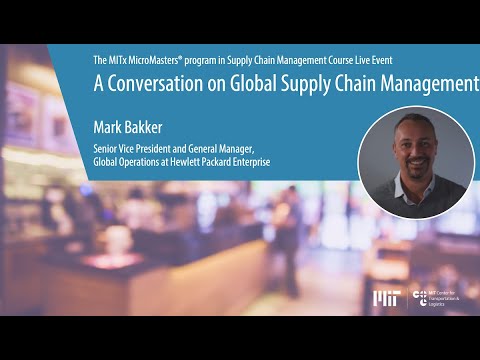
[Music] thank you for joining today's event please stand by for about one minute as we let people join the room and get situated we hope you enjoy today's presentation [Music] [Music] foreign all right welcome everyone uh thanks for joining our event today my name is alexis bateman and i'm a research scientist here at mit ctl and the director of mit sustainable supply chains and of course some of you will know me as the course lead for sc3x supply chain dynamics i am co-hosting this live event today with dr ima brea course lead of sc1x and
also a research scientist here at mit ctl today we're really fortunate to have mr mark backer senior vice president and general manager of global operations for hewlett packard and enterprises thank you so much for joining us today and welcome thank you and good morning good afternoon good evening maybe in some cases to everybody it's my pleasure to be here and i'm looking forward to uh you know this conversation great we're excited to get started and uh first you know as you know we like to keep this interactive and so we're going to be running some
polls as we uh go through the events so just watch out for it to pop up onto your screen and so we have let's get kick off our first poll um and and uh see why are you here today so just uh take a second to fill this out and and then we'll we'll get going so over to you emma great thanks alexis um for about the next five minutes mark will provide some context on hewlett-packard enterprises and some background about his role after that alexis and i will ask some questions we have prepared based
on questions we have received already from from some of you and the last 20 minutes will be saved for your questions so uh be ready to ask good questions use the webinar q a feature that you can find at the bottom of your screen to ask these questions and be sure your log with your name because we won't be reading any anonymous questions and just to reinforce what alexis said we will be sharing some polls uh during the event so be prepared to participate let's check the results on that paul alexis i think we have
like quite a few people have already responded so um why are you here today and so most of you are already working in the area of supply chain management 46 of all the participants which is wonderful i'm also happy that uh none of you had nothing else to do today so that is that is good that you guys are all very busy people and we appreciate that and i appreciate you sharing that time with us but uh yes definitely getting the practitioner and and um executive input uh is great to have to today some more
people are just yeah i just want to get inspired uh to take the next step in their careers because they want to move to supply chain to the supply chain space and work there in the future which is also great this is a great uh area to work in yep yep so thanks for sharing that and also i guess all of you guys know what hpe stands for so glad that that's uh already assumed here so um uh so we have um next on the agenda um mark yeah so mark would you like to kick
it off and introduce yourself and give a brief overview of hp yeah i certainly can um you know take a few minutes to uh to talk about that so um we start i think you introduced me hi everybody mark bucker um i lead global operations for hewlett packard enterprise hewlett packard enterprise is a you could call it a spin-off of the original hewlett-packard company founded in 1939 by bill hewlett and dave packard also considered as the founding fathers of silicon valley they founded the company in 1939 in palo alto california it's a small town small
town in the san francisco bay area about 30 minutes south of san francisco for those of you um you don't know where where that is and they founded it in a garage that garage still exists by the way it's it's considered a little bit of a monument in the silicon valley area as i said because it's considered the early start of silicon valley as a tech haven with lots of development and in that area as many of you may know still today there's lots of headquartered tech headquartered companies and not too far away stone throwaway
is google it's facebook apple has massive headquarters there just to name a few and um you know over the years there has been um you know lots of money made and lots of money put into venture capital private equity invested in startups and that's how you know silicon valley continue to grow and grow and grow um as i said companies existed in quite some time um company originally mostly known for its printing business hp deskjet laserjet printers known for its personal computing products notebooks laptops desktop products as well as server networking equipment and services around
that about five years ago almost six years ago the company went through a significant restructuring and separated itself in two pieces one piece is hp still considered hp which takes care of print and personal systems or pc clients and the other part hewlett packard enterprise which is focused on the enterprise side of products server business storage data management networking equipment and its associated services that's the area where i work and lead the global operations organization global operations is a combination of what is considered customer operations everything front end taking care of order management activities processing
orders invoicing orders fulfilling orders quoting pricing and so on and then there is what you could call classic supply chain activities a part of global operations and classic supply chain activities include planning everything around planning planning is everything we can talk more about that as we continue the dialogue but demand planning forecasting supply planning inventory planning included in there but also the manufacturing activities to bring a product to life fulfilling the product logistics engineering is included in that sourcing very important sourcing of parts um you know to build the product in the factories and so
true end-to-end supply chain activities fall under my responsibility and we are here to support the business we're here to support customers on the front end the customer operations fees we are here to support the business to be successful when they sell products you know we want to make sure that customers get their products you know delivered is the reality is if you sell what you do not deliver the company doesn't make any revenue or doesn't make any profit off of it because the customer doesn't pay for something he doesn't receive so it's fairly simple that
way critical role and so for those of you who are thinking about being a supply chain practitioner i can only recommend you to take it very serious and do it because it's the most exciting part of the business because you are in the middle of everything and touching every part of a company from a front end engaging with customers to being involved in manufacturing and sourcing supporting you know the p l performance of of a business and so on so if i haven't convinced you yet in about 50 minutes from now i it's my goal
to convince you that you should be considering a career in supply chain thank you mark thank you for the great introduction to hpe and also for the passionate uh defense of the supply chain management space which i i could not agree more that supply chain is so relevant for for the business and how it connects everything and how it's so so interesting to work in that space um so now let's let's dive into some questions and actually my first question is very much related to what you just said um in one of our courses the
c1x supplies in fundamentals the one i'm running um we just teach you know these fundamentals that you use daily at work and you just mentioned some of those forecasting inventory management transportation management so can you talk a little bit more about some of those applications and how they impact the top and bottom line of your business yeah um that's very exciting actually um we only have you know about an hour i can talk for days you know on these topics and how relevant and how important they are i said planning is everything and that truly
is the case not to you know to minimize marginalize you know the importance of other domains or functional areas in a supply chain environment but it starts with the plan um and and it's fairly simple demand you know customers you know are particularly in an enterprise environment customers are thinking about what they're going to spend their money on they have budgets to spend um and and what infrastructure or what investments are they going to make in the in the next year um and what is very challenging in the supply chain environment is to know early
enough what the demand is going to look like what are customers going to order from us and when you think about a tech product a whether it is a pc or a printer or you know in our case a server there is a lot of components that go in there there is memory chips there is processors there's motherboards there is a storage device hard disk drive or solid-state drives and network cards you know all those things you know make up a product and you need to know how many of those parts you need you need
where in your supply chain in your manufacturing network um and if you are wrong if you plan it wrongly so you do not have enough parts you get customer orders you know that you cannot fulfill within a certain period of time if you have too many parts at the end of a period you sit on inventory which has a value and that value sits on your balance sheet is a drag on your cash conversion cycle on your cash performance cash flow performance for the company which if you are a private company you may be able
to you know handle it depending on you know your financial statements and how much cash you actually have available but if you're a publicly traded company um you know stock stock listed you know that can be an influencer in the performance of your of your stock on on the stock exchange so um you know two things one is you know if you if you don't plan right you you have two evils which is one is you know your customers will not be happy with you because they place an order and you tell them well i
can only service you five months from now and the other way around is you know i have too much stuff your financial performance you know takes a hit so planning super important and it goes into a lot of detail so it's actually again you know for those of you who are interested in that a very fascinating data rich environment you know where data science data management analytics etc comes together with managing you know the physical world of parts and components you know in them in an environment so planning forecasting hugely important in the value chain
um you know as such i hope i answered that uh yeah that's a deeper or in another i can go like i said i can talk for hours on this this is great and actually you highlighted one point that we always we repeat over and over and over during our courses that in supply chains you always have to make these decisions that are trade-offs between having too much and having too little and just finding the right balance is very challenging but it's also like the way to go uh so thanks so much mark i think
that uh i think one um one important aspect of that as well is depending on you know the company the product and uh you know the characteristics of that um there's there's sometimes this this aspect of a perishable you know perishable you know is a term you know which goes both ways one is from a customer demand point of view customer demand can be perishable think about uh government spend you know government spend has a budget for the year and typically they have to spend it before a certain date and if they don't that budget
is gone because we've moved into the next year that's how you know that demand might be perishable so if you do not take the order fulfill the order it's gone it will not come back and so perishable the flip side is you know from a material point of view or inventory point of view some some products you know or some parts you know they can perish as well right they're no longer you know um you know current or especially when you go down you know pharma or you know food you know things things you know
and and then you have to write it off which you know is costing a lot of money right so um depending on what the product set is and so on those are things that become even even more important definitely thank you mark yeah that was super interesting definitely thinking about sort of some of the fundamentals we're teaching right now and how we're coming to some of those perspectives and how you can apply it in your situation and of course not that there's any right answer sometimes it's a juggle to trade off um so let's um
launch our second poll which is uh a fun hpe trivia so i wish i had a drawing but i don't so let's see which of you guys get it right so just uh i can see there's a pause on filling this out so that everyone's furiously googling this um so to see if you can get this right but while everyone responds um i know this is the the question and the elephant in the room of of the last year um you know given that you are running global supply chains and global operations you know how
have you seen kobe 19 and the disruptions you know not just government 19 but the disruptions of the course of the last year really um challenge and complicate global supply chain management and perhaps also how you've seen it um drive innovation uh in terms of what what has been happening over over that time period yeah you know in recent years in in particular supply chain disruptions you know have become you know a more common term um where um even you know nowadays you know the white house you know uh in the united states right starts
to talk about it which is a good thing we can you can go there if you like um but supply chain disruptions you know are yeah they're significant and i keep telling everybody they're becoming more more frequently and they're becoming bigger um i've been doing this for you know close to 20 years in the meantime and over those years i've seen various forms of disruptions with significant floods in in thailand you know that disrupted the hard disk um drive manufacturing all of hard drive manufacturing was basically concentrated in thailand uh earth earthquakes resulting in tsunamis
in japan japan is very much involved in you know component uh techno technological supply chain activity which which disrupted um uh seen volcano eruptions in iceland that you know created an ash cloud over you know western europe which disrupted you know air freight and um air freight is hugely important when you talk about logistics and transportation right the amount of goods that are being transported by air you know and if you don't do that your supply chain gets disrupted so they've seen many over the years but most of the time those are call it isolated
in one particular area i mean there's other examples of a factory a factory catching fire you know which reduces a significant amount of capacity uh globally but it's contained in one area the difference with last year is that the pandemic you know affected everything and everybody almost at the same time nobody spared and impacted you know from finished goods manufacturing facilities to component manufacturing facilities to logistics networks because of local authority restrictions on moving of people and goods even to the point of if we would be able to find parts build them and ship them
customers being closed because they shut down their offices and there's nobody to receive you know anything so from that perspective this the pandemic you know and i always say you know we we plan you know a good supply chain organization has you know a focus on business continuity planning and you know how do you react to disruptions and so on but typically it's a reactive activity you always review the latest event that happened and you adjust your plan accordingly what did we learn from this event and what do we need to adjust in our continuity
plan and so that's great but you know you never plan for the eventuality of the next and we don't know what the next one we know something is coming after the pandemic you know there is a new disruption coming the the actually the latest and the greatest already happened which was the vessel that got stuck in the suez canal you know which disrupted you know about 10 15 of global trade um some more affected than others but you know we were also focused on pandemic related stuff did anybody think about you know what what are
we gonna do if if a vessel gets stuck in the sewers canal uh and then there's plans you know that happen along the way so um i think it opened our eyes to even more global disruption happening at the same time i think you know from our perspective we look at that and say are we and the new buzzword in supply chain lingo but even ceos and um you know boards of companies now think about supply chain disruptions and they talk about resiliency and agility associated with that are we resilient um i think many of
us will say yeah we were resilient because if you think of it it took the world maybe one quarter three four months and after that you know we restarted global supply chains fairly quickly biggest disruption that everybody probably experienced was we ran out of toilet paper we did but it took us maybe a month two months three months to figure that one out and then you know we all had toilet paper again so we have a certain level of resiliency you know built in and i think considering the the magnitude of the pandemic we've proven
that we are resilient but are we resilient enough probably not because we want to be even faster we don't want three months four months you know before we feel that we have enough toilet paper you know on the shelves again right we want it to be a week two weeks or board members or ceos want it to not happen at all um now that is more difficult um resiliency agility in the supply chain environment comes with a cost you can you can duplicate your entire infrastructure say you know i have one factory you know and
the east and one factory in the west and they do the same thing uh if this one goes down you know um you know i have that one taking over but then you have a lot of idle capacity which has a lot of cost you have a lot of inventory sitting in both places which is very expensive um so there is this this right balance defined you know in terms of i want to be resilient and agile and agility is probably the more important aspect of this whole resiliency and disruption conversation which means you know
how fast can you switch how fast can you react and resolve the problem and and i think that's where we're learning a lot you know about the importance of data the importance of systems the importance of visibility on you know in your entire supply chain what is happening where where are your capacity constraints your your over capacity where are your parts your components do what you know what are your inventory levels how fast can i move you know inventory from a to b to to fix a you know a disruption um but also overall i
think this is where again you know supply chain becomes a fascinating space to work in the importance of it it solutions applications etc and the connection supply chain cannot function well without a proper architecture and a proper infrastructure of tools and systems and processes that provide the right level of visibility which you then can use for multiple reasons to react to the agility piece but also to be better in terms of the way you serve customers and so on so i think we we knew that already but the whole pandemic situation only amplified you know
the importance of that yeah now that's really interesting and thinking about uh one dimension that you mentioned was um now that the supply chain has you know in the clearing of shelves and those physical manifestations of that disruption it's escalated it to conversations that may not have existed before such as at the c-suite level or you know in the white house and of course my dad finally knows where the supply chain is most important of all those factors so i think uh you know do you see that that um recognition of the criticality of supply
chains changing the dynamic of the investment of resources to plan for for disruption or do you see some some change as a result of that no absolutely i think um the you know the importance of supply chain or recognition for supply chain as a critical business process if you want you know increased substantially increased you know during pandemic but actually it started already before um before the pandemic there's you know several events um that triggered um you know reactions from you know ceos and boards of companies etc which was more not so much pandemic related
but global trade and trade tension related the introduction of import duties or tariffs on products manufactured in china created a significant wave of you know reactions you know in particular in the united states uh companies you know a lot of companies headquartered in the united states u.s companies you know they have a significant portion of their business you know depending on the you know the revenue date they make in the united states if you know for many many years enjoyed zero zero import duties zero tariffs you know on their products all of a sudden you
know it became 15 25 and that's a huge impact right if you think of it you know all of a sudden you have 25 percent more cost um and and if you don't plan for it and consumers that buy those products not necessarily want to see prices go up by 25 percent you know because of it so that created you know already a lot more interest you know in the whole concept of supply chain um and other dimensions as well but um i pandemic again amplified some of that um what i'm seeing you know i
re as the global operations lead i report to the ceo i'm a member of the executive leadership team of the company um take it five years ago ten years ago you know the supply chain leader would probably be sitting in a level two level three part of the organization um uh doing more or less the same thing but the the impact um in multiple areas you know um has triggered the attention of of leadership teams and boards and so on and like you said including uh politics um and it's about you know the impact on
the financials of a company but also other things that become more and more relevant again resiliency agility disruptions related um you know important but also social environmental corporate responsibility aspects you know become more and more important we are seeing you know as one of those things is that corporate enterprise and even more so public sector so government agencies are making some of those aspects part of their rfq so when they when they tend their you know their business saying i'm interested in buying you know a ton of equipment from you know somebody but i want
to know you know is the product you are selling to me you know is there anything around conflict minerals or you know labor you know labor issues or you know what's your impact on the environment the way you manufacture stuff or the way you transport stuff you know i want to understand and it becomes a criteria for decision making more and more and because of that you know all of a sudden you know more people start paying attention you know to those things right so they have definitely seen you know that happen over the the
years i've been involved in this that yeah it becomes more of a conversation in the border and again like i said the the most recent um you know example of that is in the tech industry um there is a another issue happening right now which is the semiconductor shortage right or the chip shortage you read about in the news due to significantly more demand or you know recovery after pandemic happening faster than anybody anticipated but also more uh segments sectors you know needing those chips automotive you know cars nowadays you know have a lot more
technology in them than they used to maybe 10 15 20 years ago um smartphones you know keep growing people working from home studying from home all need laptops you know and more so than ever before we have um the the switch from 4g to 5g on smartphone on on telecom which comes with iot right internet of things there's more devices that can connect and they can talk in you know through mobile networks so more and more of those chips required now there is a shortage everybody is you know concerned about it automotive plans you know
are down they're not producing as many cars as they can they have uh millions of backlog because they're missing a 25 cent part that's it right a whole car cannot be finished because they're missing one 25 cent part um and so that has led to president biden you know doing a workshop two weeks ago with leaders from the tech industry to talk about how can we fix this problem what do where do we need to invest in more chip capacity we are too dependent on taiwan on china you know for you know chips and we
need to invest in the united states because we need to reduce the dependency so you see how you know supply chain as a concept as a as a practice becomes more and more relevant more important and enters you know a whole range of new discussions which is you know it's good it's exciting um living that shortage you know is not so exciting but you know like i said you know if it's not this one it will be something else you know in the years to come so yes absolutely no it was that was awesome really
awesome coverage is kind of how it's evolved over the last few years um so let's uh get back to our poll ema do you wanna no i just wanted to thank mark for the great uh no explanation and how like just he framed it so well like so in so many different sources for the disruptions and also the trade-offs again about like you have a budget how do you allocate that budget to prepare for an uncertain future so uh again we see that that concept of how to make those decisions uh let's go with the
poll so did people get it right so the the most popular answer was walkie talkies for the military so um you know that that is certainly one one potential i was hoping you guys were gonna pick personal computer for nasa uh but the actual answer is audio oscillator for disney uh so that was the original um first product 500 that was it so just some some fun shirt there thanks uh thanks for that great so uh let's continue with uh another question and i think this one connects very well with something you mentioned earlier mark
to go to kindergarten an appropriate id infrastructure for the supply chain to provide this end-to-end visibility that allows you to make better decisions and now like in the future too so all these eruptions we've seen in the past year and the other ones you mentioned right uh we've seen that that has driven innovation and also digital transformation in many companies so could you share a little bit how has hp innovated and build more resilience uh just through implementing more digital technologies yeah um super trendy uh supply chain disruptions resilience agility super trendy words right digital
transformation also very trendy uh trending words but you know very important um actually you know from the company perspective you look back at enterprise you know there is there is the two parts right the job i have you know that requires you know digital transformation and a solid architecture and infrastructure to support that but the company sells you know solutions you know that that help do digital transformation for companies right so um it's a it's a important you know on top of mind you know for me from multiple aspects um what have we done and
you know we hear uh you know others you know do that there's a lot of development in new systems and capabilities but first of all a lot of companies the backbone of any supply chain and operational environment is the erp system enterprise resource planning um and what you see typically is companies over the years you know they big companies large enterprise companies they go through growth they acquire other companies they you know they started off being you know a decentralized company you know and then they started centralizing and globalizing more resulting in you know having
10 15 20 different versions of erp which you know if you're the supply chain guy is a nightmare because that means you know you have 20 different versions you know of data to look at so what you want to do is try to get to one single instance of an erp but one single instance of an erp in a global company that runs billions and millions of dollars in transactions through it is also a challenge because then you get into performance issues and you know and so on right so but a lot has happened uh
over the years with large companies like sap and oracle um you know developing new state of the art you know 2021 2022 style solutions there so what we've done um as as have others you know migrated our erp system to the latest version it that's tricky because because i said it's the backbone of the company and so you know it's like open-heart surgery um you know what you do because you're running your shop and you're trying to put something new in place you still have lots of customers that place orders that need to be fulfilled
and so on right so um those are exciting things so that's one the other one is you know investments in the planning solutions um you know demand planning forecasting and so on investments there but the most i think the most impactful and um you know where there's a lot of development from a digital transformation um and investments in i.t infrastructure architecture is the capturing of data um the the the biggest challenge you know in a supply chain environment is that it's end-to-end right you go from customer demand which talks about a unit a sales guy
wants to talk dollars uh the manufacturing guy wants to talk units the sourcing guy wants to talk parts i don't care about how many and you know finished goods you know you're talking i need to know how many hard drives how many processors you know how many how many network cards i need to go buy and which ones um the logistics guy doesn't care about that he cares about kilos he cares about pallets he cares about containers you know ocean vessels air airplane ulds you know and and cost per kilogram you know on uplifting that
stuff right so so each of them have their own version unit of measure and each of them will generate tons of data and you know if you then have you know my logistics data in one database with those units of measures and i have my planning database and my manufacturing database how do i take all that stuff and aggregate it and make some sense out of it from an end to end left to right perspective right that's where there's a lot of opportunity a lot of investment as well visibility is hugely important and huge investments
creating networks whereby you hook up suppliers and logistics providers and manufacturing partners etc you hook them up into a network where all the data comes together and then you put this layer of data analytics data science and now we go into the artificial intelligence machine learning that can help a ton that's the next evolution if you think about digital transformation you know we're investing in from a demand planning forecasting point of view is that you know we have a lot of historical data what algorithms can we develop that will help us to be more accurate
in our forecasting at the component level um so that's you know where as i said in the beginning it becomes a really fascinating place because you know it combines you know a physical supply chain world with you know data the logical world and you know depending on what your passion is you know you can you can find you know jobs and interesting things to work on in in this environment easily if you're an engineer if you're a data scientist you're a business guy if you are a planner you know all these different you know aspects
you know are there but yeah digital transformation investment in tools um you know is is a big hype very important because as i said you know there's more and more data available and to manage all that data the right way and and take advantage of it and make better decisions along the supply chain it's going to be very helpful but it takes yeah a lot of work and you know education development of all of us on what we can do with it thanks mark yeah i think like digital transformation is a huge challenge and anyone
that is like trying to make it happen in their company know that it is but it's also necessary it's a step that everyone needs to take to be competitive and remain competitive i loved how you highlighted the role of supply chain as this connector and translator between all these different parts of the supply chain and even the company and also with external stakeholders and partners so i think that's uh that's a key element also in the digital transformation and a role that only supply team management can play yep that's right yeah i thought that was
really fascinating just kind of putting in sort of those you know sort of that singular objective of each of those roles right that they need to get their job done but really to make supply chain effective you have to look across all those functions and put them together and so just just the the huge um the significance of it was it was really amazing so you touched on it a little bit earlier but something near and dear to to my heart and and many uh on the line i'm sure is the shift to sustainability and
supply chain we've seen um clearly there's there's a push for sustainably def you know broadly in in business but the the centralization and strategic-ness of supply chain you know pushing or you know owning sustainability driving it across the value chain can you can you talk a little bit about how you you've seen that and what do you think it means for you know some of the professionals we have on the line yeah um sustainability um again has you know different aspects um you know there is a social you know aspect to it there's an environmental
aspect to it and i think those are equally important i i you know i engage with a fair amount of peers of mine you know practitioners in different companies even different industries you know from you know consumer goods pharmaceuticals tech and so on and everybody you know is is you know has one way or another we had a big session with unilever a couple of weeks ago where they and the chief supply chain officer of unilever talked about you know why and how they give you know sustainability uh how they've made that a big agenda
all the way up to the the the executive level um the boardroom level um it's just simply you know everybody realizes like us in you know in our daily lives we've become a lot more conscious about you know the impact we all have on uh the planet um and the role we can and need to play and there is you know one big truth which is in the supply chain environment supply chain has a huge impact um you know logistics manufacturing right depending on what you manufacture how you manufacture and any kind of emissions you
know that are there you know have an impact logistics co2 emissions you know the worst offender uh believe it or not to co2 emissions is ocean freight if you look at these ocean vessels you know and and you know what they produce um you know these big diesel engines you know in the transportation air freight you know similar so it's simply you know no denying that doing those things you know has an imp has co2 emissions are there which is bad for you know the environment and we need to be conscious about it um so
it's just simply the right thing to do to focus on it secondly as we all as consumers as human beings you know become more sensitive to this we are also human beings that have a professional life we work in companies we are people that become decision makers in these companies and as we become more sensitized and conscious about you know the impact we built that into the decision making process of what we buy when you you know we want to separate our waste we go to supermarkets and we look at the labels and things like
that right so that finds itself into procurement departments in companies and when they like i said when they tender so when you then run a business there's the two aspects you want to do what's right and secondly your customers are asking for it so it becomes an imperative by design um to to focus on and to do the right thing um that's mostly you know the most sensitivity is is around the environmental stuff but for us you know in the larger hp company and hewlett packard enterprise now for many years we've also been very concerned
about labor conditions um we set up you know together with our tech partners um you know in the industry think about apple and and so on set up huge factories in china uh where all these products are being manufactured millions of people work in there um and the conditions in some of these are manufacturing places that that have 250 500 000 people that live in the factory dorm um you know for food they go to work they're on the production line and at night they go to their dorm there is some entertainment they get their
food etc and so those conditions you know have been focused for us in the tech industry for sure right um because it's just the right thing to do we can't you know it's just not right you know when you know people are working 15-hour days and hardly get food hardly get breaks you know seven days a week you know are treated you know badly you know that's is just not right so we shouldn't let that happen um similar you know when you go into tech some of the components or raw material required to build components
you know printed circuit boards and all those integrated circuits etc those raw components where they come from it's a mining and so what are the conditions you know in mining are we sending little kids into mines you know the conflict mineral story in africa you know those are things that are hugely important um you know and it's hard because it goes deep into up you know upstream into your supply chain right it goes from raw material building this stuff and how do you control all those things um and you know um again you know it's
just the right thing to do um for the people the planet um around us uh and um we need to keep working it is it perfect i don't think it's perfect right i mean there's stuff happening every day all day in certain places from a you know people impact perspective in communities around the world from an environmental perspective it's a challenge right because we all want stuff you know to be built and we want it cheap and we want it fast and you know then it's easy to cut corners but it has an impact and
we need to be conscious about it and we need to find ways all of us together on how we solve that problem yeah that was that was really well said really interesting i think you know as as many uh explore sustainability right they they jump really to the to the environmental issues because they're easier to quantify they're the kind of uh very physical manifestation of you know sustainability as it was just that you know that was defined originally but as you so rightly said the social side is is critical to our supply chains and it's
sort of a hidden issue that people really don't understand about some of the the conditions that are deep in supply chains that are at the raw material phase of mining and production and um i think it was just really great to kind of look at the big picture of sustainability that it's all encompassing and and there is this aspect of um cost that comes into play you know one big problem where probably many of us are aware of is the amount of plastic in ocean right huge opportunity that provides a huge source of material and
to collect it right to to to melt it and to reuse it as resin you know becoming plastics you know for products and so on but it's cheaper you know to pump oil out of the ground you know make resin you know virgin resin as they call it you know and use that it's cheaper than to go out into the ocean collect all this stuff then you need to melt it you need to clean it because it's not you know virgins so colors you know things like that you know we've had this big debate in
the company in our printing division about you know building white printers and you know you take virgin plastic you can make it as white as white can be you use recycled plastic getting it white as white can be is practically impossible because there's contamination in it you know one way or another and the amount of time you would have to clean it and filter it and so on is just not practical not possible even but then the question becomes as consumers right how important is it that that printer is white as white can be or
is it okay if it's a little bit less white or is it okay you know to pay five dollars more so that we can collectively you know go out collect all these bottles you know plastic you know from the ocean etc recycle it and so on and those are you know the really fundamental societal questions you know that we we struggle with because many of us as consumers if you're not involved in it you just don't know you know some of these practicalities of it or the differences right the fact that we should you know
this is one big theme in supply chain that we need to do a lot more circular circular economy and you know really start reusing recycling materials in a much better way and to avoid having to keep pulling you know from the planet for for raw material yeah absolutely no no i thought it was really a good example to bring about the plastics and the choices um between obviously you know ocean plastics and the challenges of collection and extra cost there so i think that's a great way to frame it so um i think we're going
to uh run our last poll uh emma do you want to grab some questions to start with so we can get a few questions before we end i think i i can launch the ball okay okay it's out so one last poll uh for you guys uh and while you respond to that we can start like just speaking on some of your questions we have a bunch of questions 48 questions i don't think we have time to go through all of them but uh we'll pick up some uh i think these are they're really great
questions in this yes so um let's start with this one it's about um actually people i do choose to work in your team so what is one of the skills you consider most valuable for someone working in the supply chain um i think you know um there's multiple skills that i think are important um but uh i would say um nowadays depend no matter what domain whether it is planning or transportation or logistics or manufacturing engineering etc i think the um you know most important skill uh uh you know almost like curiosity focus on innovation
there's innovation you know possible in each and every one of these areas um innovation you know with a customer mindset right focused on what what will help our customers be more successful innovation and you know and process improvement um analytics you know we talked about data the abundance of available data and using that data to your advantage i think is is really um you know important skill digital transformation innovation of processes and and procedures um customer centricity very important um you know because that's why we're here um business acumen you know so there's you know
a lot of those things that that can help depending on what you do a technical stuff like i said you know even if you're an engineer working in a supply chain environment engineering products you know need to be introduced into a manufacturing environment it's quality you know we want to build products that have quality that you know customers can actually use and don't have to return or repair um so yeah depending on which domain there's plenty of interesting skills required and and apply okay so data literacy and like skills innovation and customer centric would be
like three of the pillars and then of course beyond that like many other skills thanks mark alexis would you like to pick another one yeah absolutely absolutely so darjah asks um i thought it was good you talked about resiliency so he's he's asking how the resilience how resiliency was implemented in your supply chain um during the pandemic and and now into the the new normal and sort of how are you how you're you're building resiliency in so we we did another um you know a round of working with our manufacturing facilities and partners and suppliers
on you know taking a look at their business continuity plans we revisited you know areas where we felt you know um you know we might be single sourced um you know from a component supply perspective so if you if you're single source then that one supplier has one factory and that one goes down right that that limits your ability to react so we looked at that um we looked at you know our system capabilities to transfer quickly from one location to another um because sometimes you know people think that it's easy you know or just
move manufacturing of product a to another location but if you don't have your system set up don't have your products set up in the system on what the bill of material is to go build you know that product you know you can move the material but the line worker doesn't know what to do with that order because he doesn't see it in his system right so we looked at things like that um we looked obviously again at all the locations around the world where they are and are they more susceptible to disruptions than than other
places um and those have been some of the things uh we we have been working on we're not done um there's more um because as i said you know this has opened our eyes to a whole new concept of disruptions when it happens everywhere at the same time as opposed to one single area you know that is affected so more more than that can and needs to be done yeah absolutely so going back to the to the digital transformation discussion that we started earlier uh people are wondering what is the approach or your approach are
to increase adherence to the new tools and processes that you're implementing to talk about the challenge of like bringing everyone together in the new erp system so how are you actually like uh incentivizing people to to make this move you know the the interesting so there's two parts to it one is um you know when you go through those mega transformation activities um and you implement new systems one of the important aspects of the process or the project itself is to switch off the old one uh so you know you you transition and you migrate
over to the new one and once you're done and everybody's on the new one you switch off the other one so that nobody can go back because that would be a disaster right if if you an erp system new orders need to come into your new erp system if they keep coming in the old one you know you i mean that that's you know complete chaos you know from there and forward so switching off um you know the the old system is one and the second one is the new systems new erps you know they're
they're designed and developed in a way most of the time that they guide the process right so the it's built on a business process or a business process is built on the systemic capabilities um and you know in some cases you know these things become a lot more rigorous so you know depending on what you do in the process you sometimes don't even have a choice to to you know to to follow you know how the new system will do these things and then it's change management with these big transformations management of change you know
having you know helping people to migrate over change is hard i mean we can talk for another hour about you know change management management exchange how do you do these big projects right and how do you get people um you know to adopt and adapt to to change you know that's it's it's hard it's really hard because um people are used to something and you know you give them something new or something different and to migrate over is always a challenge some people are you know more eager to do that kind of stuff some people
are more conservative and say you know i just like the way things are today and you need to manage that very carefully yeah absolutely that's really helpful so uh supply chains need to be agile and and people as well and so learning and upgrading all the time um so we'll just uh so we have 50 more questions but unfortunately we're coming down to the end um just to share the poll results what was more interesting what was the most part interesting part of today's session uh uh 46 said expanding my knowledge on global supply chain
management so certainly a really fascinating session on that and then 28 on understanding the constraints of operating during a crisis so clearly clearly top of mind for those that are operating the supply chain and are professionals from around the world and 12 learning more about the methods practitioners use so um really interesting there so we're at the hour um any final words for for our professionals mark where uh and as we sign off yeah i'm disappointed in this last poll to have only been able to convince eleven percent of the audience to consider their inheritance
in life uh but at the same time i think they're a convinced audience so that most of them maybe maybe a lot of them already are so then you know to have been able to expand the knowledge you know is probably a good achievement um though it was my pleasure to be here and cover some of these fascinating and interesting topics um i enjoy talking about these things i enjoy being a practitioner um and um you know continuing you know to do so and i hope it was helpful we so appreciate your time and yes
super fascinating for for us and all those that were on the line so uh really really thankful for your time and and everyone have a great day have a great day and thanks for serving your passion mark thank you