New York, Madison Avenue. An exceptional auction is taking place here this morning. Ladies and gentlemen, thank you for coming.
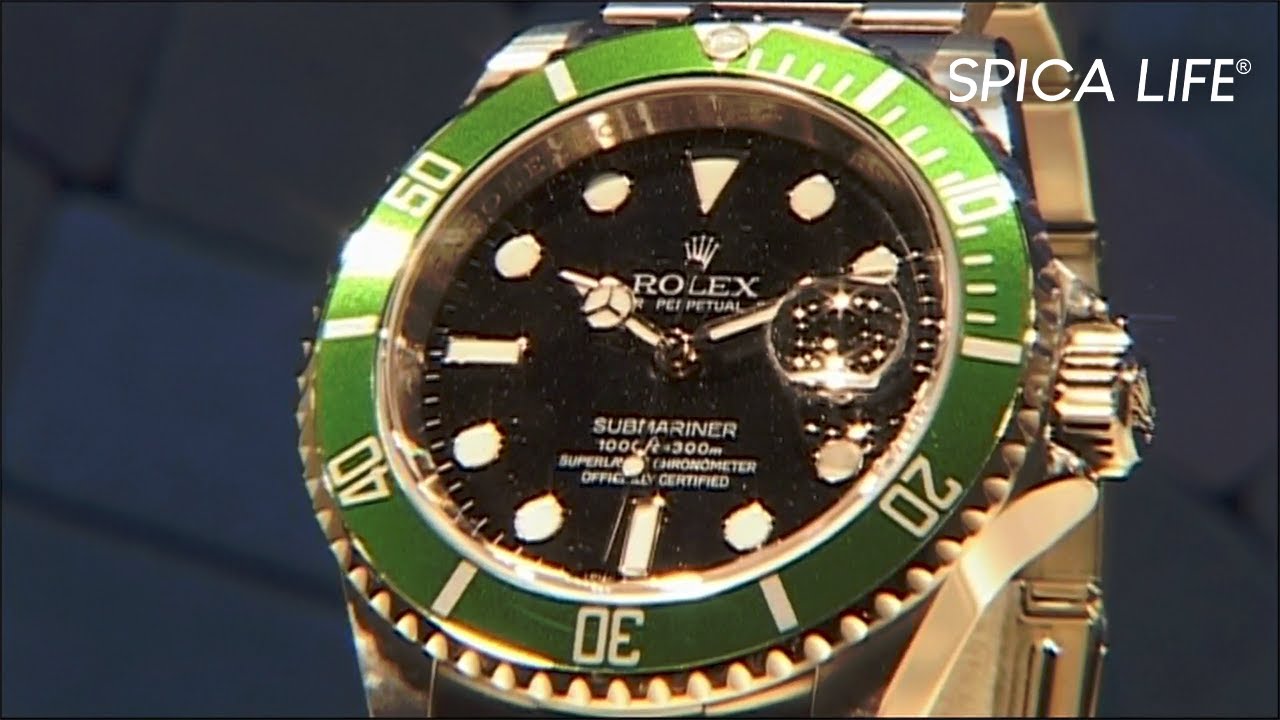
I can easily open the bidding at $70,000. 70,000 is the starting bid for this steel diver's watch. The 1000 Gauss model.
When it first came out, it was a flop. 50 years later, it's still in demand. These auctions are a must for collectors the world over.
Here, everyone has a Rolex, if not 2. Do you have 2 Rolexes on your wrist? Yes, I love Rolexes.
In the morning, it's hard to choose. We start at $70,000. Is there a bid in the room?
In a few seconds, the auctioneer's hammer will make someone happy. 75 000$, 80 000$, 85 000$ 90 000$. - The bidding turns heads.
- 130 000$. With you on the phone? 160 000$.
160 000$. Now, with Etienne? The price goes up to $160,000.
No ? No one at $170,000? It's always $160,000 once, $160,000 twice, sold for $160,000.
The vintage Rolex goes for $160,000, just over €100,000. That's 30 times the price of the brand's least expensive new watch, around €3,000. If auctions are going through the roof like this, it's because these watches are also the watches of the stars, and they're the stuff of dreams.
This man owns a whole collection of them. One of his favorites is a real spy watch. - How many Rolexes do you own?
- I've got 200. This one is the Big Crown. It's James Bond's watch.
It's exactly the watch Sean Connery wore in 1962 in James Bond vs. Doctor No, a winning cocktail of chic and action. The list of stars goes on and on: Bruce Willis, Michael Jackson, Arnold Schwarzenegger, Maradona, Fidel Castro and the Ché.
Even the Dalai Lama and Pope John Paul II. To each his own Rolex, the watch of the rich, famous and powerful. President Nicolas Sarkozy, too, has tried his hand at the star wrist, even if it meant being mocked.
Not everyone is Sean Connery. How much are brand lovers willing to invest to afford this dream piece? How did it become the watch par excellence?
Is the world's most copied brand threatened by counterfeiting? Here's the story of a watchmaker who, over the past 100 years, has completely revolutionized the world of watches. Mr Rolex, that's him.
In fact, the king of watches is Hans Wilsdorf. He's German. Orphaned at the age of 12, he moved to London in 1903 as a junior employee in a watch factory.
Wilsdorf had a genius for watchmaking and a taste for excellence. With some savings, he founded a small factory, not yet called Rolex, but Wilsdorf and Davis. At the time, there were many manufacturers, but only one model existed for men.
This was the gusset watch. Wilsdorf took another gamble. What if the watch moved from the pocket to the wrist?
To date, few manufacturers have dared to do this. Englishman James Dowling knows the history of Rolex inside out. For this specialist, offering men wristwatches was a revolution in the early 20th century.
What he decided to do was to focus production on wristwatches. At the time, they had only just appeared, but they were reserved for women. No man wore one.
A real man would wear a nice gousset watch with a big chain. It's a first-class funeral for the pocket watch. The men's wristwatch was a thunderbolt in the world of watchmaking, and it was cannon fire that did the rest.
Then came the 1914 war. It was the first war of the industrial era. Thousands upon thousands of combatants were on the move.
It was important to synchronize their actions. In the trenches, it's cold, muddy and dusty. Everyone wears bulky tunics, making it difficult to use gusseted watches.
Officers adopted the wristwatch, and no one could say that these were women's watches any more. Wristwatches on the wrists of poilus - an unexpected marketing coup. At the time, people were still talking about Wilsdorf watches, but that wasn't to last.
In the midst of war, a Germanic name meant bankruptcy. So Wilsdorf renamed his company. It was to be called Rolex.
He chose the term Rolex from the word rolling, and it gave the idea of movement. That's what a watch is. He also chose Rolex because it was a time when companies were becoming international.
Many companies chose short names of 4 or 5 letters that didn't mean anything, but sounded the same in all languages, like Kodak, for example. After the Great War, a second technological revolution gave Rolex a decisive lead over its competitors. James Dowling wears this revolution on his wrist.
I'm wearing a prototype Rolex Oyster from 1926. It's a beautiful watch, which is elegantly uncovered when the sleeve is rolled up. It's not showy, it's not ostentatious.
Oyster. The world's first completely waterproof watch. Patented in 1926, it still amazes specialists today.
Paris, 6th arrondissement. Antoine de Macedo knows every cog in this waterproof Rolex. His store is like a second-hand watch clinic.
For him, no other case is as resistant. It's the famous Oyster case. It really is, these days, certainly the best system that has been developed for water-resistant watches, obviously.
Let me put it in the machine. This machine is an underwater pressure simulator. - We're going to submerge it.
- A torture room for watches. Back in the day, in the 1930s, when it first came out, watchmakers had a display case with an aquarium, and the watches were displayed in the aquarium. It was quite astonishing.
Here it is again. There's no water inside, there's no mist, so the watch is waterproof. I'm going to show you the same thing with a watch that isn't waterproof.
We'll apply a little pressure. You can see the bubbles coming out, so the watch is leaking everywhere. Once out of the water, the result is clear.
Here, you can see the water drops inside the case back and in the movement. The Rolex is waterproof, and not just waterproof. With the Oyster case, its mechanism is now protected from all aggressions.
Dust and humidity are detrimental to the smooth running of a movement. By housing a movement in a perfectly waterproof case, it will run more smoothly. Maintenance will be much more spaced out.
Waterproof and water-resistant, Wilsdorf has a reliable watch. To promote it, he offered it to an English adventurer, Mercedes-Gleitze. This young secretary was one of the first women to attempt to swim the English Channel.
The year was October 1927. The young woman swam for 15 hours in icy water. She survived, and so did the watch.
The brand displays its triumph on the front page of the Daily Mail. It became synonymous with achievement and sales exploded in stores. But already, the indefatigable Wilsdorf was thinking of his next revolution: a watch with no constraints, no mechanism to wind every day.
So he invented a fully automatic watch, a miniature perpetual movement. Here's the giant version. The principle imagined by Rolex is exactly the same.
One of Rolex's great strengths was to make a watch that could be wound by kinetic movement. You have a rotor in the watch that translates each of your movements into a force that is multiplied by a gear and goes to the spring, thus avoiding the need to wind the watch. As a result, watches are often much more precise than those with manual winding.
As you can see, winding a watch has its charms, but automatism is a real revolution. It's an extremely logical movement. There's nothing superfluous.
For me, it's a real show beast. A beast of a watch that would leave its main competitors Omega, Breguet and Longines knocked out for many years to come. Place Vendôme, Paris, the Mecca of jewelry expertise.
Jean-Claude Sabrier is an international specialist in antique watches. For him, the genius of the Swiss brand is the automatic watch patent. That's how it locked everything up.
Rolex's strength lies in having been 10 years ahead of its competitors right from the start. Rolex took its patents very seriously. Practically, the 1931 Rolex patent protected it until 1941.
In 1941, there was a war, so it was over. There were no opportunities for competitors to develop. Omega didn't bring out its first self-winding watches until the 1950s.
Rolex had a 20-year head start anyway. After the Second World War, there was nothing new in Rolex cases, but Hans Wilsdorf was looking for a new coup. He invented the Explorer, a particularly robust watch designed for adventurers.
He decided to send it to the roof of the world. In 1953, mountaineer Edmund Hillary and his teammate Tensing Norgay set out to conquer Everest, a world first. With Rolex on their wrists, ice axes in their hands and crampons on their feet, the British team succeeded.
And so did the Swiss brand. The world's highest mountain, Everest, is conquered. The people of Nepal's capital, Kathmandu, gave the victorious team a triumphant welcome.
Their compatriot Sherpa Tensing, his rope-mate New Zealander Hillary and the other members of the expedition commanded by Colonel Hurt. The English were the first in history to conquer Everest. On the summit of Everest, Rolex also reached the height of its notoriety.
With all-out advertising campaigns for the Explorer, the public had to be convinced to buy the watch worn by mountaineer Hillary. For advertising executive Jacques Séguéla, this was a true stroke of genius. Having asserted his brand value, which is the constant search for the exceptional, he will only use celebrities to serve his brand, who express this constant search for the exceptional, because they have it in them.
In other words, this is a watch for people who take risks. It's a fashion for people who are active in life and can dive into the sea or climb into the clouds at any moment. Shortly after the roof of the world, the brand went on to tease the bottom of the seas.
In 1953, scientist Jacques Picard dived in a submarine with a prototype watch attached to the outside of the craft. 3000m below the surface, it set a new depth record. The brand immediately launched a consumer version of this prototype, water-resistant to 100m, called the Submariner.
The commercial impact was immediate. Even today, it's the star model in our catalog. In the clouds or in the depths of the abyss, each time, the Swiss manufacturer plays marketing with precision.
There's just one condition: to remain the watch of achievement. Almost 2 billion in sales, 800,000 watches sold last year - there are no official figures published by the brand, but the estimates are dizzying. To make these jewels.
Nearly 6,000 employees work with the utmost discretion. Who defines this strategy of secrecy? How does it protect itself from the competition?
Geneva, the safe city. This is as true for banks as it is for watches. This glass building is the Rolex House, an impregnable citadel.
It's off-limits to the public, and even more so to cameras. The curious are not welcome. I've got a couple of people doing a shot of the building.
Okay, yes, thank you. This is trespassing. It's private up to here.
- How far? - This is the outside. The cult of secrecy.
Even brand lovers are spurned. Such is the case of Osvaldo Patrizzi. It was he who set up the first Rolex antique auctions, but when he asked for the brand's support, he found the door closed.
The Swiss watchmaker completely snubbed him. I like their products, I don't like the way they run things, but I'm not a Rolex shareholder. I'm an outside observer.
Rolex is an exceptional product made by people who know how to do their job well, but who don't know how to communicate, except by spending millions on advertising. Getting into this factory is a real James Bond scenario. Rolex, champion of innovation, is also very imaginative when it comes to hiding.
Retinal print, fingerprint, access code. Exceptional security measures to cultivate secrecy, but also to protect a treasure. Indeed, to manufacture these watches, the Swiss brand is the largest consumer of gold after the United States.
An empire and a fortune held by owners who are also very mysterious. Who owns the Rolex shares? It's a foundation, so there isn't a real boss.
There are people in charge. There's the Heiniger family, after Wilsdorf, who took Rolex into their hands and run it. They're the big bosses today, but it's not their company.
The company belongs to a foundation. Here, I think Wilsdorf got it right. This is the foundation.
A few offices in an anonymous building. Here, as at the factory, silence. I can't give you information like that without knowing who you are.
Unfortunately, I can't find anything to tell you. Rolex is owned by a foundation, it says in its articles of association. In other words, Rolex is not listed on the stock exchange.
Nor is it listed in the Commercial Register. Originally, Hanz Wilsdorf wanted to protect his brand and his heirs from any takeover attempts. Today, according to Eric Pichet, financial analyst at the Paris Bourse, this privileged status is a formidable economic weapon.
The advantage is that you don't give any information to your competitors. As you know, in France, when you have a company, even if it's not listed, you have to file the accounts with the Trade Register, and the accounts can be consulted by anyone, including competitors - especially competitors, in fact. The fact that you don't give out any information about sales, dividends or strategy means that you're totally protected from competitors' indiscretions.
On the other hand, you can easily consult the data that your competitors are obliged by Swiss or French law to provide to their shareholders. This information is public. This gives you a comparative advantage over the others.
You don't say anything about your business, and you can watch what others are doing. Despite all these pitfalls, a brand gains ground and becomes a threatening competitor. It too is Swiss.
It's Omega. The expert Jean-Claude Sabrier observes this war between the 2 brands. It's being played out all the way to the Place Vendôme in Paris.
This is the future Rolex boutique. As you can see, it's not by chance that it's on Place Vendôme, one of Paris' prime locations. Are there competitors nearby?
Of course there are. All the watch brands are here. Just 50m away, you'll find Oméga.
This is the new Oméga boutique, which has just opened. To take on the brand with the crown, Oméga doesn't hesitate to use the same old recipes. In 1957, like Rolex, Omega created its ultimate watch, the Speedmaster.
With this model, it pulled off the coup of the 20th century. It was chosen by NASA to equip its astronauts and became the first watch to make the trip to the Moon. In 1995, like Rolex, Omega entered the spy market with James Bond.
Pierce Brosnan and Daniel Craig's Omega watches replaced Sean Connery's Submariner. Every time a new James Bond movie is released, Omega sales jump. A leap?
Yes, it's striking. Omega is gaining ground every day. - How come they can't catch up?
- You can't catch up in 10 years. Omega is a serious competitor, but the real threat, the founder of Rolex had never thought of it. It's counterfeiting.
It's the grain of sand that threatens to jam the perfectly oiled wheels of the brand. A specialist in vintage watches, Fabrice Gueroux has made the hunt for copies his hobby. He hears about fake Rolexes every day.
The first thing someone asks you when you take out a brand-new Rolex, go to a restaurant, have lunch with friends: "Is it real or fake? " It's the first question you're asked. That's the amazing thing.
You'd think there were as many counterfeit watches on the market as original ones. He bought his first Rolex on the Internet and went from surprise to surprise. All of a sudden, I saw watches going for $3,000, and the same model for $650 from someone else's instant purchase.
I said to myself: well, there's a problem. Little by little, I realized that there were quite a few counterfeits on the net. Let's find out.
Finding a fake watch on the Internet couldn't be easier. Just type the 5 letters of the brand into a search engine. At the top, the official Rolex site, so that's normal.
But just below the official site, the counterfeiters' sites. We enter the Ali Baba's cave of imitations. Over 450 models, all fake.
Here, you can choose by model: Daytona, Subariner, Sea-Dweller, Yacht-Master, GMT-Master, Explorer 1, Explorer 2, Day-Date, Datejust man, Datejust mid size. Submariners come in all price ranges. There are even models that don't exist, such as the brown model with white background.
We choose the steel Submariner. It's the special of the week. 229, 20 times cheaper than the real thing.
To order it online, we'll open an account. The temptation is great to order a second one. This time, we're targeting collector's watches.
These are watches that used to sell for between €5,000 and €100,000, so we're going to see what they have to offer. You have several models. We're going to look at the military model, which is Submariner 55-17.
It's a very rare watch, very hard to find, and today fetches between €10,000 and €15,000 depending on the condition of the watch. That's it, we're going to order this one too. Total of our purchases, a little over 300€ for a pair of Rolexes.
303€. In the blink of an eye, the order form is dispatched to China, the address of our counterfeiter. The contact in China calls.
Fabrice just has to pay the bill by mail. - I'll pay. - How long will it take to get our parcels?
About ten days. 6 days later, the order is already here. The counterfeit in quick service.
To unpack the package, Fabrice Gueroux goes to 2 other specialists in collector's watches. And then, surprise, in the envelope, no trace of watches, but a plastic toy. - We've got a toy, a plastic toy.
- I smell a scam. - Original. - A plastic toy, they said.
Can you believe it? But the tomcat is a Trojan horse, it hasn't given up all its secrets. In fact, you have to press a kind of screw.
- I don't believe it. - No kidding. - Incredible.
- Inside the toy. - There are 2 of them. - Yes, 2 watches.
- Nicely wrapped. - Is this what you ordered? Yes, there's the military one.
The look, it's really the look of a Rolex. It looks as real as the real thing. Time for the big comparison.
Fake watches versus real Rolexes. Here's the verdict. Which is the real thing?
Which is the fake? - It's pretty convincing though. - Which is real, which is fake?
It's the fake one, but it's ugly. Yes, but then you get into the detail. The cut of the bezel is different.
The real difference lies inside the case. In the bowels of the copy, a very cheap golden mechanism. - The movement costs €10.
- You can smell the poor quality. A neophyte is quickly fooled. Today, I buy a watch like that, put it up for sale on the Internet with box and paper, and sell it for €2,500.
A year later, she goes to the jeweller's, saying she's stopped or taken on water. She brings it in and is told: "Your watch is fake, it's over, it's finished. " Alongside the vulgar copies, there's another market just as dangerous for Rolex, that of adulterated second-hand parts that depreciate the watch's value.
Back to New York, to the collectors' mecca. Enthusiasts flock to have their jewels appraised. Among them, Peter Radcliffe.
He's worried today. He wonders if his watch is guaranteed 100% original. I have a feeling there's something wrong with the dial on this watch.
Has it been touched up? Can you take a look? Indeed, the dial has been reprinted.
Unfortunately, for this watch reference, it's the dial that counts. In the state this watch is in, the value drops to between $8,000 and $12,000. - No more than that?
- No, no more than that. Can I try to find an authentic dial to replace it? Yes, you can try.
I know there are some on the market, but those with good dials quote Sea-Dweller with double red lines will set you back between $15,000 and $20,000. - Just for the dial ? - Yes, just for the dial.
Quite a blow to Peter's morale. Fortunately, vulgar copies or tweaked authentic watches are not yet an absolute threat to the brand with the crown. James Dowling is convinced.
The world of Rolex is like a small family. Every event is an opportunity for a great reunion. For him, this watch remains a sure bet in the event of a hard blow.
The Rolex is a universal currency. There's an old saying that if one day you find yourself on the wrong side of the front line with gold coins or a Rolex in your pocket, you'll always come out ahead by exchanging them for a roof over your head, food or a car. I'm opening the auction with this $150,000 lot.
In the world of Rolex, a roof is a castle, food is caviar, and a car is a Rolls-Royce. 190 000$. 200,000 now.
Sold. I bought 14 watches for $1 million, half for business, half for my collection. 160 000$, 170 000$, 190 000 $.
Sold. My opinion is that the market is completely nuts. 200,000 for the Sea-Dweller prototype.
200,000 once, twice, sold for $200,000. I have the watch and there are very few of them. If anyone's interested, they'll pay whatever I ask.
In 10 years' time, how much will the latest addition to the family sell for? The Deepsea, the watch of extremes, waterproof to almost 4000m underwater, where no diver will ever go, but never mind. Rolex is also a dream at over €7,000 for this model.
- Sold at - A Rolex auction is always a jackpot. Nearly €6 million today, certainly much more next time, as the value of certain models increases by 5% per month.