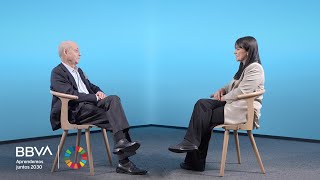
hello hello Dr wallinger Roberts my name is Monica zagiva I am an expert in mindfulness and personal development and I am delighted to be here with you today to talk about a really important issue here which is happiness well I'm very glad to be here too thank you for having me [Music] study that you have started in in many decades ago is the longest study on human behavior and happiness can you explain to us a little bit more about it yes I am actually the fourth director of the study it was started in 1938 and
it began as two separate research studies and the studies were not aware of each other both started at Harvard one study was a study of Harvard College undergraduate students 19 year old young men who were chosen by their professors as fine upstanding examples of manhood and it was meant to be a study of uh how people progress from adolescents into young adulthood it was meant to be a study of normal young adult development now we smile at this because if you want to study normal young adult development you don't just restrict yourself to white males
from Harvard University but at that time that's what they did and it was meant to be a study of thriving at the same time at Harvard Law School a law professor Sheldon Gluck and his spouse a social worker named Eleanor Gluck were interested in juvenile delinquency they were interested in particularly how some children born into very difficult circumstances very troubled Families how those children managed to stay out of trouble managed to stay on good developmental paths so again it was a study of thriving but it was a study of very disadvantaged young people in it
and then my predecessor George Valiant put these two studies together so we had one very disadvantaged group one very privileged group but what was unusual about the studies at the time was that they were not studies of what goes wrong most research is on illness right and and problems in human development so that we can help people who have those problems this was a study of what predicts who's going to thrive in life and then eventually we brought in all these young men's Partners their spouses and now we've brought in their children so we have
more than half women in the study and over 2 000 people 724 families all together and we're now in our 85th year it's the longest study of the same families that's ever been done in the history of science what we found when we were looking at the predictors of what helps people live longer healthier lives and happier lives we found something that surprised us which is that good warm connections with other people actually make us happier yes that's not a surprise but they also keep us healthier and by contrast people who are lonely people who
are more socially isolated develop the diseases of Aging earlier and they live shorter lives than people who are not lonely and who have good social connections in the beginning we didn't believe our own data we thought how could this be like it it makes sense that we would be happier if we have warmer relationships but how could warmer relationships predict that we would be less likely to develop coronary artery disease or arthritis or type 2 diabetes how could that be possible and then many other studies began to find the same thing and that's important because
no single study can itself prove finding like this that we need many studies to point at the same thing and then we can have confidence that this is a scientific truth and now it's a very well established finding that good relationships actually promote physical Health and Longevity so then how does that work we've been spending the last 10 years in our laboratory trying to understand how that works and the best hypothesis we have is that relationships protect us from chronic stress we know that life is always bringing stressful events right I mean you know we're
having a nice conversation now but an hour from now something stressful may happen to me and I'll be upset and my body will change my body goes into what we call fight or flight mode where the heart rate increases I might start to sweat I might start to breathe more quickly and what we know is that then circulating stress hormones increase inflammation increases but that's all normal it's good for the body to be able to do that to to deal with stress but then the body is meant to return to equilibrium when the stressor is
removed and you've probably had the experience that when something upsetting happens but you can go home and talk to a friend or if I can go home and complain to my wife I can literally feel my body calm down and that's what's supposed to happen we believe that what happens with lonely people with isolated people is that they never quite return to their equilibrium to their Baseline that instead they're in a kind of low-level fight or flight mode much of the time so they have higher levels of stress hormones higher levels of chronic inflammation and
those things break down body systems over time so that's how relationships could affect our coronary arteries and they could affect our joints for example um and so it's a it's a way that relationships help us regulate negative emotions perverts could you give us some tools for people to strengthen their relationships regardless of their personality it's very important for us to talk about this because we're all on a spectrum from being very shy very introverted to being extroverted and being shy is perfectly normal and just fine uh in our culture particularly I know in the United
States we uh prioritize extroversion we think extraversion is great you know but actually there's nothing special about being extroverted and and there are many good things about being shy what we know is that introverts need fewer people in their lives to feel content to feel happy that they get their energy they they get refreshed from being alone from having a lot of alone time extroverts get their energy from other people so they need more people in their lives but neither one is normal or abnormal so what we believe is that whether you're introverted or extroverted
everybody needs at least one or two relationships that we call securely attached relationships where people feel like there's someone there who they can trust to call on to to be there for them with a for um in our study with our participants we asked them at one point who could you call in the middle of the night if you were sick or scared and list all the people you could call and most of our participants had several people they could list but some of our participants couldn't list anyone and a few of those participants were
married and they didn't list anyone that they could call in the middle of the night we believe that everybody whether you're shy or a real party animal that everybody needs one or two relationships that are secure safe relationships like that and then the rest depends on you your personality your temperament what you need so shy people may simply want to cultivate and pay close attention to a few people and maintaining those relationships people who are more extroverted may want to join more clubs may want to be in situations where there are more people around so
for example I mean I don't like loud noisy clubs with very loud music and lots of dancing but my younger son loves those clubs and he goes to those clubs all the time in fact he loves being in Madrid he loves visiting Madrid because there are lots of those clubs in Madrid and so we're very different temperamentally and that's that's fine uh that's one of the things that makes life interesting and makes our relationships interesting could you give us give us that everybody could use that could be practical for everybody that is watching us today
yes one of the things that we found in our research was that the people who were most active in maintaining relationships were the happiest and they had the best relationships so for example when I was in my 20s I thought I don't have to do anything to promote friendships my friends are my friends they'll always be my friends I don't have to be active and yet what we saw was that many people would have good relationships that would wither away that would disappear not because there was any problem in the relationship but because they weren't
active so what we noticed was that the people who maintained good relationships would take small actions very often small actions like reaching out to a friend so sending a text to a friend saying I just wanted to say hello or calling a friend on the telephone sending an email um particularly making a time to take a walk or to have coffee or to go to a football game together anything but just to make plans regularly with the people who you want to have in your life on a regular basis the other thing that's very helpful
is to establish routines with just a few people so for example I wrote the book The Good Life with my co-author Mark Schultz Mark and I have been collaborators for over 25 years but we've also been friends so every Friday at noon we have a telephone call and we talk about our research and we do writing together uh we wrote chapters of the book while on the telephone with each other but at the same time we talk about our families we talk about our lives we talk about our health all of that and so we
stay current with each other's lives having that Weekly phone call is very important it means that one of us has to cancel if we're not going to have that phone call and that means we talk to each other every week no matter what having small routines like that perhaps it it's with one of your siblings perhaps it's with one of your children perhaps it's with your spouse the other thing we find is that in relationships that can be taken for granted that can get stale like a relationship with a spouse with a partner it's very
helpful to have regular time just to do nothing but enjoy each other so an example when we had young children we got advice from a friend who said you should have a regular night when you go out on a date just you too and hire a babysitter have the babysitter come regularly so every Thursday night the babysitter would arrive at 6 pm and we had to cancel the babysitter if we weren't going to go out so we always went even if we just went to the mall to buy diapers even we would go out to
dinner sometimes we would go see a film but we would do something and it would be a chance to to talk to each other to catch up on our lives because when you're raising small children often it's a time when you are you are just a tag team where all you do is you know you make dinner and I'll give them the baths and you know you don't have time to catch up on how we are together as a couple so that's another example of setting regular times to do something with the people you most
care about the other thing we know is that um doing activities with other people is a good way to cultivate new relationships so let's say I'm someone who wishes that I had more friends and I feel more alone than I than I wish I felt that research tells us that one of the easiest way to make ways to make new relationships is to do an activity that we care about something we love or enjoy or something we're passionate about but to do it alongside other people so we see the same people regularly over and over
again so it might be that we volunteer for a cause like a food pantry or we volunteer for political action to work against climate change or We join a gardening club or We join a football club could be anything that we enjoy and as long as we're doing it alongside other people it means that we have a natural subject for conversation because we're both doing something we enjoy and that turns out to be one of the easiest ways to make new relationships the other thing that often helps for Lonely People is to be of service
to someone else so volunteering your time volunteering your energy is a very good way to first of all to feel useful and to also feel like people value you again it could be tutoring a child who's having difficulty with reading it could be teaching people your language the language that you know so well but that someone else is trying to learn so again being of service is a way to make us feel useful and also to make us feel needed by other people and that's a good way to combat loneliness another tip that I would
have is to talk to people who you don't know talk to strangers um what we find is that people often make New relationships just by striking up a conversation in a coffee shop or at the gym um there was a study of people taking rides on a commuter train in the city of Chicago and they had two groups of people and they have signed one group of people who were going to take the train to work to just do what they normally did you know so it might be listening to music it might be looking
at the news on your phone could be anything reading and then they they assigned the other group to talk to a stranger when they took the ride on the train and they asked people how much do you think you're going to enjoy this when you take this train ride and the people who were going to talk to a stranger thought that they were not going to enjoy it afterwards they asked everybody how much did you enjoy this train ride and the people who talk to a stranger were much happier than the people who just did
what they normally did on the train and so what it shows us is that we're not so good at predicting what's going to make us happy and that talking to strangers striking up conversations with new people even though it can feel a little scary to take that risk it usually makes us happy and makes us happier than we were when we just kept to ourselves you started the research land a long time ago and I would like to know if the goals that those people our great grandparents grandparents those people started you started doing the
research when they were they had gone through World War II and the post-war period do they goals differ from the goals that people have now it's such an interesting question it's not exactly possible to compare our goals now but I do know that the people in that generation the World War II generation you know they grew up they were children during the Great Depression and then many of them went to the war and so terrible traumas um that they experienced many of them were much more concerned about providing well for their families right because they
had known poverty they had known that that your Economic Security could disappear in a moment or that your your safety in the world could disappear in a moment if someone declares war on your country right um so many of them were more concerned with living a good life with living a life that had meaning and purpose and they were concerned about being able to provide well for their families and that's still the case those goals are still there for many people today uh but people talk more about self-actualization they talk more about developing them their
full potential as individuals now there's much more emphasis at least in Western culture on the individual and I think in in the earlier generation particularly the World War II generation there was more emphasis on society and on social well-being uh and social good I think now young people Millennials and particularly gen Z are being are more concerned again with Collective well-being particularly because of climate change my sons say to me your generation has messed everything up you know you've ruined the climate and they they're very concerned with the health of the planet and the health
of societies in a way that I think my generation the baby boomer generation has not been what about um when you have asked young people and what where their goals now I think those goals are very different from what you're saying now yeah well there was a survey the first survey in 2007 of many thousands of uh Millennials people in their 20s and the the question was what are your major life goals and in that survey over 80 percent said that they wanted to become wealthy not just you know have Economic Security but be wealthy
and over half of them said they wanted to become famous which is incredible I mean that's such a different aspiration um who wants I mean being famous is a strange goal and then another group said that they wanted to achieve a lot at work and then they went back to these same people in 2017 so 10 years later and asked the same question and still fewer wanted to become famous but just as many wanted wealth and wanted to achieve a great deal at work so those same goals were there even though in the world happiness
report that the UN publishes every year those are not some of the most commonly expressed goals that people have for having a good life you know the most commonly expressed goals around the world are more about social support about access to good health care about freedom to make major life choices those those are the things that people say they need to have a good life not wealth and fame um so you're right the these were goals that surprised many of us when reading about them my hope is that that's changing again as these world problems
are becoming more evident and the need for more communal effort to solve our biggest problems going back to our recurring time or continuing with that now it seems that there is a growing problem in our society and it has to do with the digital world and social media it seems that instead of bringing us together is pushing us apart what can you tell us about it it's a great concern and now they're doing a lot of research on this on how interaction in the digital world is affecting us as humans and we do know some
there's much more research that we need to do but the early research suggests that how we interact with digital media makes a big difference in whether our will well-being increases or decreases so what they find is that when we actively use social media to connect with other people we get happier our sense of well-being increases I'll give you an example one of my friends during the pandemic during the lockdown he reconnected with his friends from grade school from primary school from when he was eight years old and he and his friends have started having coffee
every Sunday morning on zoom and they have now they have coffee and they talk about their childhoods and they have such a good time and what he finds is that using social media in this case Facebook makes him happier but we also find that when we consume social media passively so when we look at other people's Facebook or Instagram feeds um that we get less happy because what happens is that that we're all editing Our Lives we're all curating our lives on social media so you know I don't post the pictures when I wake up
in the morning unhappy or depressed or thinking that my life is meaningless right I don't post those pictures right I only post the pictures when I'm on a you know on a beautiful beach or when I'm in Madrid you know having a nice time right um and the problem with that is that even though most of us know that these lives are not the whole truth it's still possible to get the feeling that everybody else is having a good life and everybody else has figured life out except me at one of my teachers once used
an expression that I find very helpful he said we are always comparing our insides to other people's outsides we're always comparing the sort of changeability and messiness of how I feel with what other people look like right um and so when we passively consume somebody else's Instagram feeds it makes us compare ourselves negatively to other people and so our self-esteem gets lower we get more depressed we get more anxious but if we can be more active both in how we use social media and when we separate ourselves from the digital world when we turn off
our screens that when we do both of those we are likely to enhance our well-being so what would you recommend people what people can do in these situations when you start looking at the feed and you go there for five minutes you are queuing you're on a line waiting for something and it's like okay I'm just going to have a look at Instagram and then you stay there for half an hour two hours yeah yeah what would you recommend people to do well two things one is look at your different activities online so spend 10
minutes 15 minutes doing something you normally do online maybe it's looking at a particular social media website and then notice does it make you feel more energetic does it make you feel more optimistic or does it make you feel more self-conscious or more depressed or more left out and if it makes you feel more left out more down turn away from that activity turn away from that platform and turn toward the platforms turn toward the activities online that make you feel more energetic similarly you know if we think about the the voices that we listen
to the influencers the the politicians the celebrities think about you know take notice of the people who make you feel more hopeful about life more open to the world more open to other people and then notice the people who make you feel more Angry more afraid more closed off and turn away from those people who make you feel more closed off from the world that it's possible to to really be more active in choosing where we direct our attention the difficulty is that the software is designed to grab our attention and hold it and not
let us go because people make more money when they hold our attention right so the path of least resistance is to stay hooked on a particular piece of software on a particular platform and so we need to be more active and more intentional in directing our attention and that's the the strongest recommendation I would give to people to pay very close attention to that and to where you want to devote your very precious attention so be more mindful about what you are doing and how you're feeling while you are doing it exactly problem that we
have in our society is the loneliness that people feel when they retire or the loneliness of older people how could this be alleviated it's very difficult for older people because many older people face losses you know we we lose Partners we lose friends one of the biggest complaints I hear from older people is everyone is dying all my friends are dying my family's dying and and loss is of course a natural part of getting older and so what we need to do is try to be more active in bringing in new friends in making new
friends new relationships including if we can relationships with younger people so they have programs now at least in the U.S where they have they they have Partnerships they have a buddy system we call it between an older person and a preschool child a four-year-old and the older person reads to the four-year-old and everybody loves it the the children love it and the older people love it and so that's one way that older people can become connected with people in different ages similarly older people can mentor younger people younger workers for example like many younger workers
are hungry for mentorship and want to know what how did you make it through this difficult time or or how did you do this job and how did you balance your personal life with your work life there's so many things that older people have learned that younger people want to know and so there are programs where where older people can volunteer to Mentor younger people similarly we can reach out to older people particularly older people who who can't leave their homes some older people are physically unable to get out and so it's harder for them
to connect with other people and for those people there are programs where they can be connected either digitally virtually with other people but also there can be home visits where people come and and spend time with older adults all of this involves ways to alleviate loneliness one of the things that's of concern in more traditional societies is that those traditional family structures are breaking down those those structures where older people have definite roles so for example in China it's absolutely the norm for grandparents to raise their grandchildren while the middle group the children go off
to work and now with younger people in China leaving their Villages and going to the big cities because there's Economic Opportunity the older people lose their role raising children and the children then don't have anyone to help raise the grandchildren so the breakdown of these kind of traditional social patterns has become a source of grave concern and it increases loneliness among older adults the same is occurring for example in India and there's a lot of concern about this there and nowadays there's a lot of talk about toxic relationships I would like to focus more on
what it what does it make a good relationship a healthy and satisfying relationship can you tell us more about them well we know that we get many different kinds of things from relationships and and that's important because it's easy to imagine that we're supposed to get everything from one relationship for example a romantic relationship and that's not true because there's such a variety in what relationships give us so certainly they get give us a sense of closeness it's very important to have the feeling that I can confide in someone that I can tell them my
worries that I can get advice when I'm concerned about something in my life or concerned about someone in my family or concerned about my job so having a safe place and a trusted person to share my concerns with is very useful um but relationships give us so many more things I have some relationships that are just for fun um we do playful things together we go see a football match together or we uh I have friends who I ride bicycles with I uh you know I have friends who who I go out for food with
because we love special foods and so we go to nice restaurants in Boston you know so there are many different things that we get in terms of fun in terms of activities I have some friends who are my intellectual friends and we we talk about ideas and we debate um uh friends often give us a sense of identity of who we are so the people I'm with often make me feel like I belong like I belong to a certain Community to a certain group and that's very important for all of us all of us need
to feel that we belong um in addition there are friends who challenge us so that I have some friends who will tell me the truth even when it's not easy for me to hear the truth and I appreciate that and sometimes it hurts a little bit but so we want friends who will tell us what they really think not every friend needs to do that for us but it's very helpful to have at least one or two people in the world who will tell us the truth and tell us things that no one else will
tell us um also casual relationships are important so casual friendships turn out to be quite useful uh many times it's not our close relationships that turn out to be a value but people who we hardly know so they did a study a people looking for a next job and what they found was that you're more likely to find your next job through a casual acquaintance than you are to find it through a close friend and that's because casual acquaintances often belong to very different networks very different communities than our closest friends so casual relationships are
very good for us and that includes the person we talked to in the morning in the coffee shop the person who delivers our mail the person at the grocery store so all of this is a way of saying that relationships bring us many different kinds of positive benefits so we don't talk in the book a lot about toxic relationships because one of the things that we know is that every relationship that's important has difficulty or at least we have differences with people there's always some difference or some conflict with somebody who's important you know a
sibling a spouse a good friend and so having disagreements is normal and what's important is to figure out ways to work on disagreements to come through disagreements so that nobody feels like they're the loser or the winner but that we come we come away from disagreements feeling like we've both understood each other better and when we do that the relationship usually gets stronger so one of the things that we talk about in the book is the importance of trying to work on relationships and work out different difficulties but when we try to work on difficulties
and it's not possible that's often when we're in a relationship that just makes us feel bad that sometimes we call it a toxic relationship and some of those relationships we need to end we need to step away from particularly relationships where there's violence where there's fear where there's intimidation those are relationships where it's very important to to get to a place of safety usually by finding refuge and and stepping away from those toxic relationships but the important thing is to try to work out difficulties in relationships before we give up on them Robert many um
in life there are many things that lie outside of our control and sometimes those things that happen do affect us and there are many people out there that think that because of their circumstances or their limitations they cannot do much about their own happiness what can you say about this there's actually some good science about this there was a study by a psychologist named Sonia lubemiersky and she wanted to estimate how much of our happiness is under our control and so she took a lot of data from many different studies and in her estimation about
50 percent of our happiness of our mood is genetically influenced it's inborn temperament so about 50 percent is not under our control and we all know people who are like always cheerful no matter what even when terrible things happen and we know other people who are always gloomy even when everything is fine right and that's just inborn temperament so lubemirsky estimates that about half of our happiness is that inborn temperament and she estimates that about 10 percent of our happiness is due to our particular life circumstances right now so if I'm in a very bad
situation and then about 40 percent of our happiness is under our control we can improve that and that's important because 40 is a large amount yes and so we can do all kinds of things to build happier lives um but there is this kind of Bedrock of mood of temperament of Personality that we're all born with um we sometimes call it a uh a happiness set point it's almost like an inclination right yeah in your study you ask participants at the end of their lives what do they regret the most yeah can you share that
with us today when our original participants got to be about age 80 . we we said look back on your life and tell us what do you regret the most what are you proudest of and what the men regretted most often was spending too much time at work and not spending enough time with the people they cared about uh you know and it's a cliche you know nobody on their deathbed ever wished that they had spent more time at the office right and it's a cliche for a reason because many people feel this way many
of the women in our study said that they most regretted that they had spent so much time worrying about what other people thought what other people's opinions of them other people's opinions about what was right and wrong and that they wish that they had lived more authentic lives but when we asked people what they were proudest of almost everyone mentioned their relationships so they mentioned you know I was a good boss I was a good parent I was a good friend I was a good Mentor almost nobody said you know I won the Nobel Prize
or I became a billionaire or and we had many famous rich people right but nobody mentioned those things they mentioned the quality of their relationships so I guess when we get to the end of our Lives we get to be closer to what really matters yeah yeah I would like to ask you a more personal question what do you do in your life to feel more fulfilled to feel happier I am a Zen practitioner so I meditate and I find that very helpful it does help me feel happier more grounded um I spend a lot
of time with people uh like I've I've had to learn from my own research how important it is to spend time with people and so now I really make an effort to connect to make sure I connect with my close friends um I spend time in nature I find that spending time Outdoors especially if I meditate Outdoors it's really helpful I mean spending time just looking at a tree for 10 minutes is a wonderful experience if you really give your full attention to that tree you see so much we're watching birds I mean it's incredible
so those are some of the things that make me happiest now and I really like travel actually I've loved coming to Madrid um my wife and I both really enjoy seeing new places meeting people that kind of thing remember besides being a psychiatrist a researcher a professor you're also as an teacher according to Zen where things are conducive to having a good life according to Zen the good life is being awake in the present moment it's paying attention to whatever is here right now in the present not worrying about the future not worrying about the
past just being here and being present for whatever comes up and that according to Zen is nirvana that is Enlightenment nothing fancier than that but it's also very difficult yes it is difficult so so what would you give like some advice to people to to do that more often because this is something that is very difficult in our society where there is so much distraction and everything is um fighting for our attention how would you do that yeah well meditation is not something that everybody should do so for example my wife has no interest in
meditation she loves the fact that I'm a meditator and she supports me in doing it she says that it makes me a much better listener and it makes me a better husband but she has no interest but she loves music and she loses herself in playing the piano in singing and so that is the place where she finds a kind of Engagement with the present moment and what I think everyone should find if they can is something that allows them to be very present in the moment sometimes we call it a state of flow and
that it could be skiing down a ski slope it could be working in a garden it it could be any number of things and it's that experience where you're just in the activity and time seems to pass by without your even being aware of it and that's that state of absorption we call it that um that many people can find some of us find it in meditation but you don't have to meditate to find it there are many ways to find it I am very curious about something it's Robert how open are options such as
Harvard about meditation and spirituality I know that in the past for example Daniel Goldman or Richard Davidson had to hide that part of themselves or randas had to leave quit teaching there all together has this changed nowadays in the last few years it has definitely changed when I started my zen practice I kept it hidden I was afraid that no one would take me seriously as a scientist if they thought I had this spiritual practice but what's clear now is first of all we realize that spiritual uh life is a very helpful contributor to our
well-being right and so for some of us not for everyone many people don't feel the need for a spiritual life but some of us do many of us do we also know from good scientific research that spiritual practices help many people they are good for our physical health they're good for our Mental Health so in that sense there's also scientific evidence that spiritual practices matter in the world and I think for that reason there's less Prejudice in the academic world for example in Harvard prejudice against spirituality and religion and what I know now is that
I've learned that when I ask my patients so I work with patients every day in Psychotherapy when I ask my patients about their spiritual lives first of all they're relieved because they don't know if it's okay to talk about that in Psychotherapy and then they open up and they want to talk about it and they want to talk about their beliefs and about how they practice what they practice and so what I find is that the more open I am about that I don't I don't tell my patients all the details about my spiritual practice
but I'm very clear that I'm a Zen practitioner and I think for that reason many people feel comfortable talking to me about their religion or their spirituality Robert has been such a pleasure to be here with you and speaking about all these very interesting topics thank you so much well thank you it's been a really interesting interview foreign