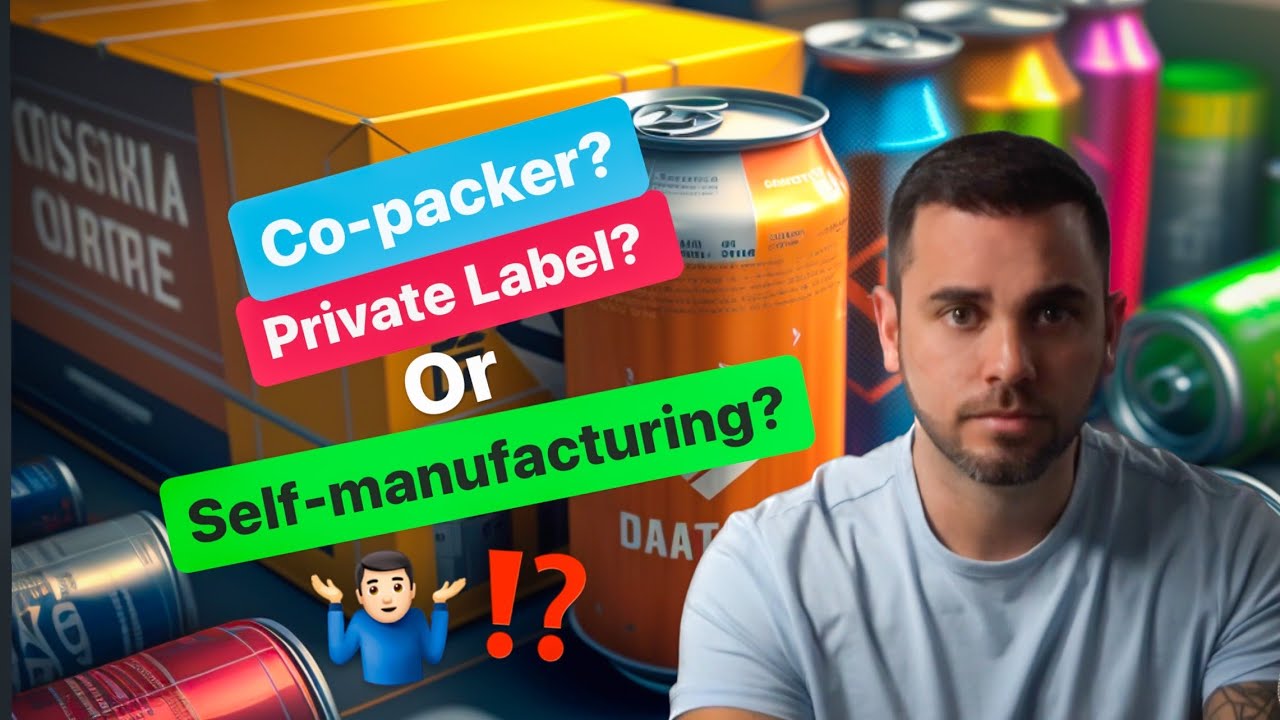
hey what's up guys it's your boy machine Perez and today we're talking about the pros and cons of manufacturing your own product versus Outsourcing to a co-manufacturer or co-packer and for all of you food and beverage entrepreneurs out there this is a video you won't want to miss so let's dive into it today we're going to talk about one of the most important decisions that a food and beverage entrepreneur needs to make when starting their own brand should you manufacture your products yourself Outsource to a co-manufacturer or opt for private labeling someone who has experienced
both production methods myself and have heard countless stories from other Founders about their successes and failures with each let's discuss each method so you can choose which path is right for you so what is a co-manufacturer or co-packer coal manufacturers are third-party production companies that allow you to produce your products without The Upfront Capital cost of building and managing your own facility they have the expertise and experience to make the products efficiently a good co-manufacturer will enable you to quickly increase your production volume to meet fast growing demand for new customers co-manufacturers have specific pieces
of equipment and are in the business of producing simple products with existing equipment at large volume each manufacturing line is actually a combination of a dozen specific pieces of equipment that each do a specific task if you need a specific machine it can cost between two hundred thousand dollars to two million dollars working with a co-manufacturer can alleviate a lot of the headaches and Time by making large volumes of your products so you can focus on growing your business they're a great option for many companies and most large companies that you're familiar with use them
plus Co manufacturers usually meet professional food safety standards often required by large retailers however the business models of food startups and co-manufacturers have essential Point attention as a food entrepreneur you're likely creating a new product with new ingredients or a new form designed to disrupt the market this often means that products require complex or Custom Manufacturing processes and co-manufacturers may not have the equipment to make your product and if they don't have the equipment to make your product they're probably not going to make the investment just for you so it's important to understand what standard
equipment is available to make some their products and design your product to fit into this process your success working with a co-manufacturer relies on setting Mutual expectations and having an open line of communication it's worth noting that while most manufacturers won't sign a contract starting out it is valuable to have your terms in writing so let's talk a little bit about the disadvantages to working with a co-manufacturer first of all they require High minimum order volumes resulting in higher than expected costs and extra inventory this means that you can't order a small amount of product
small Brands opt to find it tough to work with co-manufacturers as their business models don't align also their product quality may not be the best now let's talk about private labeling you've seen this you go to Walgreens and they have the normal brand and they have the Walgreens brand right next to it that's a private label private labeling means that a manufacturer produces a product and you just simply put your brand label on it essentially you're just buying a product that has already been created and putting your own spin on it this method is good
if you want to enter the industry quickly without investing too much money now the advantages of private labeling include being able to offer a product quickly without having to manufacture yourself this method is also good for those who don't have the time of resources to create a unique product from scratch now the disadvantages of private labeling include less control over your product quality less ability to differentiate your product from others already in the market and smaller profit margins since someone else is doing all the heavy lifting now let's talk about self-manufacturing there's three main ways
you can do this first up we got producing at home under Cottage laws this is great for those starting out who want to test the waters without jumping all in cottage laws allows you to start a food business at home but there are some limitations you can only use common ingredients and typically you can only sell under a thousand dollars a month next we got producing at a shared commercial kitchen now this is a great step up when you're looking to professionalize your business shared commercial kitchens are licensed facilities that you can rent by the
hour the day or the month they come with basic equipment like ovens tables mixers and sinks but may not have specialized equipment for you you'll need to have a business license and an inspection done by your local Health Department also some states may require additional licensing if you're selling your product wholesale finally we have producing at your own commercial kitchen this is when you call me now this gives you the ultimate control but it comes with increased risks and costs you'll need to lease or own your own production facility buy your own equipment and hire
your employees this can be expensive so you need to make sure you're ready for it you'll have complete control over your facility equipment and your hours but you'll also have to buy Workers Compensation Insurance and payroll taxes if you have the resources and really want to take that leap of faith into your product go for it on your own yeah it's risky but once you're successful and also retain full control of your quality your production your process you'll love the autonomy now if you need help in developing your manufacturing or production needs don't hesitate to
reach out to me as a general contractor in South Florida I specialize in providing top-notch services for businesses of all sizes with years of experience in the industry and Manufacturing I can help you streamline your production process optimize your efficiency and save you time and money let's work together to create the Perfect Production plan for your business ultimately the decision to co-manufacture self-manufacture or private label your product depends on your business goals your budget and your timeline co-manufacturing can be a great option if you're looking to quickly increase your production volume without The Upfront cost
of building and managing your own facility self-manufacturing gives you full control over the quality and production process of your product but requires a higher upfront investment and private labeling is a low risk low investment option that allows you to enter the market quickly but with limited control over your product now to wrap this up starting your retail brand is not easy it's challenged but a rewarding process co-manufacturing self-manufacturing or private labeling all have their pros and cons and it's important to carefully consider your options before making a decision by understanding the advantages and disadvantages of
each method you can make the best decision for your business and set yourself up for Success now thanks for tuning in and I'll see you next time
![Co Packer Near Me [ How do I find a Copacker ] THE 7 STEPS TO FINDING A CO PACKER](https://img.youtube.com/vi/vNdgixS6PPU/mqdefault.jpg)



![What Should I Look For in a Co Packer [ Should You Use a Co Packer ] 5 MOST VITAL QUESTIONS](https://img.youtube.com/vi/zg76tAHgZGU/mqdefault.jpg)