Have a look at this painting by the Ukrainian artist Oleg Shuplyak What do you see? Do you see the face of a man? Or do you see somebody painting a cottage?
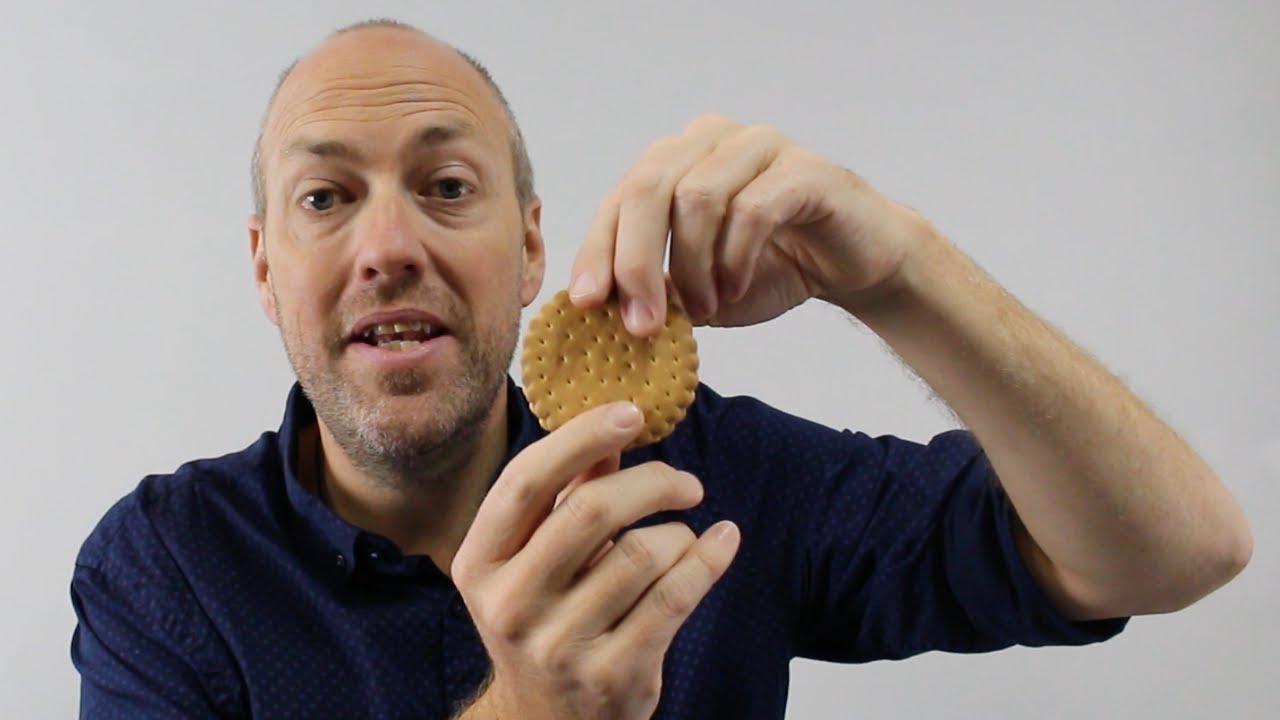
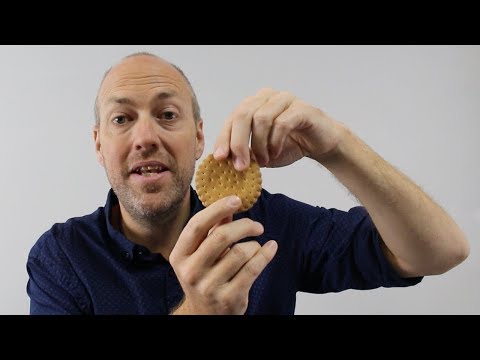
And which one is correct? Or are both correct? It depends on your perspective In linguistics, the idea that one word can have multiple meanings is called "polysemy" And understanding and accepting that words can have multiple meanings and all of those meanings are correct, depending on your perspective, is the key to understanding English phrasal verbs And also chocolate biscuits Hello and welcome to Canguro English I'm Christian and today I am going to show you how to really understand and learn English phrasal verbs Phrasal verbs are one of the most frustrating and difficult things in the English language Their meanings seem completely arbitrary and random and a traditional teaching method would tell you that you have to look at this phrasal verb which means this, and memorize it And repeat and repeat and repeat But what if I told you that, actually, English phrasal verbs do have a deeper logic, a deeper meaning, and once you understand this logic behind phrasal verbs then learning them becomes really easy To help us we need cognitive linguistics Cognitive linguistics is different from other studies of language because it tells us that the way that the human mind works shapes language The way that we see and experience the world has a direct effect on the language that we use And studying phrasal verbs using cognitive linguistics has significant benefits Before we talk specifics, there are two very important concepts to understand The first one is: perspective We can view events and situations in life from different perspectives For example, right now I am at a desk, in front of a camera, on a chair, in a school on the planet Earth My situation hasn't changed, but the perspective from which you view my situation is different and this affects the language we use The second concept is: space Space, spatial awareness, and how we move through space is essential to the human experience We can move through space on a trajectory or we can be static in space, or we can be oriented in space So now you understand that phrasal verbs are not random and illogical and you also understand the concepts of perspective and space Now, we can begin to look at the deeper meaning behind phrasal verbs Phrasal verbs consist of a verb and one or more particles Now, obviously the verb part is important but really, the most important part of phrasal verbs is the particles The particles can alter and change the meaning of the verb and understanding the deeper meaning of these particles is the key to understanding and learning phrasal verbs Now, to understand the particles we need a special tool, something really powerful and unique chocolate biscuits (laugh) First, let's look at the particle UP The principle meaning of UP is a movement through space in this direction The biscuit is moving up and this helps us to understand the basic verb + preposition combinations, like, for example, "to pick up" a biscuit or the biscuit "goes up the mountain" but this movement through space in this direction also helps us to understand the more abstract verbs which contain UP Here on my plate, I have one biscuit As I start to add biscuits.
. . as I have a greater quantity of biscuits, you can see that the stack moves in this direction: UP So phrasal verbs which contain UP can talk about a greater quantity of something So when I ask you to "speak up" I'm asking you to increase the level of your voice But also, 5 biscuits is better than 1 biscuit So UP can also indicate that something is improving, something is better than before So if I go out to a special occasion, maybe I will "dress up" I will "dress up" in improved better clothes UP can also talk about orientation in space Look at this packet of biscuits Would you say that it's UP?
No. . .
because this end is open So this is the top where you can access the biscuits So now the packet of biscuits is UP It's in the correct orientation It's ready for action It is prepared And from this idea we get the phrasal verbs such as "set up" a business To put your business in the correct orientation, to be prepared Or before you exercise you "warm up" You prepare your body for action Now a question for you How many biscuits do I have on this plate? You don't know? Well it's because you can't see them Let me "bring them up" Now you can see I have three biscuits When I "move something up" I bring it into your vision because remember, the human experience, how we experience the world, affects our language So when we "bring something up" we make it visible and now we can understand phrasal verbs like "to go up to somebody" at a party So when you come closer to them, they can see you And also when something is in our vision, we can start to know it, to understand it, so "coming up".
. . seeing something is a synonym for understanding And this helps us to understand phrasal verbs like "look up" a word in the dictionary or "read up" about the English language Now imagine that this is the last biscuit in the packet and you want to share it with your friend You need to break it You need to "break it up" Do you see?
When we break something, when we destroy it, we have this natural upward direction and so maybe if you don't share your biscuit with your girlfriend she will "break up" with you and if she's really bad, maybe she will "smash up" your things (laugh) To understand the final meaning of UP it's really important to use your perspective So here I have four biscuits on a plate Now imagine that I eat them all (Christian eating noises) :-p Now my body, my stomach, is full I am "full up" So from one perspective, you could say that this vessel. . .
this container. . .
is full which helps you to understand phrasal verbs like "to fill up" But if we look at this perspective, we can see that the biscuits are gone The plate is empty It's the opposite meaning and that helps you to understand phrasal verbs like "use up" The battery in my phone is completely "used up" The next particle is DOWN The principle meaning of down is a movement through space in this direction So, for example, the biscuit is moving down and this helps us to understand basic phrasal verbs like "to put down" or "to fall down" But what about the more abstract meanings? Here I have my plate of biscuits, as I begin to eat them (eating noises) They go down inside my body I eat them down (eating noises) But, also, you can see . .
. . that.
. . that as I eat them we have a movement in this direction So phrasal verbs which contain "down" talk about a reducing quantity For example, "to calm down" or "to cut down" the amount of cigarettes that you smoke Down is inherently negative Remember that language reflects the human experience If I had four biscuits before and now I only have one biscuit because the quantity has reduced "down" then my situation is worse than before It's a deteriorated situation and that helps you to understand phrasal verbs like "break down" when your car or your washing machine doesn't work anymore like it used to or when somebody disappoints you, they "let you down" Now, let's talk about ON "on" describes contact between two surfaces So here the biscuit is "on the plate" We have contact between the biscuit and the plate And this helps us to understand phrasal verbs like "to put on clothes" because the clothes are in contact with our bodies Or "to hold on to something" when our hands are in contact with another surface Now, let's look at ON from another perspective The biscuit is "on" the plate But imagine that the plate disappeared What would happen to the biscuit?
It would fall The plate is providing a type of support to hold the biscuit So phrasal verbs which contain ON also talk about support Like when you "depend on somebody" Contact between two surfaces causes an effect For example, if I sit ON the biscuit The biscuit will probably break and this helps to understand why phrasal verbs containing ON talk about, effects, for example "to switch on" the lights Or if you are running in a race and I am "cheering you on" Come on, you can do it. I'm pushing you Movement is essential to the human experience because humans cannot fly, whenever we move we are always in contact with a surface But we don't just move through physical space We also move through time So phrasal verbs which contain ON can also talk about moving through time For example, "carry on working". .
. . .
. continue working through time into the future and also, when I want you to think about something through time, in the future, why don't you think on that idea, reflect on that idea Now, imagine that you are with your group of friends and there's only one biscuit left You need to "get your hand on" the biscuit if you want it This idea of capturing something, of attacking something, also appears in phrasal verbs with ON For example, bullies "pick on" people The next particle is OFF On talks about contact between two surfaces, but off is when we lose that contact and that helps you to understand phrasal verbs like "come off" I hope that this stain will "come off" my shirt Or to "see off", when somebody goes on a long journey you lose contact. .
. you "see them off" But also, this movement away this distance could be physical but also abstract You can "move away" from a current condition Imagine that you are in a very bad position in your life but then your situation improves You can say "I am better off" The distance from this original condition is growing Now finally, let's switch perspective So imagine that you are the plate and this biscuit is trying to make contact with you It's trying "to get on" you but you are fighting back You are keeping the biscuit off the plate This helps you to understand phrasal verbs like "cut off" where you are maintaining that distance The next particle is IN To describe IN, first we need to define a container Now the container could have very clear boundaries like this cup or the boundaries could be not so clear like a group of people or a forest The principle definition of IN is when we have an external object moving or inside our container and it could be completely inside the container, like this, or it could be sticking out of the top and they are both valid definitions of IN and this helps us to understand basic phrasal verbs within like "to stay in" To stay inside your house, because you don't want to go out tonight or if you have a form that you have to "fill in" you are putting the information inside the boxes that are on the form In a more abstract sense, our mind is also a type of container We can put ideas and information here and this helps you to understand phrasal verbs like "to take in" a story In can also be used to talk about including or adding something Imagine if I have one piece of biscuit inside my cup and then I add another one This biscuit is "joining in" I added in another biscuit Now what if we look at these two pieces of biscuit from a different perspective Imagine that you are inside the cup with these two biscuits looking at them They are inside together and this idea of being inside the container, joined, helps you to understand phrasal verbs like "to keep in touch" The final particle we're going to study is OUT And again, we have to define a container Io it could be a container with clear boundaries like this cup, or something more abstract and the principle definition of OUT is the idea that something is NOT in the container Not in situ. .
. absent from the container And this helps us to understand basic phrasal verbs like "to go out" But if the container is more abstract it helps us to understand phrasal verbs like "to stretch out" where the container normally is my body, in this sphere and "I'm stretching out" of my container Now if all of the biscuits are OUT then that means that there are no biscuits left There is an absence of biscuits and this helps you to understand phrasal verbs like "sell out" or "run out" Now, let's switch perspectives Imagine that you are inside this empty cup and this biscuit is trying to get in but you are inside, blocking it preventing it, keeping it. .
. out Then this helps you to understand phrasal verbs like "block out" or "cross out" Now I want you to continue imagining that you are inside this cup and OUT we have this biscuit Can you see it from inside the cup? No.
. .