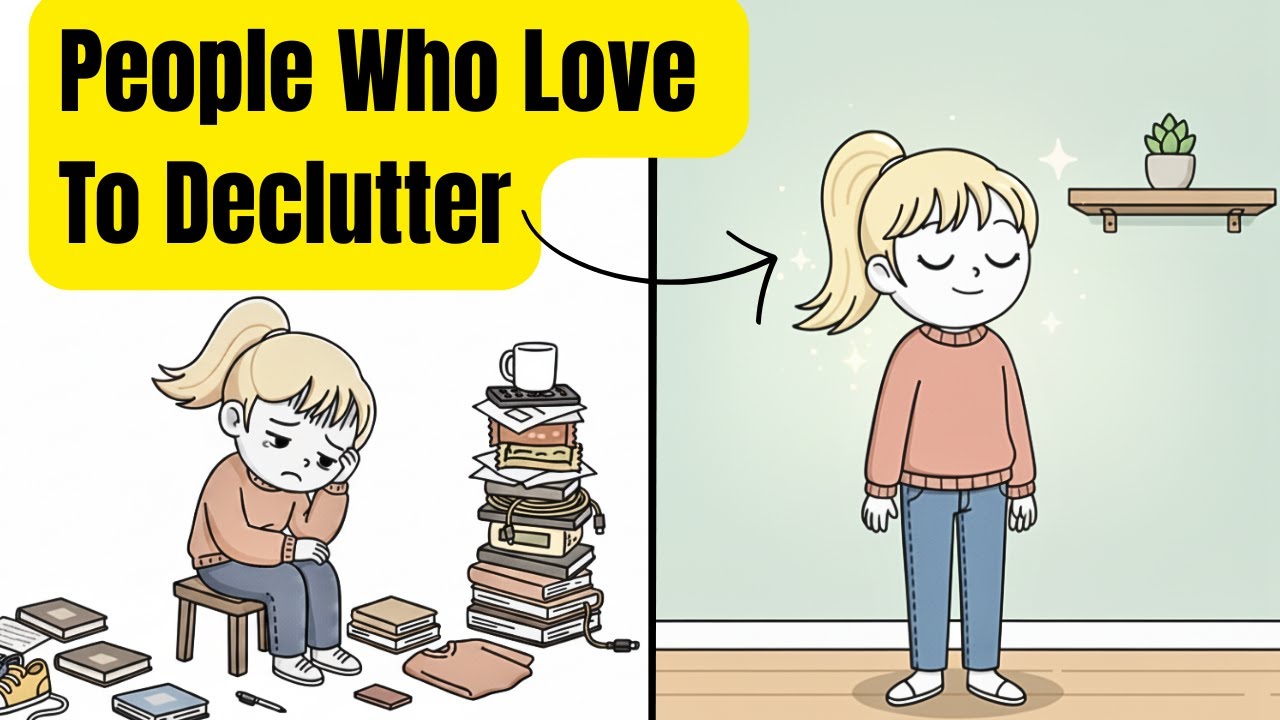
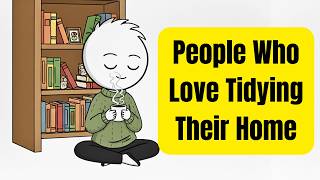
You know that friend who gets genuinely excited about throwing things away? The one who treats a trip to the charity shop like it's Christmas morning? Yeah, they're not weird.
They're actually experiencing a drug-like high. And science can prove it. See, when declutterers toss that old jumper they haven't worn since 2019, their brain releases dopamine, the same chemical you get from eating chocolate or scrolling Tik Tok.
But here's where it gets interesting. These people aren't just tidying. They're slowly training their brains to crave order.
And once you understand why, you'll never look at Marie Condo the same way again. So why do some people find joy in binning their possessions while the rest of us have emotional breakdowns over a concert ticket from 2007? It comes down to something psychologists call cognitive load.
Your brain can only process so much visual information before it starts feeling overwhelmed. Clutter. That's basically giving your mind a thousand tiny tasks to manage simultaneously.
Should I deal with that pile of papers? What about those shoes? Oh god, is that a receipt from 2015?
Exhausting, right? But declutterers discovered something the rest of us missed. When they clear physical space, they're also clearing mental space.
A Princeton study found that physical clutter directly competes for your attention, decreasing performance and raising stress levels. And people who love decluttering seem to have learned this instinctively. They feel mentally lighter the moment their environment is visually clear.
And here's an extra twist. People who enjoy decluttering often score higher in orderliness, a subtrait of conscientiousness, the same personality trait linked to self-discipline and long-term thinking. But wait, there's a darker side to this.
Because some people aren't just decluttering, they're chasing a feeling they can never quite reach. There are two types of declutterers, and understanding the difference is surprisingly important. Type one, the liberators.
These people declutter and genuinely feel lighter afterward. They're not attached to stuff because they've learned that memories live in their minds, not in objects. They keep what matters, release what doesn't, and move on.
Balanced, healthy, annoyingly. Type two, the chasers. They're stuck in a loop, decluttering for the dopamine rush, then filling the empty space with new purchases only to declutter again.
For them, it's not really about freedom. It's about control. When life feels chaotic, controlling their environment becomes a coping mechanism.
The decluttering itself becomes another form of clutter, just mental instead of physical. So, which type are you? Because decluttering should feel like opening a window, not tightening the rules on yourself.
The next time you feel that urge to bin everything you own, ask yourself, am I creating space for clarity or just chasing the satisfaction of a perfectly empty shelf? Drp a comment with your type and don't forget to subscribe. We make psychology concepts simple.
YouTube thinks you'll love this next one and honestly, I think it might explain a lot about you. See you there.