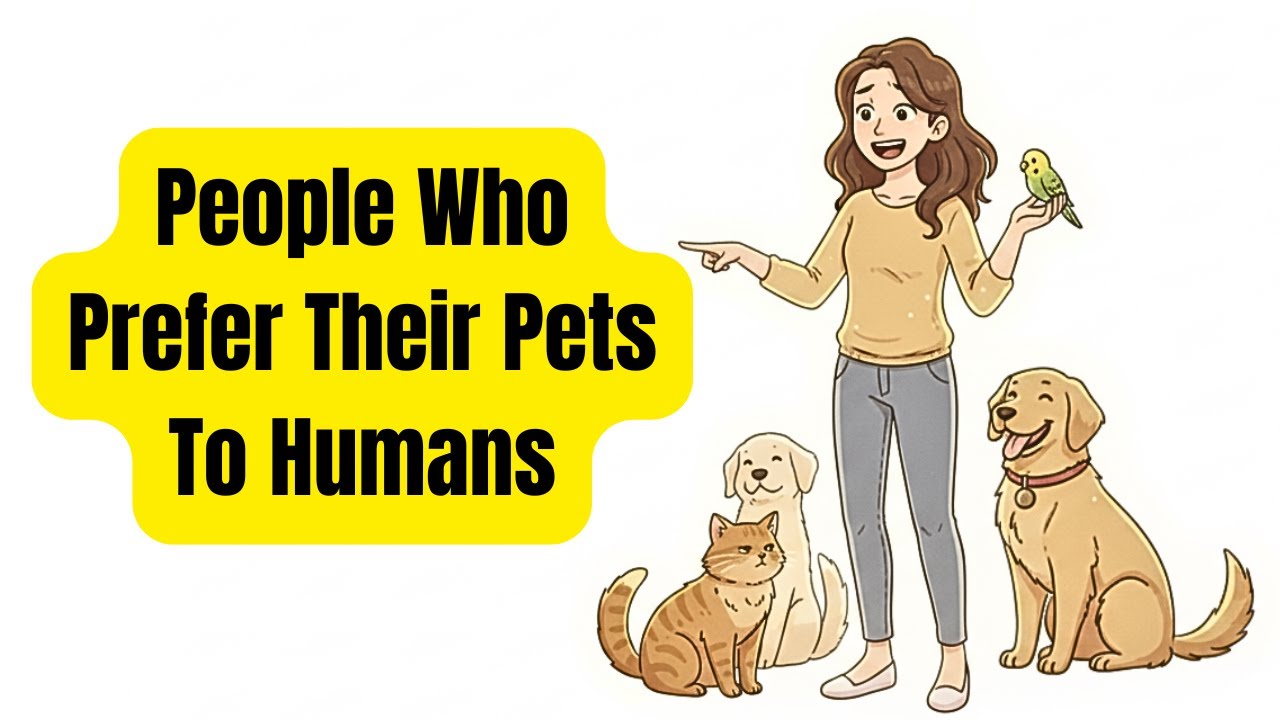
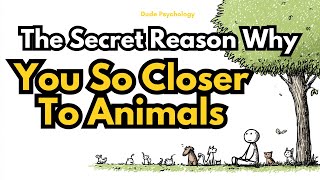
You know what's wild? Some people will avoid eye contact with humans like it's a sport. But the second they see a dog, they're on the ground making baby voices and having a full conversation.
Who's a good boy? You are. But here's the thing.
This isn't just about loving animals. There's actual psychology behind why some people feel safer with a golden retriever than their own family. Let me ask you something.
When was the last time a human looked at you with zero judgment? I'll wait. Because animals, they've mastered what therapists spend decades learning.
Unconditional positive regard. That's the psychological term for acceptance without conditions. And animals, they give it away for free.
No therapy bill, no awkward silence, just pure, you're enough exactly as you are energy. Now, before you think these people are just antisocial hermits living in the woods, hold on. They're not avoiding humans because they hate people.
They're exhausted by them. Think about it. Human interaction is like running an emotional obstacle course.
You're managing tone, reading micro expressions, wondering if your joke landed, or if Karen from accounting now thinks you're unhinged. It's exhausting. But with animals, communication is refreshingly honest.
A tail wags, a purr vibrates, done. No subtext, no we need to talk energy, just presence. And for people with social anxiety or past trauma, that simplicity isn't laziness, it's survival.
Plus, let's be real, dogs don't ghost you after three dates. Cats don't leave you on red. Well, they ignore you, but at least they do it to your face.
But here's where it gets deeper. Many people who prefer animals have been hurt by humans in ways that left marks. Betrayal, criticism, conditional love that came with fine print.
So, they turn to creatures who don't weaponize vulnerability. Animals don't remember your worst moments and bring them up during arguments. They don't compare you to anyone else.
They just see you flawed, tired, imperfect, and stay anyway. Studies actually show that interacting with animals lowers cortisol and releases oxytocin, the bonding hormone. Your literal nervous system calms down.
It's not in your head. Well, technically it is in your neurochemistry, but you get it. Now, is preferring animals to people wrong?
No. Is it sometimes a protective mechanism? Maybe.
But protection isn't weakness. It's wisdom. Not everyone connects this way, and that's fine.
Some people are energized by crowds, by conversation, by the beautiful chaos of human connection. Others need the quiet honesty of a creature that asks nothing, but gives everything. Neither is broken.
They're just different nervous systems seeking different kinds of safety. Because here's the truth nobody talks about. For some people, the relationship with their animal becomes the only space where love doesn't come with fear, where they don't have to perform, explain, or apologize for existing.
And maybe that's not sad. Maybe that's sacred. Animals don't solve human problems, but they remind us what connection looked like before we learn to complicate it.
Before we learn to doubt ourselves. They love the way children do without strategy, without keeping score. So, next time you meet someone who lights up around animals but seems distant around people, don't assume they're broken.
They might just be someone who's found their version of peace in a world that rarely offers it. If this made you think, subscribe for more. But don't stop here.
The next video breaks down the psychology behind why you connect so strongly with certain personalities. I'll meet you there.