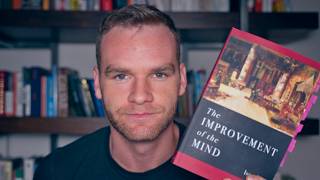
the first time I read David Allen's getting things done I remember experiencing this sort of relief and excitement that I'd finally come across the one solution to all of my productivity and procrastination problems it was like this spiritual awakening of sorts or so I thought I started dreaming of all the things I do and Achieve with this new productivity system think of the possibilities an end to procrastination a strong momentum that would enable me to anything and everything and I'd never be busy or stressed again this was a delusion of course and if IID stepped
back for just a moment I would have been able to realize that but in the moment it felt real it really felt like I'd come across this answer to all of my productivity struggles I had fallen for the perfect productivity fallacy the perfect productivity fallacy is this subconscious belief that there's a system or a tool or a method that will fix all your productivity problems and enable you to maintain the state of equilibrium where you never feel busy or stressed and you never procrastinate you never waste time it's subconscious because when you externalize it like
I just did it sounds really stupid we all know that there's no one system or method or tool or app that can fix all your problems and make your life and your work life perfect except many people including myself and maybe you act as if the is a possibility we search for tools strategies methods with the hope that they will be the missing puzzle piece we experience these brief moments of clarity and motivation just like I did when reading getting things done for the first time but then it goes away and no lasting change occurs
I'll soon share with you how to combat this fallacy and replace it with a better subconscious mental model but we first need to understand how this fallacy plays out and emids itself becoming a cycle where it happens again and again and again now as a disclaimer before we dive in in no way am I saying that a productivity system like David Allen's getting things done or a tool or a web app I'm not saying these things aren't useful they absolutely are and can be it's more about the framing that we use around these things okay
that's what I want to focus on so let's talk about the cycle right the perfect productivity fallacy cycle we could call it here's how it plays out usually you're not satisfied with your productive output perhaps you're busy you're overwhelmed you have too much on your plate and you can't focus or you're not doing enough and you're dissatisfied with how much you're procrastinating you are in a state of disequilibrium right things are not right you feel uncomfortable in some way and you want to solve it and you're either puttering along but passively searching for solution to
this and answer to your productivity problems or you were actively searching for a solution either way at some point this disequilibrium the first point in the cycle gets interrupted by what you think is a solution to the disequilibrium a perceived solution it might be a tool it might be a system it might be a method sometimes this perceived solution makes strong promises hey wear a calendar app that will stop you from procrastinating again other times you read the strong promises into it and so you look at something like the GTD method and think wow I'm
never going to feel stressed or busy again this is the trigger in the cycle when you come across something and it leads to a payoff it leads to a dopamine hit right you get this feeling of excitement this motivation this Clarity this feeling that you finally found the solution to your problems and that finally things are going to change and for a brief moment in time you actually feel like they've changed you enter into the next phase or the next point of the cycle which is false equilibrium we call it false because it's not actually
real it's an illusion first because I don't think true equilibrium exists and second because even if it did exist life is too Dynamic your work life your business whatever is too Dynamic and chaotic to maintain this state of equilibrium anyway you cannot reach a state of perfection in your work where there's nothing going wrong and you're not feeling stressed ever and you're not feeling busy ever that just doesn't exist we know this right we explicitly know this but we implicitly act as if it's a possibility after sometime hours days weeks if you're lucky this positive
feeling starts to disintegrate as you realize it actually it hasn't delivered on its promise that calendar app you downloaded it's not that much different from the normal Google Calendar that new productivity method you came across it's not that much different to the last one you used you thought it was going to solve everything but it either solved nothing at all it made things worse or it only solved a tiny component of your wider system and so you fall back into disequilibrium that first point in the cycle if you're lucky you improve things slightly maybe the
new method or the new app did help you a little bit but you thought it was going to solve everything and hasn't and so you feel disappointed soon the cycle repeats because your renewed disequilibrium gives way to the trigger and another payoff and you're back at it you get frustrated with yourself because you keep falling into the cycle you catch yourself when you're doing it but it keeps happening so how do we deal with this cycle how do we replace this subconscious mental model with a better one well let's explore that and we're going to
go deep into some principles that I think will help these are some reframes that have really helped me deal with this specific problem and will hopefully help you as well and the first one is that you don't want perfect equilibrium you don't want perfect productivity you want growth and worthwhile tension one of my favorite quotes is from Victor Frankle the Holocaust Survivor who said what man actually needs is not a tensionless state but rather the striving and struggling for a worthwhile goal a freely chosen task I'm willing to bet that you want to work hard
that's why you're watching this video that's why you're watching this channel you want to be in a state of action and momentum pushing yourself learning new things achieving your goals mastering your craft and overcoming challenges and as much as I think you should seek the path of high Lage of flow of doing what comes naturally to you and more effortlessly you cannot expect that the path of most growth for you whatever that looks like is the path of equilibrium and this perfect productivity and this lack of tension no the path that grows you the most
is usually the one that contains a reasonable amount of stress and busyness and Chaos in other words disequilibrium and this disequilibrium is not only natural it is necessary if you want to do great work and there's a certain amount of it that you must not only tolerate but respect and even lean into as part of the process of your personal growth or your business growth or your career growth the question is not how do I eliminate this disequilibrium because that's the very thing that throws you into the perfect productivity fallacy cycle the question should rather
be twofold first does this disequilibrium need to be fixed in the first place or is it serving me right now and I just need to manage it for example you might be a bit stressed and busy because you're working on a big business deal and stress is natural in that situation has nothing to do with your productivity system or the apps you're using or the methods it's just life it's just business and the only way to remove this stress completely is to stop working on the deal which might be the very worst thing you can
do for your goals your personal growth your financial success or what have you and so in a lot of cases dise equilibrium is actually serving you and an attempt to remove it or fix it is inadvertently making things worse for yourself and then how can I improve my position in state potentially moving towards higher equilibrium if that's what serves me best right now for example you might genuinely be busy not because you're working on some big important thing but simply because you lack a good tactical productivity system and in this situation adopting such a system
will reduce not eliminate disequilibrium in a way that drastically improves your workflow and general ability to perform it's also worth mentioning here that that the path to equilibrium in the short term can lead to disequilibrium in the long term and vice versa so chasing this equilibrium this tensionless state without considering the wider context in time Horizon is a great way to limit your performance and your personal growth because you'll automatically Venture down the path of least resistance which feels more equilibrius in the short term to give you an example let's say you feel a bit
stressed because you have a lot on your plate and perhaps the best thing you can do is identify what's really working triple down on it and then eliminate or delegate everything else but doing this the act of that elimination and delegation and tripping down is an uncomfortable thing to do because it requires that you act against your nature which is to try and do everything yourself and it also might require you to have hard conversations with your team and to get them to do things they might not want to do and so to improve your
state of busyness and stressinduced disequilibrium you have to ramp up the disequilibrium first you have to go through even more of it to solve it right and this is unnatural and that's why our tendency is towards avoidance or swimming in the complexity instead of addressing the root of the problem or finding what we think is a solution a tool an app a method A system that doesn't really solve anything at all so that's the first principle which is that you don't don't want perfect equilibrium you want some tension because that's what causes growth and trying
to make your life and your work and your business and your productivity some sort of perfect little system and package a you can't do it and B it might not be the thing you want anyway second principle is that tools methods and systems do not solve capacity issues so there's a concept known as work capacity in the world of exercise science and health right work capacity refers to the maximum amount of work or physical effort an individual can perform over a given period higher work capacity means that a person can sustain a higher volume of
intensity or work before experiencing fatigue which is important for athletic performance occupational tasks in general fitness and this applies to the world of cognitive work as well it's your ability to focus the person who Scrolls Tik Tok all day and can't sit down for 15 minutes and read a book has a lower work capacity than the person who gets up every morning and writes for 2 hours without distraction and if you lack this Focus ability and capacity but you have ambition and you have projects and goals you want to work on then you will naturally
feel disequilibrium because there'll be a gap between your aspirational output what you want to be doing and your real output which is what you are doing for example maybe you want to write a a book to grow your business get more coaching or Consulting clients but you find it extremely hard to sit down for an hour every morning to write it you know that's what's required but you're not doing it and because building work capacity because building your focus muscle is difficult and it's a slow process you often fall into the perfect productivity fallacy trap
and you search for a Magic Bullet solution instead but none of these things none of these external tools or systems or methods will build work capacity for you you might perceive that they will hence you fall into the cycle but you will ultimately be let down because it's something that only you can build yourself these tools these methods these systems they might help you overcome the activation energy required to start doing those things start focusing for 2 hours the same way buying you workout clothes might encourage you to go to the gym more often but
you still have to do the work that builds the muscle the workout clothes don't lift the weights the systems the tools the apps don't do the work for you they are not the thing and they do not solve the capacity issues and so you have to ask yourself is the answer to my feeling of disequilibrium to my stress my busyness my procrastination is it a tool is it software is it a new note taking app or productivity system or is it putting my head down and consistently intentionally building the capacity I need to close the
gap between my aspiration and reality the next principle is that if it doesn't lead you towards real action it is likely a distraction almost always the answer to this feeling of disequilibrium is imperfect action let's say you're busy well you take action right that might be pushing through the work you need to do so that you're less busy or it might be eliminating delegating postponing either way you have to take an action or maybe you're anxious because you know you should be taking action on something that you aren't and there's no amount of playing around
with anything else that's going to quell that anxiety other than taking the action you need to take the perfect productivity cycle tempts us to focus on peripheral actions doing things around the thing this is why people get stuck organizing their notes and a second brain instead of using those notes to create something or they spend endless amounts of time time building the perfect project and task management systems only to delay the real work that needs to be done and so to combat this one of the most powerful things you can do is focus on the
most powerful thing you can do and get in the habit of asking what is the most powerful action I can take right now you should write this down this is what I've done it's on an index card I don't if you can see that and I have it on my desk because at any given moment during the day when I feel feel like focusing on a thing around the thing I can ask myself that question what is the most powerful action I can take right now it usually kicks me out of that cycle related to
this is that Simplicity leads to action and complexity leads to distraction so we shouldn't be anti- tools right we shouldn't be anti- tools methods and systems we should be anti- tools methods and systems that are unnecessarily complex for our needs I once set up a very complex complicated uh workflow and clickup for all my personal tasks right there were automations going on fancy colors everything I got I went super deep I got really organized and uh then I had to do the work and guess what I still procrastinated not only did I procrastinate I'd spent
so much time setting this stuff up for zero productivity gains I was much more productive when I just used pen and paper an extremely simple system see clickup was unnecessarily complicated for my needs and my workflow and when you add unnecessary complexity you give yourself more Avenues to get distracted and pulled away from the work that matters you give yourself another space to engage in sophisticated procrastination another way to feel productive without being productive when you use the simplest method possible but one that is still effective you remove this layer of BS right if you
grab an index card like the one I just showed you and you write three tasks on it that you have to focus on that day and that's your productivity system then you're left with the choice do you do those tasks or do you not you can't hide behind complexity you can't hide behind a complex system or software the only reason you don't do those tasks is because you're procrastinating and intentionally avoiding them and the final principle probably the most important one is is to attack the problem and the disequilibrium if you need to at its
core if your perceived solution to your busyness problem is to download a new calendar app when the current one serves the purpose then you're almost certainly not going to solve your busyness problem because you're not attacking the problem at its core why are you busy is it because you're focusing on too much is it because you're trying to do a lot of low leverage work is it simply a busy season in life and you have to accept that and work through it and really optimize your personal systems your routine you know make some sacrifices elsewhere
to get through it you need to attack the problem at its core and not focus on things around the problem if you're disorganized then you need to attack that problem at its core and maybe you do need a better app or task management system but you should Define what it is you should Define what you need to get organized if you've got paper everywhere you know notebooks of tasks and you keep forgetting what to do then maybe you should use an app right but that's solving the problem you're not just looking for an app to
distract yourself and to get that feeling of motivation and productivity and again going back to the first principle you also need to distinguish between whether your disorganization or your busyness is a problem to be solved or something to be accepted and managed knowing that your workflow cannot be perfect and knowing that is's a certain amount of discomfort and inefficiency you must tolerate so to recap the perfect productivity fallacy is this trap that we fall into this cycle where we feel some sort of tension you know disequilibrium we want to solve it maybe we're busy maybe
we're stressed maybe we're procrastinating we find something that we think we trick ourselves into thinking as a solution to it all we use it gives us a short burst of clarity and motivation then we fall back into the cycle we need to replace this cycle with a better mental model we need to understand that perfect equilibrium doesn't exist nor do you want it that tools methods and systems do not solve capacity issues that capacity takes time to build up it is a skill it is something like a muscle you have to go to the gym
consistently to build it if these tools these systems and methods don't lead you towards real action then they are likely distractions likewise if they're too complex they are also distractions and finally when we're faced with a problem or disequilibrium we must attack it at its core not focus on the things around it that is it for this video thanks so much for watching and I will see you next time