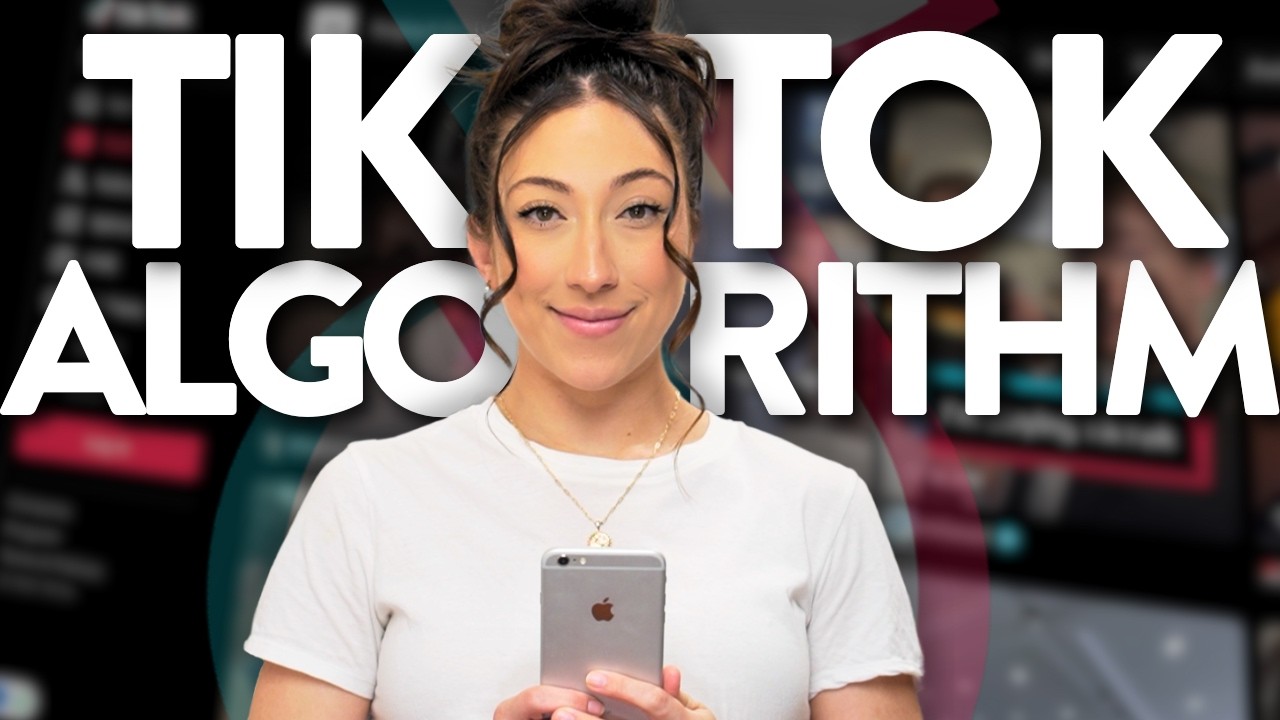
This is the only video you'll ever need to watch when it comes to the Tik Tok algorithm. Because when you can understand the core operating system of how the algorithm actually works, it doesn't matter how many times the algorithm changes, you'll always be able to work with it instead of against it. In this video, we're going to break down how Tik Tok's algorithm works, specifically the for you page and Tik Tok search, what you can do to apply that knowledge as a creator who is trying to grow and reach more people, and what to do if you think you're shadowbanned.
Whenever I make an algorithm video like this one, I only ever pull from the source themselves. So, everything I'm teaching today is from what Tik Tok themselves have said. With that said, timestamps and resources will be linked below.
Let's jump in. What is the algorithm? First things first, there are hundreds and thousands of algorithms operating at one time to give you the user the best experience across the entire app.
The foundations of Tik Tok's algorithm is powered by recommendation systems. These recommendation systems are designed to deliver content to each user that is likely to keep them on the app for longer and create a more personalized experience for each user. That's why everyone's for you page is so different and even sometimes your search results could vary per user.
Let's start with how does the for you page recommendation system work. The for you page is part of what enables connection and discovery. Discovery being the key word here because this is where Tik Tok mostly shows you content from accounts that you don't follow.
The simple way the algorithm works here is in two steps. Step one, Tik Tok studies what a user is interested in. And step two, Tik Tok shows that user videos within their interests that they think they will likely engage with.
How does that actually work? How does Tik Tok study what each user is interested in? There are three main ways.
The first, when someone creates a Tik Tok account, they're asked what they're interested in and what they're looking to discover. This alone sets the parameter of what their for you page will start to look like. Second, a user's device and account settings like language preferences, country settings, location, time zone, and even your device type or settings.
These factors are included to make sure the systems optimize for best performance for your specific device and even potentially show you content that's relevant to you in your generalized location or country. No, this does not mean that you will only ever see content in your city because Tik Tok themselves has said that these factors number two receive the lowest weight in the recommendation system out of everything else that they look at. Then the third way that they study what each user is interested in is by studying your interactions and non-actions within the app like watching, liking, commenting, etc.
Now, this one is the one that's most important because it is the most current data that Tik Tok has to analyze every single day that you open their app. Any sort of action or inaction that you make on their app is what Tik Tok refers to as interest signals. Here are just some of the interest signals that Tik Tok pays attention to.
Whether a user watches a video or skips a video, if they did watch, how long did they watch for? Are you liking, commenting, saving, or sharing a piece of content, which accounts do you follow, which accounts have you followed most recently? And even the content you create.
Yes, the content that you create affects what you see on your for you page. So once Tik Tok studies all of your interest signals and they have an understanding of what a user is interested in, they will then move on to step two, which is choosing videos to push to your for you page. How do they choose which videos to push?
Videos on the for you page are ranked by matching user interests to a video's information, which I feel like is pretty self-explanatory, right? You're going to match somebody's interests to the topic of a video or video's information. Now, what sort of video information does the algorithm look at?
What information about a video are they studying? The algorithm will pay attention to a video's captions, text on screen, sound, hashtags, effects, trending topics, number of views, and country or city it is posted in. Tik Tok studies all of that info and then tries its best to match your interests with relevant videos that they think you'll also engage with.
So, if I'm a user and I skip past a bunch of makeup get ready with me videos, but I spend time watching and engaging with dessert content, it's probably safe to assume I want to see more desserts and recipes on my for you page. So, Tik Tok will go out and find a variety of dessert videos to show me. They'll seek out videos that have dessert mentioned in the caption with dessert on the text on screen showing a dessert in the frame.
And because they're trying to show me content that they think I will engage with, they'll likely show me videos that are performing well, videos that have a high engagement rate already or a longer retention rate, things like that. Before we break down how you can use this understanding of the algorithm to your advantage as a creator and how to apply it for growth, let's first talk about how search recommendation system works because they're going to overlap in a second. We see the Tik Tok search feature come up in two main ways.
One, search, where you actually go to search for content on Tik Tok. And two, in recommended search terms throughout the app. This could be in search results under others searched for or even on your for you page while you're discovering content and scrolling.
You'll see this under the video on your feed where they just like suggest a search or like in comments they'll suggest a specific search phrase. So they'll prompt you to search for different things. What we are most interested in as a creator is understanding when you are searching for something, how is Tik Tok choosing which videos to show us in those results.
Here are some examples of information that may influence the videos that are appearing in search. Relevance and content information. Basically, how well does the content match your search inquiry based on things like the video's caption, text, hashtags, and maybe even the sound that's used?
Engagement. How well is a video engaging with other users? User interactions.
Tik Tok will also look at your past search behavior and the content that you like, share, comment on, or watch to determine which videos to pull up for you. Say you've recently watched a video on clean eating and then you saved it and a week later you search for clean eating. That video might appear.
Or if you follow a specific creator and you search for something and they have a video on that topic, their videos might appear. Or even content from a similar content creator, their videos might appear. Different things like that.
And finally, user information like your device settings, language, preferences, location. Of these four factors, Tik Tok has said for most users, content information, how well the video content itself matches the specific search term, is generally weighed more heavily than the other factors. Now, with all that said, we know what Tik Tok pays attention to the most.
So, how can you use this knowledge to your advantage when you start creating content? You need to think like the algorithm. What you need to do is become a mastermind of who it is you want to reach.
Think about your target audience. What videos are they engaging with? What topics do they want to see on their for you page?
What videos do they skip? What are they searching for in search? And try to create that content.
This is why so many coaches give the advice of like, know your target audience. If you have a clear picture of who you want to create content for, how you could help them, encourage them, entertain them, you're already one step closer to working with the algorithm because that's also what the algorithm is studying. When you start to think this way, like the algorithm, you can literally predict what sort of content will be the most relevant to your audience.
Therefore, predict which videos will likely perform the best for you. Let's apply this practically, shall we? How can you work with the algorithm to show up in search results?
Think about your target audience. What do you think they're searching for on TikTok right now? Let's say it's lowlight house plants.
You're a plant content creator and you know a common question that you get asked is like, "I kill plants a lot. My apartment has no natural lighting. What sort of plants could I have in my dorm?
" You know, like what sort of plants can I keep in a low light environment? So, what you're going to do, you're going to search that phrase on TikTok. See what videos are performing well within that search and take note of that general style.
Then you're going to make your own video talking about lowlight house plants using what you're kind of seeing as a common factor with popular Tik Tok videos. Make sure Tik Tok knows that you're targeting that search phrase by using the phrase lowlight house plants when talking in your caption in the pop-up text in the hashtags. The more you make it clear to the algorithm what you're targeting, the easier it is for them to push it out to the right people.
Now, how can you work with the algorithm to show up on the for you page? This one's a little trickier. We're going to still think about our audience again the same way the algorithm would.
Remember, the algorithm's number one priority is studying what a user is interested in. So ask yourself, what type of content would my audience be interested in seeing on their for you page? This one's harder because there's like a wider scope here.
We know from Tik Tok it could be a specific topic that they want to see or even like a specific style of videos that they like. Clean with me, get ready with me, story times, or maybe there's a trend in your niche or a trending sound that they just think is hilarious and they're constantly engaging with. Think of all those things and just pick one aspect.
Whatever that one aspect is, you're going to study how other creators are applying it in a way that keeps their videos high engaging. After studying those creators, you're going to then again apply what you've learned to your own video. When you post it, post with as much information as possible so the algorithm knows your video is relevant utilizing captions, text oncreen, hashtags, sounds, location tags, whatever is relevant to your video and your audience's interests.
If you're having a hard time picturing who your target audience is and predicting what kind of content they would even be interested in, there's another way that you could find your target audience to figure out what they'd be interested in. All you have to do is go to your competitor or a niche neighbor or creator that you aspire to be like. Look at their recent videos, see what recent videos are performing well, and then of their top performing videos, go to the comment section.
If you want to be a creator like them, their audience is likely your target audience, too. Look to see what comments they're getting, what sort of questions that audience is asking, and then you could create your own videos based off of feedback you see on other creators content. Now, what do you do if you think you are shadowbanned on Tik Tok?
First things first, you got to do an account check. What you're going to do is go to the three lines in the top right of your profile, choose Tik Tok studio, and then account check. If it comes back as all clear, you're not shadowbanned.
Here's the I feel like shadowban is like this term that was like coined on Instagram and then people just brought it over to Tik Tok when their reach was low. But Tik Tok doesn't want to shadowban you. They're not out to get you.
They want people on their app. They want creators to have a good experience because it benefits them when creators are having a good experience. Most of the time when somebody says, "I think I'm shadowbanned," they're not.
They just don't have the right strategy in place. I coach content creators on the day-to-day. I have a Slack community with my students.
I'm in there Monday through Friday. I am constantly studying accounts and helping people make sure they're not shadowbanned with their content strategy, all the things. And 99% of the time when I do a Tik Tok audit, we come to the conclusion that they're actually not shadowbanned.
It's actually us, the creators, the ones that accidentally self-sabotage our own growth by not having the right strategy and then we try to blame it on the algorithm because that's way easier than trying to take responsibility and figure out how you could fix your strategy. I know that's kind of hard to hear, but in reality, there's only been one instance where I worked with a student that didn't pass an account check, and it's because they were posting content that didn't follow the community guidelines. So, her content did get flagged for a bit.
But again, their account didn't pass their account check. They were posting content that violated the community guidelines, and that's why their content was being suppressed. But if you're somebody who you pass an account check and you're posting content that doesn't break community guidelines, but for some reason you're still stuck at that like 200 view jail and you're like, I swear I'm shadowbanned.
Nothing seems to be working. It's not an algorithm problem. It's actually a content strategy problem.
So, if that sounds like you, I actually have an advanced class where I teach content creators how to break out of that 200 view jail and finally grow their accounts to over 100,000 followers. I'll be sure to link that below if that sounds like something that you'd be interested in. And in the meantime, watch this video next because YouTube thinks you'll like it.
Thank you so much for watching. I will see you in the next one. Follow your joy.
Bye.
![2025's FULL Beginner's Guide to TikTok Shop Affiliate [New Algorithm Changes]](https://img.youtube.com/vi/oXDFPigXAqQ/mqdefault.jpg)