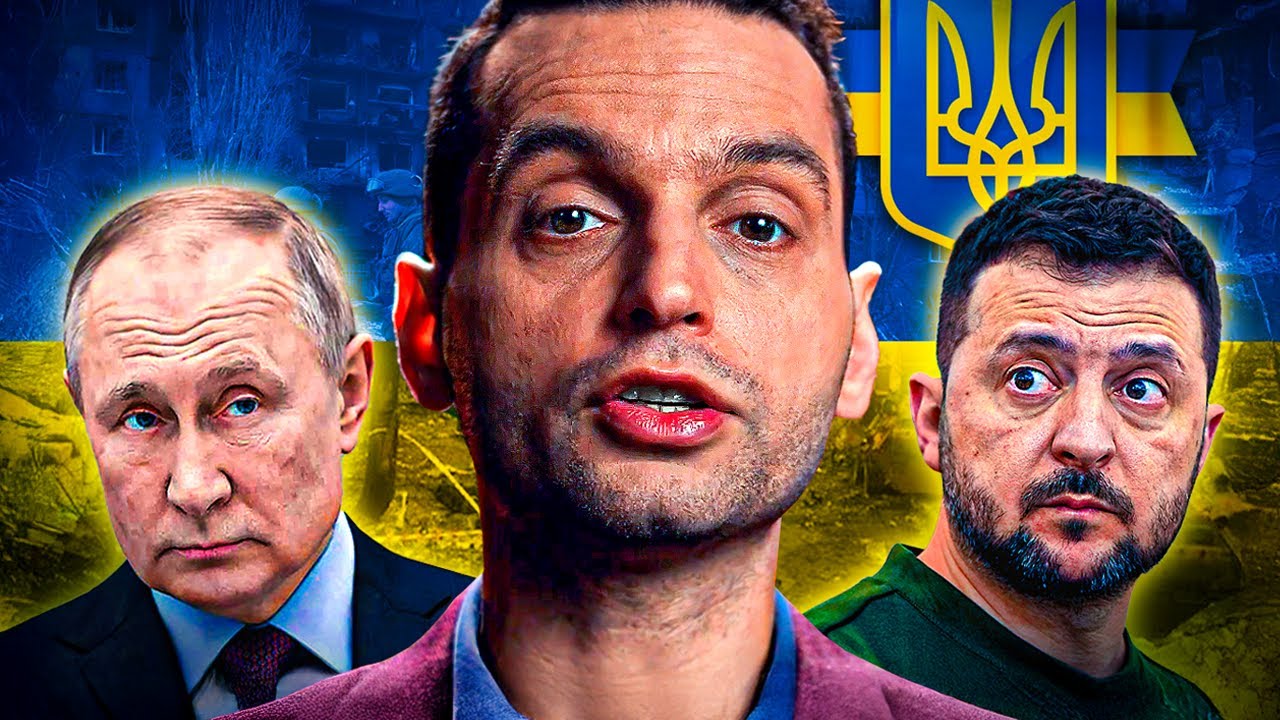
Ukraine. What does a good deal look like? As predicted, following the bust up in the Oval Office, President Zilinski has struck a consilary tone and is today traveling to Saudi Arabia to discuss peace plans with the US delegation.
This is the result of many developments, including Trump freezing both military and intelligence support for Ukraine in an effort to force Zilinski to the negotiating table. He went further still with US officials apparently holding meetings with Zilinsk's main rivals. Former Ukrainian President Petro Poroshenko, former Ukrainian Prime Minister Ulle Timashenko, and Ukraine's current ambassador to the UK, and the former head of its armed services, Valeri Zuzni.
According to reports, all of them predictably rejected the idea of holding elections while the war is ongoing. They all lag behind Zilinsky in the polls. And much more importantly, it's kind of difficult to have an election while millions of your citizens are refugees or on the front line and the country is being bombed on a daily basis.
The MAGA talking points about Zilinski being a dictator and calls for an immediate election are just that, talking points designed to put pressure on the Ukrainian president to come to the negotiating table. Frustrating as this barrage of lies about Ukraine and its leaders is, and Douglas Murray lays them out brilliantly in this important and courageous article, what ultimately matters is whether this conflict can be ended on terms that make the brave sacrifice of the Ukrainian people worth it. So what would a good deal for Ukraine and for the world look like?
Whether an agreement is good or not is a reflection first and foremost of the reality on the ground. You might feel ripped off if you pay an extra $20 for dinner, but if on your way home from the restaurant, a mugger pulls a gun on you, handing over the entire contents of your wallet in exchange for your life will seem like a great deal. After fighting courageously for over 3 years, the Ukrainians are not going to make any more forward progress.
Even if they could, the current US administration will simply not provide the military hardware they need, and the Europeans can't do so, even if they wanted to. You may like or dislike this, but reality is reality. It's also true that the Ukrainians have inflicted heavy casualties on their Russian invaders and Russia's desire to keep fighting is waning.
Vladimir Putin has little incentive to keep the fighting going if a peace deal that allows him to claim victories done. This is what the map on the ground looks like today and how it has evolved over time. As I said, only days after the conflict started.
The be all and end all for Ukraine is not territory. Crimea was lost in 2014 and much of the Dombas is today a barren, desolate wasteland whose entire male population has been decimated after being forcibly enlisted into the Russian army and sent to their deaths in what the soldiers euphemistically call meat assaults. Even if Russia retains all the land it currently occupies, this would not be a strategic defeat for Ukraine.
What matters is one thing and one thing only, Ukraine's long-term sovereignty and independence. This is what all the disagreements are really about. Britain, France, and other European nations will likely be willing to commit peacekeeping troops with a US backs stop to make sure that Russia does not invade again down the line.
So far, the Russians have claimed that this is not acceptable, and Russia's foreign minister, Sergey Lavough, claimed the presence of Western troops would inevitably lead to an extremely dangerous escalation. This is likely why President Trump has attempted to secure a ceasefire without providing the security guarantees that Ukraine is insisting on, arguing that a mineral deal would create a US commitment to Ukraine is enough, particularly given that Putin has never renegged on a deal with Trump. My view is that any agreement that fails to create a physical barrier between Ukraine and Russia would be a bad deal for Ukraine and for the world for a number of reasons.
First, it may be true that Trump can keep Putin in check, but neither Trump nor Putin will be in power forever. Indeed, President Trump's term in office will last less than four years. What is to stop Putin or his eventual replacement from repeating the 2022 invasion once Trump is out of office?
Second, we've all seen the agonizing over Russia's red lines in the wake of this invasion. If the only thing holding Russia at bay are words on a piece of paper, what happens if they decide to reneg on the deal anyway? Once Russian troops are in Ukraine, we are once again faced with a choice between the risk of nuclear escalation and letting Russia bite more pieces of Ukraine, if not annex it entirely or install a puppet government.
Third, in my view, this was the entire point of Ukraine making a stand in 2022 in a way that they didn't in 2014. Leaving the country vulnerable to future invasions means that all the sacrifices Ukrainians made and all the support and funding we have provided them has been a waste. The conversation about land is a distraction from this critical issue.
If Ukraine ends up giving away land in exchange for security guarantees, it will have been worth it. If, however, it ends up with more land, but is left in permanent limbo in constant anticipation of another invasion, that will not only be a bad thing for Ukraine, but for the rest of us, too, because we're all likely to find ourselves in this exact same situation further down the line. And finally, the big risk with the deal that fails to ensure Ukrainian security is the impact it has on the psyche of other smaller nations around the world.
If powerful countries can invade smaller countries with impunity, we are guaranteeing ourselves an inevitable uptick in the proliferation of nuclear weapons. If Ukraine had nukes on February 24, 2022, it would not have been invaded. What reason do other countries with powerful enemies have not to pursue a nuclear weapons program as quickly as possible?
If you enjoy these videos, you should know that they're available as articles on my Substack at constantkissen. com days, weeks, sometimes months ahead of time. Head on over there now to constantkissen.
com and subscribe. The news we consume shapes how we view the world. But what happens when the stories we see are filtered through the lens of bias and hidden agendas?
That's where Ground News steps in. Ground News is the app I use to cut through the noise and get closer to the truth. It's designed to uncover bias and show you the full picture.
Visit ground. news/trigonometry to see how it works for yourself. The blind spot feed is a gamecher.
It reveals stories that either the left or the right are ignoring. For example, here's a story I found on ground news. Nigeria is admitted as a partner country of the BRICS block.
Interestingly, out of 108 sources, only four outlets on the right covered this. And here's a story almost entirely absent from left-wing coverage. Many Americans support Trump's agenda, but not the person.
New York Times Ipsos poll. Ground news doesn't just show you the headlines. It provides insights like the number of sources reporting on a story, their bias, and their reliability.
You won't find this level of transparency anywhere else. Right now, trigonometry viewers who subscribe through our link can get 40% off the unlimited access Vantage plan, the same plan we use. Just click the link in the description or scan the QR code and subscribe at ground.
news/trigonometry. Your subscription helps Ground News bring transparency back to the media, something that I fully support.