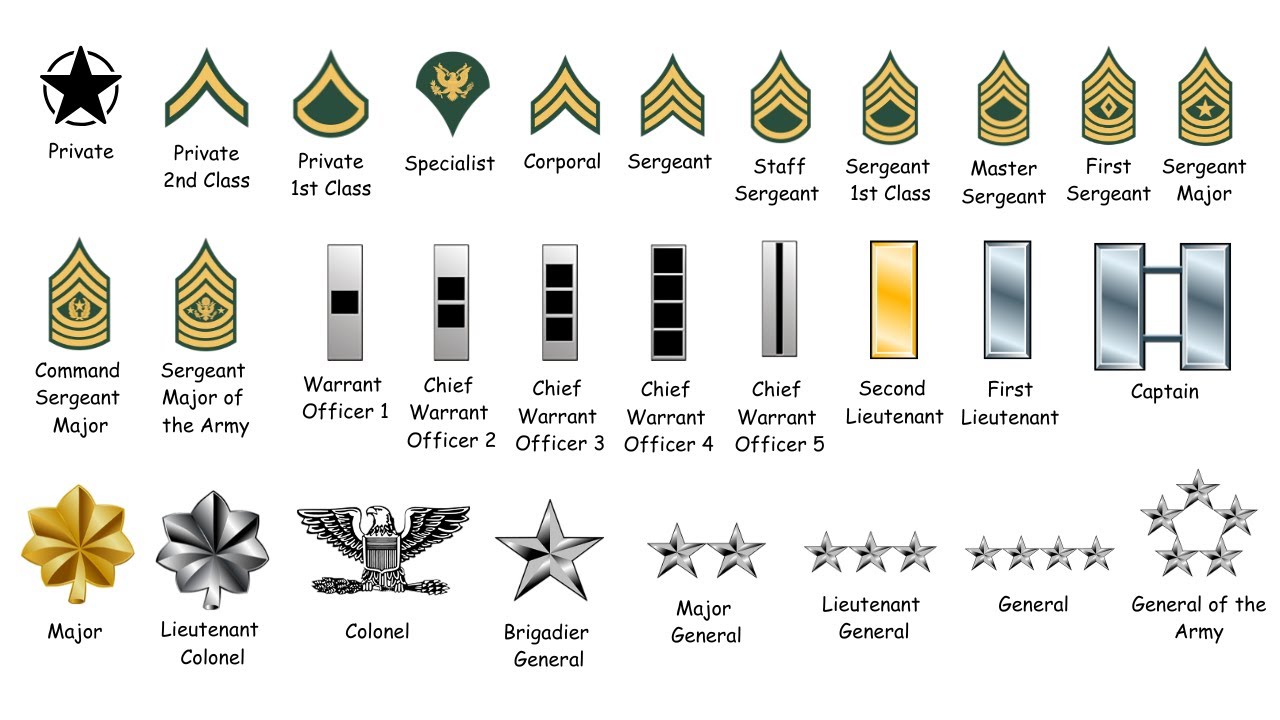
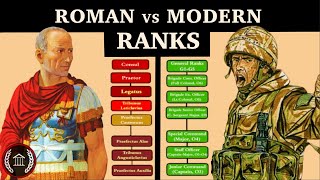
private a private is the lowest enlisted rank in the US Army serving as a trainee learning to follow orders and perform assigned duties upon enlistment privates do not wear rank insignia and spend their time in basic combat training after 6 months of service they are automatically promoted to private second class and with 12 months of Total Service and four months in rank they become eligible for promotion to private first class private second class private second class is the first promotion most enlisted soldiers receive after completing basic training soldiers at this rank are responsible for carrying
out daily tasks applying skills learned during training and following orders from higher ranking supervisors promotion to private second class typically occurs after 6 months of service with advancement to private first class usually following after about 12 months private first class private first class is the third l rank in the United States Army positioned above private second class and Below specialist soldiers at this rank are responsible for carrying out orders from commanding officers demonstrating individual responsibility and mastering their assigned duties promotion to private first class typically occurs automatically after one year of service though Soldiers with
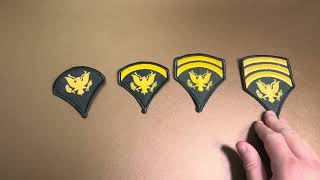
prior military training may be eligible upon enlistment exceptional performance or demonstrated leadership can lead to an accelerated promotion established in the mid 1800s the rank originally had no Chevrons or arcs until 199 after serving as a private first class soldiers typically advance to Specialist or Corporal with the latter requiring completion of the basic leader course specialist a specialist is a junior enlisted rank in the United States Army above private first class and Below Corporal while not a non-commissioned officer Specialists have leadership responsibilities managing lower ranked Soldiers the rank is typically earned after 2 years of
service with strong performance many soldiers are promoted to specialist upon enlisting particularly those with a 4-year college degree or specialized civilian skills while the Army generally considers ranks E4 and above as non-commissioned officers only corporals hold formal NCO status Specialists however are expected to develop expertise in their field while preparing for potential leadership roles Corporal as one of the oldest ranks in the United States Army established in 1775 the rank of Corporal signifies the transition from enlisted Soldier to a leadership role positioned above private first class and sharing the E4 pay grade with specialist corporals
serve as small unit leaders responsible for training discipline and upholding Professional Standards of often regarded as the backbone of the army they play a crucial role in Soldier development promotion to Corporal typically requires 26 months of service 6 months in grade waiverable to three and the necessary security clearance though unit commanders May Grant accelerated promotions based on leadership potential and performance Sergeant the rank of Sergeant marks a crucial transition from Junior enlisted roles to leadership within the United States Army positioned above corporal and Below staff sergeant sergeants take on significant responsibilities including leading and training
soldiers maintaining unit Readiness and overseeing Equipment accountability promotion is competitive requiring strong performance in Marksmanship physical fitness Education and Leadership eligible candidates must complete leadership training have 36 months of service and receive command recommendations as key leaders sergeants are expected to uphold professionalism and competence while shaping the soldiers under their Command Staff Sergeant as an experienced leader the staff sergeant plays a critical role in the Army's operational structure positioned above Sergeant at the E6 pay grade they manage larger teams oversee more equipment and are responsible for developing both sergeants and Junior enlisted personnel their expanded
sphere of influence makes them essential to unit effect Effectiveness promotion to staff sergeant requires a command recommendation 84 months of service 10 months in grade and completion of the primary leadership development course candidates must also meet education requirements such as a high school diploma or GED Sergeant First Class the rank of Sergeant First Class represents a significant milestone in an army career signifying Advanced leadership and experience with 15 to 18 years of service they are expected to make informed decisions that directly impact missions and soldiers well-being depending on assignment a Sergeant First Class may serve
as a platoon Sergeant or non-commissioned officer in charge acting as the primary assistant to the platoon leader they oversee multiple staff sergeants and ensure teams operate efficiently historically the platoon Sergeant has been seen as the father of the platoon master Sergeant the role of Master Sergeant is one of technical leadership and operational oversight at higher echelons of command holding the E8 pay grade they serve as principal advisers at the Battalion level and above offering expertise in their military occupational specialty while they do not have the same direct leadership responsibilities as a first sergeant Master sergeants
are expected to maintain the highest levels of professionalism and Technical competence ensuring Mission success uccess within their units First Sergeant First sergeants serve as the backbone of unit leadership ensuring the welfare discipline and development of soldiers under their command often called the top kick they manage Logistics career progression and disciplinary actions ensuring unit Readiness selection is highly competitive with only 1% of soldiers attaining the rank first sergeants remain in Hands-On leadership roles shaping the Army's enlisted Force at the company level sergeant major not to be confused with sergeant major of the army the sergeant major
provides critical leadership and expertise at the staff level holding the E9 pay grade they operate above the Battalion level advising officers and ensuring operational effectiveness within their assigned units while their experience and abilities match those of a command sergeant major their leadership influence is typically confined to the soldiers and units directly under their charge their role is essential in maintaining the efficiency and success of army operations at higher command levels command sergeant major a command sergeant major is the highest ranking enlisted leader in a color bearing army unit second only to the sergeant major of
the army selected by the department of the army they represent the Pinnacle of enlisted leadership and professionalism they enforce policies and standards for training performance appearance and conduct while advising commanders and staff on enlisted matters with extensive experience they operate independently offering wisdom stability and unwavering commitment to the mission unlike other enlisted ranks a command sergeant major can be assigned to any Billet in the Army making them a vital adviser and leader at all levels sergeant major of the army the sergeant major of the Army is the highest ranking enlisted soldier in the United States
Army serving as the senior enlisted adviser to the chief of staff this unique position is appointed to represent enlisted soldiers concerns to officers at all levels ensuring their voices are heard in Army leadership duties vary based on the chief of staff's priorities but much of the role involves traveling to observe training engage with soldiers and address quality of life issues the sergeant major of the army holds a special pay grade above en9 and is accorded protocol privileges above leftenant generals making them a key figure in Army leadership warrant officer one warrant officer one is the
first and lowest warrant officer rank in the United States Army requiring both leadership skills and Technical expertise enlisted soldiers must submit a written application which is reviewed and recommended by commanders before final appointment by the secretary of the army warrant officers fill roles that require the authority of a commissioned officer but demand specialized technical knowledge that traditional officers may not have Chief Warrant Officer 2 Chief Warrant Officer 2 is the second warrant officer rank in the United States Army as intermediate level experts they combine technical Mastery with tactical leadership filling roles that require the authority
of a commissioned officer while leveraging specialized expertise they serve at the italan level leading and Advising in their field while Bridging the Gap between enlisted personnel and commissioned officers Chief Warrant Officer 3 Chief Warrant Officer 3 is the third warrant officer rank in the United States Army as advanced level experts they provide guidance supervision and support to subordinates ensuring Mission success they typically operate at levels ranging from Team to Brigade offering expert leadership in both Technical and tactical operations Chief Warrant Officer 4 Chief Warrant Officer 4 is the fourth warrant officer rank in the United
States Army as senior level experts they serve as mentors to Junior warrant officers and advise commanders on warrant officer related matters they typically operate at Battalion Brigade division core and higher echelons playing a key role in Mission planning and execution at strategic levels Chief Warrant Officer 5 Chief Warrant Officer 5 is the rarest and highest warrant officer rank in the United States Army awarded to those demonstrating unmatched Technical and tactical expertise strong leadership and a deep understanding of joint operations and Innovation they are the most experienced leaders in the warrant officer Corp serving at Brigade
level and above they fulfill all duties of Chief Warrant Officer fors while also advising senior Army leaders on improving operations and integrating Army capabilities within the broader US military second Lieutenant positioned at the entry level a second Lieutenant commands a platoon of 15 to 50 soldiers or work as a staff officer gaining a central leadership experience all second lieutenants rotate between these roles but commanding a platoon is the key leadership position required for promotion they typically serve in this capacity for 12 to 24 months before ADV ancing to first lieutenant as a platoon leader a
second Lieutenant Works closely with senior non-commissioned officers including a platoon sergeant and Squad leaders who help execute orders and training plans their primary role is to plan supervise and Lead first lieutenant serving as either a platoon leader commanding 15 to 50 soldiers or a staff officer first lieutenants continue to develop their tactical expertise and Leadership skills while both both roles are essential leading a platoon is the key requirement for promotion to Captain and the primary purpose of an officer's commission first left tenants typically gain platoon leadership experience before transitioning to staff roles where they prepare
for higher responsibilities Captain a captain is a commissioned officer responsible for commanding a company-sized unit of approximately 150 soldiers this role requires a balance of strategic planning training and Mission execution making captains the final Authority on all aspects of their units operations they work closely with the first sergeant to enforce standards develop soldiers and ensure the company is properly resourced for its missions Beyond company command captains may serve as staff officers at higher levels such as battalions or brigades contributing to planning Logistics and overall unit operations they also attend professional development courses or pursue Advanced
education to prepare for greater leadership responsibilities as they progress in rank major holding the 04 rank they primarily serve as staff officers at the Battalion 800 soldiers or Brigade 5,000 soldiers level ensuring the effective coordination of military operations Majors often hold key leadership positions such as operations officer S3 or executive officer XO using their experience from previous roles as platoon leaders company commanders and staff officers to support Mission success they play a critical role in Bridging the needs of smaller units with the capabilities of higher command additionally Majors May attend graduate school or professional development
courses sponsored by the army lieutenant colonel As Leaders of battalions Lieutenant Colonels command one of the most influential levels of organization within the army holding the rank of' 05 they are appointed by the secretary of the army and primarily serve as commanders of battalion-sized units or as staff officers at the Brigade level and above assisting in planning resourcing and operational oversight as Battalion commanders Lieutenant Colonels are the final Authority on all Battalion matters responsible for everything the unit does or fails to do they are supported by a command sergeant major who advises and assists in
leadership and discipline unlike company grade officers who lead soldiers directly Lieutenant Colonels oversee and coordinate operations across their Battalion ensuring all subordinate units function cohesively to accomplish mission objectives Colonel one of the most prestigious ranks in the Army a colonel serves as the senior leader of brigade-sized units around 5,000 soldiers or in specialized commands such as law or medical units holding the rank of' 06 Colonels have spent years mastering leadership at the Tactical and operational levels their ability to command strategize and oversee largescale operations distinguishes them as the highest ranking field grade officers Brigadier General
a brigadier general is the first of the general officer ranks marking an officer's transition from field grade leadership to strategic command holding the rank of 07 they serve as Deputy commanders of Brigade or division sized units approximately 5,000 to 14,000 soldiers working directly under major generals to gain experience in high level leadership and strategic decision making achieving the rank of Brigadier General is an extremely selective process reserved for those with exceptional experience expertise and Leadership abilities marking a significant transition into the highest levels of army command Major General a major general takes command at one
of the highest levels of leadership in the Army overseeing division sized units of approximately 14,000 soldiers holding the rank of' 08 they are responsible for both military operations and the post where their division is based by the time an officer reaches this rank they have gained significant experience as a general officer having previously served as a brigadier general commanding at this level is both a high honor and a tremendous resp responsibility requiring exceptional leadership strategic vision and operational expertise leftenant General leading some of the most critical commands in the Army a lieutenant general serves as
a senior officer at the 09 rank they primarily command higher level organizations such as combatant commands or serve in major staff roles in commands like trok or forces command some hold specialized roles such as superintendent of the United States Military Academy at West Point officers attain this Rank by being appointed to positions that require it but they only retain the rank while serving in those roles upon leaving their position they either revert to their previous General officer rank usually Major General or in rare cases advance to full General since many liutenant generals conclude their careers
in these high ranking roles the position is often considered a terminal assignment General as the highest ranking general officer in active service a general holds the o10 rank and commands at the most senior levels of the army appointed by the president with recommendations from the Secretary of Defense and the secretary of the army generals are often referred to as four stars due to the four stars on their uniform they command at the highest levels leading major organizations such as trade o forces command or serving as the chief of staff of the army and on the
joint Chiefs of Staff general of the army the rarest and most prestigious rank in the United States Army general of the Army is a five-star general officer rank reserved for wartime leadership equivalent to a field Marshal in other nations it is the highest rank in the Army above a fourstar general this position is only awarded when the commanderin-chief deems it necessary it signifies unmatched Authority with its holders responsible for overseeing army-wide strategy and deployment in times of national crisis the rank was first introduced in 1866 and held by ulyses S Grant William tumza Sherman and
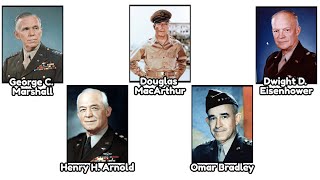
Philip Sheridan it was revived during World War II as a modern five-star rank awarded to George C Marshall Douglas MacArthur Dwight D Eisenhower Henry H Arnold and later Omar Bradley in 1950 while no officer has held this rank since it remains a symbol of the Army's highest leadership and strategic responsibility