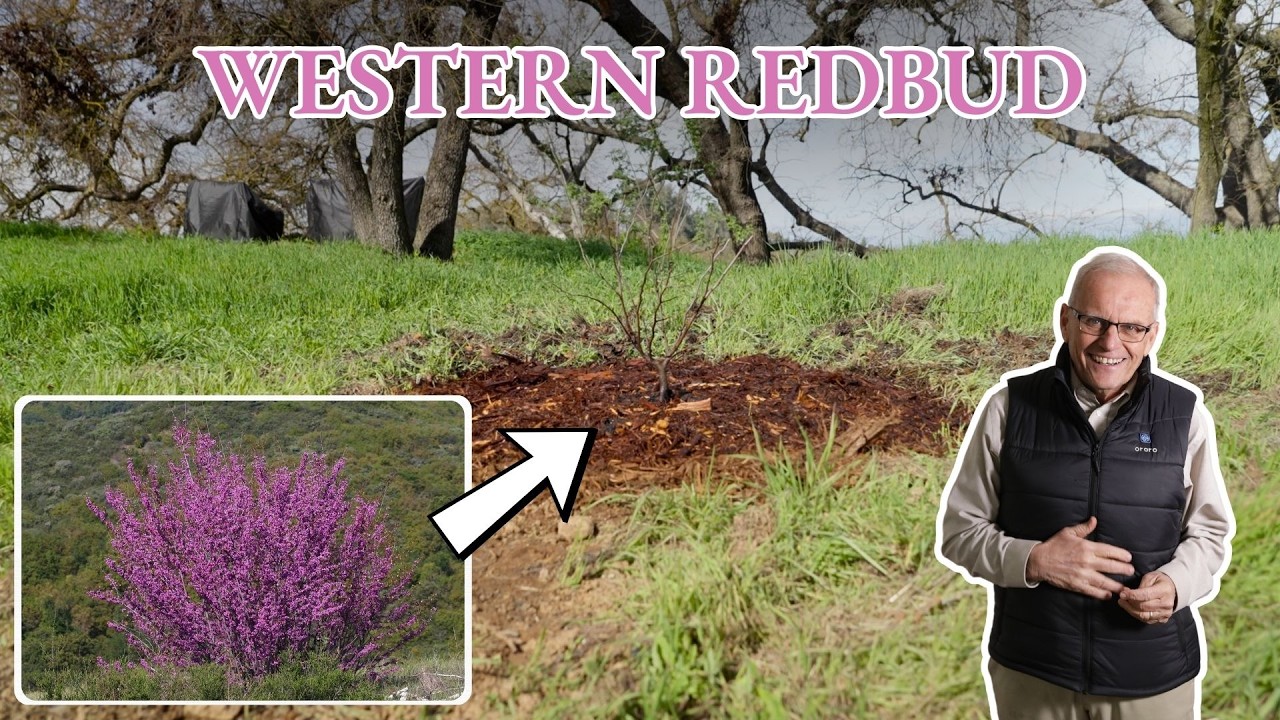
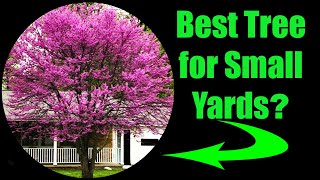
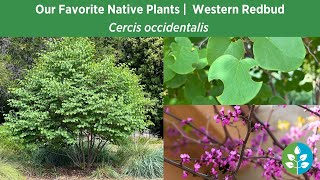
we're here in Fresno California and I'm going to show you a planting of Western Red Bud cus oxident Talis in a native type setting so one of our clients has a nice area below their house that is a lookout to the sanim river and this area has all native plants sycamores Oaks their goal was to enhance that native planting the idea was to add to the native trees that are here with an understory large shrub called Western red butter cersa oxid in Talis we laid out a grouping of five we placed them in a natural
way like they could possibly occur in nature two together and three a little ways from that we're kind of picturing them blooming in the spring which will be spectacular this is a plant that has flowers everywhere even on the branches right up to the trunk and on the trunk native to right where we are central part of California it grows in Foothill areas and grows in hot dry areas like ours it's the type of native plant we want to be using when you look into using natives natives all over the country or California natives California
represents a challenge because there are so many native plants and yet there's a lot of different microclimates in California so just because it's a California Native doesn't mean it would thrive in your area without a lot of care so you need to figure out which part of California it's native to and if that's similar to your part part of California a good example of a California Native that isn't native to similar areas to our hot dry Summers is the coast Redwood which occurs in moist summer areas from Santa Cruz northward along the coast where you
get Summer fog we have nothing close to Summer fog and that's kind of the opposite of why a lot of people want to use native plants they want something low maintenance that's suited to natural elements in their area so we cleared the area we a good siiz hole and we added our products which in this case was blend and penetrate liquid bioer our John and Bob's line of products is perfect where it's focused more on feeding the soil and then the soil feeds the plant rather than artificially providing nitrogen phosphorus potassium in a way that
can be harsh and bad for Natives and then we put a layer of mulch in a big circle around it so that that can be kept free of weeds so there's no immediate competition we think uh this will take off as soon as we get a little bit warmer weather we're in mid-February right now another month or so we'll see this start to bloom Western Red Buds and Eastern Red Buds which are similar in size and Bloom are all small deciduous trees or large deciduous shrubs so there's lots of appropriate applications for them in gardens
we're always looking for small trees that don't have damaging Roots don't require a lot of space can shade Western Sun because Western Sun is low in the sky lots of applications for Western red butd in traditional Gardens now one of the things I like to do rather than limit it to just native plants there's other plants from other parts of the world that also do good in a hot dry Mediterranean climate I like to use all of those together rather than saying I'm only going to use California natives olive trees and rosemary and a whole
host of other plants that grow in Mediterranean climates which means they don't get summer water and many of them are perfectly suited to our climate here in California so I kind of mix California natives for our area with exotic plants that have similar uh requirements because they come from parts of the world with Sim similar climates but if you say no no no no no I want to limit it only to natives that can be done that just gives you fewer plants to work with so one of the worst things for natives since you're selecting
them usually for their ability to get along without a lot of water one of the worst things is to water them a lot especially in heavy clay like soil you know if you plant them near Lawns that's usually not going to work you know there's a lot of California natives flannel Bush that are easily killed by overwatering Matia papy fantastic blooming plant beautiful native easy to kill if you overwater it you can see all of these trees trees here are not being watered in the summer but to establish new plantings in an area like Fresno
that has lots of 100 degree days in the summer the best way to do it is to be able to provide some watering the first two years or so and that'll get them off to a really strong start the owners had water up by their house we brought that water down this steep hill and we came with 3/4 in schedule 40 we put in a quick coupler valve that kind of acts like a hose but it's buried so there's no vandalism possible and it requires a key to get into it so you can't just come
and turn on a faucet and then there's a valve and a battery operated controller one of the challenges that I found in these natural areas is I don't like to use drip tubing because it's really subject to animals eating it and putting holes in it and constantly needing repair what we came up with is all the pipe is buried and it's all schedule 40 pipe and then when we got to each plant we put it on a regular sprinkler that pops up 4 in when it comes on and is made out of sturdy plastic material
so that it's difficult to damage and it's finished to grade so you can't kick it uh it's on a swing joint so even if you were to step on it it won't break we just want to water around the root zone of the plant this first year maybe he'll water once a week or so so and get it off to a good start if you liked it please officially like it and continue to watch our videos and subscribe to them if you have a comment please leave it for us we're happy to answer any questions
hopefully we've answered your questions about Native plantings [Music]