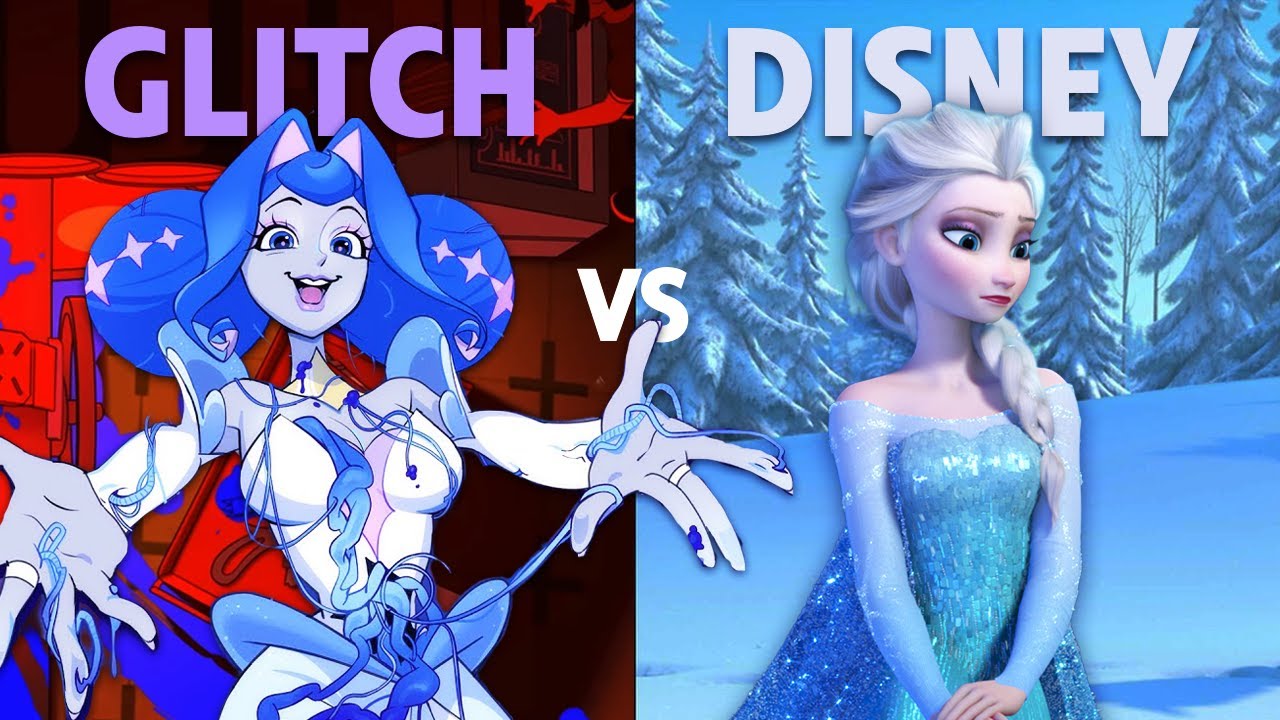
In one of the wildest shifts in recent animation history, a tiny indie studio out of Australia has gotten 1. 3 billion views on their animated shows, struck unprecedented deals with Netflix and Amazon, and got Disney's cancelled showrunners lining up to work with them instead. All in just a few years while being entirely anti- Disney.
This isn't a fluke either. It's exposing how broken the traditional studio model actually is. How one company built an entire animation empire on YouTube while legacy studios are losing their grip on animation entirely.
So, how did Glitch completely flip the script on how animation gets made and distributed? And why could this cement them as the biggest threat to any major animation studio? Plus, it's all culminated in their new 2D show that openly mocks and makes fun of Disney.
Well, as ridiculous as it might sound, it all started with two brothers making Super Mario 64 meme videos in their bedroom. I'm serious. Kevin and Luke Lurvichal, the founders of Glitch, started a YouTube channel called SMG4 in 2011, where they turned Nintendo games into absurdest comedy sketches.
By 2017, they'd built a massive audience making content that cost almost nothing to produce. And they had a crazy idea. What if we used that YouTube money to fund real animation?
That became Metarunner in 2019, then Sunset Paradise, then Murder Drnes in 2021, a show about murderous robots that somehow had like genuine emotional depth. Each one bigger than the last. Each one proving their model could scale.
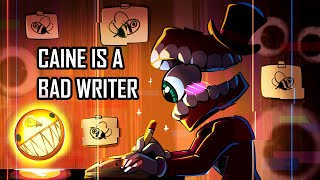
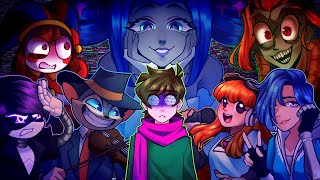
But the real turning point was October 2023. They dropped the pilot for this weird ass show about characters trapped in a surreal digital world slowly losing their sanity. The Amazing Digital Circus.
Within 30 days, it got 100 million views. Within a year, over 380 million, and it's now sitting at basically 400. Safe to say it broke the internet and became the most viewed animated web pilot in YouTube history.
Suddenly, Glitch was a household name, attracting all sorts of mainstream attention and garnering 15 million plus subs on YouTube. And the wildest part is that Glitch did all of this outside the traditional system without studio executives or a big corporate parent company backing them up, which is great, but it also reminded me how little control most of us have over the other systems we rely on every day, especially when it comes to our data. Honestly, it's not something I've ever taken super seriously until I actually started researching this stuff.
And with today's AI easily capable of faking your voice on the phone or deep faking your face in a video call, having things like your phone numbers, email or address out there is pretty scary. That's where Incogn, the sponsor of today's video, can help. Incogn works by tracking down and removing your personally identifiable information from the internet by going after the data brokers and people search sites that are selling your info without you even knowing.
Getting set up is super easy. You literally just create an account, put in your info, and they handle everything from there. It just calms my anxiety knowing how much harder it is for a scammer to do anything bad if they can't find you in the first place.
Plus, with their unlimited plan, if you find your data on a site they don't already cover, you can just copy paste the link into Incogn and their team takes care of the rest. They've removed my info from over 45 data brokers in just a few days. So take your personal data back with incognara for an insane 60% off at incogn.
com/moonwara or by using the link down below in the description. Now let's get back to Glitch. So how did Glitch actually pull off this insane success?
Because here's what you need to understand. Everything about Glitch's model breaks the rules studios have followed for decades. Here's how it usually works for creators in animation.
Pitch your show to a network or studio. Surrender IP rights. Give executives creative control or creative say.
Hope your show doesn't get cancelled. Usually the showrunner/creator does not have full creative control. They're given notes by producers or executives for things to change leading to a product that could be very different to what the creator envisioned.
I mean, we've seen this happen countless times over the past 10 years. Glitch said, "What if we just don't do that? " Kevin and Luke heavily distrusted the studio model and decided to give all creative control to the creator of each show.
It's risky, but it also can be incredibly beneficial if you choose the right showrunners. But you might be wondering, okay, but studios have executives and producers because that's how they finance shows, right? And yeah, you'd be absolutely right.
Which leads me to another key factor as to why Glitch has been so successful. The fact that they continue to be completely selffunded. They don't have investors or any outside shareholders in that way.
Glitch has always been funded by AdSense and merch. Merch especially is a big big part of their business, around 80% of the funding for their shows and is a huge reason they can continue to do what they do. So, as just a little reminder, if you like their stuff at all, consider checking out their merch.
This self-funding allows them to give creators as much creative freedom as possible with no meddling, producers, or executives getting in the way. But none of this would be possible without the loyalty of their audience, which has continued to grow in size and intensity over the years. Part of the reason for that is obvious.
Glitch releases everything for free on YouTube. just free, which sounds insane when you consider how expensive animation is to produce and how well-made these shows are. But this is exactly what allows them to build the kind of loyal, engaged fan base that most studios can only dream of.
Because when you're not asking people to pay upfront, when you're making your content accessible to anyone with an internet connection, you remove every barrier between your stories and your audience, and you let people focus on the quality of the content rather than if it's worth buying a cinema ticket to watch it, for example. The numbers speak for themselves. The Amazing Digital Circus is basically a 400 million views.
Murder Drnes pulled nearly 80 million views on its pilot alone, with subsequent episodes consistently hitting 30 to 40 million views each. These are numbers that rival or exceed what major studios get on streaming platforms. And Glitch is doing it without any of the infrastructure, marketing budgets, or corporate backing that those studios rely on.
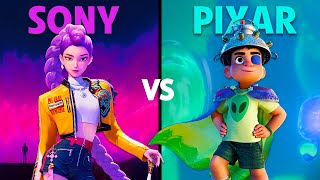
Just for context, the most viral mainstream animated movie this year, K-pop Demon Hunters, got 325 million views on Netflix so far. That's a Sony and Netflix movie that cost a hundred million dollars plus to make. While one amazing digital circus pilot has significantly more views than that.
Is that not absolutely nuts? But there's one crucial component to their success that we haven't talked about yet. Because Glitch has figured out something that mainstream studios have completely missed historically.
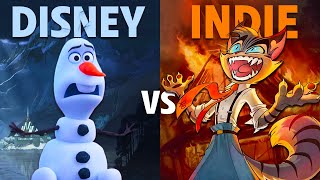
There's a massive underserved audience for anti- Disney animation. And what I mean by that is mature western animation that isn't anime or adult comedy that leans into darker and weirder themes. Murder Drnes is a show about robots brutally killing each other, complete with genuine gore, dark humor, and emotional complexity.
The Amazing Digital Circus explores existential dread and and psychological horror and characters slowly losing their sanity in a digital purgatory they can't escape. These aren't shows you watch with your 5-year-old on a random Saturday morning. They're aimed at teens and adults who grew up on animation, but have maybe aged out of most of Disney's target demographic.
People who want serialized storytelling, emotional stakes, and themes that feel unique and different that you can't find anything else and that aren't watered down to appeal to a mass audience. Disney, Pixar, DramWorks. They built their empires on familyfriendly four quadrant content.
Movies that parents feel comfortable taking their kids to stories where good triumphs, evil is punished, and everyone learns a valuable lesson by the end. That model works, don't get me wrong. Disney's the most successful animation studio in history, but it also requires constant selfcensorship.
It means executives cutting queer storylines because they might make certain people uncomfortable. It means sanitizing scripts so nothing feels too dark, too specific, too political. Glitch doesn't operate under any of these constraints.
They do whatever the [ __ ] they want. They're just asking, "What story do we want to tell? " And then they tell it unfiltered.
That's why their shows can explore mature themes without anyone in a boardroom demanding they make it more familyfriendly. We just want stories that respect our maturity. Anime definitely serves this and it's one of the reasons for its explosion in popularity in the last 20 years.
Adult animated comedies like Rick and Morty or Bojack Horsemen have served it too. But there's been this weird gap for dramatic serialized western animation aimed at older audiences that takes itself seriously without being purely comedic. Glitch found that gap and dove head first.
They're giving people exactly what they've been craving and the numbers prove it's working. Glitch's success has obviously led to attention from other studios. I mean, they struck deals with Netflix and Amazon Prime, but Glitch has continued to stick to their guns.
No limit on creative control, and full IP rights remain with Glitch for their shows. Plus, no exclusivity. Shows will continue to air on YouTube for free alongside Netflix and Prime.
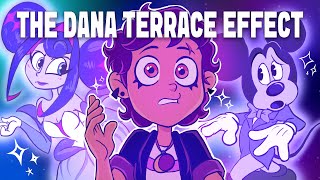
These deals just give more legitimacy to Glitch and the empire that they're building. But the real proof that something fundamental has shifted, Disney's own creators are jumping ship. The most prominent example being Dana Terrace.
She's responsible for The Owl House, one of Disney's highest rated animated series in years. Critics loved it. Fans were obsessed.
It had genuine cultural impact, especially for LGBTQ representation in kids animation, and Disney [ __ ] cancelled it. The official reason was that its serialized format didn't fit Disney Channel's brand strategy. Dana was obviously devastated.
She'd poured years into the show, built this massive fan base, told stories that genuinely mattered to people, and Disney just killed it. So, when Kevin from Glitch reached out and said, "Do you want to make whatever you want? No restrictions, just complete creative freedom," she said, "Hell yeah.
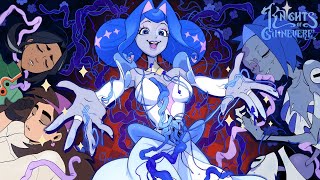
" Which led to the new Glitch show, Knights of Gwyavir. The pilot dropped on September 19th, 2025. And within the first five minutes, it's crystal clear what Dana is doing.
Dana Terrace made a show where Disney is literally the villain. The series is set on a planet divided between the fantastical Disneylandesque theme park called Park Planet and the everyday toil of the impoverished surface below. It's a pretty blunt visual metaphor for capitalism's exploitation and and the wealth divide as well.
The pilot got 10 million views in a few days. The comment section was flooded with former Owl House fans celebrating that Dana could finally tell the stories Disney wouldn't let her make. This is beyond awesome.
I love that Glitch seems to be becoming a place where people can tell their stories completely unrestricted. And that's not just happening with shows Glitch creates in-house because in October 2025, they announced something that could be even bigger. A new label called Glitch Presents.
Here's how it works. Up until now, everything Glitch made fell under Glitch Originals. Shows like Murder Drnes, Gaslight District, The Amazing Digital Circus, and Nights of Gwyavir.
Those are fully self-funded by Glitch through merch and ad revenue. And they stay free on YouTube forever. But Glitch Presents is different.
It's a partnership model where Glitch teams up with independent creators who already have amazing projects and helps them scale up production with external funding from streaming platforms or other thirdparty partners. And the creators keep full creative control and IP ownership. Glitch handles distribution, merchandising, and production support, but they're not there to interfere at all.
The first show under this banner, Lacadis, one of my favorite indie animated shows. They've been crowdfunding their web comic adaptation for years, but Glitch is helping them expand their series while letting creators Tracy Butler and Fable Seagull keep full creative control. Tracy can literally ignore producer notes if she wants.
That's unheard of in traditional animation. Studios that fund your show get final say, period. But Glitch's approach is we'll give you resources and distribution.
You make the show you want to make. We're not here to interfere. That's why creators are seeking them out instead of pitching to Disney or Netflix sometimes because Glitch offers something legacy studios won't trust.
And I can't overstate enough how impressive and awesome that is. Glitch is doing something truly revolutionary here. Which is exactly why I think they're a threat to the mainstream animation studio system.
They're doing things wildly different yet finding ridiculous success. in some ways more success than studios with hundreds of millions of dollars. And that breakout success marks a turning point for the animation industry, revealing how independent studios like Glitch can now rival the creative output and cultural reach of major networks.
What makes this moment notable is not simply that a small team created viral hits, but that they demonstrated a new production model capable of delivering visually complex, narratively ambitious, long- form animation without the infrastructure of a traditional studio. Glitch leveraged real-time rendering tools, remote collaboration pipelines, and hybrid funding sources that combine merch and AdSense. This dramatically lowers the barrier to producing highquality episodic content, enabling rapid iteration, bold stylistic experimentation, and thematic risks that mainstream networks usually aren't okay with.
The Amazing Digital Circus didn't just gain popularity as a one-off phenomenon. Its reach showed that audiences are not only willing, but eager to engage with creator-driven series that break from formulaic stories. Its success validates the idea that internet audiences crave originality and emotional depth even in a comedic or highly stylized package that challenges a long-standing industry assumption that only broad four quadrant animated content can succeed at scale.
And it's part of the reason why creators like Dana Terrace are jumping ship to work with Glitch instead. The implications for the animation industry are deep. As independent studios adopt game engines like Unreal and Unity for cinematic animation, production timelines shrink while visual ambition continues to expand every year.
The old assumption that highquality animation requires hundreds of artists, long render cues, and a massive budget is simply outdated. I mentioned this in my broader indie animation video a few weeks back, but there are countless countless examples of incredible studio level indie animation across YouTube. The barrier between professional animation and indie animation is narrowing each year.
Flow being the case in point, distribution is evolving just as quickly. YouTube's global reach provides a platform that rivals traditional television in discoverability and audience engagement and has done so for years now with more people watching YouTube on TV than any other streaming platform in the US. That's crazy.
Instead of waiting for studio executives to greenlight a project, creators can release directly to millions of viewers and build momentum organically. Glitch's runway hits have become proof of concept for launching new animated IP on YouTube first, then expanding to streamers. At the same time that the wider industry is rethinking whether new shows should start on TV, streaming or YouTube.
At the same time, animators, writers, and directors are realizing they no longer need to enter the industry exclusively through corporate ladders. The path to a sustainable career is decentralizing, opening more opportunities for niche voices and highly stylized ideas. And Knights of Gwyavir perfectly captures what this shift means.
The fact that Dana can release this directly to audiences with complete creative control and get millions of views while Disney Xs have to watch from the sidelines. Kind of says everything about who holds power. Now in short, Glitch stands as a case study in how the next generation of animation can be created, funded, distributed, and culturally elevated outside traditional Hollywood structures.
It proves that independent teams empowered by modern tools and direct audience connection can shape the future of animation as much as or even more than the legacy studios that once defined the medium. I am confident in saying that Glitch and many other independent studios across YouTube will be at the forefront of mainstream animation in the next 10 years.