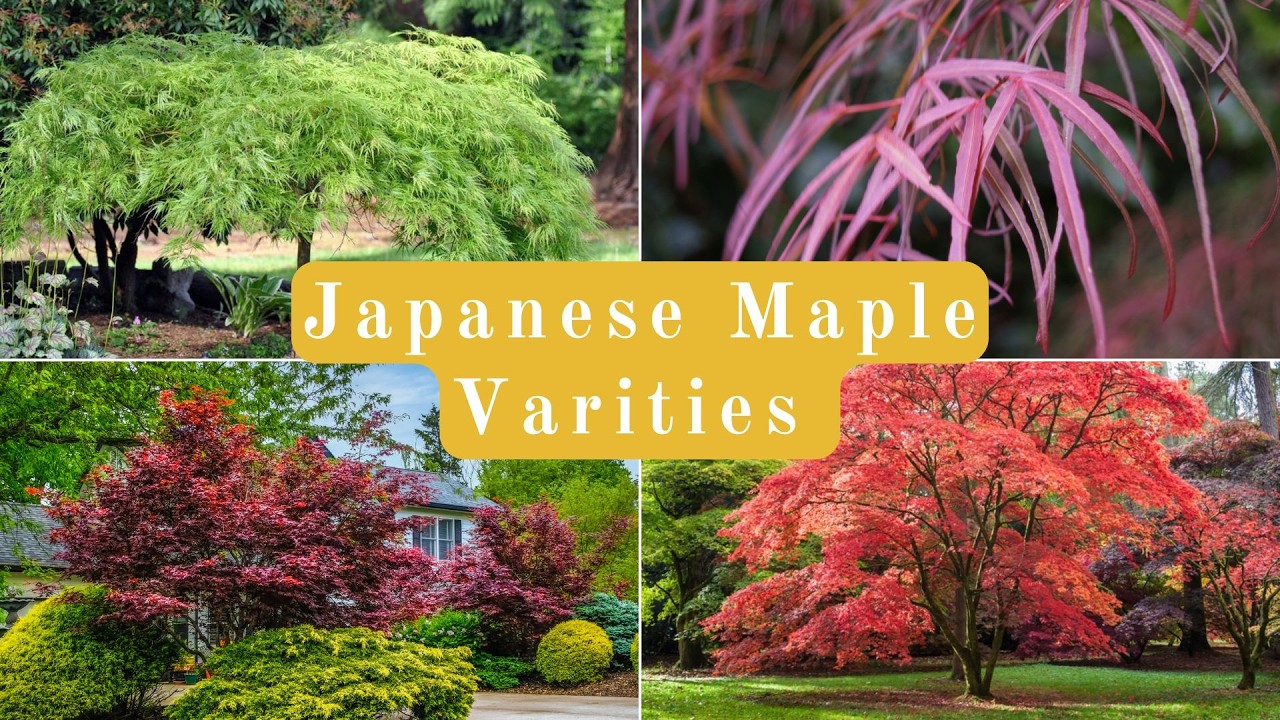
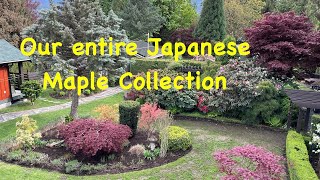
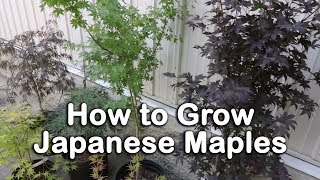
If you are interested in Japanese maples, I'm going to talk about different sizes, colors, and leaf types. We're at a really neat little garden in Fresno, California, and we're going to do a little remodel of it. You can hear we started with a remodel.
One of the things I'm going to use a bunch of Japanese maples. Now, you might say, "This garden doesn't look big enough to put more than one Japanese maple in. " That's one of the neat things about Japanese maples is they come in all sizes.
You can get 25 to 30 foot and you can get dwarf ones that only get 3 to four to 5 ft tall. So, the size of them really does vary. Incredible array of sizes.
I'd say the smallest, there are some that only get 3 ft tall. I haven't seen any that stay smaller than that. And usually they'll show a range, but they grow very slowly.
So, it's going to take a while to get to these ultimate sizes. 3 to 5t tall. That's a range of quite a few varieties.
And then you can find quite a few varieties that are 5 to 8t tall and quite a few varieties that are 8 to 12 feet tall. And a lot of the more well-known varieties are 20 to 30 foot trees. So there's a range of sizes.
For this project, we're going to pick the ones that are in the 3 to 7 ft range. A couple of the bigger ones maybe will rely on some skillful pruning to keep them down to 5T or so. They vary in their growth habits, but the three main are upright, spreading, weeping, and everything in between those.
Just like you would picture a weeping willow, that's what a weeping Japanese maple is. The leaves are in three categories. A maple leaf, and then one what we might call a ribbon leaf.
than one that seems like everybody wants, which is a lace leaf. And different variations of those three. All of the leaves that are more finely divided and more delicate tend to be more sensitive to sun.
And so you have to be more cognizant of its exposure. Make sure it doesn't get much or any afternoon sun. The leaf colors are tremendously beautiful and varied.
You can find orange, purple, red, green, yellow, and the color is most noticeable in the spring and the fall. And some aren't colored. So, they're green when they come out in the spring.
But the ones that are colored usually don't hold their color through the middle of the summer. They'll fade just because of the heat and the and if they do get some sun. Another fantastic variation with Japanese maples is the bark.
Some are spectacular. Probably the best known. is one called sango kaku and I would love to use that here but that's 25 ft Japanese maple sango kaku has this beautiful bark adds to the attraction of the tree even in the winter when it doesn't have any leaves it has this vividly colored bark maples will do well in a wide variety of planting zones most parts of the country can grow Japanese maples tend to like slightly moist soil particularly ally if they do get more sun than they should get.
Uh so in the summer if you're trying to keep them looking good and not burning, then you want to make sure those roots stay moist. You see this existing boxwood similar to how you'd water boxwood. You learn a little bit about their characteristics and see what appeals to you in terms of leaf color, size of the tree, and leaf shape.
Check out what's available at your local nurseries. You can also buy small ones online, getting even unusual ones. These are the varieties that we picked for this garden in here.
We're going to do it like a mini arboritum. They're all going to be different, dramatically different from each other. And that's kind of the the theme of you walk through and you see this little mini collection of Japanese maples that all have different colors and different leaf shapes.
There's lots of varieties of Japanese maple. Maybe you have a favorite. Let us know about it in the comments.
Thanks for watching and keep watching if you want to see this garden progress. See how I use the Japanese maples and how we kind of spruce this up and plant it. And if you like this video, please like it and subscribe to us what's going to be a screen of Chameleia Setsuga up against the garage wall there.
And then we're going to spot in, and maybe not exactly where I drew them, but uh we're going to spot in about nine of these dwarf Japanese maples. Underneath all of that, we're going to do an understory planting of juniper procumbent nana mixed with laapi varagata or maybe a few carrots uh ice dance or something similar.