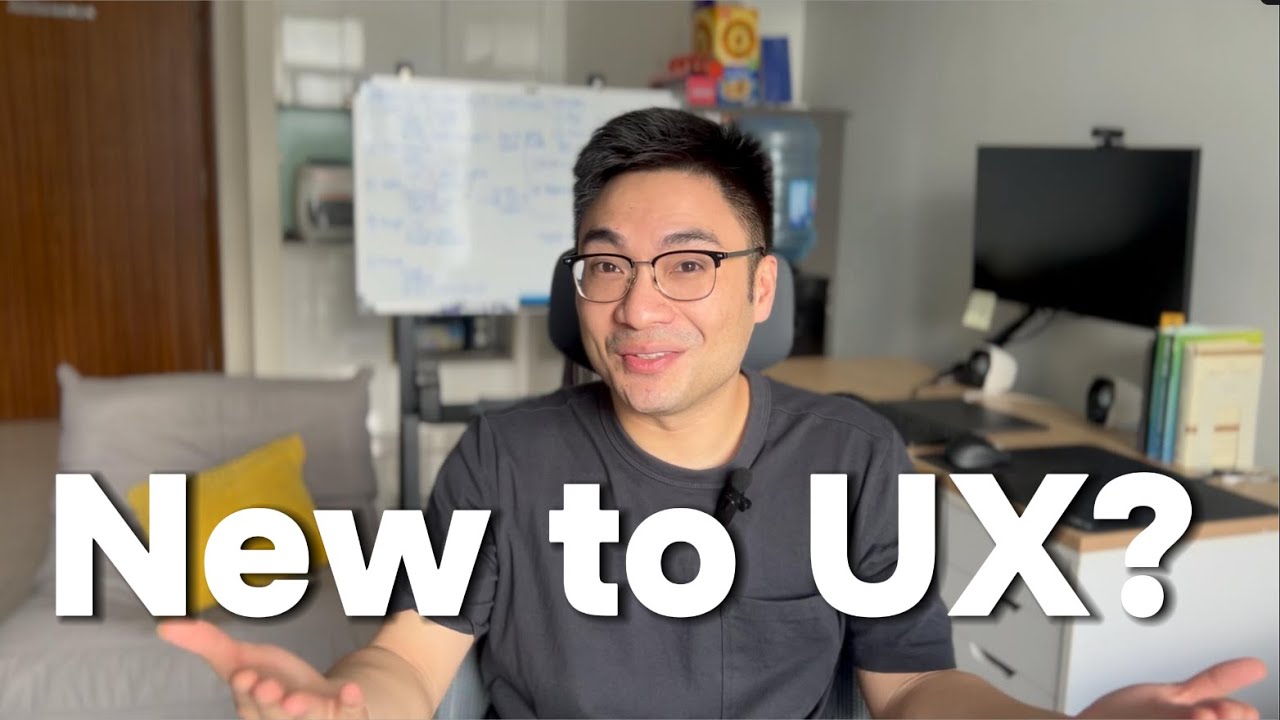
okay hey guys welcome to my Channel first video I'm making is to share with you guys my experience making a career switch to ux design I will give you guys step by step things that I did during the whole time what I was learning and trust me there was a lot of learning pains when I first began you might be watching this as someone that's thinking about making the career switch 2 or maybe someone new into ux haven't been doing it for a couple weeks couple months or maybe even a senior you've already had a
job and you kind of want to share and put in your own Insight so it's overwhelming at first and I want to design this video for you guys and make it as clear as possible so I'll give you guys the steps I took and I'll give you guys also the action items for each step to know better help you out so I remember that feeling you're not alone without further Ado let's get into the video so the first thing is considering if design is right for you if the industry is right for you and I
personally now looking back there's some qualities that I say okay a lot of designers have these similar qualities right and it's pretty you know it's pretty cliche but critical thinking and critical thinking is always kind of wondering why always thinking of it in a different perspective different angles of a problem if you're always the type to say hey this can be improved or what other options there are you know you're practicing critical thinking you're seeing what kind of um how you can test things so that's one of quality then from there after critical thinking kind
of naturally curious person so it's related pretty closely with critical thinking and that's just being curious and saying Hey what if we do this or what about this just always asking why why are we doing this why is this a problem so so being curious in that way will one of the qualities I've seen a lot in good designers probably the last one and I think it's the most important one if being a growth mindset so growth mindset and what does that mean and why is it important growth mindset is always being humble and making
sure like you're leaning on Experts you're leaning on different people to gain insights continue and strive for more knowledge in anything but especially in design so what you consume is important and also what you the output you have right what are you doing are you making projects are you conducting interviews are you sharing it with people so that's one of the more important things in design so yep go now let's go into the steps of what I did to become a designer so the first step to start learning about ux design is building a foundation
and very much like building a house you got to start off with the bottom layer the very strong support so well my strong support in the in the beginning was reading popular design books that are widely known as the the basic design books you start off with and give you an overview an idea of what design is so the two books are the Design of Everyday Things by Don Norman and don't make me think by Steve Krug so these books are really good so in the Design of Everyday Things Don Norman talks about affordances which
are possible actions a user can take signifiers that indicate tell a user what actions are possible and lastly feedback which are responses given to the users about an action so those are really two good books to start off uh uh on your base knowledge and then from there going into interaction design I would recommend reading about face and about face gives you the common patterns theories principles of interaction design so this book will give you a baseline on the terminologies that you need to to know about interaction Des or the tips on improving your interaction
design and your uses of tools and creating designs I would suggest taking a course that you enjoy and having a teacher that delivers the information to you in an easy way simple way it's kind of like when I learned guitar was really difficult at first holding the strings and everything but then on Tope of lessons that I I took online just simplified it a lot it made a lot easier so you just got to push through that initial month or two of learning and then it gets easier and easier and these design tools are pretty
much the same all across you got to learn one and then you'll learn majority of them so when you're looking at other designs to mimic or look like I wouldn't go through conceptual designs like you'll see on dribble I would look at actual real life products moin is a good source of references you don't have to sign up to a lot of different uh accounts to do so so you can use mobin look I did it from references better improve my design principles by reading U books like refactoring you so they teach you about typography
the color theory hierarchy which are skills that you will always use as a designer and then I'd also look at laws of ux so that will that's even more designed principles in the description I'll put the link for laws of ux so you can get better uh familiar with these are obviously things I I use every day as a designer for example laws of ux all those principles the Design of Everyday Things and the most common principles just don't make the user think so so make design simple not too complex design something that you would
use yourself so that's just building uh that's using the fundamental building blocks to springboard Your Design Journal once you have all that basic Foundation of design and you know the tooling and the principles behind design then you want to be able to ply it so step number two is just building a design mentality and what do I mean by building design mentality I mean observing everything around you what you can improve around you what designs that you see is inefficient or just not as functional and what you can do to improve it notice the applications
you're using the products you're using in real life and how you're interacting with them even the world around you outside of just the digital products you use the physical products like I mentioned maybe looking at ATM how it's designed if is it inefficient all the ideas of maybe you're doing a a withdrawal over your phone what kind of OTP codes are you you need to get on your phone what is the flow like another example is when you are in an elevator look at the interface of the actual buttons and see how you behave with
it why does it work the way it does this step will be very useful when it jumps to The Next Step I'm going to talk about step number three putting in the work in an actual project and that that means passion projects when you're first starting off it's hard to get actual projects can do free work but hey rather than do free work you should rather just do what you're interested in that's what I did I took apps that I actually use like at the time I was learning Vietnamese and I was using hello talk
I was actually able to interview around five users understand their pain points I made a whole case study of I thought about how a lot of the users were really focused on pronunciation and app didn't have a feature that kind of condensed what exact word they were mispronouncing by interviewing a couple users even though it was not the greatest case study or was the greatest idea it was just putting in the work building it's like a muscle that you go to the gym and you put in the work and you get stronger and stronger so
in the step number three you just want to get as much practice in as possible and these are going to be like pretty cringy case studies that you look back on but that's okay that's not the point the point is to actually get the you can also ask advice too like mentorship adps has a mentorship program as well you can check into I I never did it my friend she had a relative that husband was a designer so I reached out to him and he gave me some feedback now looking back my my my portfolio
was horrible M my yeah everything was just horrible and I'm pretty embarrassed but without that I wouldn't be able to kind of learn and I he gave me a lot of good insights ask for specific advice of what you can actually improve on so just don't give a portfolio or case say hey what do you think about this maybe ask hey how is my process how is my interaction design skills do you see things that can be improved be very specific when you're asking about feedback that's a important tip as well get feedback from people
that been in the industry for example when I was doing a research proposal I took a course by Nikki Anderson ux researcher that's popular on LinkedIn she had a course on a research process I sent her some of my research proposal and research planning uh documentation and she actually took a look at it was nice enough to add comments and that has helped me out too like kind of seeing what if you're going in the right direction because a lot of times when you're first starting off and especially when you're starting off being self-taught you
just don't know if you're going the right direction so rely on Experts to help you out there put you once you put in the work in the projects and trust me it'll be worth it in the long run you'll go to the next step step number four is preparing your portfolio and your resume these two two artifacts so the portfolio I would say is the most important thing as a designer it shows your work it shows Your Design thinking the designer your work is what matters also you are as a person too so you can
include your story and obviously your resume is the thing that gets you in the door by a lot of recruiters so portfolio after you finish putting in that work in the gym you've get you're gaining all those projects under your belt then you can start putting into that portfolio that you can work and some portfolio sites I recommend uh I personally use web flow and web flow is great I would suggest using web flow you can also use Squarespace but personally I just stick with web flow and learn one tool and that would be it
another point is your portfolio doesn't have to be perfect at first my first couple iterations on my portfolio were horrible and I had it reviewed actually by Sarah dudy but she helped me look at the structure of my portfolio how is it easily scanable um what projects I should put on there everything you know like it's it was really helpful and that's what you should be doing as well you should be looking and designing your portfolio in a way where it's easily scannable shows your kind of critical thinking your design process I see a portfolio
or I make a portfolio where hey this person shows interaction design skills shows thoughtful design process very high quality work that's the main thing another Pro tip here is during interviews prepare a portfolio deck and you'll so you have two things things you'll have a regular portfolio online that lives online that's easily accessible and then you have a portfolio deck and what I created I created a portfolio deck that I can just kind of skip through different slides and do more of the talking and the storytelling rather than an overload of text it's a little
bit more thoughtful a little bit more individually crafted for the interviewer when you're working on your resum my old resume had just accounting experience and I wanted to reflect design experience so this is the perfect opportunity where you can use those projects that you worked on to put into your experience and you can craft in a way where what did you do what problems there were and what what was your success you know look focus on success metrics and this is very hard sometimes like how are you going to have sucx metrics in the beginning
it seems very difficult but you can relate it to usability testing you can relate to a lot of different things just be very creative on this get here I would get feedback again from more senior designers maybe mentorships um to see how you can craft that part of your resid then so you have the two most important things that that you need to show your work you have the portfolio and then you also have your resume now you are ready to go out in the world and to start spamming LinkedIn job post and if your
resume and your portfolio is good enough you'll might get a call back and in the next step I'll show you how to prepare for these interviews and how to land that first ux design job interviews once you have your resume once you have your portfolio with the personal projects that you have then now you're just practicing for interviews and getting ready so the interview process from my experience kind of looks like this you have the screener interview then you'll have maybe some kind of whiteboarding challenge or a take-home assignment I have my personal opinions on
take-home assignments I don't I'm not really a fan of them I would say practice whiteboarding challenges so whiteboarding challenges have established a basically a process when you're dealing with any type of whiteboard challenge so what whiteboarding challenge is you get a problem a usually a fictitious problem or a problem that is made up or it could even be really related to the company and real life problem the company has a lot of the interviewers they're going to test your your critical thing thinking how you problem solve at this stage it's important to use a framework
that works for you and ability to use that Frameworks to solve that problem and there's a lot of different tips I might make a video on a whiteboarding challenge on the future but it also depends on your interviewer what do they want from the whiteboarding challenges you can specifically ask them hey what are you looking for in this whiteboarding challenge so you can better you know solve their problem and and then you can practice technical questions so this one's a little bit harder because you won't have any experience for example doing Handover um you can
learn best practices on Handover and be very transparent you know during these interview questions that all these kind of situational questions you can really study on YouTube there's so many different videos on how to answer and how to approach these specific question questions look at your own situations and how would you behave maybe there's things that you can learn and improve on yourself a lot about being a designer is just being prepared yeah then after that maybe you land the job you did it you landed the first job nice I'll go through uh what I
think is the one of the more important steps after you land the job and then you started working as a ux designer you've done it and a step that I'm currently so step number six is continually growing as a designer like I mentioned in intro I think is usually required as a designer is just having the growth mindset and always being open to learning new things being comfortable with learning different Frameworks for example just being very structured in the way you're thinking and then also understanding like metrics you might be tracking um being a little
bit more data oriented and hopefully once you get to step number five and then you get a job you continue to grow and consume more about design like I said design is an infinite game so you'll always have things to learn about and you'll always be that Curiosity all right it's getting a little bit dark so I'm going wrap up this video so in conclusion is ux design still worth getting into honestly that you have to make that decision yourself I know the job market is looking super rough right now I personally believe that this
industry is still alive and well and you can start your journey now to becoming a ux designer especially have the passion for design if you like it if you enjoy the work then I totally would recommend at least even getting started on learning it most of the resources is free these skills even you if you don't work on design you can apply to to other different aspects of your life and job so for example creating this YouTube video I use a lot of the design skills that I've learned in my job as a designer creating
these YouTube videos making it short and concise even though I kind of stretched out this video a little bit long just at the end of day if you're into it you really want to do it just just do it just do it just do it try it you never know nothing nothing to lose um I think the jobs will come back eventually at the time you can be better equipped yourself to be ready when that happens and continue working on your portfolio continue working on your projects continue to consume knowledge read books on design um
practice here okay this is the call to action you know that's big and and bold so just tap onto it and just do it don't let your dreams be dream even when I was 30 years old I thought I thought like yeah I'm too old to be I'm too old to make a career change and there's people even older than me that's making career change at the end of the day do something that makes you happy and I totally support you if you do the career change hopefully you find this video useful for those of
you that are trying to make that career change or thinking about making that career change or in the middle of that career change I'm with you buddy yeah just post in the coms comments about your journey into design how how that's been and any tips or advice so peace out thank you guys for watching this video I'd hate to say it but if you like this video please subscribe um smash the like button comment in the comment section yeah just uh really enjoy making these videos for you guys and till next time peace out bye






![DON'T Be A UI/UX Designer In 2026, Do THIS Instead. [FULL BREAKDOWN]](https://img.youtube.com/vi/SUXU72cb_T0/mqdefault.jpg)