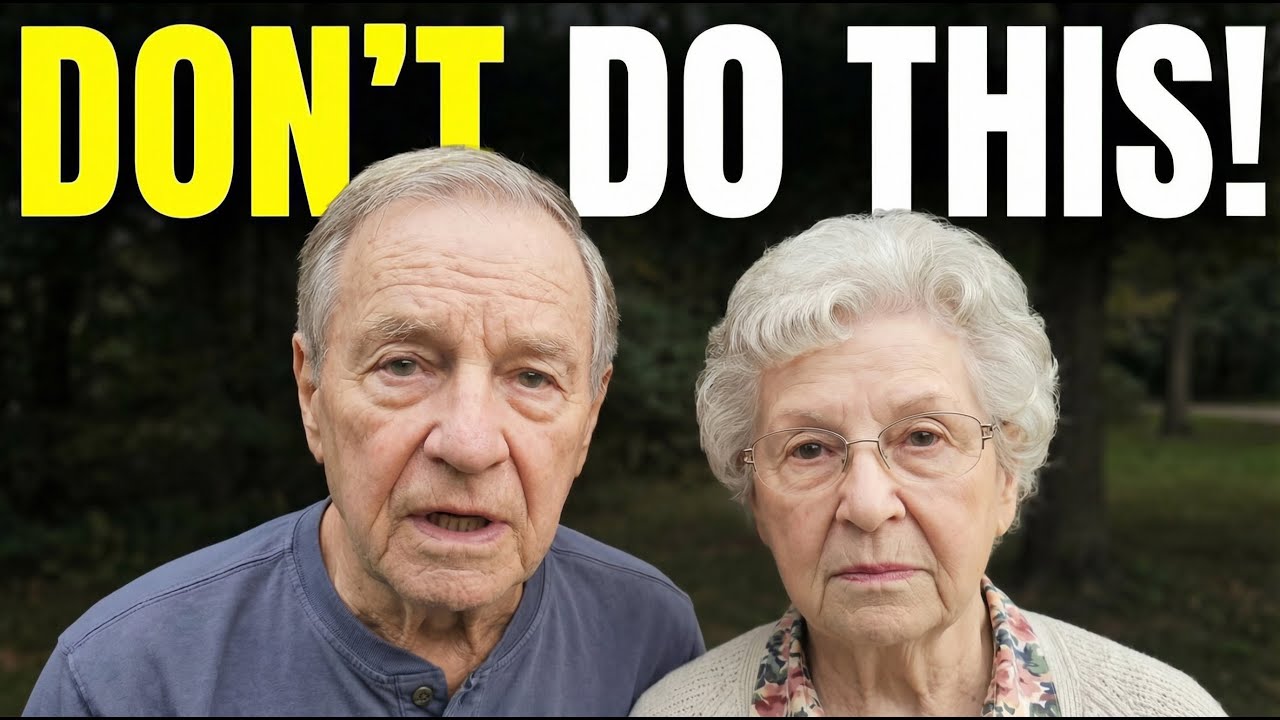
[music] I'm Harold and this is my wife Denise. We've been married for 60 years and I need to tell you something right now before you click away or skip uh ahead. What we're about to share with you, we wish someone had told us on our wedding day back in um 1964.
These aren't small things. These are the mistakes that almost broke us. And if you're in a relationship or thinking about one, you need to hear this.
>> When Harold says almost [music] broke us, he means it. There were years, honestly, where I wasn't sure we'd make it to our next [music] uh anniversary. And looking at us now, sitting here together, [music] people assume it's been smooth.
They see 60 years and think we figured it out early. We didn't. We made mistakes that cost us time.
[music] Um, closeness, things we can't get back, but we learned. [music] And that's why we're here. >> Mistake number one, keeping score of who does more.
For the first 15 years of our marriage, I kept a mental list. I took out the trash. I mowed the lawn.
I fixed things around the house. And every time [music] Denise asked me to help with something else, I' i'd think, "What about everything I already do? " [music] I never said it out loud, not directly, but she felt it.
The resentment was there sitting um between us [music] like a wall. >> And I kept my own list. I cooked every single meal.
[music] I raised our three kids. Uh managed their schedules. stayed up with them when they were sick.
I cleaned, I organized, [music] I remembered every birthday and anniversary for both our families. And when Harold would come home and complain about being tired, I wanted to [music] um scream, but I didn't. I just added [music] it to my list.
My list of all the ways I was doing more, caring more, trying [music] more. It poisoned us because marriage isn't a transaction. It's not about making sure everything's 50/50 down to the last dishwashed or diaper uh changed.
Some seasons, one person carries more. [music] When I had that injury back in 1983 and couldn't work for 4 months, Denise carried [music] everything. She worked double um shifts as a nurse, came home, [music] took care of me, took care of the kids.
I couldn't keep score then. And when she went through her own health struggles years [music] later, I did the same. But we wasted so many years before that measuring, comparing, building resentment over who sacrificed more.
The shift came [music] when our oldest daughter said uh something to me. She was maybe 30 at the time, having her own marriage troubles, and she said, "Mom, do you and dad even like each other? " That hit me so hard because we loved each other.
I truly believe we always did. But had we become so focused on um fairness [music] that we'd forgotten to be a team, I stopped counting after [music] that. Not overnight, but gradually.
And Harold did, too. >> Mistake number two, [music] thinking you can change each other. Denise is a planner.
Always has been. She makes lists. she schedules uh everything [music] she needs to know what's happening three weeks from now.
I'm not like that. I've always [music] been more um spontaneous, more go with the flow. And for years, decades [music] really, we fought about this.
She'd get frustrated that I wouldn't commit to plans and I'd get frustrated that she couldn't just [music] relax and be in the moment. >> I thought if I just explained it the right way or if I got upset [music] uh enough, Harold would understand why planning mattered and he'd change. I'd [music] say things like, "Why can't you just be more organized?
" And he'd say things like, "Why can't you just loosen up? [music] we were trying to turn each other into different people and it doesn't work. [music] It just makes both people feel um inadequate [music] and misunderstood.
>> What finally changed was accepting that Denise's [music] planning isn't a flaw. It's how she moves through the world. It gives her security.
[music] And my spontaneity isn't irresponsibility. It's how I find joy. We had to stop seeing our differences as problems to [music] fix and start seeing them as things to work with.
Now Denise plans our big trips, handles our finances, keeps our calendar, [music] and I surprise her with small spontaneous things, little day trips, unexpected flowers, moments she didn't plan for. [music] We compliment each other instead of fighting each other. Mistake number [music] three, not saying the difficult things until you uh explode.
I am guilty of this one. So guilty. [music] I would let things build up.
Small annoyances, small hurts, [music] and I wouldn't say anything because I didn't want to start a fight. I'd think it's not worth it. Just let it go.
[music] But you can't let everything go. It doesn't actually go anywhere. it just piles up inside you until something tiny sets you off [music] and um suddenly you're screaming about something that happened 6 months [music] ago.
>> Uh I remember one time must have been in the early uh 2000s. [music] Denise completely lost it because I forgot to pick up milk, just milk. And suddenly she's yelling about how I never listen, how I always forget things.
And I'm standing there thinking, "This is about milk. " But it wasn't about milk. It was about 6 months of feeling um unheard and the milk was just the final straw.
>> If I had told Harold earlier calmly, "Hey, [music] when you forget things I ask you to do, it makes me feel like you don't value my [music] time. We could have talked about it. Instead, I [music] uh stayed quiet until I couldn't anymore, and then it came out as an attack.
And that doesn't solve anything. >> We learned to speak up earlier, not aggressively, but honestly, this bothered me. Can we talk about it?
It feels [snorts] uh awkward at first, [music] but it's so much better than the alternative. The difficult conversations don't have to be fights. They can be just conversations.
>> Mistake number four, treating your marriage like it can run on autopilot. [music] After about 25 years, we fell into this routine. We knew each other so well.
[music] We'd been through so much and we just assumed the relationship would um sustain itself. [music] We stopped dating each other. We stopped really talking [music] beyond logistics.
Who's picking up groceries? [music] What time is the dentist appointment? Did you pay the electric bill?
We became roommates [music] who occasionally slept uh together. >> And the scary thing is it happened so gradually we didn't even notice. There was no single moment where we decided to stop [music] trying.
It just slowly um faded the romance, the curiosity about each other, the effort. [music] We got comfortable and comfortable became [music] uh complacent. >> What woke us up was watching our friends get um [music] divorced after 38 years.
Everyone was shocked [music] because they seemed fine. But she told me later they'd been fine. Just fine.
Not happy, not [music] connected, just existing next to each other. And one day she realized she didn't want [music] to spend her remaining years just uh existing. That terrified me.
[music] >> So we made changes. We started having dinner together at the table, not in front of the TV. We started asking each other real questions again.
What are you thinking [music] about? What's something that made you happy this week? We started going for walks together in the evenings, [music] just 20 minutes, but it was time that was ours.
>> And we brought back date nights, [music] not fancy, but intentional time. Sometimes it's just um driving to get ice cream and [music] sitting in the car talking. Sometimes it's playing cards at the kitchen table, but it's time where we focus [music] on each other, on us, not on tasks or obligations.
Your marriage needs attention. [music] It needs care. It won't thrive if you ignore it.
>> Mistake number five, forgetting [music] that you're on the same team. This one's big. when we'd argue, especially in those middle years, it felt like uh we were opponents, like we were each trying to win to uh [music] prove we were right and the other person was wrong.
Every disagreement became a battle and battles have winners and losers. >> But marriage [music] doesn't work like that. If one person wins and one person loses, [music] you both lose because you're supposed to be partners moving through life together, not competitors trying [music] to uh defeat each other.
>> I think the turning point was when our middle son was uh [music] going through a really hard time. He'd lost his job. His marriage was falling apart and he moved back in with us for a few months.
Uh he was 40 years old and he was broken. Uh Denise and I had different ideas about how to support him, but we couldn't fight about it. This was our son.
So, we talked, really talked. We listened to each other. We compromised.
>> And helping Daniel reminded us that we're a team. We're not Harold versus Denise. We're Harold [music] and Denise together facing whatever comes.
[music] Every problem, every decision, every challenge, we're supposed to tackle it together. We disagree as um [music] teammates who want the same outcome, not as enemies. >> When you remember you're on the same team, [music] arguments change.
You stop trying to hurt each other with words. [music] You start saying things like, "Help me understand your perspective. " Instead of, "You're wrong.
" You start looking for uh [music] solutions instead of looking for ways to prove your point. We're not perfect. Even now, after 60 [music] years, we still make mistakes.
We still get frustrated with each other. Harold still forgets things. I still overplan.
We still have moments where we fall back into old uh patterns, but we know what we're doing now. [music] We catch ourselves. We correct course.
We choose each other [music] every single day. >> If I could go back and tell my younger self uh anything, [music] it would be these five things. Stop keeping score.
Accept who she is. Say the hard things before they become explosive. Never stop dating your wife.
And remember always that you're on the same team. >> 60 years is a long time. [music] We've buried friends, raised children, survived losses, [music] and celebrated victories.
We've changed so much from who we were in 19 um 64, but we've changed together [music] and that's made all the difference. >> This channel is full of people like us sharing what we've learned from decades of um living. If this meant something to you, subscribe and turn [music] on notifications.
Drp a comment and tell us which mistake [music] resonated most. Hit that like button. And actually, we're planning to do a question and answer video soon.
If there's anything you want to ask us, anything at [music] all about marriage, life, mistakes we've made, doesn't matter what it is, leave it in the comments. [music] We'd love to answer your questions. >> We're not going to be here forever, but while we are, we want to pass on [music] what we know.
Maybe it'll save you some of the pain we went through. [music] Maybe it'll help your relationship be stronger. Either way, we're glad you listened.