Please don't tell Spock that I said he was the best first officer in the fleet. Why, thank you, Dr McCoy. You've been so concerned about his vulcan eyes, doctor.
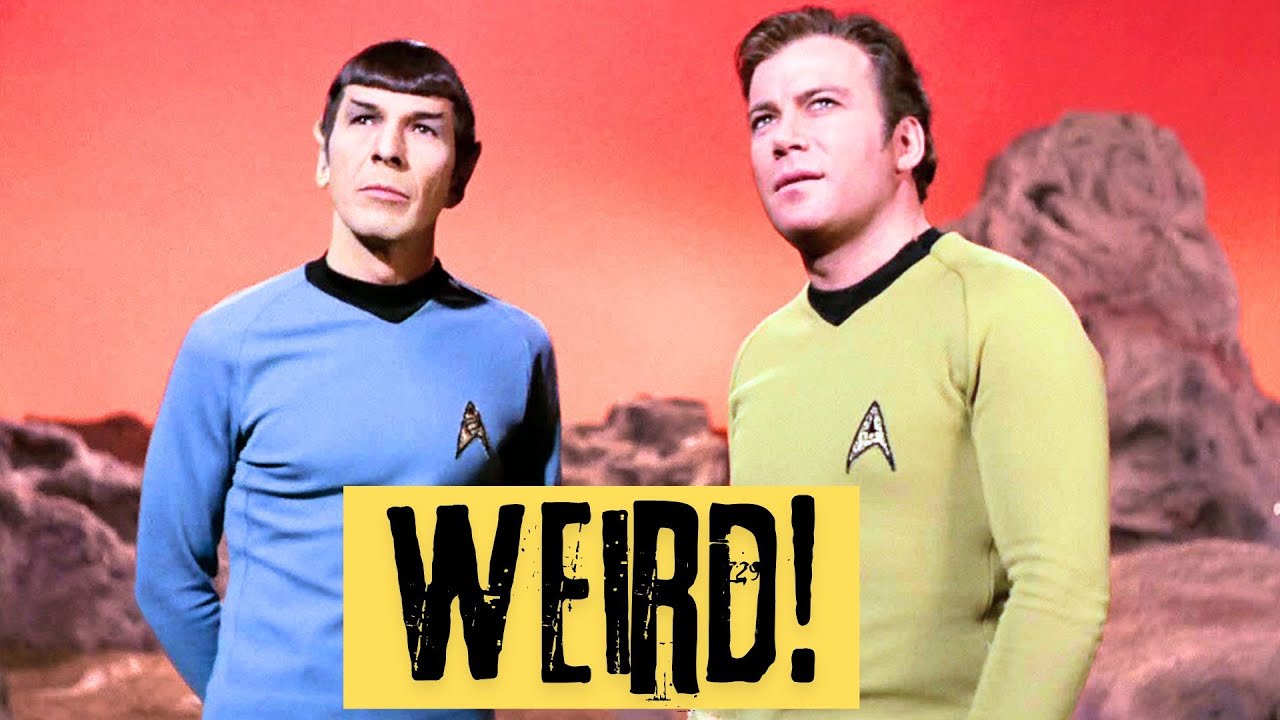
He forgot about his vulcan ears. I had walked back to one, Mr Sulu. Undeniably, one of the most iconic and influential television shows of the 1960s was Star Trek, the original series created by Gene Rodenberry.
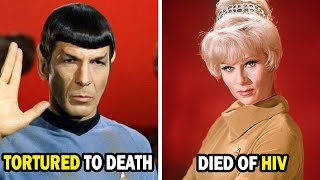
Featuring William Shatner as Captain James Kirk, Nemoy as Mr Spock, and Michelle Nichols as Lieutenant Uhur. The series even counted Dr Martin Luther King Jr. among its fans.
Despite its cancellation after just three seasons, Star Trek has only grown in popularity over the years. Here are 10 weird facts you might not have known. Or maybe you're a Treky and know them all.
In any case, I hope you enjoy the video. Be sure to stay to the end for a bonus fact. Number one, before the world met Captain Kirk and the classic Star Trek crew, there was the Cage, an ambitious but unaired pilot that remained unseen until its release on home video in 1986, featuring an almost entirely different cast.
The episode starred Jeffrey Hunter as Captain Christopher Pike. The only familiar face on the bridge was Leonard Nemoy's Mr Spock. The Cage lacked the warmth, charm, and diversity that would come to define Star Trek, and NBC rejected it.
Rather than abandon the project, creator Gene Rodenbury pushed for a second chance. Hunter, however, opted to leave the series, paving the way for William Shatner's Captain Kirk and a re-imagined cast that would become television legend. Number two, during Star Trek's second season, Gene Rodenberry co-wrote an episode, Assignment Earth, designed to double as a pilot for a potential new series.
With the show perpetually on the brink of cancellation, the episode introduced Robert Lancing as Gary 7 and Terry Gar as Roberto Lincoln. While many guest stars turned single appearances into lifelong convention earnings, Gar had a decidedly negative experience with the show and often avoided discussing it. In an interview, Gar admitted, "I did that years ago, and I mostly deny I ever did it.
" Adding that she was relieved the pilot didn't move forward. One possible explanation for her feelings comes from Bob Jine, who recounts an uncomfortable incident during production. Rodenberry reportedly insisted that the costume designer repeatedly shortened Gar's skirt, even going so far as to kneel in front of her and adjust itself.
This awkward and inappropriate moment likely contributed to Gar's lasting dissatisfaction with her experience on the show. Number three, long before dawning the Starfleet uniform as Captain Kirk and facing legendary adversaries like the Romulons and Cllingons, William Shatner built a career exploring the darker corners of film and television. In The Intruder, a stark social drama, Shatner delivered a chilling performance as a racist provocator, stirring chaos in a southern town, a role that showcased his willingness to tackle challenging material.
Shatner's television work also left an indelible mark. His portrayal of a man unhinged by the sight of a gremlin on the wing of a plane in The Twilight Zone remains one of the show's most iconic moments. [Music] Number four, Harry Mud was a fan- favorite guest character, appearing in two episodes.
He was also slated to appear in an episode titled Deep Mud, but actor Roger Carmel was unavailable due to other commitments. In the early 1980s, Carmel shared that during screenwriter Herb Solo's farewell party, Gene Rodenberry approached him and expressed regret about an unrealized series idea for Mud. Surprised, Carmel learned that NBC had once asked Rodenberry to develop a show centered on Mud as a space pirate and intergalactic conman.
However, Rodenberry admitted he never had the time to pursue the project. There were also unfulfilled plans to include Harry Mud in Star Trek 4, The Voyage Home, and an episode of The Next Generation. [Applause] [Music] Congratul The Apple, there's a scene where Spock throws a rock that explodes upon impact.
The explosion was so loud and intense that the actors, still in costume, were rushed to a doctor's office in Hollywood for treatment. Years later, Deforest Kelly, who played Dr McCoy, revealed that the incident left him with persistent ringing in his ears that never went away. Leonard Nemoy experienced less severe but lasting effects from the explosion.
William Shatner, whose hearing had already been damaged, saw his condition worsen significantly. He endured tinidis for decades before finally finding some relief through the American Tinitus Association. Hey, if you're getting a smile from this content, would you please beam up the like button?
Thanks so much. May I point out that I had an opportunity to observe your counterparts here quite closely? They were brutal, savage, unprincipled, univilized, the very flower of humanity.
I found them quite refreshing. I'm not sure, but I think we've been insulted. I'm sure.
Number six, the iconic Vulcan salute paired with the phrase, "Live long and prosper. Live long and prosper made its debut in the second season opener as viewers were introduced to Spock's home planet of Vulcan. But the gesture wasn't an invention of science fiction.
It was rooted in Leonard Nemoy's childhood experiences at an Orthodox Jewish synagogue. Nemoy recounted witnessing a powerful moment during a synagogue service. Five rabbis get up on the stage and they start this chanting.
My father told me, "Don't look. " But curiosity got the better of the young Nemoy and he peaked. I saw them with their hands stuck out making the now famous salute.
The sight combined with the discord enchanting left a deep impression. I had no idea what was going on but the sound of it and the look of it was magical. Boy, that just took off through the culture.
It was amazing. Within days after it was on the air, I was getting it on the street. People doing this to me, waving to me.
Number seven, Dr McCoyy's exasperated protest, "I'm a doctor, not a brick layer. I'm a doctor, not a brick layer," has become one of Star Trek's most beloved lines. But the roots of this iconic gag, stretch back decades before McCoy first stepped aboard the Enterprise.
The 1933 film, The Kennel Murder Case, starring William Powell and Mary Aster, features a character named Dr Dormis, who delivers similarly indignant quips. For example, I'm a doctor, not a magician. I'm a doctor, not a magician.
While Star Trek borrowed the idea, Dr McCoy played with sharp wit by Deforest Kelly gave it new life. You like to see just how fast I can put you in a hospital? Number eight.
Although modern audiences might not recognize it, William Shatner was once considered a sex symbol and the original Star Trek series was designed with his character Captain Kirk as the focal point to appeal to female viewers. However, in an unexpected turn of events, that role ended up belonging to Spock instead. Despite his alien features, Spock became the center of attention for many fans, particularly women.
According to Leonard Nemoy, from the very beginning of the show's broadcast, he received an overwhelming amount of fan mail expressing admiration, especially from female viewers captivated by Spock's character. Number nine, while William Shatner has embraced his Star Trek legacy, he hasn't let it define his career, becoming wellknown for other roles such as Sergeant TJ Hooker in the 1980s police drama. However, during the height of the Star Trek movie franchise and the growing popularity of conventions, Shatner addressed the intense fandom in a memorable way.
When he hosted Saturday Night Live in 1986, he performed a skit where he played himself attending a Treky convention. Faced with overly detailed questions from fans, Shatner jokingly told the crowd to get a life. Get a life, will you?
He quipped. You've turned an enjoyable little job I did as a lark for a few years into a colossal waste of time. I mean, how old are you people?
What have you done with yourselves? While the sketch was meant as humor, quite a few fans were deeply offended. This convention has everything.
You can even try on Lavar Burton's visor. Number 10. Star Trek was produced on a remarkably low budget, just $193,000 per episode, equivalent to about $1.
3 million today. For comparison, a modern 1-hour drama typically costs around $3 million per episode. To cut costs, the studio had a non-union workshop create all the costumes.
In other words, a sweat shop. Since this was illegal, the wardrobe had to be secretly transported to the set. Makes you wonder what other shady things were going on.
Now for a bonus fact. Leonard Nemoy not only created the iconic Vulcan salute, but also invented the Vulcan nerve pinch. In the episode, The Enemy Within, the original script had Spock knocking out Captain Kirk with a punch to the face.
Nemoy felt that such a move was too primitive for Spock, explaining, "It seemed more appropriate for the Old West than the 23rd century. " When it came time to film the scene, Nemoy offered the idea of the nerve pinch to William Shatner, who instantly loved it. Nemoy later credited the success of the pinch, in part to Shatner's impressive ability to faint on Q.
I hope you enjoyed today's episode, and I hope to see you again real soon. Shut up. [Applause] [Music] Wow.
Well, what do you know? I finally got the last word.