all right guys so september 16th 2007 what's known as the blackwater massacre raven 23 incident i want to get each and every one of yours firsthand accounts of what happened black water security guard shot more than 30 unarmed iraqis in baghdad in 2007 black water security contractors were serving time for killing 17 iraqi civilians in 2007. four americans receive lengthy prison sentences today for an infamous incident during the iraq war all four former blackwater security contractors convicted in the killings of 14 unarmed iraqis including women and children in baghdad in 2007 especially in 2007 with
it being deemed the most violent bloody year of the entire war they said that in 2007 there was an average of 180 engagements from insurgents a day as soon as we came to a stop within a minute or less i started hearing the pings on the side of my vehicle and at the same time i heard i don't know if i heard paul yell it out on the radio or just yell it out down the turret that there was a white kia that was presenting a threat and was coming towards the vehicle so so he
landed in the middle of this gun battle and just walked over as we were loading the uh our our brother's remains we had already put him in body bags and we're dragging him back up the hill and he just lands in the middle of the gunfight he lands his bird and he gets out he wanted to see that it was his brother and then as soon as he seen it was his brother he got back up and they started laying down suppressive fire for us again but like it was just a crazy moment you know
that it was just it was tragic man like i said his worst day of my life for sure he had just taken a drag off his cigarette and the efp came through the window compartment and he lost his arm and the only reason why he's the driver is he took his hand off the wheel to do something i don't know if it's the light one take a puff or what but he lost his his arm behind it the other thing that he said that was so critical that didn't get introduced at trial was that these
iraqi witnesses said the white kia punched forward like a car bomb a really good friend on the line here you guys might know his name's eddie gallagher ladies and gentlemen welcome back to the sean ryan show this is episode 011 the very first episode in our brand new studio i want to start off by saying thank you because we had a massive influx of patrons after the last episode and it's patrons like you that make this entire production possible if you can't support us on patreon head down to the description please click the itunes tab
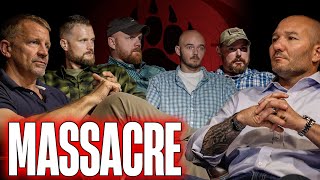
go over there leave us a review even if it's just one word that helps us more than you know so please leave us a review now let's get on with it in srs011 what you are about to hear is an untold side of the most controversial gun fight in the iraq war also known is the blackwater massacre these gentlemen have never been given the opportunity to tell their side of what happened in nasir square baghdad iraq that day please welcome paul slock evan liberty nick slatten and dustin hurt raven23 enjoy the show all right gents
welcome to the uh sean ryan show so just for the audience you gentlemen are from raven 2 3 also known as the blackwater massacre and which is the most controversial gun fight in all of the iraq war and possibly in american history so kind of how this happened is um how i got introduced to you guys is evan you know i was uh checking messages on instagram and check the out box and there's a message from evan and i'm pretty sure it just said yeah i just uh said i i loved your podcast and uh
was a big fan yeah thank you for everything you're doing and you were part of raven23 incorrect i was like it's been a long time since i heard that name so i jumped off real quick googled it now i blew my mind i was like holy [ __ ] you know i didn't even know you guys were out and so i reached back out to you and uh i think you kind of got cold feet and uh you know you're like i don't think you're actually going to reach back out and i was like well
here i am you know let's do this [ __ ] and uh got in touch with the rest of you guys and so here we are but um you know kind of taking this thing on this is i just want to say this is the biggest probably most important interview i will ever do and i'm going to do my damnedest to to give you the best interview you will ever have and and i want to give you guys a platform as we all discussed for you guys to tell your side of what happened and um
you've never been given the chance or the opportunity to do that and so that's exactly what we want to do here is give you guys the opportunity to get everything off your chest and 100 percent your side of of what exactly happened back on september 16 2007 so when i took this you know and i agreed to do it and i started digging in i got overwhelmed with the amount of information and just how in-depth this case went and uh so kind of before we get going i just want to say you know thank you
to you guys and your families for um for helping me with all the information gina keating did an amazing job on her podcast which is the number one thing that i used and uh that's linked below com it is full of information uh that you can't find in the regular press the mainstream media bill cofield helped a lot and support raven23.com uh there's a ton of information on there and we'll be talking about some documents some videos all kinds of stuff email chains cables from state department and um just for the audience that will all
be linked in the description none of this [ __ ] is being made up it's all fact it's documented and the links are below if you don't believe me or these guys don't take our word for it all the proof is uh linked below so um kind of when i want to take this interview with you guys is there's a lot of people that probably don't know exactly what blackwater was so i kind of want to start at the beginning or what it took to get in so i want to go around the room and
get an introduction from you guys kind of what you were doing before you went to blackwater how you got into blackwater what was the vetting and training like when did you guys all meet what was the op tempo and the deployment schedule when you guys got in then we'll walk us into the incident the the raven 2 3 blackwater massacre and then the indictment prison what you guys are doing now so um let's just start with paul you know what were you doing before uh before i just come back from a rotation uh in iraq
with the national guard unit we were primary convoy security and then a psd for for our battalion commander and our s3 shop i'd come home and uh basically was was working at a home depot um and it just wasn't a good fit i missed the mission i missed um being in in what i felt was an honorable task for the nation in helping another nation just come out of a horrific season that they that they had been in and so i uh ironically enough went to a job fair um and there was a blackwater wrap
there and i met him and i'd heard the name before and i had a very limited understanding of really what blackwater was other than um being in iraq and and so i conversed with him and he said yeah give me your resume and give me your dd214 all that good stuff and we'll go from here and and so the process was really just kind of a back and forth filling out the packet and then uh being accepted and going to the vetting process there in moya so you've been you'd had combat tours before with the
military yeah how many tours did you do uh that year just just prior to that okay in the garden yeah uh where were you when 9 11 happened i was at hunter army airfield we were on a tarmac weirdly enough we were on what was red cycle at that time and so we were attached to a tank battalion um and a ranger battalion and we were set up as a response force for for the globe in the in the uh and then you know if there was a need for that and so um yeah we
were sitting on the tarmac our lieutenant came outside and said hey guys we're under attack and at the moment we were all just kind of ribbing one another because we were on this red cycle right that we were going to deploy here deploy there and deploy you know any other number of the places in the in the world and anyway he said yeah he said for real we're under attack and at the time his father-in-law was a chaplain at uh the pentagon and was reading last rites when he called him and and said it's it's
it's really happening nick so i was in the 82nd airborne division i was a infantry sniper and i was a team leader um i was at the point of re-enlistment you know deciding to stay in or get out and they were pushing me to either go to division lures or to go to sfas and so i had to get out of the 82nd in order to do that i had to like out process and part of that out process is you have to go to job fairs as well and it was a triple canopy recruiter
that picked me up first they said hey you know you're sniper qualified we could use you and they said you can get into the oga after you do some time on state so that was my goal anyway that's what i wanted to do and you know blackwater ended up winning the contract so it switched from canopy to blackwater they they took me to training and it was it was amazing man there was you know high level seals high level cag dudes high level sf dudes you know i was still a kid i was like 22
and so they were they had been fighting longer than i had been alive you know so it was awesome just and they took me under their wing because i came with a real humble attitude you know and i was just like man i don't know this stuff i need you to help me and they did you know they were they were very awesome and that was the best training i'd ever received it was just out of this world how good we were trained just uh for the audience it's civilian types what can you describe what
sfas is yeah it's just the entry selection i think it's called for special forces assessment so it's like they wanted you to become a green bird yes sir you're trying out for green berets and you've done combat tours sir i had two tours with 82nd my first tour was right around the fallujah area and then that was um we're basically attached to uh special forces units and and kag and stuff doing raids where we would just uh be after high value targets you know this is the guy we're looking for we either capture or kill
this guy and then after that i came home they slotted me for sniper school went to sniper school and then my second deployment was more like a peacekeeping mission it was just in the kurdistan region nothing was really going on there so it was just it was very nice you know i didn't like it at the time because i was an infantryman i was like i need to be fighting but looking back on it it was nice because i got to see the dark side of iraq and also the good side of iraq they're the
kurdish people they loved us you know first mission i went on i was a team leader and uh it was a very good chance we were going to get ambushed because it was basically a village that set back in this mountainside and it was almost like a cul-de-sac the mountains so there was only one way in and one way out so i call a hawk and i'm like i'm just gonna push up and if anything happens to me y'all just leave me you know i was like come back and get me later call airstrike or
whatever and so as i'm pushing up i notice these local villagers are kind of going in and out of their their huts and i see this woman come running out and she's holding something so i look at her in my optic and she's got a tea kettle and she's screaming and and kurdish saying berkarbic which is like welcome and she sets the tea kettle on the fire and then she starts dragging chairs out of her house and i'm like where are we at man you know it was like night and day difference so it was
very awesome just to see the you know my first tour they were they were shooting at us they were blowing us up versus come come have some tea with us you know it was it was really good right on evan well i grew up in new hampshire doing a lot of outdoor stuff fly fishing camping hiking things like that plans playing sports basketball i was a big runner when i was a kid and pretty much decided i was going to go in the marine corps pretty early in 1998 when i was a junior in high
school i signed up for the delayed entry program and um me and my best friend were going to go in the marine corps together once we graduated um one of the big mistakes i made when i was a kid was basically just deciding pretty quick that i was going to go in the marine corps but not really giving a lot of thought into what job i wanted to do i just knew oh you know my uncle was a marine the marines are the the toughest branch um i want to do something challenging so i just
signed up and then i had a female recruiter and she asked me what do you want to do for a job so she gave me the pamphlet and i started looking through it and of course you you see machine gunner security forces mp things like that so i said you know what i think i want to be in security forces you know i didn't do any research or anything like that we didn't have the internet so i just uh it sounded cool and i was like yeah i'll do that so she came back within a
week and said you know what uh because of the date that you and your best friend want to go to boot camp there's gonna be a big uh time gap between graduation and boot camp and when you can go to security forces school so she said pick something else so i said you know what uh put me in for mp i want to be a military police so same thing a week later she comes back and says well bad news you have to be 19 to go to mp school you're only 17 right now so
go ahead and pick something else so you know typical kid i went off doing whatever i was up to in those days and about a month later she calls me and said you know what i i found an mos for you i put it in for you uh it's my mos you're gonna love it it's uh you know go to work in the morning you're done by 16 30 and that's it and i'm like well that doesn't sound like the marine corps that i'm imagining wha what uh what job is it and she said supply
and my heart sunk i was like what what is that what do you do with supply and she kind of explained it to me and i was sick man i i was like man i want to be in the marine corps but i want to do something badass so i go off to boot camp i'm hearing all these guys talk about how they're going infantry they're doing machine gunner they want to be a sniper and all this and i'm stewing i feel like i got screwed but the paperwork was in i was a young kid
and i just went along with it after boot camp of course you go to your mos school and the school is only a few weeks long it's a joke so i went to the school got stationed in north carolina and from the moment i got to north carolina i was trying to get out of that mos any by any way possible so i'd uh i'd volunteer for different duties i'd volunteer for different classes i'd go to the rifle range when i didn't need to go to the rifle range i'd go on different exercises and i
was kind of proving myself as a good marine but my higher-ups knew i was not into the job that i was doing so after about six months my master gunnery sergeant came in with a marine corps times newspaper and he said hey i think you should go down to uh talk to this recruiter and he threw the paper at me and it was for marine security guard school and i said what's what's marine security guard and he said well there's an embassy basically in every country and there's a detachment of marines at every embassy that
protects the embassy protects classified materials and protects the diplomats that are in the embassy you know the american americans working abroad so i got excited and there was quite a process to get get ready for the interview just to basically prove that you're qualified to go to the school so i went to the uh recruiter and i sat down with him and he looked over my file and he said you know what you look like you're a good marine um you're a little young but you're qualified the only problem is you have to be at
your duty station for one year so he said i'm going to put you in the class slated for right after you get one year on station i'm like okay perfect i go back to my unit and all these guys are you know lance corporals corporals sergeants they've been stuck in this mos and they hate it and they've been there two three almost four years so i came back and i said yeah they selected me i'm going to marine security guard school and they said no [ __ ] way man you you just got here you've
been here like five six months you're not going to marine security guard school i've been hearing whole enlistment so i said i don't know that's what he said about a month later the message comes out and sure enough my name's on the list to go to the school so as soon as i hit a year on station in camp lejeune i left went to marine security guard school in quantico and my first embassy was cairo i spent about 18 months in cairo and i'll backtrack a little bit uh 9 11 happened right after i got
selected for a marine security guard school and then uh the invasion of iraq happened around the time i was in egypt so yeah i was in the middle east but not necessarily in combat and then my second duty station was cairo egypt i mean guatemala city so anyways throughout my enlistment all this combat is going on and i'm pretty much dying to get over there and and take part in it because i feel like hey this is my duty you know like after 9 11 i just felt this huge feeling of patriotism and i wanted
to contribute to that cause so when i came to the end of my enlistment i was thinking well do i try to get off marine security guard um get out of marine security guard battalion and lap move to a different mos and get over there in in iraq or afghanistan or i could get out and go in the private sector and go with uh blackwater or dyncorp at the time and pretty much guaranteed to be over there within a couple months so before you go on how did you hear about blackwater and dyncorp piers or
well at the time the only thing i knew about blackwater was the big incident that happened in um in 2004 in fallujah where four blackwater guys got ambushed and pretty much burned alive and drugged behind their vehicles and strung up on a bridge and it was a big international incident it was in the media a lot so i knew that that happened right around the same time frame and you wanted to go in after you saw that well i i would i that caused me to backtrack a little bit because my friend was writing me
emails back and forth say hey you know i think we should go with blackwater you know it's a it's a quick way to get over to iraq and i said hey have you been watching the news like four guys just got strung up on this bridge he's like well you know it's it's always a risk in combat and you know he's trying to justify it and at the end of the day i i knew that was my fastest way to get over there and i didn't know how long iraq or afghanistan was going to last
i mean little did i know 20 years later they're still in afghanistan but at the time you didn't know that you just thought hey i'm 21 years old this is my chance you know i'm in the marine corps i'm patriotic i want to uh serve my country in pretty much the highest way possible and going to combat right so yeah i i emailed a black writer recruiter and i said hey it was really informal i just kind of outlined hey uh i'm a marine i'm a sergeant um marine security guards uh element marine security guard
battalion i have a security clearance i've worked alongside the state department and i'm interested in working for blackwater so i got a response filled out some paperwork and they accepted me and i got out of the marine corps in november of 2004 and within 60 days i was in north carolina training at blackwater right on for those listening the incident that he's talking about that happened in 2004 those were blackwater contractors correct all four of those men were prior special forces or special operations i do i believe they were all special forces green berets uh
correct me if i'm wrong but they were stopped at a checkpoint by iraqi insurgents who were dressed as police uh you get a police uniform over there for what 20 30 bucks yeah um and so they they they stopped thinking they were police cracked seals on the vehicle they were shot and killed by the insurgents dressed as police then they stripped them down strung them upside down and burned their corpses from a from a bridge while the local population cheered and celebrated the company said they were guarding convoys delivering food around fallujah a small crowd
descended on the burning cars what happened next was gruesome the bodies of the four americans were pulled from the flames poked prodded and beaten one charred body was tied behind a car and dragged through the streets a procession that included children two mangled corpses were hanged on a bridge over the euphrates river participated in it and participated and and you know there's that's well documented that's a well-documented event i had a friend uh who's actually uh part of that but um that's so i'm kind of bringing that up because i want to paint the picture
of you know this is who we're dealing with uh over there with general population and bad guys dressed as friendlies so uh dustin um a marie as well uh i joined back in 2004 or 2000 and got out 0-4 i went into marine infantry and then i went to fast company which is in the security force battalion it's the same school that he went through but i did that after my machine gun and stuff i spent two years or three years with fast and then i spent another year with battalion 8th marines as a machine
gunner you know you're talking about 11 earlier we were out doing a side security exercise which is if the embassy gets in trouble or anything like that we roll in and we take it we hold it we do whatever it is with fast you're basically on call somewhere in the world they got different stations and if something happens they send us in to reinforce take different things like embassies or whatever they want done and so we've actually set up around our armory saying hey you know this is how we would do this we set everything
up we put our machine guns into position and my captain comes out and said i planes just hit the twin towers and we're like okay this is part of the drill and he's like no really this is not part of the drill this is real life and it's still not sinking in well we went from having no ammunition because we're on american soil just doing exercise to they started passing that elmo and when they did me being a machine gunner i went through advanced machine gun leadership school and it was me and one of my
buddies that i'll talk about later we did the machine guns and he said hey heard go lock and load the 50 and i'm like sir we're aimed in on base housing if you want me to lock and load it somebody hits the butterfly we're gonna shoot into the housing and he's like i understand but lock and load and i'm like oh damn [ __ ] just got real and so we ended up doing a normal rotation to bahrain and we were there i think three four months i don't know exactly and then we got the
order to go to kuwait for the build-up so when before any troops crossed the border we were in kuwait doing hanging out waiting for a task for the build-up itself and we ended up hitting the wool platforms off the coast of iraq with one of the seal teams and the polish special forces the grom and then we came back to kuwait we went in and did a trap mission for one of our f-somethings that got shot down uh went recovered the officer's body i think it was lieutenant wide if i'm not mistaken and uh the
seals dove the lake and got out the stuff that needed to be taken out that way you didn't have the classified stuff just sitting in the bottom of the lake in iraq outside of kerballer so we rotated back to kuwait again well we'd already been deployed for so long they went ahead and sent us home after that that was the first time that i went to iraq was the trap mission and then hitting the old platforms you were the you were hitting the oil platforms you were with a good friend of mine mike ritland uh
who i interviewed on here as well and he was on those ops i should connect to you guys that'd be cool yeah [ __ ] the seal i was talking about that i seen later on whenever i was with black water you know he was one of the seals that was on there too and so we rotated back well my my wife at the time what her girlfriend at the time fiance was supposed to get married sometime in the spring well whenever i left fast and i went to sagan battalion 8th marines i said oh
by the way heard we're going to afghanistan here in a couple months and i'm like okay cool so i call kelly and i'm like hey we got two choices get married now or get married later so we decided to go get married and then my honeymoon literally i got married on the marine corps birthday november 10th and that next week i was back in afghanistan or you know first time i've been to afghanistan but what i'm saying back in the middle east so we're over there we do our rotation there we was in a pretty
light area we just got blown out a couple times and a few little stuff we rotated back and i got out of the marine corps october november i was in vetting december i was back in iraq again with black water and so for me it was just a you know left one i got a job at a liquor store just because i didn't have any income coming in and then i got called and said hey your package went through you got a school date and so i went to school and went to the vetting portion
and went to the training portion you know doing the movements and all that stuff and then i was back in iraq december 2004 wow i stayed there till november 2007 so how did you hear about blackwater well my buddy billy actually uh went to a job fair that i was unable to attend and he came back and he said hey man um we need to get a bio and a resume together because i was talking to one of the recruiters for blackwater and he wants us to submit our stuff and billy and i did the
same thing all the way through the core we're both machine gunners we went to advanced machine gun leadership school he's got a driving course that i didn't get but other than that our resume and bio is almost identical and so um he went with me too after fast the second battalion eight marines to afghanistan and so he's the one that's like hey dude we need to get together on this and we talked to the same recruiter and he helped us get everything in order and then we went to the same class together for blackwater good
so open forum now when you guys were talking to the recruiters um at blackwater blackwater is a massive it turned into a massive company it was the biggest private military contracting company uh in the world and uh i believe that i don't think it will ever be outdone but with that being said they had several different contracts they had state department contract a couple different state department contracts i believe that air contracts for pilots they had oga contracts um other government agencies i believe they had did they have the dea project as well i'm not
sure or was that dyncorp they might have but all these different government agencies had separate contracts and just because you worked for blackwater wasn't all grouped into one they had several different whatever you want to call it divisions which were different contracts for different organizations and so when you guys were talking to the recruiters were they telling you about all the different contracts or were they did they have one specific one in mind like you had mentioned oga in my case anyways i didn't know those other contracts were available i think when i told the
recruiter my history with the state department marine security guard battalion he pretty much decided right there that my best fit would be with the state department contract in iraq so i didn't know those options were available they might have been to these other guys but not in my case mine was pretty similar to evan i'd been i was active duty before going into the garden i'd been to bosnia and and done some things and for me it seemed like the best fit that was kind of proposed to me was was the whips contract and besides
that i didn't really know anything other than that so yeah yeah oga was what i was wanting to do but he said that this was like a foot in the door he's like you know you you get in and you get a reputation as a guy that's reliable and uh does his job well then he's like they'll pick you up for sure so that was that was my plan all along that's what i wanted to do yeah i really didn't know it was just whatever they wanted me to do i was i was game was
there any type of uh sales pitch at all or did they no not really nothing i was so on board with anything i just i just wanted to get over there i didn't give a [ __ ] you know i was i felt like i was missing out especially having the mos that i had originally and then being stuck at the embassies all through 9 11 invasion of iraq all that i was just um anxious to get over there i shared a lot of those same sentiments of wanting to get back to the mission because
it felt like when we left we were gaining traction and to nick's point when you go past mosul and you're up in in kurdistan you you can see just the the differences between northern iraq and southern iraq and it's like why why can't this be mirrored south of here what what is the the bifurcation yeah i could definitely see that you know continuing on with the mission the service to the country i just wasn't ready to hang it up i was debating on re-enlisting or if black water didn't work out i i wasn't going to
continue just that little piddle job doing a liquor store i worked for a great dude but when you served as a marine and everything else and then you're sitting there while everybody else is still doing service to their country they're out there fighting that fight and you're just sitting there and it's like this is not what i was made for i was made to continue the service wasn't fulfilling enough yeah this is this just is not me you know stocking a shelf at a liquor store and you know helping people do that and it's like
man i've got a skill set that needs to be used because stateside there's no use for machine gunner there's no use for stuff like that unless you go law enforcement or something like that and it just really didn't fit with who i am you know i wanted to go out and continue to serve the country in any manner it didn't really matter to me so what was the training like when you guys got there how many different you know how many guys were in the course and or how long actually sorry how long after you
guys talked to the recruiters were you offered a position uh or an opportunity to prove yourself at vetting and training well i know i went through i think is ds class 14 or 15. i went through some of the very earliest classes they had you know because they were running them like every week every two weeks and so you had like three or four classes still going through as i was going and you know later on we had to go back and recall on like 203s and stuff like that because we wasn't authorized and i
know we showed up i don't remember how many we had but the vetting portion of just the shooting the rifle the pistol the shotgun the 240 the saw the fan fire the ak the cqb and stuff like that it's i can't tell you how many dudes that we dropped during all that because it was for us it was show up perform or you get the window or i'll see going home and so i don't know how many we started out with but i know we lost tons of dudes in that and dudes that are supposed
to be you know top tier guys but it's either they're out of shape they haven't shot in a long time they just for whatever reason they didn't make it through the vetting portion and then you know then you had to learn the movements which is mirrored um like the secret service moves off of the formations to move principles around when you're doing the the protective detail and so you had to learn all that and it was it was awesome i mean just learning the different stuff because in the marine corps i was never exposed to
any of that what about you guys how long after you talk to the recruiter did you wind up with betting was it months was it a year was it no weeks in my case it was weeks and when i initially got over to uh moyock north carolina that's where the blackwater training was i was just impressed by the facility because you know it's thousands of acres with long range shoot ranges and you know cqb houses there's a driving track there's i mean everything you can imagine uh is there so it was it was pretty impressive
and then as far as the class goes there was maybe 15 guys in the class i was right behind him so he was class 14 i think i was 17 or 18 so maybe a month or so later um and like i said the class was relatively small but i was the absolute youngest guy and and by a long shot so you had guys that had been in the seals for 20 years you had former green berets you had guys that have seen you know a lot of combat and i was pretty intimidated you know
but um a lot of the training was just ensuring that you were qualified and you could actually do what you said on your resume for example qualifying with weapons qualifying it land navigation came a little bit later medical stuff stuff but the one thing that they did uh actually teach you there and not just verify that you were who you said you were was like he said executive protection type stuff because most guys in the military aren't doing that type of mission so that was the one thing that we did they did hammer that home
because that was going to be our mission overseas and just like him we dropped a lot of guys and i think we started with maybe 15 and we graduated or we finished with less than 10 for sure okay so it's like a what 30 nutrition rate yeah yeah the attritional rate was even higher in my when i went through um i had a similar experience the shooting was basically just a vetting like you had talked about like you can either do it or you can't we had dropped a lot of people in that but when
it changed over to the personal security they like i remember one of the instructors he really took me under his wing and because he knew i was just an infantry yeah you know he he knew i'd never done this kind of stuff before and he really helped me and uh and uh i learned a lot from that man i mean he had been over there you know walking the box for years in baghdad so he knew exactly what he's talking about he gave me a lot of tips that kept me alive when i was over
there and after i graduated that they sent me to the ddm course and they said it was completely opposite you know everybody was nervous they were going to fail the first course this course was like look we're just here to make you shoot better they're like the only person that's ever failed this course he lied on his resume he said he was a sniper and he wasn't you know and you know you can talk to somebody for five minutes and figure out whether or not they were really a sniper right so it was awesome they
just showed us a lot of holdoffs you know i had done a lot of dialing you know ddm is designated marksman yes correct yes right so they that was the most fun i think i've ever had you know we just shot a lot and those guys had been over all over the world you know as a sniper and they were they were very helpful it was really cool you know because i was a kid i was in 22 so i had all these older guys that just took me under their wing and you know they
gave me the shirt off their back so to speak they filled me with knowledge and sent me over there and a lot of things they showed me you know kept us alive you know when i was at ddm the things they showed me it worked you know in a real world situation so it was awesome that i share a lot of similar sentiments i was 25 26 maybe when i went to moyock and was just completely blown away by the professionalism at every turn i mean from the chow hall to to the classroom time to
being behind a firearm or being behind the wheel of a car every instructor there was professional to the letter and i'd never walked the box before i i didn't know what that was and and frankly i'd never driven um in the manner that that they wanted you to drive um meaning you know you got the lead and the limo and the follow and and so your your ultimate purpose is to be in between a threat and that principle period however it works out that that principle comes home alive and that was our mission and so
again to be around a lot of these guys one of them uh his name was carlos and forgive me i can't remember his last name but he was an sf guy had had been around this line of work for years almost as long as i've been alive and i think he sensed that that i was willing to learn and i was a cultural kid and and he taught me a lot of things that that had a lot of carryover in into that that position in that that environment can you explain what walk in a box
is yeah so walk in a box is basically you've got plates on principle if you're walking from point a to point b you have plates on at any any given angle because you're in a 3d battlefield and so you've got typically one to two guys on the flank you've got your lead agent and you've got your follow agent and it can be other layers of protection outside of that but that box is what's plates on principle in the event that that rounds come in when you're talking plates you're talking armored plates you're you're literally putting
yourself with you're the sponge between you blackwater's had a bad rap for a long time and um i remember when i was in the seal teams i heard a lot of bad things about it and then later on i also worked for blackwater and uh found a lot of that to be so what i want to do now is you know when i was in there it was we're hiring walmart security guards that's the kind of [ __ ] i was hearing and then when i actually showed up for my vetting it was a state-of-the-art
facility it was like nothing i'd ever seen before in all my time in the seal teams i had never seen anything uh that's state-of-the-art and we used it a lot we would fly in uh from the teams right down because you know moyock's right down the road from the seal teams and so we would train there and so kind of what i want to get at now is the fact that it wasn't there were no [ __ ] walmart security guards working there and um so i kind of want to walk through and this just
once again open forum what was it like day one when you showed up to training at blackwater you know what was what happened were they welcoming what were you guys doing was it right to training well day one for us you know we went right into it if i remember correctly you're gonna think that's been almost 20 years ago uh getting pretty close on that but i know the first thing if i remember correctly that we did was the pt test and coming out of the core it was like a joke after you know what
we did and it was like a mile and a half run instead of three you did some sit-ups some pull-ups uh dummy drag stuff like that and then you know it's one of those things that you're sweating everything because you're basically told when you show up show up and perform or go home and it's not a it's not a here let me show you what to do and so there was a lot of pressure with it and it's one of those things that when you're not used to that environment when you're used to being military
and everything else and you're used to having somebody say all right well look you did it this you did this wrong do it this way it brings a whole different um mental aspect to it because it's one of those things that show up or perform or window or owl whichever and so you know it's it was that portion of it was just a mental game as far as having to get through it so the first thing was was the physical fitness test right well i think in my case i probably had a little different experience
because i remember when i showed up at the airport like i said i was 21 year old kid so i showed up at the airport and there was supposed to be somebody there to pick me up this is the day before training supposed to start so i'm looking around i don't see anybody i'm calling i can't get in touch with anybody there's no cell phones i'm using a pay phone so um i called my dad and he said listen because i was about ready to say no i'm out of here you know uh you know
i just i'm kind of reconsidering it you know maybe maybe this is a sign maybe i shouldn't go because this is right after the four blackwater guys got hung up on the bridge so um he said listen get a hotel uh go tomorrow do the training everything's gonna be all right so of course everybody else was already at the at the classroom and somebody picked me up at the the hotel brought me over there and they had already done like a a physical exam you know like checking you over oh they were given physicals was
the first thing yeah well for in my case so i remember you know 21 year old kid i walk into this classroom there's a bunch of whatever 30 40 year old guys in there and there's a female nurse and she said all right well uh drop your pants we got to do a hernia check literally like right in front of everybody she did the hernia check and i'm like okay well welcome to blackwater i guess i was so embarrassed um but yeah after after i got over that uh horrible experience uh the first thing after
that was i think the pt test and i didn't have an issue with it i've always been pretty good at stuff like that um one thing that was different than marine corps uh pft test was like a dummy drag so i think they have a 100 pound dummy or something you have to drag it a certain distance in a certain time frame and then i think we moved into the weapons qual and like dustin said you got a call on m4 you got to qualify on glock 19 shotgun 203 i believe uh m249 saw all
that stuff and um yeah got through that and moved on to the next thing i can't really remember the exact order of things but the the training was outstanding they tried to make it as realistic as possible what you were gonna face once you got on the ground in baghdad and they did an excellent job as far as vetting you know the the weapon squall like they said it was just either you pass or you don't but the actual personal security side of it they really took time to teach us the correct way to operate
overseas and yeah i was just grateful to all those instructors man they're awesome awesome people when you showed up was it the same was it physical physical fitness huge balls yes sir paul yeah same get to the hotel and it was really almost like a a conveyor belt for lack of a better term of just you know you hit the station station station station and it was it was either pass fail it wasn't well you know what you need to improve here go there it was just either it passed failure and then one thing i
will say that later on i know evan and i both had to go back for recall because the state department brought in 203 grenade launchers and originally when we went through they were you know not authorized and then they you know started bringing them in well the guys that had been there for a while like evan and i we had to fly back to the states and go through wpbps2 qualification which was just basically abbreviated version of the original qual vet that we went through and then you know we went in and re-qualified on all
the weapons we went out to the 203 range did that and i think we did the simulated uh attack on principles and stuff like that before we went back out and i know that from the first time i was there to the second time i mean it was just a world of difference they actually had the conex box town the last time i went there and so you know blackwater was always improving it was you know always going and one thing i will say that was just excellent was the driving course because it wasn't just
a high-speed track to where you just drive they actually had people bump you with cars and you learned how to ram through push through you know learn how to pit people but the the thing that was awesome about it too is they had simulated ieds along the side of the road and so you'd be driving and here you know it would be projected up but here an explosion would happen and then you know you went into your medical stuff behind it and so it was it was good good stuff so when you guys showed up
it was physical physical fitness weapons calls how many weapons calls and exactly what weapon systems were were just pass fail it was there was no instruction correct it was here's the weapon system here's the qualification you got one shot it was the glock [ __ ] it up you're out glock nine millimeter it was the m4 um it was the saw 249 it was the 240 i don't know bravo i think we had golfs in the core we had uh ak and then later on like i said when we went back you had to do
the 203s as well in the shotgun as well and they actually they actually yank you guys off the deployment in iraq to fly you back just to repo just to qualify on it right on a new weapon systems that's that's been implemented so like they were extremely proactive to make sure you guys were up to snuff and up to speed on everything that you might and then there was guys um you know they couldn't meet the standards and they were out of there before the end of the day i mean it was passive fail you
you couldn't qualify on a weapon too bad see you later i mean you had to meet the standards and everybody did is there so after the weapons quote i like this because they're literally getting rid of people the minute you show up they're eliminating the weak links starting with things that people can't control you know the physical and then physical fitness if you don't show up prepared get the hell out of here yeah even with the pt test there were some guys that that didn't pass the pt test i was like wait a minute the
medical training was good too i remember there was one simulation where they put you in a vehicle and you're blindfolded and there's two other people in the vehicle they're trainers and um you could they're simulating that you're driving down a road in iraq and when they tell you to pull the blindfold off you have to react to whatever situation they present to you so you know they they're just talking back and forth they're pretending they're on you know whatever mission in iraq moving down route irish for example and then they throw like a flashbang or
something to simulate an explosion you pull the blindfold off you look at your driver the driver's got his eyeball hanging out the guy in the back seat's got his leg blown off and i remember i did really well in that because it was drilled into me that security is first you know treating your teammates for whatever injuries they may have comes after security so i provided security laid down some fire where the threat was and then started working on the guy with the leg that was blown off because he was the pretty much the most
serious injury and then i moved on to the guy with the eye injury and uh yeah i did really well in that but that knocked out a lot of people as well so they so it was a process how many days did it take to get through the weapons call on the pt test i don't recall various days it took a little while maybe a week yeah it might have been a week and then you moved on to the next thing i like i said i can't remember exactly the order of things but in every
step of the way you would lose somebody you know if somebody was good at pt maybe they they couldn't shoot certain weapons or maybe they couldn't perform in the medical training or the attacks on principal they were a little shaky and they just get rid of them how long uh altogether was betting slash training i think the certificate says 164 hours so i don't know how many days it was broke down to over a month yeah i want to say it was a month about something about a month yeah yeah and then the ddm course
was like half that after that so you went through about a month and a half of of evaluations yes it's not even really it doesn't even sound like it's really training it's more they want to see how you react in certain scenarios and their value they're constantly evaluating and then you had the period of evaluation too yeah that was your evaluation yeah if you're are sliding through but your peers see it then you could be pure uh peered out and so you know that's that got a few people too was somebody just doing something stupid
the instructors didn't see and you know basically we could be like hey man you [ __ ] up you did this and take it to the instructor and they'd send them home then the the training blocks were cqb which is close quarters battle let's just talk about that specific uh training block how how was it what did they what were they doing were you guys hitting houses were you hitting shoot house shoot house it was for us it was because everybody's got a different background as far as you know each unit has their own type
of cqb they do whether you know you got a man high man low around the corner different things and so what they did is they walked us through it one time and they said i don't care how you did it where you come from this is how i want you to do it here and so that way everybody's running like a standard format yeah and we went through the shoot house several times i think the first time was a dry run second time with sim and then if i'm not mistaken the third time was live
fire and so it was a fast pace it's fast paced and if you couldn't keep up or perform it was get out window row one big thing during that portion specifically was safety so if you're in a stack about to go into a room and you flag somebody even you know the lower part of their leg and for people that don't know when you flag somebody basically you're pointing your weapon at some something that you don't intend to shoot so as if it's just for a split second yeah just want to reiterate that so if
i'm holding a gun and i go like this and sweep you guys even if it's just for a split second that that's an ejection from the course yeah they took safety safety violations big that was a that was a serious thing yeah to dustin's point um and not to step on your neck but uh it was trying to get everybody on the same page as as what the stack looked like and and how they wanted you to move and flow through a room or through a hallway or whatever presented itself and how everybody had their
specific responsibilities and to dustin's point again it wasn't necessarily you know you had guys from marshall you had guys from sf units from seal teams and they just wanted everybody to be on the same sheet of music moving forward to see really kind of how you operated as a team if you were able and willing to do that that's extremely hard to do you know when you're coming i mean i remember doing it uh on the oga side and i thought it was a huge pain in the ass trying to get on the same page
as the marshal guys as the green berets as the cag guys you know the rangers and then you know and then when you throw soft and unconventional and conventional together then it gets even trickier so that's uh no easy task at all because everybody has a different way of doing that and um so do you the reason you were probably doing cqb because it's a reactive unit correct so do you think the reason you were doing cqb is if the principal was taken hostage you would have to go in and and extract that principle that
you're protecting you've also got something that is called alamo up and what that is if somebody alamos up is a principal gets hit on venue right well if they if the team can't make it out to their vehicles what they're gonna do is they're gonna go find a hardpoint and they're gonna hold that hardpoint and basically put shooters throughout wherever they need to be then they're going to put the principle somewhere where it's safe as safe as they can get them and like us uh you know we're all in raven23 which is one of the
tst teams and so as a tst team when something goes boom or bang we're the ones that would go and so with the cqb stuff that we were doing if a team's ala mode up let's say on the tenth floor of a building in iraq well then as a unit we've got to be able to clear up and get them and then clear back down on the way back out so i mean it was real life you know it wasn't just how you're gonna do this to check this box it's how you you know whenever
you get to your team everybody's going to start doing their own form and get whatever needs to be done but i mean it was stuff that we could actually use it wasn't just check a box yeah what does tst stand for tactical support team okay it's quick react force all it is is qrf and most of our vehicles had uh two 240s one in the front one in the back except for one that just had a teacup up on top which was one 240. how long was the cqb portion and and how how complex did
it get were they throwing in live role players on that as well with hostage scenarios it was it was uh it was three days of cqb training without the role players and then at the end basically it was like accumulation it was like they taught us all this stuff along the way and it was like vetting and then at the end your final vetting was a tax on principles so it was like basically this is all we've taught you this is all you've learned and then they put it to the test and you know the
instructors were the bad guys they're the ones shooting at us so yeah it was really good and they you know they had run those scenarios countless times and so you're coming into it fresh so it's they've got the upper hand for sure the instructors know that area like the back of their hands so it was it was awesome it was great training how about the driving awesome for sure yeah that was probably the the funnest part yeah getting to do a pit maneuver on a bmw is something like you don't get to do every day
when you get to smash through vehicles that are parked and ram through punch through that's when you're wrecking vehicles and you see how much abuse that vehicle can take and still keep running for a time i mean it's opened your eyes to what you're going to be doing in country yeah why why would they have you recommended vehicles what because if you're driving the streets of baghdad and they try to set up a blockade to keep you from moving toward you get a l-shape ambush or anything else you got to learn how to where to
hit the vehicles to push through everything you got to know be able to drive out or reverse out if you have to yeah and how long was the driving portion i think it was three days as well right 340. or something like that i think everything was three or four days okay some i mean each block each one was its own individual block so it's like you did one block then you moved to the next block and then to the next one the next one until you're done medical yeah you had to do a full
psyche valve to make sure that you went off your rocker oh they did that as part of the physical they did that as part of your overall evaluation and you went in there i know me personally the lady which they try to trip you up just to see if you got anything so you sit down and they're asking you questions and they just pick something and they just keep pushing and pushing and pushing and then finally you're like what have i done and they're like okay you're good but they want to make sure that your
sound of mind before you continue what i was what i was getting at that's good to know but what i was getting at is the medical training the triple c did they how in depth did they go with that what kind of stuff were you guys learning did you do any live tissue labs what was that like it was what he was talking about mostly it was uh scenarios like you would come up on whatever on the battlefield and then they were evaluating you know do you know how to put on a tourniquet it was
just basically like combat lifesaver stuff basically like i can patch you up good enough to get you to the cash kind of thing so they had really awesome props like they had arms that were amputated that like would would pump out liquid and stuff so like it was it was we hadn't seen anything like it in the military you know yeah so it was the scenarios were very well thought out and i think it was just because they had such a good collective of guys you know like i said they had all those high tier
level guys that kind of put their heads together and they're like well what worked in your unit what didn't work and they kind of just put all that together and got rid of the stuff that didn't make no sense about the military and used the stuff that didn't make sense right and so i think it was just by the time i got there you know i was the last one in by the time i got there it had involved it had evolved into something that was just amazing you know everybody talked about how well the
training was i've never heard anybody say that it wasn't good training you know so yeah the continuance of that training too with the medics on your team was always i mean they wanted everybody to be as proficient as they were in the event that that they were taking out is there any uh more training that did they get via final exercise or that was the tax on principle yeah we were talking about the scenario and like paul said once you finish the vetting and you're qualified to get deployed the training doesn't stop there it's not
oh you're good to do a whole contract you don't have to train we'd rotate uh work days off days but when we were off we would be training so we would continue on with the cqb stuff uh the vehicle maneuvering you know you go to the rifle range a lot more than i would in the military anyways because all that stuff was available so uh yeah i i got a lot out of the training in country as well because you like paul said you learn from the experienced guys on the team that have been in
country and have probably seen every possible scenario that you can encounter over there so uh yeah that was very beneficial to me too we didn't talk about the psd training the uh personal security detail training how in depth was that and i think i think that was one of the portions that they really went uh in detail with because that like i said there's nothing there's not really many units in the in the military that are doing executive protection type stuff in high threat environments so if for me at least i got a lot out
of that because um i i hadn't had any experience with it so i don't know about you guys definitely yeah they i mean that's what i was saying earlier is we didn't do any of this stuff in the marine corps we never learned how to walk formation how to you know stand on the doors and wait till everybody's set and when you're running a three-car motorcade you gotta think you've got shooters that are in the front or in the back seat of each vehicle you got shooters that are in the back seat of the other
vehicle and everybody's gotta move into a position to where everybody but the driver gets out there's always a driver with the car and then that way if something happens at any time you know you got to be able to go in a heartbeat and so learning how to go from carrying a machine gun to moving a principal around that was the only portion that really wasn't vetting quote unquote until the end because they wanted to make sure that you understood what you were doing and how you were doing not just hey you move over here
so i know like at the hotel at night we had matchbox cars and we would say hey you know the door guys are moving to here the aic is going to get out and whenever everybody gets set and they call set over the radio then they're going to say hey cracking the door open the door whatever terminology and then they open the principle where the guys on the far side of the vehicle is going to come around to the principal side catch up the principal and then you're gonna have one guy in the front one
guy in the back and at least one guy on each side of them sometimes two guys on each side and everybody in there has got a sector a job to do the aic the person is the agent in charge of what aic means he's going to be right behind the principal and so he's within armed reach to where if something happens his job is to reach up and grab him by the collar of the shirt and then just take him to a vehicle get him in climb on top of him put his body on top
of the principal's body to move him out of the hostile situation and then you worry about everything else later yeah with that there was also advanced team training as well as far as what the advanced team is to look for because the advanced team is the one that's going to receive the three-car motorcade and so you're going through all your steps and processes and boxes that you have to check to be to be ready for this principle because you've got to set up the time the person that they're meeting all the extemporaneous stuff that goes
into the meeting plus you have your own team that's on-site security that's got the scene locked down ready to receive the principal and that was so that was the only portion that wasn't passed bail until you mess up you're out in the end yeah it was it was it was but during but during the training itself um it was it was training i remember during that training when you were talking about if you didn't pick it up quick enough like they would get fed up they sent a couple people home during that portion they're like
look if you we've told you this many times if you don't perform this movement the way you're supposed to you're out and a couple guys just they couldn't grasp it for whatever whatever reason but yeah they broke it down very simple i felt like they they because that was like the meat and potatoes of what we were gonna do over there you know so they were like get this you know this is very important and basically they just said you know you you are the one that gets shot not the principal so you're stepping in
front of any danger you're taking that round you're killing whoever's trying to kill your principal it's all about getting him back safe you know they told us that those people are worth more than you are they're worth more than anybody over here you do whatever you got to do to get them home to their family and so you know that's what we did so throughout the entire betting slash training they're just constantly running you through scenario after scenario whether it's a medical scenario whether it's a psd scenario driving scenario cqb scenario um target id scenarios
and they're just constantly throwing [ __ ] at you evaluating you and jet launching dudes that can't it can't keep up out yes sir so and then so you guys all got through it and what happened then they give you a contract i know for me i got through um i graduated the vetting course there i went home for like a week or so and then i know it was like around december 15 december 20th i was back in baghdad and i stayed in baghdad for most of the three years that i was there and
i know whenever we first got there dynacore and blackwater shared the contract and so they were still building what was known as the man camp and we actually lived in a big warehouse with all the kbr and everybody else guys because they were still building facilities there and so you know i'll never forget back whenever i first got there like around christmas and stuff we'd go up on the roof of the trailers and you'd watch the fireworks show out in the town and they were dropping j dams they were you know ieds you could see
the tracer around skipping and i mean it was it was wild because back in those days i mean it was it was full on they were they were going hard out there yeah yeah i i i deployed pretty quickly because like i said when i was on marine security guard duty i had a top secret clearance already so with blackwater i believe this the security clearance was secret so it was below that so i i deployed pretty quickly and it was kind of like a culture shock when i got over there uh these guys might
have already had experience in bad baghdad but for me it was uh kind of like okay here we go because this is this is what you asked for so i remember when i got over there they put me they assigned me to a team and i met with the team leader and he said listen our team is being tasked to go out in the middle of the desert and protect some scientists that are digging up a mass grave site they're preparing for saddam's trial so if you're not willing to do that or you're not prepared
to do that i could put you on another team so i said i was willing to do it so uh we i think we went out in the desert it must have been two weeks after i got there and i was actually on the advanced team to go out there so it was me and two other guys and i think the arm army transported us out there so we're flying out into blackhawk helicopters and there's nothing to see for miles around all dirt and then all of a sudden we're getting close to where the mass
grave site is and you look down and there's a perfect square of grass and that was exactly where all the bodies of the people that saddam had killed were buried so we were out there maybe i think it was over a month and you just slowly watch the scientists dig up the dirt with a tractor first and then each step of the process they got smaller and smaller tools until they're like using brushes and uncovering all these skeletons so you would see uh what i assume would be a woman with a small baby skeleton with
a bullet hole in in the skull and it was it was a it was a shocking uh moment for me but it kind of uh validated why i was over there and um it it made the mission even more important because um it was a historic thing you know uh we took saddam out of power and he was going to pay for all the things that he did to those people how many bodies were in there i think there was over a hundred were they all skeletons or were there yeah they had been in there
a while and you could tell they must have said uh you know pack up all your belongings we're gonna put you in a in a different place or move you somewhere else i don't think these people knew they were going to get marched out in the middle of the desert and basically be shot in the back of the head because you could see layers and layers of clothing a lot of the clothing was still there but it was just skeletons and uh just bodies stacked up on top of each other so it was the first
thing you did the very first thing i did when i got to iraq we found another one of those down around hillary in the joff is i went out with the team of i guess it was the same scientists or different ones that were looking for mass graves and we found another one out there and they actually started digging until they found something they covered it back up and then later on they went out and retrieved the bodies out of that one too so after whips training i went to the ddm course and then after
graduation of the ddm course i think like the next day they shipped me over to baghdad and they said based on my background in the infantry they wanted to put me straight on raven23 and like they said you know that was a tactical support team and within a few months uh january 23rd happened where they shot down one of our helicopters and killed five of our brothers what had happened was the door gunner of one of the helicopters had taken around to the head and they flew him back to the cache and the other little
bird they always operated in pairs right so the other little bird elected to stay with the team that was in contact on venue and so we were tasked with at first we were tasked with extracting the principal team and so when we were in route we got ambushed and they shot out one of our tires out of our lead vehicle so we had to execute a tire change after we fought our way out of that ambush and then as soon as we got the new tire on we get a new mission that the secondary little
bird that stayed with the team on venue had been shot down and that we had to recover them and the last grid that they gave us was actually over the river so we were like man this bird crashed into the river so we were driving all these dead end back alley roads and we were just getting shot up man we you know it's it's a miracle that we even made it to the crash site and we fought our way through five ambushes just to get to the side five ambushes yes and so once we made
it to the site we realized that we were completely overwhelmed with enemy combatants there were way too many of them and the army shows up and they save us you know like we we would we would have died there was like 19 or 20 of us and the apache helicopters i remember being up in the machine gun and one of my buddies was in the lead vehicle i was in the second vehicle and we had set up in what's like called a herringbone so that more effective field of fire so like this vehicle pulls that
way the second one the third one and the fourth one right so that you've got better angles to shoot and there was a five-story building that was probably about 800 meters away so pretty pretty long ways away and all sudden round hits in the street in between my vehicle and the lead vehicle and i call out i was like there's a sniper like i call it out on the radio second shot it hits my vehicle and so i'm just i'm laying waste towards where i think he's at he's in the in the third i think
he's in the third level and my buddy thinks he's in the fifth level and so i'm shooting at the third story my buddy's shooting at the fifth story and then i can just picture in my mind dudes got me in his crosshairs like i'm about to get shot right and then all sudden apache just flies overhead and it puts a hellfire missile in the fifth one and then the third one and then the building just pancakes like that and we didn't take any more fire from that building you know he i don't know who that
uh apache pilot was but i'm thankful man because he definitely saved us that day and so we we uh fought for about three and a half hours and we finally recovered our brother's remains and i found out that it was a art he was one of my boys that i went to whips with and he was he was a really good guy he was actually a vietnam helicopter pilot so he was an older gentleman but he was he was an awesome pilot and you know those guys they elected to stay when they didn't have to
you know they they put their lives on the line to protect that principal team until that principle was able to be extracted and moved back to the green zone and you know they gave their lives for it and it was the worst day of my life man for sure was this the gentleman you were telling me whose twin brother was also flying yes sir so he landed in the middle of this gun battle and just walked over as we were loading the uh our our brother's remains we had already put him in body bags and
we were dragging him back up the hill and he just lands in the middle of the gunfight he lands his bird and he gets out he wanted to see that it was his brother and then as soon as he seen it was his brother he got back up and they started laying down suppressive fire for us again but like it was just a crazy moment you know that it was just it was tragic man like i said it's the worst day of my life for sure sorry to hear that man um yeah so uh we
we uh graduated they called a ceasefire and said uh you're still standing uh you made it um you're deploying and uh so it was probably a month after that i guess i deployed and i show up to baghdad and they said that they needed bodies in kirkuk which is in northern iraq kurdistan having been up there before i was somewhat familiar with it the uh the embassy up there was not much bigger than a postage stamp uh it was a little bitty we were known as a spartan element i believe um it was us some
members from british parliament and i want to say some kiwis were there too i know there were some some kiwi new zealand security forces there but uh for the most part in that region it was it was pretty quiet in other words when there were times when we would go to solomonia we would take off our kit because it was such a welcoming environment they they really wanted us there and and it was almost like having an extra layer of security being in that area that said there were of course car bombs here and there
there was an attack on the front gate but it wasn't it wasn't baghdad and once dyncorp took over that contract we were all moved down to baghdad and set up as as an advanced team for ambassador uh khalilzad and uh we operated from that point as as apd green ambassador protection detail green and so we were the advanced element for him at that time we i was not part of raven23 but january 23rd the next point is uh let's that's one of the bracelets that we all wear because it was uh yeah a horrible day
shane stanfield which was the the first gunner he talked about was the first uh hilo gunner that was that was met with around and then um all of us were listening to the radio while they were out we were in suburbans we weren't in fighting platforms so we were really kind of handicapped but every one of us staged and were ready to move at any given moment and there was almost just a line of suburbans from every gate that was in the iz all the way back to the man camp of people lined up ready
to go at any moment's call and it was probably one of the most helpless feelings that i've i've ever experienced because here you have a team that is actively engaged and in part my language but there was a damn thing we could do about it except stand by and wait for some directives because in the end it could have been way worse of us getting in the way in in non-fighting vehicles but yeah that day will probably live in infamy for for my lifetime how many when you guys got in the country and you were
all in baghdad at the mancav how many how many state department contractors lived there i think it was a 600 capacity man camp 600 state department contractors now you got to think there's people rotating in and out basically monday through friday they're running flights i don't know if it was two days a week three days a week or five days a week i'm not sure but i know that you would fly from wherever you're at the us to jordan from jordan you would fly into baghdad from baghdad you'd be picked up by another blackwater element
that was called the team house and then they would take you in and drop you off at the man camp when they finally got it finished and so i think it was 600 capacity now how many rooms were open at a given time i had no idea but you i know we had 26 teams out of baghdad if i'm not mistaken there's 26 teams yeah how many people on a team what 1920 because you had or 22 23 something because you had to give guys days off because sometimes the off tempo you just you had
to give a guy a day off if he needed it and so that's not counting all the outline sites like hilla up there where he was at and then you had some just different locations and so there was there was a bunch of us they called it the man camp and there was females in there but i mean that's what it was dubbed and so i don't i can't tell you how many people were there at a time was that part of the green zone yeah were you guys flying into biop yes yeah take him
around irish which was the most dangerous road as long as i know that to be honest with you though yeah we got hit on there but it was when we ran down haifa street that you're almost guaranteed to get hit everybody talks about buyout being a bad place but i'll tell you right now that every time that we made a run down haifa street it's i was there for the founding of two three when they stood up the team i was already doing uh psd i did that for like a year and some change before
i went over there to the tsd teams and every time i know in the beginning days before we realized how bad that area was to run down that we'd run down it and we got hit every time we went down it we got grenaded ied or something one day by ips iraqi police because they actually closed the checkpoint behind us and when they did everybody's like ah [ __ ] here we go and sure enough it happened so i mean bob yeah we made countless runs down that and yeah we'd get hit every once in
a while bob but it wasn't like some of the other roads really what was this what was uh your deployment schedule like was it two months on one month off was it different for everybody were you guys working with the same guys the entire your entire career i think um for the most part they do rotations of 90 days in country and then 30 days vacation and you could sell your leave back sometime if you wanted to stay but they didn't really um like that all the time because if you stay over there too long
like these guys were saying the threat level was so high and you never get a break from that that stress um it starts to take a toll on you um so you had an option of doing uh a year contract at least when i first got there they had year contracts where you could do the 90 30 rotation for a year and they also had a six month contract so you did 90 go home for 30 then do another 90 and that was a completion of your contract and i switched teams a few times so
the first contract i did was the team that went to the desert and did the mass grave site security and when we weren't in the desert we did traditional psd movements and uh then i got moved to another team where we had a um like a permanent principle a lot of times you're not protecting the same person a lot of times you just get a run sheet from the embassy and it could be whoever whatever diplomat needs to go out in the red zone and meet with an iraqi official so you go to the embassy
you bring them out and bring them back and and that's what it is and your the person that you're protecting could change day to day uh with the second team i was on we had a designated principle so we rode with this guy every day he worked in the green zone but would go out in the red zone a lot and then i took a short break between contracts uh between my second and third contract i believe it was just you know a month or so or a couple months and when i came back they
were going to assign me to the ambassador detail the ambassador's detail so i wasn't real keen on that i didn't really want to go to the ambassador's detail because it there's so much support and there's uh is so much um you're the the inner layer of security so uh you're never really on the front lines um so to speak so i kind of put up a little bit of a fight to the the detail leader or whoever was assigning me i said listen uh there's no way you can put me on another team and he
said well i can put you on red detail and red detail is is made up of the teams that were quick reaction force teams the tactical support teams and that was right up my alley so i said yeah go ahead and put me on that and that's when i moved over to raven23 i believe dustin was already on the team and then i showed up and then uh nick and paul came later so none of you guys knew each other until you were all attached to raven 2 3 right and that was what 20 man
team 19 man team i'll say this there's when you're in such a large camp there's a lot of people that you know you recognize faces but you may not know names so still to this day whenever i see people that reaches out to us and everything else i'm like who is this because one it's been so long and two over there with just so many of us that were there it's like oh i know that dude by his face but i didn't know his name and so for us we're you know evan and i were
on two different i was on team six originally and so he was on a different team and your team is kind of the the tighter knit group you know every dude on there because you're going in and out of uh the red zone in baghdad and so like like i said whenever we started up 2-3 i was one of the founding members of it and um then evan came i got to know him he was in the truck with me in the back and then later on if i'm not mistaken paul came and you're pretty
much in the uh erv or uh follow follow oh no you're in the follow with me okay so paul was in the follow with me the nick came and you know that's how we all gotta kind of got to know each other was we had the different when they bring you together on a team is whenever you really start meeting people i don't know if this still holds true today but um i remember hearing prince say that blackwater is the only private military contracting company that never lost a principal is that do you guys know
if that's still true to this story i believe that history was true and the figures i'm not exactly sure the exact figure but it was over a hundred thousand missions and we never lost a principal not even a principal injured so that's a pretty amazing job with one of the most difficult tasks there were over there especially in 2007 with it being deemed the most violent bloody year of the entire war they said that in 2007 there was an average of 180 engagements from insurgents a day and baghdad alone we did lose 43 of us
right of all the different contracts there's the number that we know that i know is 43 and so there's 43 contractors and whatever a lot of it was on the wpps contract because we was running baghdad every day and you know where the other ones are at i'm not real sure but you know it's we never lost one and we ate a lot though yeah you know a lot of our brothers died a lot of your brothers died yeah in this so yeah it was the most effective protection unit in the entire world and that
was with some um standards that were put down from the state department for example they dictated that the psd teams roll around in high-profile convoys in black suburbans and big big vehicles that everybody in the city knows there's an important american in there there's an important diplomat in there and they just create a huge target and despite that we still didn't lose a single principle that's incredible but hey guys let's take a quick break when we come back i want to talk about just kind of the daily routine and the op tempo of what you
guys were facing uh once you all met all right guys we're back from the break you guys have just uh all met you're a part of raven 2 3 now and uh so i want to kind of go over like i said earlier the op tempo of kind of what your day-to-day life was and what the operational environment was what the threat was but just before we get into that uh paul if you could talk a little bit about use of force and the steps that you guys would take that were mandated from state department
your rules of engagement before you actually fire a shot yeah so with with the environment that it was there was there was always the use of force there was the use of force continuum and it started with literally just your voice and and the hand motion to stop or kiff and then it could elevate to water bottles and then to pin flares and then to if you if you had to you had to engage a threat directly be it in the engine of the vehicle or the driver or or the the threat themselves and so
that those were the steps that were always i mean just pounded into your psyche at that point they were part of your everyday vernacular and just a big piece of your toolbox and it was something that that all of us followed to a tee i think we probably threw more water bottles than anything and and a lot of times it wasn't even necessarily a threat it was somebody just not paying attention or it was someone in a car that was pulling right into traffic and they just didn't see you coming it's just an honest mistake
so it wasn't always this environment of of just total chaos and destruction did you guys have signs on the back of vehicles that said in arabic and in english stay back 100 feet or you will be shot yeah so so that was the first thing they would see second thing would be vocal yelling third thing would be water balls hand signals yeah i mean it could be both in the same yeah throwing a water bottle at the vehicle pencil flares which are it's basically a nine millimeter flare and and then then of disabling the threat
keeps coming you can raise your weapon uh and then if it continues to come you can put a round into the grill and if they continue to come after that you can go to the windshield and neutralize the threat see so the reason you guys are doing that is because of all the vehicle-borne ieds out there and i just want to throw a couple examples up real quick of exactly what a vehicle-borne ied is so what happens over there is you'll get a white corolla because that's probably the most common vehicle a white toyota corolla
and they would come out of traffic whether you stopped at a checkpoint they'd blend in with the gen population and it would speed up while you guys are giving these signals you know hey stop that way if it is somebody that is not a car bomb then they get it they see hey don't go any closer or i'm going to be neutralized but if it is a car bomb you guys have to protect your boys and as i'm talking there's there's video up right now of different examples of what exactly that looks like and how
devastating a car bomb can be right and what people have to understand is everyone in this city every iraqi knows the rules of engagement they know that they shouldn't get close to a convoy and our convoys like i said before they are super high profile it's not like we're riding around in taxis and trying to blend in with the crowd we have shiny black suburbans we have big armored vehicles so it's pretty common knowledge that okay when you see a convoy come through you stop you pull off to the side of the road let them
go by and then continue on with your day and another thing in a v-bed explosion every meter is very important so when people watch in the movies i guess they might get an image of a v bed like okay well if i'm 100 feet away from this thing and it goes off oh i'll be all right no there's explosions there were explosions during that time period that will level a building we were just talking about a specific incident where an explosion happened i think it was 600 or more pounds of explosives went off early morning
and it blew up a hotel and this explosion was literally miles away from where i was and i was sleeping at the time and i had one of those old webcams on my table and the shock from that explosion that was miles away was so strong it knocked the camera off my table and i jumped on the ground because i thought it was a rocket that hit right outside my my uh trailer and when i opened the door i couldn't believe it because i could see the um the smoke rising from you know miles and
miles away so when you're talking about just for the audience when you're talking about every meter counts what you're talking about is how fast a blast wave can die down and just one meter could possibly save your life maybe you'll keep a couple of limbs you know and so the you know obviously the farther you are you know the the weaker the blast wave gets and that happens you know espec with with a regular ied it happens faster than something like a 600 pounder but so with that being said it's imperative that you go through
that use of force continuum you know fairly fast because the greater the distance the better the probability that you're going to survive the blast and so i just wanted to you know say that for for the audience who haven't who hasn't experienced you know blowing the [ __ ] up one thing to add on the use of force that was dictated to us specifically by state department that wasn't something that we made up ourselves and you had a big issue with the military because they had a different continuum of forced use of force and so
they had a problem with some of the ways that state department said the guidelines that we should follow they didn't think that certain things should be done this way that way or whatever but at the end of the day our boss was us department of state it was not the military it was in blackwater it was us department of state and so when the embassy puts out it says hey i want you to take this step this step this step before you do anything the military might say well you got to do all these other
steps before you can do something but the problem was is we didn't work for them and a lot of the friction that we had with military units and everybody else that was in the area was that the commander thought that he should be able to dictate what goes on in his area of operation that's fine if he's running his area for the military but whenever it come to us we were set in stone the steps that we had to follow by state and so it's not something that we took lightly because if we overstepped our
bounds then we were responsible for what we did at the end of the day if we did something messed up you could get charged or you could be fired like this so it's not something that's we took lightly and another thing in regards to the rules of engagement blackwater was the largest contractor in iraq at certain times and it was the highest profile name but there were many many companies from other countries as well that were operating in iraq that didn't have those same rules of engagement so when they would go out and they're not
wearing a military uniform the local iraqis would assume it was blackwater but 99 of the time it was just some other contracting company that may have engaged a car or a person and not followed the same strict rules of engagement that we had but because the only name that they knew was blackwater we got thrown under the bus for it that's a good point oh think about that if somebody asked you who do you work for because you did something messed up are you going to tell them hey man i work for triple can if
you're going to be like oh no i work for blackwater that's good take it to take it up with them so a lot of the dirt that was put on us that smeared with uh you know you talked about this the notoriety that had to do with black water during that time everybody thought was true trigger happy but you got to think how much was actually us versus how much was other companies that were doing things that instead of saying hey i'm dynacore i'm kbr i'm a triple canopy i'm whoever uh no hey we work
for blackwater go ahead and call the embassy with your complaint i forget what the percentages are but eric prince said once in a in an interview that our percentage of our ratio between actually engaging a target and disengaging and getting out of the area was i was like single digits it's less than one half of one percent yeah i mean the percentage is just unreal if you look at the narrative as opposed to the actual percentage it doesn't even line up and another thing people have to keep in mind is it depends on what team
you are working with in blackwater so you had psd teams that were doing protection for diplomats and then you had the quick reaction force teams or the tst teams that we were on so if you are on a psd team the likelihood of you shooting was relatively slim because of your mission you know you're trying to move your principal from a to b safely let them do his business and bring them back to the green zone safely and as quickly as possible um so i i worked over there for two contracts on psd teams and
i didn't shoot a single round it was only until i moved to a tsd team where we were actually going to the engagements where i saw more firefights and shot rounds so when people say oh these guys sound like they're into a lot well we were into a lot because our teams were getting hit a lot so raven23 was only mobilized when there was an active engagement happening to people that to your teammates and the principal who's being protected no the way that worked is there was three tst teams you had two two two three
and two six all right what we did is we did a three day rotation we did one day on one day off one day or one i'm sorry one day on one training day one day off and most of the time it didn't work out that way most of the time if your secondary primary you're both working and then the the third team is on standby in case something happens and even if we're training we're still fully loaded out because at any time that we could be called i showed you the picture that we'd just
come from the gym and we're in gym shorts and we got our armor our weapons on because we had to go out because we're off we're all in the gym we're all doing this and that we got the call and every second that you take to get gone is people are in a bond and so what they would do with us is let's say that you got five teams running in this part of baghdad you got five teams running over here in this part of baghdad well they would get one tst team to cover these
guys one to cover these guys now we may go out to a different location in baghdad to stage and then the other one may stay in the green zone at one of the checkpoints waiting to see if something happened or we get a call in like on may 23rd like we'll talk about a little bit all three tst teams ended up showing up for that event i guess what i was getting at is you're only mobilized you're only going to go into the red zone if there's an active gun fight happening and people need support
you're not there to do surveillance reconnaissance d d the uh what i want to say traditional psd work you're you're there for when [ __ ] hits the fan and that's it right oh the only other function we served as going out in the red zone was kind of what he was hitting at is like say the venue was a high threat venue and so the psd team was worried you know arrivals and departures is usually when they would get hit you know when they're showing up to the venue they would get attacked that happened
a lot so we would basically escort them in to the venue with these big trucks with big guns you know kind of like a show of forced uh so the insurgents would be like oh these guys got back up let's leave them alone so we would do that sometimes as well but yeah mostly our function was what you said uh we're just waiting and if anything happens we're going to help whoever needs help if you guys leave things have already gotten bad yes they're expected to be extremely bad that's right okay so kind of moving
on to you know day-to-day operations which were kind of you know covered in a nutshell but i want to kind of give like what the deployments were like and uh and how many engagements would you guys say you would get in a week well personally when uh when i like i said when i when i was on my first couple contracts and i didn't shoot a single round so on a pst team in 2005 and midway through 2006 we didn't see much much combat at all when i moved over to 2-3 and it started to
get progressively worse in in iraq because of a different situations on the ground i think we were getting engagements a few times a week especially towards the summer of 2007 leading up to this incident that happened we were where we're going out multiple multiple times a week on top of that with the rocket attacks the mortar attacks we we were you know talking downstairs earlier about the the tcns who who worked in the in the kitchen and the child these were people that you saw every day you actually developed relationships with these guys and and
one rock attack attack in particular we we went and scooped up bodies um and they were in their bags in the back of the bearcat we were taking them to to the cache and and so it was i don't know it was almost layer upon layer and it was like a you could feel like the momentum just picking up all the time and it was like where where does it stop because at some point it's got to come to a stop right and it felt like the enemy were getting more brazen more aggressive and more
tactical it wasn't anymore just kind of engaging and then it would just break off i mean they were starting to button hook around corners and i mean they were they were getting sharp back in the old days you'd hear mortar you can tell the difference in between outgoing and incoming and you'd hear that thump in the background and you'd hear it fly off you're like oh that's nice and then it progressively got more and more and towards the end of 2007 right about the time that our stuff was happening it's like you'd be sitting outside
we used to hang out in like folding camp chairs and we'd all sit around and everything and you'd look at your watch and be like well it's getting to be about that time and then in the background you can hear all the thumps of the mortars and the rockets being launched and it wasn't anymore oh that's nice one just went by it was time to hit bunkers and get behind sandbags because i mean they were raining on us hard you know used to it was just if they got lucky they might get somebody then they
got the embassy dialed in which we're right across from this embassy in the uh lz washington so i mean there was [ __ ] coming in on us and i know one night um forgive me i don't recall the name cartouche something katusha rocket kertucha rocket hit right in the middle of our camp i'm talking hit the top of a sandbag bunker one of our guys was actually on skype with his wife and a piece went through his eye and lodged in the back of his head well the tst teams there's three of us our
job was to go in and make sure nobody was dead or injured in the camp and so we had a guy that was on another team with me he got hit in the leg and we were actively working our medics were working on him trying to get him patched up to where we could take him to the cash and the next volley started coming in and instead of the medics leaving they hunkered down over the top of this guy and you know we're still receiving uh rockets and mortars and when that guy got hit somebody
kicked in his door and they thought he's dead because he had [ __ ] coming out of the eye what they didn't know is that his feet of skype or whatever it was bondage skype whatever was still going and his wife could hear everything that was going on and he ended up living through it but i mean we were getting hit hard from all angles i'm talking just getting the [ __ ] kicked out of us i remember when i was there in 05 it became pretty routine and and it was every night and then
bullets were coming through the conex box you know just be sleeping and like especially when a soccer game happened yeah yeah and that specific incident i was actually sit sitting right outside on that block with my best friend over there tommy lopez who passed away um in the states later but uh yeah he he actually heard the rocket coming in so he was the one that warned me we popped up out of our chairs to dive in the dunk uh bunker and it hit like dustin said and destroyed this guy's trailer so um that that
explosion was uh so big we were kind of out of it and we're in the middle of the smoke and i it was like out of a movie because i looked at tommy and we had been going through a lot of [ __ ] recently you know he was on 2-3 also and i said tommy are you all right you know what's wrong are you all right and he just looked out of it and he didn't answer me and that very next day he quit and went home he just couldn't take it anymore damn let's
talk about some day-to-day operations and and some of the engagements that you guys got in leading up to 16th september so you're going to talk about uh the next one that we we talked about january 23rd we did so uh the next one that i recall would be considered the central rail station incident that was in february so we get called out that there's a team in contact on venue at central rail and that one of the ddms has been shot and so as we were driving up we noticed it's the iraqi army is engaging
our team so the people that are supposed to be on our side are killing our brothers up there and the helicopter lands on the rooftop as we were pulling up black water assets load up the injured guy he actually lived he got shot through the wall and i believe it lodges in his hip yeah i think it went through his side into his hip maybe so he actually lived though and they they got him to the cash and again you know the the air assets they one of the birds elected to stay with us while
the other one took him back so we had a close air support from that helicopter and we got into probably 25 minute engagement there and it was taking too long and i remember i was you know i was pretty fresh to the team i had been through the january 23rd incident and so i was the machine gunner that day as well in my vehicle and i remember i was in the command vehicle that day on the gun and i remember it was taking too long to get the principal to us and so i said you
know open the back doors and so we opened the back doors and we just backed the bearcat you know the bearcat is almost like a brink security truck it was like the worst vehicle we had you know it sucked but anyway that day it was very beneficial because it had two doors that opened up and they just the driver was awesome he just sandwiched it against the side of the building and so they just brought the principal and literally like chucked him in there to us and so we were able to close the doors and
we got the psd team into our motorcade and we drove out but i just thought it was just crazy that it was the iraqi army engaging us and they they clearly knew that this was uh americans that were having business here and it was just like it was like our first really taste or my first taste of like iraqi army you know turning against us and then we and then we saw that like they were talking about the tempo in 2007 and i believe that was like the the troop surge time is that correct it
was so it was like the more troops it got over there the just the hotter it got and it just kept picking up and then uh anybody want to talk about the next one was uh may 23rd so we had a what i was talking about when a team alamo is up they had a guy jump across the fence and pop a few rounds or something they had some fire from the buildings too and uh we was not too far away at one of the camps i believe was eating lunch at shields if i'm not
mistaken and we come rolling into the traffic circle and we start picking up fire well by the time that we're done we ended up having all three tst teams there but we had a army team come up behind us and they ended up opening up with at4s and a 50 cal and then apaches came on station about the time that we were leaving and they hit some stuff after we had left and so you know it's by the time you get three tsd teams all in one area it's it's a bad day it's a it's
not just a hey we're in a skirmish we're popping some rounds then we're moving on our job was to stand there and take it until they could get the principal out until they deemed it was safe to move the principal so we stood there and went toe to toe i don't know how long i know it was a long time and so how many rounds that we went through that day is a lot that's the one that i gave you the video clip of so i mean when you get an army convoy open up with
their 50s and everything else plus you get all three tst teams and then the psd team was actually in the venue and they're shooting over the top of us hey follow is that us army or uh 240. rogers into the building that we're taking fire from and what people don't understand is when they think they see in the movies of a war you got a guy standing there you got another guy standing there and you see each one of them bring their weapon up what they like to do is they like to take and get
on the the rail of the building the lip and just hang their aks over and just spray down at you and so it's not like you can kill that dude with one shot it takes multiple shots and getting lucky he's got to look up to see where it's at and be firing before you can actually hit him it's hard to hit the end of a barrel just being shot at you so when you're just standing there you would think that hey man we can roll in here we can take care of this but the difference
in between what we're doing at that time versus the military the military you closed with and destroyed the enemy by fire maneuver we didn't do that we would stand there and fight until they got ready to leave and then once they once they leave we can disengage were you guys able to communicate with the apaches or was that military community military we didn't have columns what the way that we you didn't really know if they were going to show up or not no the way that we could communicate though was actually calling back to the
base in in our talk the tactical operations center i think there's military assets in there and they could communicate but we had no direct columns with military i will say that any time we got into a major engagement though the apaches were there within minutes like those guys were spot on whoever i don't like i said i don't know who those apache pilots were but they saved our lives more times than i can count like like i would be dead if it wasn't for those guys so thank you if you're seeing this we appreciate y'all
yeah save the rest on that specific firefight me and dustin kind of had a close call we were telling you about earlier um as we were rolling out um we both kind of experienced something weird at the same time and we didn't really realize at the moment but um we were you know pushing back to the green zone we just rolling out of the circle and i felt like something wet on the back of my neck so i reached up and my initial thought this just popped in my head i thought he got shot i
thought it was blood because it was warm liquid in the back of my neck so i just went like this and it was clear and uh i went about my business and we rolled back to the green zone when we back when we got back to the green zone somebody that was on one of the other teams i believe he said uh to dustin hey uh who was the who was the uh gunners in the in the follow vehicle and he said oh it was it was me and he said hey you guys almost got
shot so uh around or multiple rounds must have came through uh this case of waters that we had on the top of the trucks and they exploded on the back of each of our necks so you're talking not that far behind me a water box disintegrated how many vehicles uh did you guys go through they would break quite often um it seemed like we had such good mechanics that they always were able to piecemeal us a motorcade together you know like you rarely had the same truck like it would last for a while and it
would take damage and then by the time you started work the next day they would have you a replacement like they were just yeah we had something we had some great mechanics they worked i never seen them not working like they were always in there fixing something at night that and the lights set up i think we lost what four vehicles i think the efps and uh ieds yeah and uh stuff like that total is i know two that just got mangled and now i mean they'd get shot but it wouldn't really do nothing to
them but the efps would would mangle them were you guys ever hit with uh ieds or efps or car bombs uh i was on half a i don't know if it was a grenade or ied i'm pretty sure it's a grenade i know we got hit then with one but i don't think 2-3 ever took a efp or a car bomb but i know i think it was two two and two six i'm pretty sure they both did and that was our sister teams and uh one of our guys he had just taken a drag
off his cigarette and the efp came through the window compartment and he lost his arm and the only reason why he's the driver is he took his hand off the wheel to do something i don't know if it's the light one take a puff or what but he lost his his arm behind it and then another one with an efp yeah another efp hit the vehicle and i know we went out and recovered the vehicle and the guns and radio and everything out of machine guns and the damn barrel of the 240 was bent like
this because i don't know if that vehicle topped and then came back up or what but through the armor of that vehicle in the engine compartment there was a hole about like this and the efp went through the armor of the vehicle and lodged in the center of the motor our intel analyst went out with us her name was mia and she actually i was there when she did it she recovered the piece of the efp that was in the motor compartment and so our team never took a blast like that but our sister teams
did they they they got smarter as time went on with those efps as well because yeah they started you know using uh one of my temperature temperature controlled uh detonators you know to trigger the efp so that when instead of uh like a remote debt like a garage door opener or a cell phone or whatever the hell they were using that day uh his vehicles will come by they would pick up the temperature the temperature of the engine and that would set the efp off well then i remember when i was there i saw vehicles
starting to put ammo cans on poles out front because then they um they were also doing just regular motion would set it off well it would hit the ammo can and it would detonate right in front of the vehicle so then they started putting them on a time delay like a second delay or something so the the efp would be triggered wait a second for the vehicle to pass and then you know and it just got more and more and more effective you know as time went on and uh so i just want to you
know put that out there but that reminded me of uh what happened that day because we got you know aars and debriefed on any incident that had to do with any any kind of insurgent improvement that you were talking about how they got smarter in their tactics but they had actually the iraqi police had stopped traffic and waved our sister team through and they had a watermelon stand set up and they had put the efp inside the watermelon stand i think it was multiple array i think it was more than one actual projectile but they
had a laser that they could turn on and off and so they would turn it off you know for normal traffic but when we were coming through our sister team they turned it on and detonated it so like the cops were complicit with it you know they left they let them set it up the cops were probably the ones that actually set it up but they uh yeah they blew our guys up didn't kill any of them but he got ejected from the turret and hurt really bad one of them lost his arm i believe
and then there was a follow-up attack so these guys are having to having to cross-load the casualties they're having to engage the enemy secondary attack and then they're having to burn the vehicle because it's immobile they can't get it out of there so they're having to thermite the vehicle all within a matter of you know seconds because seconds count at that point so yeah those guys did a great job by the time we got out there to help them they were already they had already took care of business and sanitized the vehicle all we did
was hook up to the vehicle and drag it out so i mean they were they were squared away yeah they would use ieds to initiate the ambushes and they would hide them and trash bags cars concrete t-walls um curbs whatever they could whatever would just blend in and then it got it got so ridiculous every time you'd see a trash bag on the side of the road it was an alternative trigger yeah i still have a problem with that i see a trash on the side of the road dead animals i mean just anything that
they can put them in bodies yeah everything so i mean you know it's uh i think the next one was right around the corner from i don't remember the date but the traffic circle is here where my vehicle was in this lane and then we arched in this way we got another one in between the next traffic circle same exact venue almanac city hall and i know that i don't think that one was as bad as the the first one i don't think we stayed there as long but it's you lose track whenever you're out
there you you know it's sometimes it feels like you've been there forever and you've only been there a minute sometimes it feels like you hadn't been there very long but you've been there forever and so you know one of the things that we was discussing earlier is when they ask us well what was this guy doing i don't know what this guy's doing i have a sector of fire that i'm responsible for in me being the very tell-in gunner of the convoy i have a whole range to cover and so you know there's times like
in that one i had guys with aks that were moving down well if i engaged as a machine gunner i'm accuracy by volume of fire so in other words i'm not shooting one round and laying it down i'm shooting a burst if i was to shoot a burst into where those guys were in that particular one i'd have been hitting all kinds of traffic and everything else around and that's where nick came into play is i said over the radio i'm like hey man i got a problem back here can you take care of it
and he took care of the issue and so um i'll let somebody else go into the rest of that one well you particularly have a reputation i believe it's you of being extremely you err on the side of caution when it comes to firing around well am i correct is that yeah it and it's not that i err on the side of caution but unlike 90 percent of our team actually probably i know that there's only like one or two actual machine gunners that were on there that's been to machine gun school and done everything
like that um i i fully understand what that weapon does and so it's it's an area weapon it's not a precision weapon and so whenever i'm taking a shot with it i've got to know my target what lies beyond because if i hit somebody with a machine gun it's not going to stop there and if i hit somebody with a burst yeah i may get you with one or two rounds but i've also got a lot of rounds pushing through an area and so i've got to know what's behind it now granted if you're in
a fight for your life you do whatever it takes to survive because you don't have a choice but if there's a different tool for the job why hit something with a hammer whenever it can be done with a screwdriver and so you know that's like nick being the ddm he can take a precision shot because he's got an optic and so there was so much traffic stuff from where i was at that if i put a big burst into those guys that were back there i would have ate all kinds of stuff and i wasn't
comfortable with doing it and now later on some of those guys were coming through alleyways and everything else and that's fine because there's no collateral damage and so i've got to know what i'm hitting i got to know what's beyond my target because a 240 for me is a small weapon i'm used to 50 cows in mark 19s and so whenever you start playing with 50s and marks that's a lot more damage causing weapon and whenever you shoot those into things it'll punch through a wall and keep on going you know what i mean it'll
go through a car and keep going so it's not that i'm cautious i understand the weapon system it was i meant that as a compliment but it's i'm i'm not saying it negative towards you i'm just saying it's i understand what that thing's capable of yeah it's as best as i remember though the principal was hard pointed and we pulled up and if i if memory served me well it was almost immediate it wasn't a pause it was um as soon as the drivers put the vehicles in park or maybe they didn't put it in
park yet we were just we just kind of settled into our our area we started receiving small arms fire i remember hearing over the radio of someone saying watch the disco because the cops were starting to get up towards the vehicles where the discus were mounted and had that opened up on us we i mean you're not going to stand up against that a disco just being the the russian version of the 50 cal and so i think what what dustin was talking about the guys he was trying to engage they were coming down the
alleyway trying to button hook towards me which was the broadside of our bearcat and at the same time we were receiving small arms fire from a guy up on a remember the great big water red water towers that were on top of the houses there was a guy up there that had me in his sights and it was the lead lead gunner whoever i can't remember who that was had stopped that threat because had they not i mean they had me dead to rights i was in the middle of doing a a reload with the
240. um and then we broke contact pretty quickly i don't think we were there yeah that one didn't last too long it was about 10 minutes total i think i think we were probably like five minutes on the scene and then we got the principal in our motorcade that's what we would do a lot of times we would once the psd team had the principal loaded we would just put him in our package so we have two vehicles in front we put their three three vehicle motorcade inside of our motorcade and then we'd have two
vehicles behind that so we would just kind of escort them in to the green zone that happened quite a bit and uh they had ambush set up on both sides of the river i remember and it was kind of stressful because they actually traffic was blocked so we actually had to get out and deploy the fire team on foot so we were taking contact while we were on foot and we had to clear out traffic you know and we got that done pretty quick because we were taking rounds while we were out there so we
had to leave the safety of the skin of the vehicle and get out there on our feet and take contact and we got the vehicles out of the way finally and yeah it was 10 minutes for me that was the first time i had actually seen them bounding towards us and they were coming down the bank of the river and yeah it was that was a mess and the guys like you say they've gotten out of the suburban to try to clear traffic and you know fortunately we got out of there but yeah what was
your guys relationship with the principals with the state department we didn't know people didn't have a clue who it was who they were what they were doing or anything else never worked with the same one no sometimes was on psd yes but on the tactical teams no no no no clue who they were or anything it didn't matter the only time we ever saw them is when they were in trouble and we were dragging them out of somewhere that's the only time we oh no you know that's my only experience with a principal because i
was on the i was on 2-3 the whole time so i never had any encounters with principals or state department officials unless they were in trouble when they were calling for our help to come get them as the advanced team for uh ambassador khalilzad he he seemed to really have a lot of respect for us because he i'm not going to speak for the man but he i think he really understood what it was in that environment because he had been there for so long and and he i think he truly appreciated everything that we
put on the line for for he and his staff and again i don't mean to put words in the man's mouth or that or by any means any of that but um just giving my very limited interaction with him um he really seemed to to respect us and and to care about us you know there wasn't a disconnect there at all that's good what what were you guys were you guys getting fed intel at all did you get any intel briefings bolo lists anything every morning every morning yeah below list for the audience is be
on the lookout for blank whatever white kia opal always was on the list yeah i mean like you're saying earlier the toyota it was kia's toyota motorcycle motorcycles taxis taxis trucks yeah ambulance they always stole ambulances and blew those up too oh that was the first thing we saw that one that was our last day i remember seeing that thing thinking all right here we go every every morning you guys were getting an intel dump and who was giving that to was it mia mia our intel analyst was uh she she was blackwater do you
know where she was getting that intel from was it military department i assume all those all those assets had a uh like he said earlier they had a talk and they would all share it we didn't know we never went to the talk but the way the way that we were we were informed is this was a united effort basically all interagency cooperation they would kind of lay out and they had sources out there at the time and this is what's going on in the city we had really reliable intelligence as far as routes like
they had really good assets on the ground that would tell us these are the routes where you're going to get hit so we advise you to take this route and it was usually spot on i mean as far as the routes go we we are traveling to the same places a lot of times where the psd teams are traveling to the same places so there's only so many routes you can go i mean you could pick three different routes but normally only maybe two of them are useful maybe one so there's no uh way around
it you got to go down the same streets normally around the same time uh all the time so you're just a huge rolling target one of the biggest needs too for like coordinating intelligence is you may have an army asset team over here doing whatever it is they're doing and it's it's your objective at that point then to kind of stay out of their way because you don't want to you don't want to cross paths unnecessarily and you don't want to to interrupt what's going on so for instance if if a principal is over here
at say ministry of oil and your route happens to cut right through where some military operations are going obviously you don't want to do that if if you can help it and so that's where that interagency cooperation really helped for for any kind of blue on blue incident because that's obviously the last thing you would ever want to happen friendly fire is never friendly how well did you guys know the city they were great from backwards core he knew it like the back of his hand yeah very well yeah our tactical commander he was he
had [ __ ] together he knew he knew all the back streets all the main avenues like dustin said he's he was normally the the rear gunner in the follow vehicle so he's he's looking at the city rolling backwards all the time so if you turn him around he might get lost but uh yeah we knew this we dropped backwards i can tell you where to we knew the city pretty well i mean it's you know there's places like sauder city and stuff that they didn't want military going in but if we had a meeting
there if the principals had a meeting we didn't have a choice but to go wherever it was that they were going and so i mean when it was the military couldn't go we still would and so because if the boss says hey you got to take somebody here you're taking them there it doesn't matter the only place that i knew that was blacklisted to drive into was ministry of health and most time they would fly a team in drop some people in let the diplomat do his meeting and then fly them back out um is
there anything specific you guys want to cover before we move in to september 16th there was also the the dart incident as well so there was a helicopter that was shot down at one of our sister camps which was like south of us it was called hillary yeah it was halfway between hillary and back there so they were flying they were taking guys for their leave they would fly them back to baghdad so that they could hop on a plane and come back to the states and like you said they were halfway in between so
it was about it's probably like a 15 minute flight from where we were to the crash site where they got shot down and they always traveled in pairs so the air guys were squared away as soon as that helicopter got shot by rpg it crashed landed all occupants er all of our brothers on there survived and the other one set down and immediately cross-loaded and they were able to get them all back to safety in the green zone but the bird was still out there so our mission was right quick if i can the pilot
got his tail rotor shot off and he landed his bird under high line wires wow to put it in context of how good a pilot this man was or two pilots um so it yeah it was amazing that that i mean the biggest thing i think was a scratch maybe on a couple of the guys but in in in context of a good pilot that that's what he was saying he was my neighbor actually i knew i knew the man and he was a vietnam area pilot we had like vietnam era aircraft we had hueys
and we had little birds and the huey he was flying that i think he was one of the only guys that had been through the rpg simulator back in vietnam so i think he had been shot down like three different times by rpg fire and all of his crew always lived like everybody like he knew how to crash land like wow he was a very good pilot but so our mission was we're supposed to fly out there and set up security which was like 10 or 15 minute flight and then we had to wait for
them to fly back and load up mechanics to bring the mechanics out take the sensitive stuff off the bird and then that was going to be our mission so as we're flying out there they tell us you're going to land in a hot lz there's active enemy combatants out there and so as we were flying closer i realized that the army is already on station and there was apache gunships that were circling there was two of them and there was a mind sweeping vehicle a bradley and a humvee out there already right beside the crash
site so when we landed i noticed and a lot of the guys were talking about how the apaches were they were engaging with their chain gun they were lighting up this tree line and this village where they where the rpg attack had come from and so we set up security around the bird and i i linked up with the local assets the i think he was a lieutenant and a sergeant is who i talked to and another guy on our team talked and we're just saying all right look y'all got the big guns we're we're
here told him what our mission was he was like all right and so we're sitting there for a minute and then we notice all these locals start coming out of the woodwork and there was this crowd that had men women and children in it and they're looking through the optics on the bradley and they're telling me this and they've got people with aks but they've also got civilians intermixed in this crowd and so what the apache did it he just kind of flew low and kind of dispersed the crowd and so they all kind of
peeled off and they started chucking their weapons into the fields and a lot of times what they would do they would just put them in a feed sack and pitch them out in the field so we've been there maybe two minutes three minutes and then they just started coming back out of their houses when the apaches gained elevation again they started pulling their weapons back out and they started engaging us and then firefight broke out and then somewhere in the middle of that the mechanics show up and then and then they start they start helping
us engage and then uh the apaches they uh i guess they were asking for permission to use hellfires and we we eventually got the apache logs later and they laid down a lot of ordinance like they they blew up a couple buildings in a tree line and then we didn't take any more contact after that they killed all the bad guys and then we uh yeah that was it we took the the mechanics took the sensitive stuff off the bird and we loaded back up flew back i know this is not on this subject but
you said before we moved to september 16th uh we'd be all over baghdad all over the city and everything right and one of the the things they like to do to convoys in general over there with the military is cut off the last vehicle and then everybody else would have to turn around and come back and so you know you're always on the watch for ambush and everything else well it was my vehicle we had a car right as we were coming across a bridge that jacked out in front of us i'm talking just pulled
well my driver did what he's supposed to do he drove through to keep us from getting ambushed i don't recall if we took rounds that day i did i don't i got my bell wrong i actually broke my back i got two raws six screws in my lumbar and i couldn't tell you if we took a single round because we hit so hard that it almost ejected the front gunner it rang everybody's bell inside of it and i ended up i knew i hurt got hurt but i didn't realize how bad and so you know
the threat that we faced every day was all day every day of [ __ ] could happen at any second any time and we wasn't a team that didn't leave the wire in other words we wasn't sitting around just playing on our computer and doing whatever we were constantly on the go because somebody needed us for something whether it's just like they're saying earlier okay they bring in the heavy trucks and it's a show of force or whether it's something that went boom or bang that we're actually responding to but you know we're under the
threat of attack all day every day and that's what people don't understand is the prosecution sold missouri square like this is right outside of here in nashville that it's a safe place that nothing ever happens there yeah but you know baghdad wasn't like that baghdad was like the wild west of what was it about a month prior to that the car bomb went off underneath the square and blew a crater in that thing the size of something you'd see on the moon bill cofield said that that crater i believe was 50 meters deep and 75
meters wide that's how big that [ __ ] car bomb was yeah so and it was sold as if it were dupont circle in washington dc it was rivers of blood when we went out there like it was like you know how you you hear that that term rivers of blood or like blood flowing in the streets it was literally like just people like they're they didn't even know how many people got killed like it was a crowded thing dude drove it i think it was actually in april i think it was a few months
before that but he actually drew drove his car underneath there was like a tunnel that went underneath it and the people were milling about that circle and he detonated it and it just i mean just blew people to pieces man and we had drove through there and it was just it was insane still being repaired that day yeah and all those months later september like they were still repairing it the tunnel wasn't open yet i don't believe bill cofield also said that that's why the circle was so crowded that day was because that that entire
section was shut down that's right and there's we'll get into this later but and the threat was real whether they want to admit it or not and that's why when the fbi team eventually showed up three weeks after it happened they didn't just walk out there and and try to take pictures of the curb and pick up supposed evidence they went out there with a platoon of security guys as well because they didn't want to get blown up full kit yeah apache is on station and when apaches come in it's a game changer you don't
want to jack with a flying tank yeah and so whenever they're there to start with things are a lot less likely to happen yeah they were definitely they had the privilege of being the full protection air ground everything and you guys didn't but um let's take one more quick break when we come back we'll we'll get into the september 16th okay oh all right guys so september 16th 2007 what's known as the blackwater massacre raven 23 incident i want to get each and every one of yours firsthand accounts of what happened when you got that
call so let's start with nick so we were all in the green zone there was a huge explosion and immediately we started moving to the vehicles we were all running they called us on the radio said that one of our teams had been get got hit by a v bid as we rolled out we rode through checkpoint 12 we ended up in eastern square and as we were rolling into the circle we noticed uh it was strange man we noticed a lot of military iraqi military and a lot of iraqi police just on foot scattered
throughout the circle and we had never seen anything like that more than usual yes sir usually they were at specific locations like guard posts and stuff but there was a heavy presence and so immediately that got my hackles up and i felt like that something was about to happen and so we were directed that everybody was okay in the team that the v bit it went off it had actually exploded outside their venue so what they were going to do they were going to load up the principal and they were going to travel through neisser
square and so we were just going to facilitate a fast route for them to get back into the green zone then we were going to put them in our package and drive into the green zone right so we had been there for maybe 15 seconds maybe 30 seconds at the most and we started taking incoming fire and i heard on the radio the ips are engaging us and so i looked out and i saw multiple iraqi police at first they were kind of like this with their aks and then they started raising them up and
they started engaging and then firefight broke out and i heard our vehicle just cut off and evan had said that our vehicles down i heard that on the radio and we were hearing impacts on the side of our vehicle and so i was like man we're we're hit i just knew we were going to die and so i heard the machine gunners engaging and eventually the firefight ceased and it was probably maybe two or three minutes of back and forth between us and the enemy and then the shift league calls for a tow out which
means the second vehicle our vehicle was the third vehicle the second vehicle is going to back up and then they're going to dismount fire team members and hook up a tow strap to our vehicle so that we can be pulled out right and so they do that they execute the toe out and we're traveling back to the green zone and i remember hearing on the radio that the psd team raven 4 that the initial attack had happened our sister team i believe it was raven 2-2 had picked them up and put them in their motorcade
and they were receiving contact as well on their route back so they took another route away from easter square back to the green zone and so that was two separate fire fights yes sir within how close of each other within probably two and a half miles i would say is the heart compound that was the compound they were at it's probably two miles from the circle so within that area i didn't know exactly where they were at but on their way back to the green zone they were taking incoming as well so you've got a
you've got a radio log where we've got multiple engagements going on we've got we really believed on on an after action report we really believed that this was a kidnapping attempt we really believed that they were going to detonate that v bid and have the psd team drive through neisser square because that was the most direct route back to the green zone and there was a huge water truck and a bus like a big city bus and they were going to just block off that intersection so that the psd team would be trapped in there
and then they were going to kidnap the principal that's how i feel about it but they didn't expect guys with machine guns up armored vehicles to roll into their their ambush so i think they just panicked and initiated their ambush prematurely and so we get towed out we make it back out of the circle and as we're leaving the circle i hear on the radio we're still receiving fire and somebody else calls out will shoot back and then he says i can't shoot back because i can't see where it's coming from and that was the
last thing that i heard on the radio we made it back to uh the parking lot that was it do you have any idea how many people are engaging you i saw personally i saw two people engaging me i saw two iraqi cops engaging paul yeah my memory is much the same as as far as coming into the circle it was it was really uh spooky it was weird because there was a lot of active ings and ips and not to beat a dead horse but it was it was really something that was not normal
and everybody knew that that something was wrong and so as we pulled in to the square it was again as we got settled it seemed to be almost immediate as far as incoming fire and at the same time there was the white vehicle that was pulling out of of uh stopped traffic and and everybody including iraqi witnesses said that it was what they what they thought was was an apparent v-bit and so in in in uh the thought process of of preserving the team and engaging a legitimate threat the thought for me was was to
stop that that v-bit and uh and so that's what i did i engaged the threat and and following that there were uh five other if i recall correctly five other um threats that were engaging us and as the call was was let out that the that our command vehicle was was uh disengaged and not able to start anymore i heard corey wainscott say over the radio command turret gunner take up six because it basically it was the wall of steel between us and the enemy were re-receiving fire from and then the erv yeah backed up
hooked up the toe out and that's when i witnessed other threats trying to engage what i thought was dustin and so we got the the toe out we got hooked up and we start moving out and the the volume of fire had had died way down but there were still there were still other rounds coming in and and again like nick i heard uh we're still taking fire we're still taking fire and i heard um shoot back or fire back and and it was clearly dustin saying i don't i don't have a clear threat i
don't i don't have a clear target and uh he and you know pop smoke and we would we'd move back and uh we're driving down the down the right side of the road buttonhood back going towards the iz there were people up on rooftops um of apartment buildings that were watching us clearly they were they were watching what we were doing we got back in the iz and then went to patriots and then nick pulled me out of the turret peeled off my kit and my flight suit to check for holes but i was good
and the way the weight was at the kia and the white kia were you being engaged by threats when the white heel was headed your way as i recall it was all at the same time it all happened at the same time it was definitely it appeared to be a coordinated attack and that that same car if i remember right was on the bolo list that morning that same car was on the there was a b on the lookout for the white kia for a possible uh would all you say that were there any other
assets in there did you guys have air did you have drones where is mill there so there was a drone i think nick can speak a little better than that than i can i know that air showed up kind of at the tail end of things and they were our support as we were coming in but as far as i recall air didn't engage at all the yeah the helicopters the gunfighted pretty much dissipated by then and the drone was already on station from the v-bed that had gone off earl uh just a couple minutes
earlier correct because it was already up in the air by the time you guys even rolled out a checkpoint 12. yes so uh i was the driver of the command vehicle the third vehicle of the convoy so we rolled out uh rolled into nesour square and i agree with these guys that um there was something off about the iraqi police activity it just seemed to be a bigger number of of iraqi police and even i think iraqi national guard um and typically when you see them they're either directing traffic by shooting their weapons in the
air or they're lounging around in the in the in the shade resting they're not really too active so i did notice when we pulled up into the circle um it was totally packed with with traffic and um the ips seemed to be maneuvering around and kind of like frantic movements and and that caught my attention so pretty much as soon as we came to a stop within a minute or less we received incoming fire small arms fire and i started hearing the pings on the side of my vehicle and at the same time i heard
i don't know if i heard paul yell it out on the radio or just yell it out down the turret that there was a white kia that was presenting a threat and it was coming towards the vehicle so i'm kind of scanning the eric area looking for threats i see the activity i see some ips raising their aks firing at the convoy and then at the same time that white key is coming forward as well but as a driver your job is to safely move the team from point a to point b and also give
the the turret gunner a secure platform to protect the team so while i was looking for threats and scanning the area and calling out things that i was seeing my job was to drive so i just happened to glance down at the at the dashboard and all of the dash lights were illuminated which which kind of concerned me because that would mean that the vehicle is turned off so i i i turned the key again and it wouldn't start it just kind of clicked so i did a couple times and i and i looked over
the team leader to my right and i said hey hoss this vehicle is dead man and uh we were kind of in the middle of receiving all that fire so as we spoke about earlier um we we were in armored vehicles but just because you're in an armored vehicle doesn't mean that you're totally protected it doesn't mean you're in a behind a force field yes it does protect about against a small arms fire but once you receive a certain number of small arms rounds or even explosion or an rpg you're going to have big problems
no matter what armor you have so one of the images that kind of would pop into my head was that image of the four guys in fallujah that got burned in that convoy and and strung up on that bridge and um you know uh it was a it was a life-or-death moment so the team leader kind of snapped me out of my my driver mode uh because the vic was obviously disabled from incoming rounds and he told me to open the door so he could engage so i i swung the door open with my foot
leaned back against the seat and he leaned over me and fired at some threats that he was identifying i'm not sure how many rounds he really shot it wasn't more than one one magazine but he pulled back i shut the door and started working on the vehicle again um shortly after um i i kind of gave up on the vehicle because uh it was not going to start it was just um yeah it was a it was a waste waste of time so he told me they'll open the door again and that's when we both
engaged um i saw ip that was kind of behind a fighting position there was like some sandbags um and he was actively shooting at the convoy so i shot in his direction neutralized the threat and uh shut the door um i think it was at that time where there was like a little lull in the fire fight and um there's a few things that you could do when when you're being actively engaged or you get hit by a ied or v-bit one of the things that you could do is the x is what you call
the the area when you're basically it's the danger area where all the fire is going to be directed at the x so the x is basically the best way to describe the x the x is the entire focus of the battlefield it is a magnet for bullets right so you want to get off the x as fast as possible your vehicle being the x because it's disabled and they're already shooting at it right so we were kind of sitting ducks at that point um so one of the options that we had was for the follow
vehicle to actually put their bumper against our rear bumper and push us out but because of the way the vehicles were positioned the the amount of traffic in the circle in the route that we would have to take to get just off the x it wasn't feasible it just would have been too hard to maneuver the vehicle without power steering so the team leader made the call that we're going to tow out and like nick said the erv vehicle which is the second vehicle in the convoy backs up the follow vehicle covers provides cover for
the side of the threat they hook up the tow strap and then they tow you out so on the way back i do remember uh guys calling on the radio that were receiving fire still from back in the circle and dustin came on the radio and said he didn't have a clear shot and then um just uh we we got pulled back to the green zone fighting the vehicle the whole time and that was it it was a a relatively minor engagement in the big scheme of things it's serious anytime you discharge your weapon but
the amount of firefights that we had been in in the weeks leading up to that in comparison it was relatively minor engagement in my opinion well um as we rolled into the circle we started receiving fire i don't recall exactly the timeline of how fast everything happened i mean it's been been some time ago i just know that we're being shot at from the south down there there's an area that i could clearly see people engage in us and i neutralized the threat and i'm not sure how many people was there it's just one of
those things that you've got a problem and you've got to solve it and like they were saying about the ips and everything one of the things that was dividing my attention is there was a bunker that had a belt fed in it off to the uh it'd be out of the area that we came leaving the checkpoint we drove right by it and so not only was i dealing with the the active threat but i was also kind of keeping an eye on that too and so i know that after everything it was short there
was it wasn't a big firefight it was after everything was done i started throwing smoke on the way out and that way it covers our exit to where if the enemy can't see you then they can't shoot you you're providing concealment for the entire convoy yeah i threw every smoke that we had and um you know they said it was acting irrational or stuff like that and so my fire team member which is the guy inside the vehicle he handed me up a thermite and i looked at that and realized it was a thermite and
not a smoke i could have thrown it i could have just chunked it wherever and let whatever burn but instead i handed it back to him saying hey man if we need this we're going to need it you know i'm not just going to throw it so as we were leaving and it'd be to the north of the circle i could still see [ __ ] skipping off the the pavement around us and i called out on the radio and i said hey we're still taking fire and that was after the toe out and everything
else and it wasn't a lot but it was still enough to concern me well i actually got hit by something um i don't know what it ricocheted off of but it hit me in the chin strap my my kevlar and so i had a big old pop knot on my chin and it landed in the bend of my arm right here and the nomax suits like 12 1500 degrees before it's supposed to combust and i was actually on fire and so i put the fire out with my glove and everything and then um whenever i
called and i said hey we're taking fire i got the order from my team leader saying shoot back and i called back over the radio i said i can't shoot back i don't have a target i'm not just going to open up i had 400 rounds linked together and if i wanted to be malicious i wouldn't had a one linked up i had all kinds of ammo in the truck too so i had plenty of ammo if i wanted to be malicious and we got back to the patriots parking lot and as soon as we
came into the gate before we got there i stripped off my armor and had my fire team member check me because i knew i'd been hit by something to make sure that i didn't have a hole in me that i didn't feel because of the adrenaline and everything else and so i didn't have any holes in me which was good and when we got back to patriots i went and got my burns dressed and everything so that was pretty much the short and sweet of it how many other teammates out there out of the 19
you guys were engaging threats do you know was everybody no it would have been i think there was like seven together seven seven out of the 19 i think engaged the the way the trucks were positioned uh we were spread out across the southern side of the circle pretty good so the distance between the league lead vehicle and the follow vehicle would be what it was a good good distance so what the people in the the lead in the second vehicle are looking at is not necessarily the same as the third and fourth vehicle and
there was a median that went basically right where the second and third vehicle were separated so if you were in those first two vehicles that street that most of the threats were on was blocked by palm trees in that median so and it's hard to really say with any accuracy how many guys were firing also because we were all in us three were in one truck dustin was in the follow so um like we've said before when you're in a firefight you're kind of paying attention to the threat and doing your doing your thing you're
not really conscious of hey this guy in this truck is firing out this porthole or this gunner is shooting in this direction you really don't know so anything that i would say now would be something i heard after the fact so yeah how how much distance was between you guys and the threats that you were engaging the kia did get pretty close as well um as far as the ips maneuvering yeah 50 75 meters the kia was a very controversial topic when you guys got to court and there was a another shooter who engaged the
kia who was in there right that wasn't you guys there's actually two other shooters besides us that engaged the kia and one was dropped for lack of evidence because nobody saw him shot him shoot he's the one that said in his sworn statement that he shot and then the other one that's not here with us today took a guilty plea and um he's admitted to killing the passenger and if not the driver if i'm not mistaken so just to recap there was a v bid your team got hit your sister team got hit they went
out to go recover them there's also in a there was a uh army engagement also happening at the exact same time plus your engagement so that's three firefights within five mile radius correct then you showed up there was already a drone on station who was filming footage and you had two black water little birds on station as well out there so you get back did you guys think anything of it no it sounds like a pretty minor engagement compared to some of the other stuff that we just talked about i'm sorry no when we got
back the main concern was get ready in case we had to go back out yep i brought the vehicle straight to get repaired and get loaded up and my uh my main concern was getting that vehicle uh ready to go back out yeah there are still other teams out there on venue and remember this there was 180 there was an average of 180 engagements a day in the year 2007 when this happened so at what point did you guys get indicted well uh 2009 before we go into the indictment the thing that was weird about
this shoot versus others is okay normally the shooters do a statement okay at the end of the day if you shot your weapon if you discharged it in any manner you're supposed to do an after-action report an aar and when you do the whoever shot supposed to turn the statement and to the detail leaders and then the detail leaders walk that to the embassy and as soon as we got back in we was eating chow and they started looping the video from the tower over and over on cnn a video of your guys's firefight a
video was already a video how fast are we talking about 30 minutes 30 minutes cnn was rolling this yeah it took us just enough to go from cross loading our vehicles to make sure that we're ready to go back out i got my burns treated we went back in we were eating lunch in case we had to roll again and my whole team is sitting at a table and there's the big old school tv that's back there in the back big square one and it's on cnn or it's just starts looping the the video footage
afterwards and you see one burning vehicle the iraqi fire department or whoever it is hasn't even got there to put it out yet there's a couple vehicles that are still there that i guess were disabled back behind the kia and um you don't see bodies littered all over the street like what it says and if i remember correctly that video was shot within just a few minutes after the after the firefight itself and so the thing that struck me odd like i was saying about the statements is normally the shooters just do a statement and
then it's taken over there to the embassy if they got questions they call you but later that evening they wanted the whole team to write a statement and i guess because of the cnn stuff and so the whole team had to sit down and do their sworn statements which are garrity statements it's uh says i declare underneath the penalty of perjury that this can't be used against me as long as i tell the truth and whatever the statement is i don't remember the exact heading i'm sure one of those can be found actual statement and
what you do then is you go in and it's a work statement it's just like a cop when a cop discharges a weapon on the streets here in the u.s he's got to go in and he's got to give a work statement and what he's telling his boss is because of that investigation is going to happen and so he gives a statement well it was weird that the whole team got called over so we started doing our statements then we went to the embassy and turned them in in person and then um i know that
we went back like three other times and there was people that said that they didn't shoot that did and uh that caused a lot of friction because there was a grenade or two i don't remember how many that were shot and there's only certain people within the motorcade that had grenades i was one of them paul was one of them and there's i don't remember who the others were but there's unaccounted rounds that were spent and so what created friction was the person that shot that said that they didn't they started putting point in the
finger and it went from just a questioning to a more aggressive interrogation of where did this round come from well if it didn't come from you and it didn't come from him where did these rounds come from it's like i don't know dude i don't know what to tell you and so after we all did our statements and we kept going back and forth in between the embassy and the man camp and answering the investigators questions and you know being honest i haven't deviated i've never said anything outside of my sworn statement and i stand
by that because what i said right after the incident whenever i wrote that statement out everything was fresh in my mind if i tried to give you a recap of anything that's today there's been so much talk of everything else and the years that's gone by i just couldn't give you an accurate statement because of all the things that we've heard in court the you know and everything else it's just not fresh and so i know that after we gave those statements before we were indicted that there was a state department agent that actually leaked
those to the press so i know paul's statement was on cnn part of my statement was on cnn and so they took a protected document and leaked it to the general public i don't recall how long after that until we got doubted it so um i think so the incident happened september 16 to 2007 uh i stayed until the end of my contract i wasn't able to go out and work and like he said that initial night when instead i could just call in the shooters they called everybody over there and the way they were
interviewing everybody there was definitely something a little different about that um that fire fight so we can we kept going on with our days over there working out watching tv hanging out waiting to go back to work and then it was about three weeks later that we received word that the fbi was going to come over and investigate so in my mind the fire fight was a minor engagement so i invited them to come over and investigate i'm like you know what if this is what it takes to resolve this thing come on over and
do it so shortly after that my contract was up so i went home and that was the first time i met with a lawyer and i was so naive at the time i guess you could say or i just didn't have any experience with the justice system i didn't realize how serious this whole thing was about to get because one of the first things i asked my lawyer i said hey when can i go back to work and he said listen forget about blackwater and right there i knew it was about to get serious so
it took about a year later when i've i got that final call where he said listen i was in columbia at the time overseas and he said you gotta come back they're gonna indict five guys on the team i don't know if it's you but you better come back just in case so i came back and sure enough i was one of the five well let's take a quick break and then um and then we'll get into what happened in court all right guys so now it's 2009 two years past the actual incident nazar square
and you're just now getting indicted correct late 2008 late 2009 2008 2008 so about a year and a half afterwards so press says there were 17 killed 17 innocent civilians killed and i believe 20 20 injured 21 if i'm not mistaken something like that now they didn't send an fbi investigative team for what three weeks after the incident so i don't know what the hell they could have found three weeks after the incident at a in a circle a major traffic circle in the middle of baghdad but they didn't show up for three weeks until
after the incident and let's start with what happened when they indicted you guys well how many of you got indicted and what were you being indicted for like i said i i got a a call from my lawyer saying that he got word that five guys from the team were getting indicted and he wasn't absolutely sure it was me but it was my best interest to come back to the united states just in case because i was one of the shooters so came back to the states i met with them and i figured out that
it was going to be me dustin nick and paul and a fifth guy on the team and the first thing that popped in my mind was well why us and not the other shooters and one of the reasons was because simply they they took the reports the protected reports that we wrote and used those against us to figure out who shot first of all in the case of one of our teammates as soon as they started pressuring him and he figured out he was in in in the middle of a big investigation he immediately flipped
and started to cooperate with the government and that was the first time where i caught word of that because you know in my mind no one did anything wrong out there and i was gonna fight and prove that i was innocent and i sure as hell wasn't gonna cooperate with a faulty investigation and throw my buddies under the bus so when i learned that there was a guy on the team willing to do that i thought well maybe he feels like he did something wrong which to this day i don't believe he did anything wrong
either i just think that he's weak and he folded when they pressured him and you know we hear a lot of stories about heroic deeds in in combat and people getting medals of honor for jumping on grenades and in his case he's actually the total opposite of that so instead of jumping on a grenade to save his teammates he was willing to push us on the grenade to save himself and the only problem with with that is that uh we survived and uh i'm willing to tell everybody he's a coward now this specific person they're
talking about ridgeway correct there was beef within the team between nobody really liked him he was kind of known as being late all the time he didn't keep himself in shape what else so there was there was a grudge between him and the rest of the team correct well it's not that nobody didn't like him it's he used to hang out with us and would drink beer and scotch or whiskey whatever in the evenings and it's the worth ethic you know it's all right we got a mission to do you need to be on time
to do the mission personally he wasn't that bad of a dude but when it came to work itself that's where people had a problem with it was job performance type stuff that was the issue yeah can i just say one more thing i would agree with dustin my problem with ridgeway is is nothing stemming from what he did in iraq or how we interacted on the team i was friendly with him we joke around you know he was a prankster or whatever his job performance like like dustin said subpar but my main problem is what
he did when he came back to the states you know so i just want to make that clear it's not like uh we were at each other's throats overseas we worked together we got along fine did i agree with everything that he said or everything that he did no but you don't really get along with everybody on your team anyways it wasn't a major problem my problem is what he did when he came home when he when he showed his real colors well when you guys say that he flipped and this this investigation and the
courts there's so much [ __ ] that goes into this i don't know if we can cover it all but he reversed his statement correct five times five times there's i believe five different fbi 302s that's right initially he said that uh he was taking enemy fire he's he stuck with that he stuck with that part of the story until like i think like 2014 and um he just uh they convinced him that he shouldn't have done what he did as far as uh people in vehicles they convinced him that he did something wrong like
he should have done everything he could not to engage a few people that were in vehicles but he maintained for years that he was taking contact from that bus stop where there was right after the incident there were there was brass pitchers of brass taken at that exact location that he had maintained that he was receiving enemy fire from pictures of what kind of brass ak-47 shell casings were scattered at the exact location that he said he was taking fire from and he even that's even in his fbi 302s right the initial interviews he's like
he admits that he was taking fire from here but his lawyer got him to plead guilty to account both counts were like had to do with vehicles like that he shouldn't have engaged for some reason so they basically convinced this guy that he did something wrong and then they just kept chipping away at him over the years it's the same place that i said i took fire from it's it's not just him saying that he took fire from there because i engaged threats in that area too and so it wasn't him just saying hey i
shot here here and here i don't know where i'll be shot i've never read a statement but i can tell you for sure where the ak shells were is where i took fire from 100 and there are photos of the shells at the exact location where you guys said that you took fire from yes sir and then he reversed his statement made a plea deal with the government saying that uh i changed my mind i was wrong i wasn't taking nobody took any fire that's right the government accepted his first statement saying that okay you
took fire and we'll let you plead guilty on that and then the government changed its strategy to nobody took fire and when they did that it was we're no longer going to give you the plea deal unless you say that you took fire or did not take fire i apologize and so he had to go back and say all right well i never took any fire out there that day i was never engaged at all i never heard or seen anybody shoot at us they said there were 17 17 bodies 17 dead correct they only
found two bodies no autopsies were done there was no attempts to match the bullets to the victims and the iraqi army and the iraqi police were in infiltrated by iranian influence uh suleimani so you guys gotta help me out here with the with with with the chronological order here because there's so much stuff to cover i got some things to say about what you just said about the autopsies right so they did pull bullets out of some of the bodies but they didn't match ours they were actually ak-47 rounds that they pulled out of some
of the dead people that they were trying to put on my brothers and then they lost those rounds that they had pulled out so they actually did find bullets in some bodies that they had at the hospital where they supposedly took all these victims to but when they tried to match them to our weapon systems they found out that they were more consistent with the ak-47 than our weapon system so they lost those rounds they never brought them back to the states who lost those rounds the fbi the fbi just happened to they left them
in iraq that's right what about the drone that was over top because that seems like the drone could have proven everything they deleted the footage they deleted the footage absolutely so the way that it was presented is there's a beginning and there's an end but there's no middle and in the middle that's the actual engagement so they're trying to say that it was deleted as a normal course of business how can the middle of a of a stream from a drone be deleted it doesn't make any sense why would why would it be deleted so
they had drone footage were you guys in any of the drone footage were your vehicles in any of the drone footage yes we pulled in and then there's just a black hole and then that's being towed out so there's what roughly three to ten minutes of drone footage pulled the drone footage shows our vehicles in the in the circle and then it's not until later on that it picks back up in the circle and it's like we're already gone out of the circle by then so i don't know how much time had elapsed it shows
a lot of iraqi police milling around and it shows uh that's all it shows you know there's there's a big gap and we were trying to track down that gap my lawyers were and the only answer they could give us was it was deleted as a normal course of business but they didn't delete the drone footage of you pulling and setting the vehicles into the circle they should delete that that's right they've got pictures of us they're still photos of us sitting in the circle i don't know if it's satellite or drone but there's there's
beginning drone footage and there's a middle drone footage that's missing and then they've got end drone footage right so at some point they took the middle out and we got them to confirm that yes at one time this was whole footage like a man from the geospatial agency testified and he said yes at some point this was complete footage and so my lawyer was like so you had it and now you don't and he's like correct and he's like no further questions and the footage leaving shows the big wet spot on the ground where the
radiator was blown out of the vehicle that had to be towed out so you can see all the radiator fluid the the big wet spot on the ground so there wasn't much time they just they'd literally just pulled the actual fire fight that's right right because i mean it was over 100 degrees how long does uh a wet spot on the street last in iraq you know sure that's a good point u.s army captain took photos of the documented uh 762 shell casings he reported to the fbi that iraqis were cleaning the shell casings from
the exact spot they took the fire from that's there's a picture or there's a disc that had 52 pitchers on it and they turned over to us 50 pictures of the 52 if i remember correctly that's almost the exact number and what happened was during trial they let the iraqis testify and that's the the captain that took those pictures he gave those over to the investigators well midway through trial after everybody had gone home they said oh we found these pictures it's a honest mistake well what that did for me is i'm like alright cool
this shows exactly where i said i fired at this shows that somebody was shooting at us and then the next pictures that they took those shell casings are gone it's ak brass and our judge said well that's old brass how can the judge determine if it's old chinese russian whatever it is ammo that's been stored in the warehouse or anything else and where's the forensic analysis of anybody saying that this is old brass new brass this stuff had been sitting out there for a week a month prior to our stuff it's i've never been a
conspiracy theorist but i mean when you got a picture of one time that they took it the brass is there you got a picture the next time they took it and the bottle cap that's still sitting on the ground is gone i mean that's convenient just like the drone footage and this army investigator had no no communication with you guys no relationship with you guys you'd never met him it wasn't it wasn't like no i think what it was is he was based relatively close to where it happened so he heard the gunfire and he
loaded up his his platoon and headed out so he was at the scene pretty quickly and he's he started taking pictures of different things that he thought would be important uh if something happened there and one of the things he took a picture was of was ak-47 shell casings exactly where everybody was seeing incoming fire and basically what it comes down down to is it just shows from the very beginning this guy was on the scene minutes after it happened and there was evidence that supported us and then as time elapsed and even a day
later two days later three weeks later when the fbi shows up and tries to do an investigation in a unsecured crime scene they didn't lock anything off all the cars were moved there was only one car that remained in the circle and that was the white kia and that wasn't even secured it was just pushed on the side of the street um basically what this all shows is from the first minute those iraqi police under their iraqi police chief colonel ferris was cleaning all all these evidence that supported our theory of incoming fire and basically
piling on all the all the all the evidence that would make us look bad so you know if it was five five six rounds or shell casings on the ground oh you know let's let's show all this and on this video and and send it to cnn or oh there's magazines over here there's uh 203 rounds over here um it was just it seemed like it was just rigged against us from the very start how long did the first i mean how long did the first case go on for before you guys before i got
thrown out it was about a year so we got indicted we figured out that ridgeway was cooperating and you know the four of us we we stood strong and said you know [ __ ] no we we don't feel like we did anything wrong we're going to we're going to push this to trial and we're going to make you [ __ ] prove that we're guilty and if not you got to leave us the [ __ ] alone because we at this point a couple years has passed or a year and a half we were
already tired of dealing with this you know we like we said in the very very beginning the fire fight was not a major engagement and as it ballooned from there and got media attention and just got you know exaggerated we were just exhausted from this whole process and we just want it resolved so we were fine with pushing it to trial it was only later that i understood that that's a bad idea i don't care who you are i don't care how innocent you are if if you go to trial you have less than one
percent chance of winning and most people that are criminals they understand that and ninety percent of people plead guilty before they ever get to trial we have never been in trouble trouble i've never had even a speeding ticket so my experience in the justice system is it was basically zero before this so i figured i didn't do anything wrong i'm going to be cleared i want to go back to work i want to keep serving my country let's go to trial and get this resolved so it was about a year after the indictment that we
were filing doing the final preparations for trial and we were presenting different things that the prosecution was doing that was basically illegal things having to do with evidence using our protected reports against us basically using those reports to figure out who shot um and we presented this all to the judge and we all went home the the hearing for that all the misconduct that the prosecution was doing that took a couple weeks but our lawyers said listen don't get too excited this type of stuff rarely works plan on going to trial so it was about
a month or so after that hearing and you guys can talk about your personal experience when you heard it but i was driving in new hampshire and i got a call from my lawyer and back then any time i got a call from my lawyer i got sick to my stomach i was like [ __ ] [ __ ] what now sometimes i get an email if i was overseas because i lived in columbia a lot of times he would email me and say call me asap and i'd start sweating because he never had good
news so he called me and he told me that he had my dad on the other line but he was uh i guess obligated to tell me first that the judge had dropped all the charges against all of us we were good to go the prosecution got hammered because of all the illegal [ __ ] they were doing and i can get my passport back i can go overseas i can do whatever the [ __ ] i want i'm good and i thought this [ __ ] was over and that was in late 2009 it
was on january or december 31st 2009 and i thought i was totally cleared and here we are in 2021 we just barely resolve this i don't really understand why they hammered you guys you know at the beginning i mean i i kind of i know now the end game and we'll get into that later but you know just for an example in 2005 alone 17 000 civilians were killed by tribal and or insurgent violence uh and that's according to iraqi body count.org so um you know they only found two bodies with you guys that were
you know civilians and we already went over that that was a justified shoot but well the original body count and i'm not real sure on the numbers but i want to say it was around 10 people total that was reported to the u.s embassy before everybody got a hold of it it was reported but was not found that was reported and how they found the report let's talk about that because the iraqi police corner kareem ferris yeah sure how did he id the the bodies let's talk about how that happened well i'll go into it
a little bit basically we didn't find out his whole history until well down the road we're talking seven years later but um basically um he was the main uh iraqi investigator in iraq so immediately after he was the guy that was in charge of gathering evidence gathering up supposed supposed witnesses organizing statements and basically doing everything having to do with the investigation so when the fbi showed up three weeks after the fact they went straight to him and of course he turned over all the evidence that he had collected and what a coincidence there was
no ak-47 shell casings even though you could walk down any street in iraq in that time frame frame and pick him up off the street so he had none of that all he had was five five six and he had 203 shell casings and he had um everything that basically made us look bad and then he had all the witness statements organized where you could tell that they were not written by the specific person because they used the same verbiage and the same language throughout all of them and you have different people from all walks
of life that may have been out there that have different levels of education different vocabulary but for some reason in these witness statements they're all very similar and one of the things that he did to speed up his investigation was he basically made uh infomercial and he put it out on iraqi tv and he said listen if you're if you were in this area if you or anyone else you know was involved in this come to the police station and make a statement and in my mind that was basically promoting people to go down there
and make a claim to get possible payment from the us embassy or some other benefit from the united states as far as asylum or was that in the commercials that they would be paid i'm not sure what was in there but i think it was implied and there was one particular witness that sat on the stand and actually testified that the police chief had told him he said if i tell somebody go left they go left if i tell somebody go right they go right put down on paper what i tell you and that same
police chief said hey if black order will pay us x amount of dollars per person and we'll make all the witnesses go away there won't be any to testify so that can basically explain why right after the incident the body count is disputed okay was it four five six whatever the number was it grew over time wouldn't they know pretty much within 24 hours how many people were involved in this that commercial put it out across iraq to basically come down and make a claim and you can possibly benefit from it and we'll get into
this later but when we finally went to trial we we figured out that that colonel ferris had links to two terrorist organizations and that only later did the government try to distance themselves from him after all the things they they worked hand-in-hand with this guy for seven years and he was their main guy and then when it became a little bit public or unsealed that he was a possible terrorist they didn't want to work with him anymore they had video of the us government finding 762 by 39 shells the u.s attorney assistant u.s attorney hid
those photos that you were talking about for seven years of the shell casings at the i believe it was the bus stop that they were shooting at you guys from hid those photos for seven years and there were no repercussions for withholding the evidence uh on the on the uh assistant u.s attorney's side was that the first indictment yes the no no that was the second indictment but the judge said that it was a harmless error and that's how he ruled on that because i mean at that point you can't cross-examine a witness if they're
not in the country they have video of gunmen dressed as police changing their shirts and walking away after the gun fight did you guys know that i didn't know that i just knew that we had uh guys uh in the little bird helicopters that witnessed that too so yeah i knew it was actually footage of that yup this says that uh there was a actual video from pilot but um then there is a ton of evidence here that was not released that was in your guys favor one thing that people have to keep in mind
when when we tr we're trying to prepare for trial throughout the years we only have access to what the prosecution gives us access to so it's not like our defense team could fly to iraq and put in a subpoena and talk to random witnesses and possibly get somebody that was gonna say oh yeah those blackwater guys were getting fired upon they weren't allowed to do that this is a very um unconventional trial it's never happened before like this so the fbi team and the prosecution went overseas and they gathered up the people that colonel ferris
gave them on a platter and they didn't dig and try to find people that supported our side of the story so they flew those same people including the guy that was linked to two terrorist organizations they flew him over to washington dc to testify in front of a grand jury and you know he could do it stay in a nice hotel and take a picture in front of the white house and we didn't have the freedom to go and actually proactively find people that could support our side of the case so from the very get-go
it was one-sided it was it was a the the deck was stacked in their favor and they knew it all the uh vehicles that were supposed to be there that had anything to do with the incident was moved to a military base and if i'm not mistaken it's the same paper run infomercial whatever the the statement was done that said hey if you had a part in this if your vehicle was there if you were there come in well they moved all that stuff to a military base and our attorneys actually requested permission to go
to iraq with a forensic team of their own and do a trajectory analysis analysis to do just any type of analysis on that the vehicles itself well those vehicles were later deemed that they got crushed or lost or something and they were denied the right to go and actually look at the vehicles themselves so case the first time you guys got indicted the case was dismissed for all for you ridgeway flipped he said you guys weren't taking incoming fire they couldn't have enough they didn't find enough evidence to convict you any of you guys so
they dismissed the entire case right how long was it between that case and the next one where you were reindicted for the second time how much time has passed it took about two years to reindict us so you guys were you thought everything was fine for two years no then biden comes on tv and what happens right so when we got the news that we got the case dismissed on december 31 2009 i really thought i was cleared i was celebrating um was gonna go on with my life and put this behind me and it
was about a week later less than a week later somebody sent me a link to a video of vice president joe biden in iraq addressing the media and they were questioning him on our case because the iraqis were outraged about the whole incident mainly because of the way it was portrayed in the media and vice president biden basically said listen dismissal is not an acquittal we will appeal this and they will be prosecuted so when i heard that my heart kind of sunk because when the vice president says you're going to be prosecuted you can
damn sure believe that you're going to get prosecuted so that happened so technically we were cleared but we knew that the government was going to appeal that dismissal and possibly bring it back but i still had confidence that it would never make it to the inside of a courtroom again so it took a good two years before they reversed the dismissal and indicted us for a second time all right so the first case got dismissed you guys are free then joe biden comes out he announces he's going to re-indict you again and this is where
it gets extremely complicated what i like to do is bring in an expert gina keating the investigative journalist has been following us for six or seven years now and uh so i'd like to get her in here get her take she's gonna give us chronological order on exactly what happened and then when you guys come back we'll talk about what happened when you got the verdict all right gina i'm i just want to say thank you so much for taking the time to come down here we tried to film this and it got a little
confusing there was a lot of emotion and uh i don't think anybody knows this case better than you other than maybe the attorneys yeah so i just want to say thank you for coming down here and and uh helping us out to get this stuff scored away oh it's my pleasure it's nice to be able to use this knowledge again because i accumulated it over five years of covering the case so yeah you're the expert your podcast that you produced uh was incredible and it was really hard to find uh anything that of informative that
wasn't the typical media [ __ ] and uh so really helped me put this whole thing together thank you yeah it was i wouldn't say fun to do but it was really rewarding because we finally got to tell the story of how this could actually happen in the united states to american citizens in the u.s judicial system one thing that i would like to bring up just for the audience uh you know with everything that's going on today in politics and in our country is when i made the phone call i had no idea that
you were a liberal and i think the first thing that you said to me is i just want you to know i'm a liberal yeah and uh which actually i think is um great because it brings a new light to this and i it it shows that um regardless of what everybody sees in the media today that there are things that democrats and republicans can come together on uh for the greater good and uh you just you don't see that anymore anywhere in the media and so when i get the opportunity i want to i
want to bring that out and tell people and show people that it's possible that we can still work together so oh yeah i mean absolutely it was um so obvious to me that this is one of the basic things that we all need to agree on is that the criminal justice system needs to work for everybody there needs to be a presumption of innocence regardless of what your job is or who you work for or who you support politically and one of the reasons that i kept going on this case for so long and i
was so passionate about it is a little selfish which is i don't ever want this to happen to me or anybody else who i love and it was such a broadening experience for me because i grew up in a big city i worked in los angeles for a long time that's most of my media experience and i was covering you know four red states small town guys and their families and really getting to know them and the reason that they think the way that they do and what they expected of the justice system and that's
something that we all agree on regardless of where we're from so it's really important that we stand up for each other especially in this kind of thing it's the most basic thing that we all deserve you're a major reason on how these guys got pardoned and uh you and the team that you put together on the podcast you got trump's attention and um and uh congratulations because it worked and but before we kind of dive into the nitty-gritty stuff that happened in court and all the evidence withholding how did you get involved in this whole
thing yeah that's a really kind of funny story and i'll i'll tell you the whole thing and you know you can keep it in or not but um i had this shih tzu named jessica simpson who's one of my favorite actresses i just think she's really cool and um she would go went outside one day i mean she never did this she got out in the front yard of the house where i was living in texas with my boyfriend and she dragged a newspaper in and she'd never done this and we lived in a really
blue-collar neighborhood not a lot of people got newspapers so i was like this is weird i wonder whose this is and i just sort of ignored it and then over the next few weeks like she would just every once in a while get out and drag a paper to our door and so my boyfriend just picked it up you know and he would read it and one of the times that he dr she dragged the paper in it was the story of the raven 23 guys getting uh sentenced in 2015 and he saw dustin hurd's
name and he said i wonder if this is my good friend's kid but he lives in maryville tennessee and he said but i think this is him and he said there is no way this kid did this there is no way that he did this and he was really upset about it and you know obviously i'm an investigative reporter and he said you've got to do something about this and i said no way dude i'm a business reporter i don't know anything about foreign policy or the military i was totally against the iraq war i
am not touching this but he kept bugging me about it and a few months later when we went to back to his hometown olney texas we met stacy hur dustin's dad and my boyfriend pushed me you know on him and said she'll you know she can help you with this and i said all right give me the case file because i've actually done a lot of reporting on on criminal cases i won some awards investigative awards so just give me the case uh transcript and i'll look at it so i got it over christmas and
i went over it um in 2016 for a few months and i looked at it and i thought man there are a lot of irregularities in this case there's um things that i would have questioned uh things that should have resulted in a new trial prosecutors had hidden some evidence or you know refused or failed to turn it over when they should have um there are just some things here that that really don't seem right but i'm not a lawyer so i wasn't sure and about this same time the national association of criminal defense lawyers
wrote an amicus brief supporting these guys and saying that they should never have gone to trial at all that the case was rife with prosecutorial vindictiveness and misconduct that the judge had made fatal errors that there were precedents that were being made in this case that were dangerous for civil liberties so i i then thought okay i'm not crazy there is something really wrong with this case and that's when i made the decision okay i'm gonna go and visit these guys in prison and if they are good guys and i feel comfortable with this then
i'm gonna take this um and try to get some coverage for it or write something i didn't know what i was going to do but that's how i got involved so you picked it up pretty much right after they went to prison right yeah so they had they got sentenced i think was october of 2015 and then i heard about it it was april i heard about it uh sometime in that same time frame like days after they got sentenced because we we saw it in the paper so it took me about eight months i
would say to actually convince myself to do it wow and you dedicated you pretty much put just about everything on hold yeah and gave damn near six years of your career to get these guys yeah i mean i'll there were times when it was like i went to graduate school uh during those years also and you know had some family things that i had to take care of um but yeah i mean i wrote i wrote my netflix book i i did a movie but this was always on the back burner i was always trying
to find some way to get some publicity for this but it wasn't clear exactly how that was going to happen because there was such animus against these guys you know they were monsters they were war criminals and all this stuff so it it seemed like a real losing battle and in fact i had you know colleagues of mine and in fact my agent when i went to him said don't touch this nobody wants to hear about this no one's interested in this anymore just let it lie it isn't going to work and i just i
could never i couldn't interest anyone in it you know and so and that was the really difficult part was there were a lot of months when i would be talking to them either through email or they would call me from prison we would try to figure out you know what can we do how can we get some um how can we get some light brought on this case because it's as it unfolded there were more and more crimes that were committed against them in in the course of these three trials that took place i mean
the prosecution was shameless they just kept violating their rights and nobody seemed to care that was the most frustrating thing damn well let's move into let's move right into it so i'm going to uh use this report that you sent uh to kind of guide me here because this case is so complicated but just before we get started i just want to let uh the audience know that we're going to be gina is going to prompt us if there's actually emails or documents videos everything is linked below in the description so if you don't believe
us you have to take our [ __ ] word for it you can go to the description and download the documents yourself and uh we'll be splicing videos in uh of evidence uh throughout the interview great so uh i'm gonna let you pick it off okay so um just to talk about how you know how the case got started um so the most important thing to remember here is this case dragged on for 13 years um it was brought before the first judge in 2008 that's when the first indictments came out and it was um
dismissed by the first judge to hear of it in uh on january 31st of 2009 at that time the obama administration was very interested in getting nuriel maliki to be elected as prime minister because they felt that they could work with him but his big beef when the blackwater guys were pardoned was you know i need somebody to blame for all the violence that's going on here and you just let these guys go and i need a win i need to not look soft with the americans um so you need to bring this case back
it was two days after the judge threw the case out not on a technicality but because the prosecutors had violated their constitutional rights so thoroughly that the judge said you can't bring this case it's dirty and and so hillary clinton wrote an email to her second in command at the state department and said what do we got to do to bring this case back and we know that because there were emails leaked from hillary clinton's email server that we found that show exactly that so that's one document that you can link to is is hillary
clinton clinton talking to harold cohen saying what do we have to do to bring this back at the time the state department i'm sorry the embassy in baghdad were writing these cables to washington dc saying oh my gosh iraq is going crazy baghdad is going crazy they're so angry that this case was dropped we need to do something about this and the three main things that they were upset about were that they were threatening to do was kick all of our troops out of the country this is in 2000 early 2010 they wanted to kick
all of the contractors out of the country who were protecting us diplomats and they were talking about nullifying some leases with exxon mobil all of those things are in the diplomatic cables that i gave you and people can read them and they can they can see all of the things that were coming out of baghdad at the time the imams were upset about it the iraqi congress was upset about it everyone was up in arms about this and blaming these guys and saying that they were getting away with murdering iraqi civilians so this is if
you look at these it's very obvious where the impetus to try these guys came from so for the rest of that year they went to grand juries trying to come up with a theory of how you can put these guys in prison for a combat related incident and that's difficult because if you're going to charge someone with manslaughter or murder they can't be trying to defend themselves which is what was happening there was evidence that is you can now see we have a video that we gave you showing army investigators looking at shell casings on
top of a bus stop that show that insurgents were shooting at these guys i think they probably described that there were probably eight to ten insurgents in the square and they when they returned from the incident told the state department investigators exactly where they were the next day the state department went out and found shell casings in the places where they had designated and the state department said this is a clean shoot there is no problem with this but because of all of these things that were happening politically they had to go back and reinvestigate
it and you know and then they came up with this ridiculous theory that they had so they go to trial in 2014 and they are convicted they the prosecutors bring over the largest number of foreign witnesses ever in any u.s trial to testify there was a failure of the defense to challenge the number of victims so you had all of these people coming to testify on the stand in washington dc and it was i'm sure extremely difficult for a jury to rule against these people i mean some of them definitely had lost loved ones and
had seen horrible carnage but it's not even really clear whether all of that occurred in nessur square because there were two other incidents that happened that same day so this was such a flawed investigation um that um you know it just was kind of like a show trial yeah let's uh start on this you have you've written a great timeline here oh okay and uh i want to go kind of start from the top why did the government indict these men in 2008 but wait almost seven years to try them in 2014. okay so as
i um as i said the first judge to hear this case was judge ricardo urbina who was a clinton appointee um and he looked at the case and he said no you know you not only do you have some tech technical issues here with using their statements against them but you don't have a case you you violated their constitutional rights multiple times so i'm throwing this case out you can't bring it so then it goes to the appeals court and as i describe you know the appeals the appeals court comes back and says yeah you
can try them so all this political stuff is happening at the same time but it takes such a long time for them to formulate a new theory of the case to get witnesses like jeremy ridgeway who was their main witness and matt murphy and some of these other guys to change their stories and do plea deals that it took that long to reindict them and bring them back and at the same time the fbi and and the doj was exerting an immense amount of pressure on them just to plead guilty and testify against each other
because they didn't want to bring this case to trial because they had no case so that's why it took so long okay just before we kind of get into all the corruption and evidence that was withheld they weren't even allowed to try them or got extremely tricky because they had the military extra territorial judicial act right and so basically what that is saying is they couldn't well that was saying they couldn't try them in iraq correct so they had to bring them home yeah it's something like that okay so when it was they were caught
in a very a gray zone all of them are veterans and had this happened um while they were in their respective services they would have you know come home and been tried in in the uh military justice system but because they were civilian contractors um there was an order that paul bremmer made when he was in charge of iraq when we first invaded that said that any civilian contractors or civilian employees of the united states had to come back to the united states to be tried but um there was a question as to whether or
not they could be tried under media because that applied to defense related contractors dod contractors exactly so but the blackwater was working for the department of state they were protecting diplomats and that was what their job was because it was so violent in iraq um there was a lot of overlap with their mission they would actually get called out to help the dod on different uh combat missions and so because of this the doj wanted to try them under mija now they argued no that's not right we shouldn't have to be charged under that we
should just have civilian you know civilian contractors under the state department but they lost that the appellate court said that they actually were on the defense mission even though the number two guy testified for the defense and said no i am number two at the defense department they weren't working for us they're state department contractors what's interesting is i think it was talking to nick uh offline at dinner uh the night before i interviewed them and how they kind of went around that is they saved a army convoy that got hit and so it's they
saved active duty service members lives and they use that against them so that they could try them under musia right so no good deed goes unpunished i mean they they did that a lot there were several leading up to the nasser square incident they were called out a lot to support the army so that it just makes it even more galling that they're out there doing an active duty combat mission not just protecting diplomats and they and they get they get hammered hammered for that it was so so hypocritical it's really hard to believe so
kind of moving on about the next kind of block we have here is how why did this take so damn long which kind of covered but um well it was three don't forget it was three trials so we had the 2014 trial all of them were convicted um and then they went to the appellate court and the appeal appellate court said okay nick's latin should be tried separately and so he gets a new trial and these other guys need to be re-sentenced because this gun charge that you convicted them on does not apply to them
so that dragged on because the judge was waiting for nick to be retried they retried him one time and the jury uh found uh hung and and they didn't get a conviction and then they went back again and convicted him three months later then the guys were able to appeal so or were re-sentenced so it just it was it was horrible it was so bad of the government to do this 13 years on those families 13 years on those guys it was absolutely a waste of resources nick took a polygraph yes and so before not
just any polygraph according to nick the top polygrapher from fbi had recently retired and was now it kind of started his own private business so they hired him to give nick the polygraph and it sounded like the gentleman that gave him the polygraph uh was had convinced himself that this guy that nick was guilty and and it kind of verbalized in that i'm going to find out that you're lying and so nick takes polygraph passes the polygraph and um the guy apologized to him saying you did you didn't do this oh yeah i mean that
polygraph was kind of like the last desperate act because it was there was no first of all there was no evidence that nick did what he was accused of and in fact the government decided not to include him in the early stages of the case because they didn't have any evidence that he did anything wrong so after uh the case was dropped um they decided you know we kind of want to put him back in but they had let the statute of limitations on a manslaughter charges expire against him so they couldn't file really any
charges against him except murder because that doesn't have a statute of limitations so they put him back in the case with this ridiculous theory that somehow out of the porthole of one of the uh vehicles that he was able to shoot someone that wasn't even in the range of his rifle um and that he he shot this white driver of the white kia even though paul slough and every other team member on raven 23 said paul slough did it paul slough made four sworn statements i'm the one who shot the kia driver everybody said paul
slough shot the kia driver the fbi told the father of the kia driver that paul slough shot his son in fact the fbi tried to bring the father back to the united states to testify against nick in his second and third trial and the guy said no we have that email too he told the fbi i will not come back and and testify against nick's latin you told me for seven years that it was paul slough that shot my son i won't come and and participate in this lie so i don't know what more you
need they had no forensic evidence in fact it wasn't even physically possible for him to have shot the kia driver you have paul slough saying i shot it in all the sworn statements that he made contemporaneous and for years after that no one said nix flatten shot the kia driver except for the prosecutors so this attempt to exonerate himself and to bring some kind of sanity into these proceedings was him going to the calligrapher and saying can you just show i'm not lying but that failed too because they decided to prosecute him again yeah what
so how did this how did they just because that this gets so frustrating uh because of how did they just completely dismiss the fact that paul was the one that shot the white kia and now they're bringing it on to nick and they used their statements that they made at the end which was apparently also illegal to use those so what happened they had bridgeway who flipped his entire story who said all along that he was that they had they had taken contact they were receiving fire and that it was self-defense yeah then ridgeway changes
the story how did to where that they shot first how did they switch how did they take how did this happen i mean this is the most difficult thing to understand because it's not like it you know nobody knew about this case the national and international media were covering this case um nothing was done in secret they just literally between the time that judge or being in was was through the case out to when they brought it back and this other judge named judge lamberth took it over they simply decided okay we're going to go
to a grand jury and instead of letting people testify the witnesses testify to what they saw we're going to write these summaries and the summaries are going to be whatever we say they are so we're going to take all the witness statements and we're going to edit them just to say all the stuff that we want them to say they've kept out everything that was exculpatory towards the guys all the evidence that they were shot at was removed from these summaries that were presented to the grand jury they were threatening witnesses um they were hiding
evidence from the witnesses who um like jeremy ridgeway uh who testified ended up testifying against the guys so those witnesses felt like okay i'm gonna be railroaded i might as well just fall in line here that was the decision that ridgway apparently met made because he didn't know he that you know there were shell casings that were found there were photographs that the prosecutors had there was plenty of evidence showing that this was a gun battle and not some kind of freak out by these guys like the prosecutors were saying they just completely made up
this theory of the case and they shopped it to the grand jury and they got away with it and there's a wonderful document that i'll give you which is was written by a former prosecutor who was representing this guy named donald ball who was also in the case for a while but this lawyer said to the prosecutors hey you better watch out because if you keep doing this i'm going to report you for misconduct because he they he saw what they had presented to the grand jury and he said every single witness that testified that
there was shooting even the iraqi witnesses you've removed that from what you presented to the grand jury this cannot be right but by this time they have this new judge judge lamberth royce lamberth who for some reason just decides to go along with whatever these prosecutors want he allows this case to go forward even with these flawed indictments and he just kind of went along with the story when the prosecutors would come to court and they'd get caught not bringing in evidence that the defense eventually found out about he'd just say series of harmless errors
so the judge was also complicit in this and it's not just me saying this the national association of criminal defense lawyers also questioned this judge and his rulings found him very vindictive found him violating the men's civil rights so it was very it was very disturbing and it happened in broad daylight and no one in the media questioned this which was very upsetting to me he brought up some interesting points uh in her document about this judge who also had something happen to him in vietnam yeah do you want to dive into that a little
bit sure so that was another thing that was really disturbing to me because when i was trying to get people interested in this story they would say well how come the judge is allowing this and i thought you know what i got to figure out who this guy is so i went and did a good investigation on him he's a career federal employee he was a jag in vietnam for a year he went he went in country and there's an incident that he talks about a lot that he seems to be very proud of which
i find incredibly hypocritical and that is that he went um into a village to investigate a case in which some rangers were accused of capturing some viet cong guys and slitting them open and stuffing their bodies with rice and this obviously is a war crime they were caught um talking about it in a bar so um he was charged with representing them and he flew into the place where the bodies were supposed to be but on the way down to the landing the helicopter started having engine trouble he freaked out and grabbed an automatic weapon
and started firing into the jungle towards the village just firing like crazy because he thought that they were being shot at and they have this hard landing and he realizes ha ha nothing was happening it was just um it was just engine trouble so that to me was so incredibly hypocritical that he could sit on the stand and accuse these guys of freaking out and losing their cool and you know they're good men but they just lost their nerve well that's what happened to you you ought to know about that but that isn't what happened
to these men and there's no evidence that they did this and the other thing that about that story that was so hypocritical was that he brags that he wasn't allowed that he won that case in favor of the rangers because they couldn't find the victim's bodies there were no autopsies performed in this case none and so here you have this major case with not one single autopsy performed well so how do you how are you proud of that yeah you know that you're putting these veterans in prison with no evidence whatsoever let's talk about all
of the evidence withholding starting with maybe the first thing which i think is the rounds right okay so let me get to the page of that that page because there's a lot to go through there is so this was so incredibly angry because this didn't just happen um you know again there were three trials so this was a constant element of this case so in the very first case um involving all four of them there were two major brady violations and that's a violation when the prosecution is aware that it has exculpatory evidence and doesn't
turn it over so the first thing was there were photographs taken right after the incident within minutes of raven 23 exiting nisser square there was an army captain named peter decaro who was at a base right near mr square and he heard the gunshots and came out with a camera to um to take photographs to see what had happened and he also uh interviewed several of the iraqi civilians who were walking around in the square at the time those civilians described hearing a gunfight they described seeing gunmen who were shooting at the convoy they he
took they showed here's here the shell casing so decaro took pictures of these shell casings handed over the notes that he took of his interviews with these iraqi civilians handed over the can the film to the army investigators and they were lost they were lost until halfway through the first trial when the prosecutors magically found them and the witness statements were lost were lost forever do you have those pictures by chance yes i do well we'll put them on screen here real quick okay and we also have at the time um army investigators went uh
to the square and took video of this so we also have video of that of that investigation where you can see the ak-47 shells so that was one the second thing was during the trial there was um a witness who was very important um who was a a traffic cop who was in a kiosk real near the square and he was right the closest policeman to the kia that was shot and in his testimony during the trial he testified that the the driver was shot and like immediately uh coming into the square um and that
you know he ran to the car and he was trying to get the mother out and then she was shot and and he had to retreat because there was so much gunfire well so the guys get convicted and they do something called victim impact statements which allow people to tell the judge you know this is how this affected me and and this is why you should sentence this person harshly or whatever so this guy writes a statement that says well i wasn't actually i didn't really run up to the car i actually was so afraid
that i stayed in my kiosk but i could hear the the boy and his mother in the kia talking about what to do because they were being shot at and this is completely different from what he testified to and it proves that nick slatten could not have killed that driver because the prosecution's theory was that he drove into the square shot the driver so that he could set off this massacre of iraqi civilians so clearly you know there's a huge discrepancy in this guy's testimony that was not disclosed to the defense until about five days
before sentencing and it was buried at the bottom of this massive pile of victim impact statements they didn't tell anybody and so when the defense found it they moved for a new trial and the judge said no wow so that was the first two in that in the first trial just for before we move on with the um for everybody listening the white kia was it did wind up being two innocent people exactly but the the other thing that peter decaro the captain army captain who testified and who took pictures of the shell casings and
talked to the witnesses the other thing that he said that was so critical that didn't get introduced at trial was that these iraqi witnesses said the white kia punched forward like a car bomb and you know as they i'm sure told you they had received a security briefing that day saying look out for a white kia it might be a car bomb so there was perfect it was very tragic but there was a reason for them they had a reasonable belief because of the way that this vehicle was behaving that it was a car bomb
they it was a justified engagement and i believe the court even said that that was a justified engagement correct at one point yes and so just for everybody listening the whole reason that was a justified shoot is because that's that's their tactics they load up a car nine times out of ten it's a white corolla or a white kia yeah and there's signs everywhere they went through um the use of force and the car just kept coming come and come and coming if it doesn't stop and you're going through use of force then you have
to protect yourself because it may be a car bomb and there was a v-bid was it a v-bit or a regular id that just went off yeah like 20 minutes or 20 minutes before they came out yeah so it was it was perfectly reasonable for them to believe that this was an attack on them and like i said iraqi witnesses interviewed by peter decaro also believed that it was a car bomb so you know i mean you the thing is the standard for self-defense was met yeah and they should never have been tried it they
shouldn't have anyway so and as we talked earlier these guys only come out they only leave the green zone if there's an engagement and they need to and somebody needs backup somebody needs them to come get them out of uh out of a gunfight and so they're not just rolling around town looking around for stuff right exactly um okay so i'll let me go quickly through the rest of this so then there was also um some evidence that this is so ridiculous um the there was a drone fl an army drone flying over the scene
at the time of this incident and they managed to find out about the footage the defense did and said okay you need to preserve this they said this to the government you need to preserve this so that we can examine it and and look and see if it helps our case well oh my gosh what happened when they finally got to look at it a huge chunk in the middle was gone and they the defense asked the government and the government said well it was your responsibility to get this preserved which is completely [ __
] and then the second thing was well um you know we uh we uh repurpose this but if it's repurposed then why is the beginning and the end still there in the middles in the middle is gone they have talking to these guys they had this drone footage actually had them rolling out to nassar square you can see the vehicles rolling out then the footage is cut and then when it picks back up they said i think they said it was maybe a 10-minute segment gone missing when they when they when the drone footage picks
back up you can actually still see where the radiator uh had leaked all its fluid on the ground it still hadn't dried up by the way it's about 100 and i don't know how many degrees right every day in baghdad right and the other thing that we all wanted to know about was there was testimony from some of the helicopter pilots that were flying over at the time and also some civilians that there were gunmen dressed as iraqi police and iraqi army who were leaving the scene after this was over and taking off these uniforms
and abandoning them so we you know if that was the case you know the government's theory that there were no gunmen in the square is completely null and void which brings me to one of the other most important brady violations that occurred during this case which was the government contended there were no enemy gunmen in the square there were no terrorists and yet they had evidence that the guy who investigated this case the iraqi national police colonel named ferris karim was known to us intelligence as a potential terrorist he was allegedly selling information about american
troop movements to the botter core and the mahdi army and they knew this and they didn't turn this over when the defense finally asked for evidence just any kind of background that the government had on witnesses policemen army people who were in the square that day they came up with two people that had intelligence files on them one was the guy who headed the investigation and the uh and they couldn't figure out who the other one was so that nullifies the government's theory that there were no terrorists in the square that day and they didn't
get that evidence until 2018. is this the same guy that they flew into the u.s and then didn't come and then didn't call him to testify and then somebody had leaked to the prosecution that he had two different ties to two different or two he had ties to two different terrorist organizations so they quietly flew him back in the middle of the night before court the next day right that's the i heard that theory i was never able to confirm it i had no cooperation from the department of justice at all i filed multiple uh
freedom of information act requests about this case i never got one single document i went to washington dc during this sentencing and tried to talk to the one of the prosecutors the lead prosecutor there he ran for me like little red riding hood from the wolf so it's been very difficult especially talking to them about who these iraqi witnesses were i know that none of them had any kind of background checks before they came into the united states um so and and nothing was shared about these people uh to anyone until nick slatten's second trial
so um yeah so we don't we don't know a lot about what was going on but it's it seems pretty clear from the from the summaries that were filed by the government that this guy who was prosecuting american soldiers was a terrorist wow is that unbelievable that is uh infuriating to say the least and they don't even know who the second guy is because the judge wouldn't unseal um the report these are 13 year old reports why can't we see them that's what i want to know yeah that's a damn good question maybe we will
get to see them someday but maybe i doubt it so that's one let's see where were we those were the two all the biggies but there were there were more i mean there were so many more things that they did oh let's talk about the dart mission okay that's a good one okay so one of the main things that the government had to do to keep nick's latin in the case and prove their theory that he you know had this he was like an iraqi serial killer who you know had this tactic where he would
go into these engagements and purposely shoot somebody innocent so that he could you know convince the rest of the people around him to just set off a massacre that was their theory was that he hated iraqi so much that he had these you know he had these different engagements where you know he he wouldn't really see a threat but he would try to get everybody to go along with him to kill as many iraqis as possible so the only way that they could prove that he had intent to commit murder which you've got to have
and premeditation those are the two main elements that separate manslaughter from murder and so how do you prove that when he goes into a combat situation he's never seen the victim before and he doesn't know anything about the situation so this is how they do it they decide that they're going to prove that he's done this before so um a few days or weeks before the nissar square incident blackwater gets called to um help rescue a downed helicopter okay it's a few miles outside of baghdad and the army is already there by the time um
blackwater gets there nick is a a sniper and he sees a guy in an apartment building who is uh who has a scope and a rifle and he shoots the guy and takes him out at the time the army says you know this is a clean shot it happens probably 20 or 30 minutes after a lot of other ordinance is shot into this building during this engagement by the army and and that's really what happens it's completely unremarkable because it happened every day but the prosecution seizes on this and because the defense has no record
of this incident they completely reconstruct it to be guess what blackwater rolls up and nick slatten says to his buddies jeremy ridgeway and matt murphy hey guys i'm going to just shoot somebody you just follow my lead and he gives them a wink and a nod and that's what the prosecutors say who told the prosecution that was it one of the guys no i mean this is the thing that's so crazy they had a powerpoint from the state department which investigated this they had matt murphy and jeremy ridgway's original testimony from this which described the
incident the way that i described it at first and then they had an apache helicopter log telling them what the timeline of this all was but instead of being straight with it they take this incident and completely rewrite it to where blackwater gets there first and nick's latin sets off this massacre by shooting an unarmed guy in an apartment building and nick knew that it was complete [ __ ] but nobody else but they couldn't prove it because they had no documents showing this until after nick is sentenced someone finally comes up and says hey
here's what really happened on that dart mission they completely fabricated it so that they could make it look like he had a prior incident where he was trying to get his fellow blackwater guys to shoot at civilians wow is that unbelievable yeah so they basically so they get matt murphy and um jeremy ridgway on the stand in the case knowing that they had already testified to something completely different got them on the stand and got them to lie about what happened in that dark mission in nick's trial and how these prosecutors are not in jail
or disbarred i don't know because i can't think of anything that spells suborning perjury more than that yeah god dang oh did they tell you about how um the fbi used to would chase them down in their hometowns nick and no and dustin yeah so when they were trying to get the guys to um to plead because they knew that they had no case um they went uh they sent agents to nick's house to his his family farm uh to try to question him uh and to dustin's house also and just parked there and went
around town and tried and followed them and tried to intimidate them really they did not tell me about that yeah they did let's talk about the motives on why this case became so important with the sofa agreement with the exxon mobil contracts coming up so the sofa agreement is the status of forces agreement yes and the status of forbes the status of forces agreement was uh between iraq and the us which basically stated when we uh went over there that our troops would be out by a certain date i think was it december of 2009
i think is when we were supposed to start withdrawing with us you know we're gonna have to check this but it was actually 2011 for the sofa agreement that we're talking about okay i think it was you'll start pulling troops in 2009 and the last ones will be out by december 2011. i think that's right yeah so what was going on at that time when the sofa agreement was getting ready to expire so um and and this you're talking about like what happened with the um with the iraqi can we talk about the election too
because that kind of feeds into it as well that's why yeah right so then this is this was very hard for me being a democrat to talk uh critically about the obama administration and joe biden um because what i saw in these um in these diplomatic cables was really troubling to me um so at the time if you if everybody remembers hillary clinton and barack obama ran in 2008 on getting out of iraq and they were about as anti-contractor as you could possibly imagine i mean they were like fighting each other for which one hated
contractors more which to me was extremely disingenuous later when i found out that by the time obama got out of office there were three contractors to every soldier in afghanistan and two contractors to every soldier in iraq we could not have prosecuted the war without contractors um and the contractors were exactly the same people in most cases as the troops so to um to put the this blame on contractors i found really pretty repugnant um so what was happening in january of 2010 when the you know what hit the fan with judge rabina dismissing the
case was two things number one muriel maliki was about to stand for election in march of 2010 and he was not according to the polls gonna win but he was the person who we backed because we felt like we put him in when we invaded iraq and we could deal with him we felt like he was somebody that we could negotiate with he was a known quantity surprisingly iran's suleimani also backed him which is kind of ironic if you think about it so when the blackwater case was dismissed and everything started going crazy in baghdad
um the iraqi gov iraqi government threatened to not approve the sofa agreement which would let the our forces stay in iraq and stabilize it and we had some massive things going on that needed to keep on going which was we needed to withdraw in an orderly fashion and we needed to keep everything kind of calm for the oil companies that were trying to get their leases so they did not want so they wanted to keep they didn't want the sofa agreement to expire because we would have had to pull troops out right if we pull
troops out that destabilizes the entire country which makes for a complicated election cycle right so obama and biden needed that agreement side so that we could keep troops in country so that they would have a smooth election yes iraqi prime minister did not want to keep the troops there because he wanted these blackwater guys prosecuted so he told them i'm not signing it pull your troops out we reindicted well first joe biden ran over to iraq and stood up with iraqi government officials in front of the cameras and said hey we're really sorry this happened
we're really disappointed at this outcome we don't think that it's right and we'll we promise we're going to get justice for the iraqi people okay so what you're you know a defendant and the second most powerful man in your country says hey you're guilty i mean that's basically what he's saying when he's over there in a foreign country talking about your case so yeah i mean he did it essentially because the iraqis needed the uh muriel maleki needed to look tough and that's also in those diplomatic cables uh in front of the americans or he
was threatening not to approve the sofa or allow contractors to stay in the country and then when they did ran died the sofa agreement was signed how fast afterwards for next week i don't know i can't answer that because i can't remember i think uh when i talked to coafield bill cofield evan's attorney he said that the sofa agreement was signed the very next week yeah i'm sure that's probably true it there was no there was no hiccup with the sofa agreement um so that that tells you you know tells you everything you need to
know yeah what was going on i'm a little confused with what was going on with the exxon mobil contracts at that time that was something that was mentioned in one of the very first cables and um when i looked at those i uh paul slough's lawyer is the one who found those and he gave them to me and i called robert ford who was the charged affair at the time in iraq in baghdad and i called him up and went over all these cables with him i sent them to him and said hey do you
remember sending these and he goes well i didn't write them but i absolutely remember sending them and i said well explain this to me explain what was going on here um and you know he just he kind of glossed over that part of it but he said what happened here was not their fault they did exactly what we told them to do everything that they did in this square was in their contract they followed the contract so i can't really speak anymore to the exxon mobil part but the fact that he included it as the
third paragraph of all the fallout of the dismissal of that case says a lot yeah interesting um were there any other political um reasons on why they wanted these guys down in prison the other thing that was um difficult for them was eric prince was not popular during the obama white white house years he's christian conservative rich they just you know they didn't like him they didn't like that he was making a lot of money on the war but it wasn't his fault you know reinstitute the draft if you're so upset about contractors you know
but nobody had the political courage to do that so it was really convenient to get mad at eric prince for being successful at something which was training veterans and equipping them properly as we should have done when we sent people over to iraq so everything having to do with this case was reflected in the blackwater logo that is something they could not escape they could not escape the association with blackwater and i think that that's why it was so easy to convict them in washington dc i think that if they had actually tried them where
they should have tried them which was in salt lake city or tennessee or texas where they were from there's no way that they would have got this result but eric prince was such a bet noir in washington dc that they were never going to get a fair trial because of him damn did he jump in and help at all um that's something you would have to ask ask the guys about um i um i think that probably you know he used whatever influence that he had to try to get them freed um i talked to
him for my podcast and he did give me an interview but i think that he was well aware that any kind of association with him was negative for them and i had a an expert who actually defends a lot of these cases and is a former federal prosecutor and a former jag and i said how much do you think this case cost the government and he said oh 50 million dollars easy 50 they spent 50 million dollars think about it three trials 13 years they brought probably 45 people over from iraq and put them up
they went to iraq and back stored cars that were supposedly in nisser square i mean collected evidence think about that think about how expensive that is well for uh an iraqi election um let's talk about the bodies okay how many bodies were found um that's a really good question because they were actually convicted for killing two people whose bodies never showed up whose bodies were never found they were basically people who uh whose relatives said that they were in nissar's square around that time that same day but they never came home they never found any
bodies and they were accused of what's 17 killing 17 and wounding 20. yes okay so the body situation was very interesting because when i first started looking at this case i went back to all of the contemporaneous uh news stories that were filed from baghdad that day and i also looked at the government the iraqi government statement about the incident okay don't forget there were three major incidents that day involving contractors and american soldiers right shootouts okay so when i looked within just a few miles of each other we're not even talking all of baghdad
we're talking you could hear right exactly they were so close so when i looked at this the new york times reporter who was there in baghdad reported on that day that eight people were taken to the hospital eight okay on all of baghdad that day the iraqi government put out a statement that said something like less than 10 people were killed in that incident and all of a sudden you know their the american government is running ads on iraqi tv asking anybody who might have had something to do with the nissar square shooting to please
come forward and all of a sudden you get this enormous number of dead and wounded some of whom as i mentioned were never found the bodies were never found what were it what was in those ads is there a reward well their compensation it was a phone number and just a call for you know anybody to come forward but by this time it was very well known that the u.s embassy was paying people cash for being involved in shootings with american personnel and in the state department cables which you will have on uh your website
you'll see that it was the standard payment was ten thousand dollars for a dead family member 5 000 for wounded and 2500 for property damage this was well known by the time the surf square incident happened this is something i discussed with robert ford everybody knew this whenever there was a big incident people would just show up at the embassy and say hey i i had somebody killed we used to get that all the time i spent 14 in and out of middle eastern countries and war zones for 14 years and every time i would
go to the embassy there was always a line yeah of locals trying to get some kind of compensation for a dead goat or a shot car or a dead family member and there's never seems to be any proof yeah i mean that and you can't blame these people i mean they're you know their society was completely upended by this war you know i i do everything i could to get to get money as well but um you know when you're prosecuting people um and taking away their liberty and you know putting their family through this
hell you want to have actual bodies you want to have actual crimes anyway one thing i wanted to read to you because i when i was preparing for this i wanted um i wanted to say this because i think that people don't know it one thing that was really um disturbing to me about the way this case was presented um to the washington dc juries was the prosecutors acted like you know that these guys drove into times square and just started shooting people like like it was that kind of atmosphere was just a normal day
in baghdad and no one was shooting and no one was dying but in fact this was at the height of the killings in baghdad there's a a very reliable website that i used a lot just to try to get some kind of perspective on how much um how many casualties um were occurring at in baghdad at this time in 2007 september right um and you'll remember that this is the time of the surge um and there was a lot of uh of fighting that was going on uh in opposition to this so according to iraqi
body count the first eight months of 2007 saw the most massive vehicle bomb-based attacks in iraq's history um they occurred with greater frequency that in any time during the war that's right when this was happening there were 20 bomb attacks killing 50 people one in one case 500 civilians were killed so the u.s government was going around to the media and saying this is the worst massacre in iraq history and if you go on wikipedia you're gonna see that it's the worst massacre in iraq history that is complete [ __ ] it is a total
lie there were somewhere between 868 to 326 deaths of civilian bystanders by u.s led coalition forces in 2007. so i mean and that includes 88 children okay so to say that this was the worst massacre in iraq in the history of the iraq war is a total lie and it shocks me that this continues to be perpetrated in the media it shocks me when these guys are free and the united nations makes a statement that this is the worst massacre the worst massacre in the entire war yeah right at that time was what years were
they putting that out well up to 2007 so yeah four years i think we went in an o3 yeah for the first time four years and they were only able to recover two bodies no they actually well let's put it this way they recovered no bodies because the bodies were removed from the scene immediately but of the body count for the nissar square incident they counted two people where they don't even know what happened to them because they had no bodies they don't have death certificates or anything else they allowed them to be prosecuted for
two people who just disappeared that day the two uh did they remove the bodies from the kia no those were still that they were still at the scene and they were the only two bodies that were still at the scene that's kind of what i was getting at yeah the only recovered two bodies exactly and that was a justified shoot exactly so interesting okay so i yeah we talked about nick about the fact that the government just basically set out to defame him and that's that was their entire strategy i mean they were attributing things
that he said to other people i mean they essentially according to the documents that i reviewed they interviewed all 19 members of uh the raven 23 convoy and they essentially from what i could see took everything negative that every one of those people said about iraqis and attributed it to nick you know what i don't understand is why did they move it from paul to nick what was why did they want nick so bad so this is something that i spoke to nick's sister jessica slatten who's a a lawyer and she's even she is incredible
on this case she knows every single detail and i asked her that because it just seemed like it'd be so easy to just let him out of the case and just go with the other three guys and what she told me was that right after the incident um nick was talking to jeremy ridgeway back in the green zone and they were discussing where they had taken enemy fire and ridgeway went to back to the state department and said hey you know nick's latin saw gunmen in this place this place this place and then the next
day the state department investigators went out this is probably the first time that they'd ever done this a an investigation to this uh degree of um you know scrupulousness they went out and found the shell casings exactly where nick described they were okay but then they get ridgeway to flip and say oh you know there there wasn't anybody shooting in the square so if they had not had nick as a defendant he could have been called as a witness he would have been able to verify the state department report that was introduced he would have
been able to impeach jeremy ridgeway so he was kind of a dangerous witness oh good so i think when i talk to jessica that's kind of what she comes up with but frankly you know i'm going to just say what the national association of criminal defense lawyers says about the prosecution they were just vindictive and they wanted to re-indict him and he said no and he went to the appeals court and he won and that made them angry so what they decided to do was charge him with murder and their vindictiveness had no end i
mean i can tell you stories from that moment to the moment that he was released that you would not believe the doj continued to go after him while he was in prison it was terrible you weren't allowed to talk to any of these guys at first correct right so when i first decided to um to investigate this case i tried to go into i applied to the bureau of prisons as a journalist and said i want to come in and and interview them with a recorder or whatever and they turned me down they said no
you can't so i reapplied as a friend of the family and uh under my maiden name and they let me in however i got to see um paul evan and dustin and i went to florida to visit nick in the supermax where he was at the time and um and the prison wouldn't let me in so i i can't explain that but the other thing that was i thought really horrible was they designated these guys as all high-risk inmates dangerous inmates because of their training and they had a lot of um a lot of strictures
put on them because of this they weren't allowed to communicate with each other which i thought was particularly cruel there were a lot of times when i would try to get a hold of dustin and he would just disappear into the solitary housing unit for no reason and i'd call and say where is he you know what's going on and they wouldn't tell me so it was it was terrible i mean they were violating their rights torturing them essentially the entire time they were in prison so moving on from that you started gaining traction after
you after you were able to gain access uh and speak with them and kind of start putting your research all together and that amazing podcast that's out and linked below but one thing um that i wanted to kind of cover is when you started trying to get uh president trump's attention to pardon these guys at some point you kind of renamed was i can't remember if it was you but the case got renamed the biden for right and that it sounded like is eventually what got his attention yeah that was um by the time that
i started making the podcast i had the very good fortune of hooking up with a a very well-known producer michael flaherty who was the co-founder of walden media we met doing a different project and he asked me one day if i had any other projects and i was so desperate i said i know this is gonna sound completely crazy but you gotta hear about this case and to his credit you know he really um researched it and took it in and he was absolutely outraged and the great thing about mike is that he has a
lot of contacts in on the conservative side of the political spectrum and with the media so he immediately as soon as he kind of wrapped his head around what was going on contacted all of his friends and people he knew on that side of the aisle and it was wonderful to see um how they really dug into it and really looked at the facts before they said anything but then they came out in great favor of them being pardoned so mike knew someone who was very close to the white house counsel's office under president trump
and that was how we helped get the pardon packet that had already been filed by paul slough's lawyer kind of helped move it along a little you know we just sort of combined forces those guys knew some people we knew some people and it got escalated that way and then mike um got us on fox news together and he got kristen slough on laura ingram's show and so very slowly we started to get traction david french from the national review wrote a really wonderful well-researched well thought out article about why these guys needed to be
pardoned and it had extra meaning because he was a jag and he also was active duty in iraq so when we started to get these credible people saying hey i looked at this and this is really wrong that's when we started to get traction and the whole idea of renaming them the biden 4 i think yes what had to do with the election but also you know just because we we also wanted to send a message to joe biden that this isn't right what you did you know interfering in this way doing this in the
criminal justice system is wrong and we want you to know that we saw it do you think you saw it i don't know but i was a little bit happy that you know he's taking seriously the need for criminal justice reform because we really need it yeah you know i'd be extremely angry if you know anybody in the biden administration tries to mess with these guys again that would be all hands on deck we would not forget it do you think that's possible well you know what i was a little worried about it when they
first got pardoned um i was really worried when the u.n came out negatively against it um that was kind of none of their business and it made me angry that nobody seemed to research what was going on in this case before making those stupid statements and then you know people in the media even people i knew coming out who knew me and knew about how i was involved in this case getting angry that they were pardoned without even knowing what was going on i mean if this had happened anywhere else in the united states with
any other people the press should have been outraged that they were in prison but because they were black water and because of the association with the iraq war and because they were contractors no one will look below the surface of this story it's a real shame that it doesn't seem like anybody will look below the surface on any media anymore whatever they see is gospel and that's it yeah and uh and that's a dangerous spot to be in it is but you know what the great thing about now is we can post all these documents
and videos that show you exactly what was going on and people can make up their own minds well so before we kind of wrap this up one last question i i understand at least why the u.s government was so motivated to put these guys uh to lock these guys up to appease the iraqi government what i don't one piece that i still don't understand is how and why they flipped ridgeway which was a major turning point in the in the entire case so he completely changed his statement and do you know why the government when
it used those protected statements that it wasn't allowed to use from the guys the ones they gave right after the incident to the state department investigators when they were not allowed to use that they decided to change the theory of the case to say they just went out into nasser square and started shooting people for no reason they didn't have any reason to discharge their weapons therefore they're guilty of manslaughter involuntary manslaughter attempted manslaughter whatever so they needed somebody to say someone on the team to say no i didn't see anybody shooting i don't know
why we were shooting and the person that they got to do that was jeremy ridgeway and my theory about this is that jeremy ridgeway was one of the most vulnerable members of the team he had real bad ptsd he had lied on his blackwater application about his experience he was the one person who was described by the other people in the vehicle as having shot a lot probably a lot more than he needed to in fact tommy vargas who was the vehicle commander in that vehicle told me that at one point during the incident he
grabbed ridgeway who was up in the turret and told him to cease [ __ ] firing because he was worried that he was going to melt the barrel of his weapon because he was shooting so much so ridgeway was very vulnerable if there was going to be someone held accountable for killing civilians it was going to be ridgeway and he knew it so the government worked on him a lot and then they also remember were withholding evidence and they were saying we got no physical evidence that you guys were being fired at which was a
total lie because they had the decaro reports and the decaro photographs that they didn't turn over to the defense so jeremy ridgeway is operating in this universe where nobody is going to believe him and if anybody gets caught it's going to be him so he says what do you need me to say and that's essentially what happened at the time like i said he was suffering from very severe ptsd and i don't think it was very difficult for them to intimidate him into testifying he was also older than the rest of the guys he had
a family and i'm sure he was thinking about that as well but he completely reversed his previous statement he did and there were also um you know he had statements that were made to the state department he had emails that were sent to people that were part of the evidence i don't know if they were shown or not but he absolutely changed his testimony from we did nothing wrong we were being fired at to i didn't see any gunmen well i can tell you just about everybody that's been on this show has severe ptsd yeah
and uh that has nothing to do with flipping a story yeah so i uh don't think that's a valid excuse no i don't either but i think that you know he's he's not the same kind of man as the rest of the guys that's for damn sure yeah but it was so tough for them that was you know i mean imagine that you come out of combat you can't get your life together really because you have this hanging over your head and then you have to go to and every decision went against them by the
time they got to that trial in 2014 their lives had been on hold for seven years and they didn't you know and they and they all walked in there thinking there's no way we're gonna get convicted the only one who thought that they would was nix latin because of the experience that he had with the prosecutors and getting charged with murder but when i saw them and when i went to visit all the prisons i ran into bill cofield at uh evans prison in pennsylvania and i just said why didn't you put on more of
a case and he said we didn't think we could lose with the evidence that they had they had no evidence we shouldn't have lost and i think they all believe that dane baswinkus the guy i was telling you about who stood up to judge lamberth he stood up there during nick's sentencing and said i almost left law because of this case damn that's one of the most powerful lawyers in this country and that's what this case did to him wow i mean i have that transcript too bucket let's throw it in yeah well gene i
just want to again say thank you so much for coming up here and jumping in and helping us kind of organize this portion and uh to try to fit this in uh whatever we just did an hour and a half two hour segment is no easy task so hope everybody can follow along but once again all the documents are linked below you can download them you can read them yourself for those that are listening that don't know what a cable is that is a government email essentially um and but before we do close out where
can we find you how can people find you follow you i'll link the podcast that you did below but yeah that's i really want that to get as much attention as possible because that will tell everybody the story of it so it's um raven23 presumption of guilt is the name of the podcast and if you want to follow me on twitter i can't remember what my twitter handle is you can't remember i can't i think it's just gina keating all right well we'll link that below too okay so we'll link your twitter below the podcast
is linked below all the documents and the videos uh are all in that file down there so go check it out and uh gina thank you again and uh if you have not heard of it netflix versus the world which you produced i wrote it and produced it wrote it and produced it uh phenomenal duck so cheers thank you thank you so many of the articles say this is a war crimes trial the president publicly showing support for the navy seal he was a great fighter he was the one of the ultimate fighters tough guy
not to mention 19 years of service eight overseas deployments he was found not guilty of murder and attempted murder and has long proclaimed his innocence we overcame this and we're going to continue to make sure that this does not happen again to warriors in this country our family saw behind a curtain we never knew existed after enduring a very public two-year trial overcoming a travesty of justice filled with false allegations mainstream media slander political and legal corruption we came out vindicated we learned firsthand how broken and politically corrupt the system is and that our service
members and first responders can be unfairly and unjustly targeted simply for doing their job we vowed having escaped injustice we would commit ourselves to helping others in similar situations and fight to reform a broken system the pi peter foundation is dedicated to defending the rights and freedoms of our men and women in uniform the same rights and freedoms they risk their lives to uphold as a 501c3 our mission is to support service members police first responders and their families through financial and legal support advocacy and public affairs throughout my career i was always taught we
don't leave our own behind on and off the battlefield the pipebitter foundation will continue that sentiment and make sure our men and women get the due process they deserve by highlighting their stories and supporting them in their fight for justice join us together let's fight for those who fought for us donate now at pipepitterfoundation.org so you guys just got the verdict you're going to prison what's going through your heads this can't be real it's we all prepared for it because you get a 50 50 chance and you know it's a yes or no verdict and
i never thought it would happen i mean it's always in the back of my mind that it could happen and it was just complete and utter shock it was like you're living in a daze and whenever they put the cuffs on you it's like oh [ __ ] it just got real how long how long are you going away for um they upped the annie from the original indictment to where we was facing a 30-year indictment if we got convicted for anything and nick went from a 30-year indictment or the original indictment to a life
sentence and so i know for me it's like well i just got found guilty i know it's going to be at least 30 years that i want to do because i'm 33 years old i believe it's my age at the time and it's like i want to be 60 years old 60 plus by the time i walk out of prison yeah i was uh just devastated to say the least um throughout trial i was pretty confident you know of course you never know and you're scared out of your mind but i was confident that we
were gonna be found not guilty um the jury when they came back i remember them walking in the courtroom and you're you're standing there everybody's silent and you're trying to kind of read the jury to see if you can catch you know somebody looking at you somebody smiling you know give you a little indication of what they're about to tell you and i remember i saw one of the one of the younger girls um was kind of joking back and forth with the other jury member and in my mind i thought well you know if
they're so jovial there's no way they're about to convict anybody so the first count that they were going to read was nick's count so nick's count was first degree murder and it carried like dustin said a life sentence so in my mind nick was good i i thought there was no way on earth he was going to get convicted of that the standard of evidence for first degree murder charge is too high how you going to charge somebody with first degree murder in a war zone the evidence was non-existent i thought that was no doubt
about it he was not guilty so they said count one nicholas slatten guilty and as soon as they said that i knew we were all [ __ ] because in our cases myself dustin and paul it was we were charged with first uh with voluntary manslaughter so um if they found nick guilty on that we were all done for and sure enough they went down the whole list and it was multiple counts it took them you know five ten minutes to read them all but you know as soon as they say guilty on one count
that 30-year mandatory minimum is tacked on there and you're going away so i always uh told these guys as the trial was progressing that we were going to be found guilty because of all the stuff that gina talked about that they got away with all the evidence that they hit and stuff so it wasn't a shock to me at all i knew that the jury saw us a certain type of way because we were blackwater and they had it was basically a trial against the name blackwater not they didn't view us as individuals and they
didn't judge our individual actions you know so it didn't shock me at all at what point did you realize that you were just being used for political gain i don't know what would y'all say maybe a week into it i told y'all that yeah there abouts i i think i didn't want to accept reality and when nick would he would constantly say no this [ __ ] matters it's rigged and i didn't want to hear that you know i thought no it can't be [ __ ] rigged this is the united states you know i
i'm a [ __ ] former marine i i was over there serving my country it's not rigged you know these people all that matters is the people in the jury what they think it doesn't matter what the judge says or what the prosecution says it matters what the jury thinks and boy was i wrong they slammed us on every count yeah the the term that i've used a lot is just crushed and i don't i don't think there's really an english word that that aptly describes that feeling of hearing the word guilty and knowing what's
attached to it my wife and mother-in-law were sitting in the courtroom and and there was just an audible gasp um when nick's verdict came out because all of us were certain that if if they found nick guilty like evan said it was opening i mean it was closed for us and so are the marshals were lined up against the wall and uh they got through the couch and read everything and and i remember locking eyes with the the lead attorney anthony ascencion and uh he just blinked and looked back at the judge uh and at
that moment the prosecutors said you know it with in light of the heavy sentences that this carries we think that the defendant should be automatically taken into custody and so we were and the marshals came and got us escorted us to the back and uh had us up against the wall they were emptying out our pockets cutting our shoelaces out and uh it it was it was a feeling of helplessness like i felt on on january 23rd and and there there was so much uncertainty tied to it that i knew my wife needed to hear
something and she deserved more than just seeing my backside leave that courtroom and the attorneys came back and linda bailey was one of the attorneys and she was just grabbing up our wallets and belts and shoelaces and everything i mean they just handed her a wad of [ __ ] and and basically told her that you know this is this is it for now and and i told linda um i mean at that point i think i was probably sobbing to tell kristen keep the faith and and that was the last statement i got to
give her for a while because they took us directly to d.c county jail thank you uh had some interesting stuff to say about being in prison and how you found out yeah absolutely uh so we left dcg i went to a northern neck which was like a regional jail they put me in the hole in there because i was uh pretty crazy i was coming down off of a lot of medication you know they had me on xanax and stuff and they didn't really know what to do with me you know they they believed what
they read in the papers they thought we were all monsters but me particularly for some reason they they just put me in in segregation so i was by myself and i got a bible really quick and i remember the first night i was calling out to god and praying and you know i was i had really turned my back on god when i came back from the war i was very angry and bitter and i was eating a lot of pills and drinking a lot and i would hurt people i was really violent you know
quick to fight and so i really believe that god let me go down for something that i did not do just so that i would return to him because uh like he was talking about being broken that is the most broken you will ever see a human being is when they are separated from society like you just that's about as low as you can get and i knew that i was going to be locked up for the rest of my life i knew that i was facing a life sentence so you know i'm calling out
to god i'm like you know i didn't do this what are you doing and like he answered he said you don't run this i run this i'm like well what am i supposed to do and he said love god and love your neighbor and so that's what i started doing i started just digging into his word and seeking his face every day and you know i saw many miracles that happened while i was locked up you know this is it was a daily thing that i had to meet god i had to pray i had
to get in the word and talk to him but years later down the road you know eventually we were pardoned by the president it was a miracle but like that road he was just shaving off all the bad pieces of me the six years all the anger and all the hate that i had stored up all the all the grudges that i had towards people he was just slowly chopping those off as i would do what he said he would he would just cut those pieces off of me and i remember this was after my
third trial you know gina talked about all that but this was after my third trial i'd actually been found guilty again and they had me in a little regional jail and they had a riot in that jail and so the prisoners broke the sprinklers they set the microwaves on fire they ran the police out and so i didn't participate in the ride i just went and sat on my bunk and got my bible and started reading it and one of my friends he saw me in there and he just came by and shut my door
and so the door is electronically locked so only the police can open it from the control panel and so my cellmate was caught out there in the riot because he was participating in it so when the riot team came in with their flashbang grenades and their tear gas canisters he got pulled out so they took him to the hole so after that they weren't being nice to us at all they they were starving us they um it was about seven days they just brought us styrofoam trays but there wasn't hardly anything in them i mean
there was maybe that much food a tiny amount of food in each tray and so we were hungry and i had been reading my favorite chapter in the bible is psalms 91 and i read that every day i still do to this day first thing so in psalms 91 and verse 3 it says surely he will save you from the fowler's snare and that really irked me that day when i read it because i was like here i am i'm starving i didn't do this i've already been to trial three different times and i'm found
guilty again and i'm getting a whole another life sentence right like what are you doing god because you said surely you will save me from the fowler snare i was like that's where i'm at and i remember i boxed in the word fowler snare and then immediately i hear on the speaker there's like a little speaker in your cell where you can push a panic button you know something happens i hear over that slat and pack your stuff you got a presidential pardon and this was a year and a half before the pardon even happened
there had been no mentions of pardons it wasn't on any of our radar none of that and so i was like man i'm going crazy right and so it was a couple days later they let us out of ourselves finally to call our family i called my sister and she's like nick have you talked to anybody i said no i've been locked down she said well the new york times reported that president trump is considering pardon soldiers accused of war crimes and it mentioned you by name i was in the paper with gulstan and gallagher
and myself those were the three names in the article that was written and i was like that's the same day i heard the voice that i was praying and i was like that's the day that the article from the newspaper was dated i was like i was like i told her i was like look god told me i'm going to get pardoned she's like yeah you're going crazy bro right but it wasn't until a year and a half later that god fulfilled his word but like it happened and then immediately my lawyer started trying to
track down leads whether this was true or not and then they had a whole new approach we were already appealing in the courts so they had this whole political thing that they were doing and then i told them i said look it has to be all of us or i'm not going to take the pardon and they're like well it just says you in the article i was like you heard what i said i'm not going to accept a pardon unless it's all of us and then paul's wife ended up hiring a pardon attorney and
he put his head together with my lawyers and they started advocating they started lobbying and a bunch of like congressmen and people got in our corner and it was just god was just showing me that if i would have faith like he fulfilled it man and it was just amazing like it was it was a complete miracle the one thing i'll say is whenever we stood there the first and second time and you get people speaking on your behalf that you've known all your life my daughter spoke in my second sentencing and it's one of
the hardest things that you'll ever have to listen to because i can tell you right now my back was to the court i was at the very back they were sitting sideways and i was trying not to tear up my daughter got done it's when you listen to people speak on your behalf it's really like listening to your own eulogy there's no other way to put it it's like you're not even there and they're talking about the man that you are the man that you have been and then the man that you know if the
court goes lenient on you that you can be again and that's not an easy thing because you're standing there the first time it's like okay well i know i got a 30-year mandatory minimum we know life's where nick's got life and then the judge says the prosecution if i'm not mistaken the first go around was trying to give me 63 67 72 or something some crazy numbers like that basically giving us a life sentence without a life sentence and the judge said no i want to give these three guys 30 years in one day and
then nick still got life and until you actually face down odds like that it's it's you you can't understand that feeling of getting a sentence like that and basically knowing that okay i'm 33 34 years old and by the time i do my sentence if they give me a 60 year sentence that they're trying to do you're not walking out of there you'll be carried out in a box and i can't imagine receiving a life sentence like nick did i mean it's just you can't you can't comprehend that and so to make it through not
once but twice of listening to stuff like that that's probably one of the hardest moments ever is listening it's like you're dead and gone and people are talking about you maybe to add just a bit to nick's experience as well is i called myself a christian for a long time and and i said that i knew christ and then i followed them but um i'd never really had that intimate relationship and i'd heard about it but i didn't understand it and there's so many there's so many analogies within the text to our own situation um
and i don't pretend to choose anybody else's world view but just reading the story of of daniel and shadrach meshach and abednego and what they went through as innocent young men there are there is tons of material just within those four men's experiences and the the furnace that the three went through and then daniel was in the lion's den um there there was no way out in natural terms for those four men there was none but in god's miraculous provision all three men walked out of that furnace and didn't even have a hint of smoke
on them and daniel walked out of the lion's den and not a scratch on him and so i say that to say this is four men are sitting here in front of you today again as as proof of miraculous providence and god's care well gents last night at dinner uh paul you brought this up you wanted to say thank you to somebody for the pardon and uh i think the best way maybe to do that is go through each one of you guys and uh kind of explain what it was like when you heard that
you were getting that pardon yeah and uh so however you guys want to kick this off starting with you paul okay um president trump thank you um and thank you doesn't cover it you gave me my life back you gave me my freedom back you gave me my my little girl and my wife back and it's something that i i didn't know how to experience again in this lifetime and out of your abundant grace and mercy you you gave me a second chance at life with them with these three men thank you sir thank you
uh president trump we love you man thank you thank you so much uh like he said it it's like we're back from the dead you know we thank god and we thank you we think you know you had more guts than anybody we've ever ever seen or ever heard of so you're an awesome man and uh you're welcome down in sparta tennessee anytime you come hang out anytime you want we love you everybody down there loves you you man well said guys um president trump thank you thank you for having the confidence in us for
having the courage to act despite getting political backlash thank you for giving me a second chance i promise to not let it go to waste and i look forward to seeing you in the white house in 2024. sir i can't thank you enough um my two children are no longer going to be without their father you give us a second chance at life and we're going to try to do our best to make it worthwhile thank you very much sir and i just want to say thank you guys for everything you've done for this country
and and um if anybody deserves the freedom they fought for it's definitely you guys okay when you guys came here i said that i wanted to connect you with some people and uh a really good friend on the line here you guys might know his name's eddie gallagher and uh he wound up having a situation very similar to your guys and so i want to introduce him right here i got him on the line eddie gallagher eddie what's up what's going on pleasure wow so eddie runs the pie pitters foundation and that whole foundation is
you know to kind of help guys like you so eddie i'm just going to turn it over to you man hey man what's up fellas uh dude i can't tell you how awesome it is to see you guys here especially at sean's place man like i can't imagine what you guys went through man i got a taste of what it is to be you know have our government turn against you and sort of hang you out to drive man but uh it's honestly it's it's an honor to be able to talk to you guys man
i'm glad guys are using this platform to tell your side of the story um but i just think i would want to let you know man sean uh told me that you guys were going to be on here we were following everything that's been going on and uh our non-profit the piper foundation uh we authorized an emergency relief fund for 10k for you guys uh and that one of our board members has also donated 2500 on top of that we also started a fundraising portal on our site uh for you guys to raise to raise
all the money you guys need to pay off your legal fees man yeah that's that's what our nonprofit's all about man that's what we can do man but we're i'm stoked for you guys and i can't wait to hear you guys side of the story thank you brother thank you thank you very much so much well uh that'll be linked in the description so if anybody wants to donate and there's going to be a lot of people that want to donate the links below you can donate to pipe hitters foundation there's going to be a
porthole like eddie said for uh your guys's legal fee specifically so um yeah eddie yeah you're the [ __ ] man dude foundation.org go there you'll be able to access it and donate we can't thank you enough we thank you i followed your story from inside the walls man that's you know it's awesome to be able to talk to you on this platform and be able to interact yeah likewise i i followed uh your story closely too i used to be running up and down the stairs in my unit watching fox news and listening about
uh about your case and of course all these other guys i was locked up with would uh would assume you were my co-defendant but i had to tell him no i i'm not on his level uh but uh seriously when uh i saw that clip of you walking into court with your uniform on with that big stack of ribbon ribbons and metals it uh it made me sick in my stomach because you had handcuffs on and i knew you didn't deserve that uh you deserved more from your country and i'm glad you got acquitted i'm
glad you're doing well and thanks again we love you brother we love you brother man america loves you you know we got your back if you ever need anything let us know we really appreciate you anytime hey thank you guys matt eddie you truly set the standard man and keep showing the rest of us what it looks like um anytime in the future if there's ever anything that that we can do for you or your family your organization please never hesitate to reach out one more thing i got one more thing i've seen you on
instagram doing the murphy workout and i officially want to challenge you but i need a couple months to prepare all right uh you know afterwards when all this stuff blows over it's it's not easy man so anything you guys need hit me up and uh you know our foundation will be there so you know god bless you guys and i can't wait to hear your guys side of the story god bless you brother thank you thanks thanks eddie thank you brother thank you my man appreciate it i'll talk to you soon man love you bro
love you brother you do wow goddess awesome wow he's a good dude i was sitting here looking at the orange spots on the carpet i'm like what the [ __ ] those wasn't there well again right were you guys expecting that no no i'm pretty happy though yeah that's awesome guys i was looking for a cool coffee cup like a shark glass yeah i thought you're going to give us some gummy bears or something you know i've seen the podcast i can give you plenty of gummy bears but i thought maybe that would be a
little bit more special than that yeah what type of gummy bears they are yeah i'm out right now man but yeah eddie is just uh you know he's like you guys you know he's just a solid [ __ ] war fighter uh who got [ __ ] over and uh you know when when uh i was talking to you guys and you had mentioned the legal fees and nick like when you were sitting in here yesterday and um you said the only reason i'm here is to raise money for the guys that still have legal
fees i mean man i just you know and i think maybe you think that i took a little offense to that but dude i think that is uh the most honorable thing that you know you could do you're not out here looking for fame you're not out here you know doing anything you just you just want to hook your boys up and same with you evan and all you guys you know you know one thing also very respectable god is good man one thing i'll say about this is we got locked up together and we
walked out together they never broke us as a team yeah it's six years two months we got they put the handcuffs on us and then the times may have been a little bit staggered on which prison let who out but i know that i talk to everybody directly thereafter you know it it may take us a minute to get a hold because of number situations but you know one thing i can say about these three men sitting next to me is there's nobody i'd rather sit next to because we rolled in together we stood there
we took it like men we didn't turn our backs on each other we didn't turn our backs on the country and then we walked out with our heads high in the end because i'm not going to take a deal for something that i didn't do i'm not going to sell these men out for something that they didn't do to save my own ass and we can talk about who should have done what who did what this that the other but at the end of the day we went in together and we walked out together there's
no and my family didn't understand one day we were sitting inside the visitation room in fci memphis i reached down and i pointed at the floor i said you see this spot right here my ex-wife got all beside herself i said there's no place i'd rather be and she's like what do you mean i said i wouldn't have lived with myself had i took a deal and did what ridgeway did i wouldn't live with myself at the end of the day if i'd turned my back on these men i mean i'm not even lie to
you i wouldn't i would ate a bullet i would have [ __ ] something drank myself to death but instead i'm sitting here next to these men and i mean dude i can't thank y'all enough thank you brother thank you i'm alive today because of you three i'm confident in that yeah y'all saved me more times than i encounter over there for sure well you guys are definitely a hell of a band of brothers there's no doubt about it and uh you know America owes you one there's no doubt about that either so for everybody
that's watching go to the pipepittersfoundation.org and donate and get rid of these guys [ __ ] legal fees right now they deserve it and uh i just want to say thank you guys for coming out here and getting your side out i hope that felt good and um i just wished all you guys the best of luck and god bless you god bless you thank you thank you brother thank you sir guys pete thank you cheers