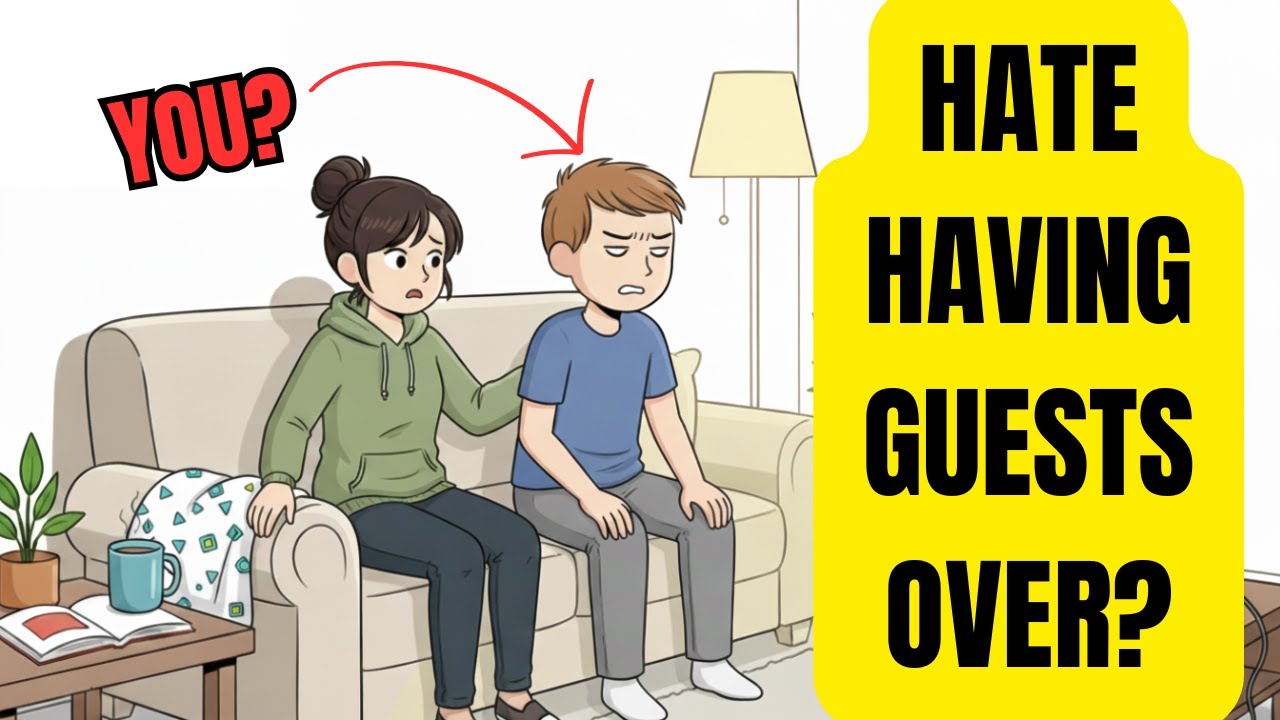
Have you ever felt that sudden tightness in your chest when someone says, "I'm coming over. " You smile. You say, "Yeah, sure.
Come by. " But inside your brain whispers, "There goes my peace. " If you know that feeling, trust me, you're not alone.
And today, we're diving into the psychology of why some people hate having guests over, even when they genuinely like the people walking through the door. For some, hosting is fun. The laughter, the energy, the conversations.
But for others, home is something different. Home is sacred. It's the only place where the mask comes off, where the breathing gets deeper, where the world stops demanding something from you.
And when someone enters that space, even a friend, something shifts, the air changes, the silence breaks, a gentle tension creeps in. Not because you dislike the guest, but because your sanctuary has been disturbed. So why does it feel like such a small invasion?
Psychologically, people who value solitude have something called territorial comfort. Their home isn't just a building. It's their emotional reset button.
Every sound, every object, every routine inside it is something they control. So, when a guest arrives, the mind feels like a calm pond someone just dropped a pebble into. Nothing bad happens, but the ripples change everything.
Some people also use their home to recover from social energy. Out there, they're polite, they're aware, they're on. But inside their home, they finally get to stop performing.
So, when a guest comes over, even one they love, the mask goes right back on. And that emotional effort, it drains them quietly, like a battery losing percentage in the background. Here's something most people never admit.
Some of the nicest, most warmest, most caring people are the ones who feel the most relief the moment the door closes behind a guest. Not because they're rude, not because they're antisocial, but because silence feels like oxygen. Psychologists say these people often have strong emotional boundaries.
They don't push people away. They simply protect the spaces that help them stay whole. To them, home is not a stage.
It's not performance. It's who they are when no one's watching. That's why they prefer meeting friends in neutral places, cafes, parks, anywhere where their inner world stays safely theirs.
And for some, this sensitivity comes from childhood homes where guests meant stress, pressure, or chaos. So now, even as adults, visitors activate old tension they never asked for. But here's the important part.
There is nothing wrong with wanting to protect your space. You can love people deeply and still crave solitude. You can care for others and still guard your peace.
Because for some, the truest form of comfort is a quiet room, a familiar chair, a cup of tea, and the gentle hum of their own thoughts. So, tell me, are you like this, too? Drp your experience in the comments, and don't forget to subscribe.
We explain everyday habits simply, and I think you'll enjoy this one, too. See you there.