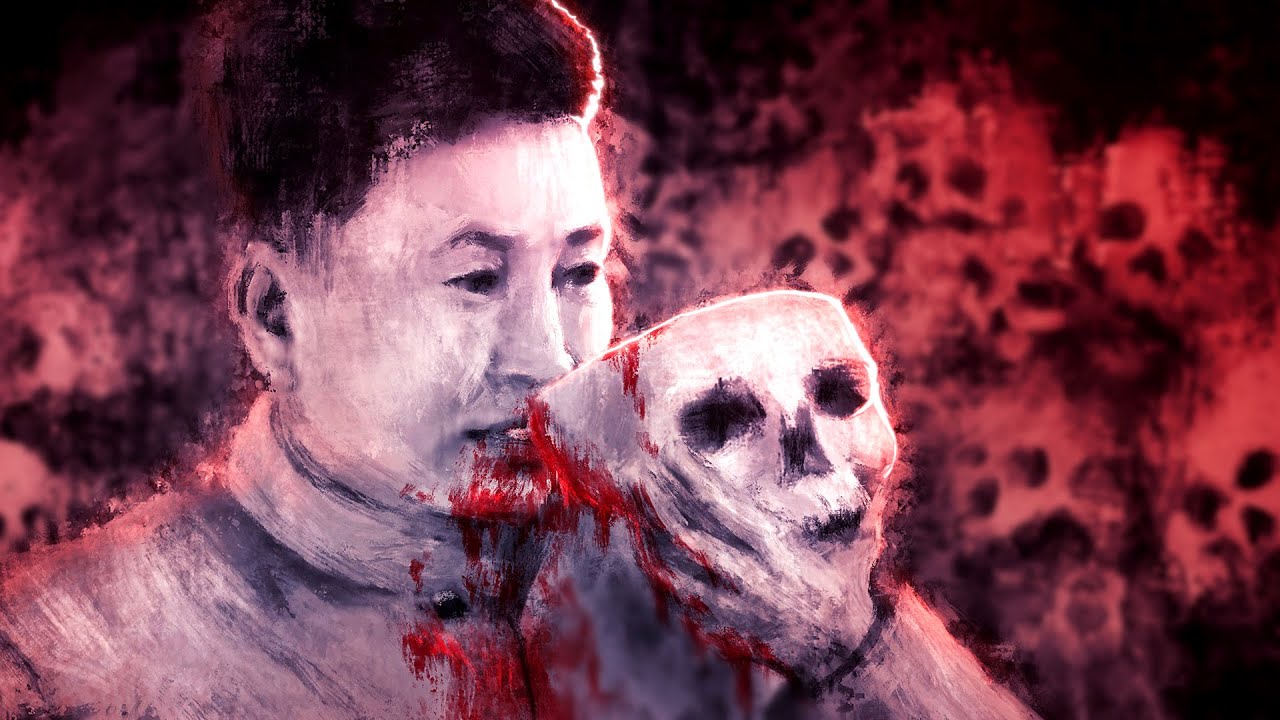
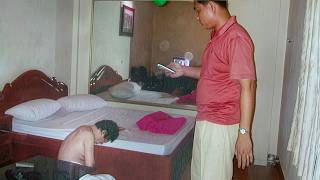
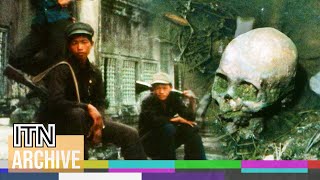
sadly not many people outside southeast Asia remember the tragedy of The Killing Fields of Cambodia but in the late 1970s and 1980s when the evil nature of the regime in that country from 1975 to 79 was publicized in Europe and the United States the absolutely horrific acts of the kimeru's regime became Front Page News an oscar-winning movie and a quite popular punk rock anthem Holiday in Cambodia by the Dead Kennedys in 1980. here at a day in history we do not shy away from bringing you tragic and sometimes hard to watch topics this is definitely one of them please use your judgment before showing this video to young people or those who are sensitive to accounts of extreme violence thank you for watching please like And subscribe foreign 1996 an oscar-winning actor was killed in an attempted robbery outside his Los Angeles home a tragic thing to happen to anyone but making this senseless act even more tragic was the fact that the victim was Drhying s Noor neuro had come to the United States and made a successful life for himself as an actor portraying another victim and survivor of the regime death pran and winning the best supporting actor Oscar for his role in the movie The Killing Fields Drneuro had been an obstetrician in Phnom Penh the capital of Cambodia when the Communist Khmer Rouge took over the country in 1975. Khmer Rouge means red Khmer Rouge is French for red the color of Communism and the French had ruled Cambodia for 90 years until 1953.
Khmer is the Cambodian word for the dominant ethnic group in the country the Khmer Rouge were on the extreme left of the political Spectrum The Very extreme left by the time they took power in Cambodia Chinese Chairman Mao zedong's China was coming out of a radical period itself the great proletarian Cultural Revolution and Mao himself would be dead within a year beginning a shift in Chinese politics you can find out more about this strange and amazing time in a day in histories the most bizarre events in Chinese history on our Channel but suffice it to say that the ideology of the Khmer Rouge made Mao look like a man living in the past though the Khmer Rouge looked to Mao in China for both guidance and financial support the leaders of the movement most notably it's number one and number two men Pol Pot and non chair known also as brother number one and brother number two saw North Korea and Albania the two most isolated and repressive communist regimes on Earth as their role models all three nations believed in alter key complete self-sufficiency though the smallest of the three Albania was the only one to come close to its goal during the time of French control of the country many cambodians rebelled some carried out a small scale and largely unsuccessful Guerrilla War many people supported the Cambodian royal family even though they were a puppet of the French military government however the heir to the throne Prince noradom sihanuk 1922-2012 known within Cambodia by his traditional title of some deck yuv or King father became Head of State in 1960 and again when Crown King in 1993 eventually led the country to Independence in post-world War II talks with France like many other people in Southeast Asia between World War one and World War II many cambodians were drawn to Communism for them the communist movement and ideology were ways to overcome the many problems in the region including crushing poverty especially in the countryside foreign Rule and unequal distribution of wealth in the country for many years Cambodian Society had been divided by a number of visible and invisible lines the biggest and most obvious one was the difference in the life of people within the cities and the countryside the biggest city by far was the capital Phnom Penh though there was poverty in Phnom Penh and other smaller cities there was also a middle class of merchants professionals such as doctors and a wealthy land-owning Elite who owned much of the countryside many of these landlords collected rent but never visited their land and had hated overseers watching out for their interests a considerable portion of the landlords were French which only caused more resentment among the cambodians what's more many of the Cambodian Elite had adopted French sometimes as a first language and it attended French schools both in Cambodia and in France generally speaking many people in the countryside were quite resentful of those living in the city for their part many people in phnombe pen saw the people in the countryside as ignorant dirty and backward additionally Cambodia was made up of a number of different ethnic groups the largest ones were the Khmer Vietnamese Chinese Chum and Thai the charm people were Muslim and lived Australia the border with Vietnam in the Middle Ages the Khmer ruled a large empire which included today's Cambodia Thailand Laos and parts of Burma and Malaya the mon Khmer Empire reached its height in 1200 but continued to be a power in the region until around 1700 a frequent opponent with the Vietnamese whose territory expanded from the northern half of Northern Vietnam to the borders we know today over the centuries a great deal of ethnic Warfare had taken place and there was tension between different ethnic groups in Cambodia especially where the Khmer people were a smallest segment of the population communism in Asia promised an end to class in ethnic Warfare as well as advocating for the overthrow of imperialist European powers and their local henchmen ironically the man who would lead the Vietnamese communist Ho Chi Minh and the cambodians who would establish their own brand of Communism in their country in 1975 were educated in France some attended French schools others worked Ho Chi Minh was both a waiter and a reporter for example all of them came into contact with Communists from all over the world while in France including those from the Soviet Union both before World War II and immediately after Soviet leader Joseph Stalin and the Soviet view of Communism dominated both French and Southeast Asian communism Ho Chi Minh and the Vietnamese were the most populous and Powerful block within Southeast Asian communism and when the Cambodian first formally joined a Communist party it was called the indo-chinese Communist party but was controlled by ho and his Vietnamese comrades before World War II after World War II the Cambodian Communists formed their own party the Khmer people's revolutionary party or kprp it was also sometimes called the campuchaiyan people's revolutionary party campuchain was another popular name for Cambodian but is rarely used today and you'll understand why shortly many of the men who were to rule Cambodia between 1975 and 79 were students in Paris and though most of them were from Phnom Penh and other towns they advocated a peasant farmer takeover of the country and another radical step which was unique among the Communist Nations [Music] from 1953 onward Cambodia was run by sihanuk as the head of state with a variety of political parties in the National Assembly as you may know the Communists in neighboring Vietnam waged a war against French colonial rule after World War II and in 1954 drove the French from the northern part of their country both the Vietnamese Communists as well as the more powerful Chinese Communists under Mao Zedong encouraged and supported a communist Insurgency in Cambodia from the 1950s onward by the late 1960s support from China in Vietnam had allowed the Cambodian Communists now widely known to the world as the Khmer Rouge to take over large parts of the countryside especially in the Vietnam border area the Khmer Rouge also worked from within Phnom Penh in the government weakening the rule of the still popular see hanuk who seemed to have more interest in living the good life than running the poverty-stricken country in 1970 Cambodian General Lon naul over and established a military government his government was supported by the United States an American bombing of Cambodia in an attempt to both destroy Vietnamese supply lines in the country and help defeat the Khmer Rouge helped rather than hindered the Communists in their effort to take over the country Lon Knoll had little support outside the capital and between 1970 to 75 the Khmer Rouge isolated the military government in the city while it established control in much of the rest of the country in 1975 Lon naul fled the country and the Khmer Rouge took power foreign [Music] the most powerful man within the camera Rouge was Salat saw who went by the Revolutionary Alias Paul pot which was a shortening of the French words politic portonsiel or potential politics he in a changing cautery of insiders would order and control the mass murder to come Pol Pot and the Khmer Rouge believed in a radical form of Communism which they hoped would bring about the workers Utopia described in the works of Karl Marx Vladimir Lenin and Mao Zedong however as in China most of the population of Cambodia were rural peasant farmers who knew nothing about industry the Khmer rouge's unique idea was to rebuild Cambodian Society from the ground up according to its vision and its Vision turned out to be hellish for millions of people interestingly though the Khmer Rouge hated sihanuk's policies and killed many of his associates they used him as a figurehead to recruit support in the many villages of the country where he was immensely popular with the poor and uneducated at first sihanuk thought this might be a way back into power but by the time Cambodia was freed from the camera Rouge in 1978 he had been a literal prisoner for some years one of the first things they did was to eliminate many of those who had held even small positions in the governments of sihanuk and Lon Knoll the Khmer Rouge were also suspicious of the urban professional class like doctors lawyers teachers journalists Etc they also believed that any resistance to their Rule and policies would come from this class of people after all many of the top Khmer Rouge were educated men and look what they had done many of these people were killed in the streets of Phnom Penh the only large city in the country two men that survived this initial Purge were death pran a photojournalist and haying S Noor an obstetrician for the professional class the only chance of survival was to take up another identity haying esnor pretended to be a cab driver for instance he was lucky either no one he knew noticed him and turned him in or his acquaintances were pretending to be part of the working class and didn't want to be turned in themselves one thing that the Khmer Rouge we're looking for in particular were people with glasses everyone with glasses was considered to be either wealthy and living on the backs of the people or part of the professional class both highing s neural and death pran through their needed glass as a way to survive as in the museum at Auschwitz in Poland with its suitcases shoes and other items left behind by victims of the Nazis the main Museum of The Killing Fields in Cambodia holds piles of glasses left behind by those killed by the Communists the professional class were not the only ones to suffer at the hands of the Khmer Rouge for while execution squads were searching for doctors teachers officials Etc other troops were beginning the Roundup of two to three million people in the capital many of whom were refugees from the fighting that had recently taken place some of these people left the city reluctantly but without resistance for the situation in the city had grown so bad that food water and shelter so were hard to find the camera Rouge promised them all three in return for helping them construct a peasant's paradise most people did not want to be removed from their homes and separated from their families and thousands were killed in the streets for resisting and as an example to others by all accounts the worst of the worst of the Cameroon soldiers were young people teenagers and even younger from the countryside who had been fully indoctrinated into Khmer Rouge ideology and believed that almost everyone in the city was an enemy or potential enemy these youngsters were encouraged to be particularly violent and vicious in many instances of torture rape and brutal types of killing took place while Phnom Penh was empty and that was only the beginning one of the more bizarre aspects of Khmer Rouge ideology was that once a perfect agricultural Community had been created the cities would then be repopulated any uniquely communist Urban Society would be set up [Music] the people of Phnom Penh in many of The Villages of Eastern and Central Cambodia were relocated to agricultural areas there they were told that through hard work and communist dedication they would soon increase cambodia's food supply threefold and help the country be fully self-sufficient in short order there were many problems with this first Cambodia was divided into zones and not all of the governors agreed with some of the harsh methods that Pol Pot and the central government were using this caused productivity to lag and eventually small-scale Civil Wars began in outlying provinces though they were finally put down by Paul Pott and his supporters which included Chinese advisors the lack of productivity meant that many began to go hungry this led to problem number two no one was willing to report poor harvests those that did were often killed because it had to be their fault they were either accused of poor communist Zeal or of being a CIA spy whose purpose was to overthrow the regime third many of those who were put in charge knew absolutely nothing about farming what's even more surreal the Khmer Rouge destroyed many of the books in the country so even basic how-to books were non-existent the farmers that did know something were completely out of their depth as well they knew how to farm small plots of land not the huge Collective set up by the regime starvation meant people a insects rats snakes and reportedly fresh corpses on occasion all of this was done secretly for being caught would mean you thought that the regime wasn't supplying enough food for which you could be killed hunger starvation and disease claimed 60 of the roughly 1. 5 million victims of the Khmer Rouge making things even worse doctors could not acknowledge being doctors and all medical books and most of the medicine in the country were destroyed by the regime they were seen as poisonous Western influences traditional folk medicine was supposed to take its place but even the sick were forced to work hang senior was an obstetrician but in one of the most tragic things you will ever hear he could not save his wife an unborn child when she went into an early and difficult labor he had to Stand By and Watch while she and his child died admitting he was a doctor would not help thousands of people lived together no one had any privacy had he helped he would have been shot and his wife and child killed anyway those who were seen or seen to be resisting loitering or complaining were killed many times in the most brutal ways possible in order to save bullets khmeru's executioners used axes and picks to cave in the heads of their victims others were tied to Stakes with their hands behind them with an airtight plastic bag around their heads suffocating to death others were tied to stakes and rivers drowning at high tide the horror went on and on the enduring symbol of the regime today is the museum at the former S21 prison in Phnom Penh there pawpaw's enemies real and perceived were kept under a strict regimen that included complete silence at all times chaining to a wall or floor at all times waterboarding and other torture on a regular basis and mass executions which occurred mainly at night and with pickaxes to the head it's estimated that 20 000 people were killed at S21 only 12 people are known to have survived the Khmer Rouge were also Cambodian nationalists which is sometimes overlooked in history books throughout their reign of terror they eliminated thousands of men women and children from cambodia's minority groups many of these were Vietnamese and this combined with a low-level War which had begun between the two former allies after the communist victory in the Vietnam War caused a more powerful Vietnamese to invade and defeat the Khmer Rouge in 1979.
What are the key takeaways?
Based on the transcript, here are the key points...