hello everyone so this is going to be the video about consonants okay so here we go so uh a good definition for consonants is that they are sounds in which the articulators are used to either interrupt restrict or divert the flow of air that comes from the lungs in a variety of ways okay and these verbs interrupt restrict divert we're going to make reference to them when we talk about manners of articulation okay when you talk about the articulators that are used we're going to make reference to those to classify the consonants according to place
of articulation and also the first type of classification i want to make sure it's clear is the classification between voiced and voiceless sounds okay voiceless or unvoiced okay so as the as the names suggest voiced consonants are those that are produced with vibration of the vocal cords okay and voiceless without all right so take for instance uh the sound that is usually correlated with letter f okay so if you think of the consonant if you produce it continuously and you place your hand in your throat you're not gonna feel any vibration okay that's because there
there are no your vocal cords are relaxed and open there is no vibration right so you can you can do this you can go and you feel no vibration if you add voice to this consonant you end up getting you end up getting the consonant that is usually excuse me correlated with v another example if you take uh one of the consonants that is usually represented in writing by the combination of letters t and h okay if you pronounce it like this you're pronouncing the voiceless version of this consonant the voiceless consonant but then if
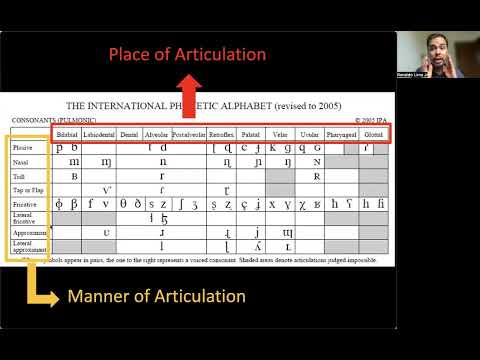
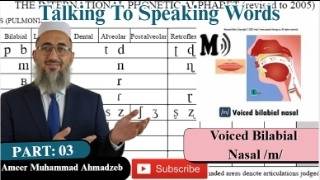
you pronounce it [Music] you have the voiced one okay a last example all right so voiceless and voice we're gonna use this uh terminology to classify consonants okay so here is the ipa chart for consonants the chart from the international fanatic association uh and it's the international phonetic alphabet both are ipa and this chart is the one for consonants okay now it's it's organized in in many in many ways all right if you look at the columns the columns are uh organized into places of articulation and from left to right the places of articulation come
from the outmost so lips to both lips by label to innermost okay glottal right it goes like lips teeth and lips alveolar ridge palette and so on now the rose they are uh organized according to manner of articulation remember the verbs on the first slide uh restrict interrupt or divert the airflow these are the ways the manners right we produce the consonants now you can see there are some empty spaces in the chart and some empty spaces are white and some are grayed out the ones that are white it's because it's a possible articulation but
no language in the world no language has been registered to have uh this sound okay for instance take a look at a labial dental plosive it's possible to articulate a labial dental plosive so it's possible but there is no language with this sound ever recorded okay or or imagine uh a label dental trill i it's hard to articulate to vibrate vibrate uh lower lip but it's possible it's possible to articulate but no language has it okay or think of a oh when there are two symbols in the same cell the one on the left for
example here by lady plosive the one on the left is voiceless the one on the right is voiced so there is uh a bile voiced by label nasal it's possible to have a voiceless one we can articulate it we can go right and m with no voice but no language has ever been recorded to have this consonant when the cell is grayed out it's because it's uh the classification is contradictory and there's no way to articulate it so you can have a bilabial lateral fricative because it's either bilabial or lateral if it's my label use
both lips you can have the air come through the sides of the tongue all right so it's it's just contradictory uh what else well when there are two symbols the one on the left is voiceless right so is voiceless and the is the voiced counterpart here is voiced and there is no voiceless counterpart okay and remember that those are symbols okay they're symbols to represent sounds okay so uh when you see this even though it resembles letter p it's not letter p it's a phonetic symbol to represent a sound okay we might talk about letter
sound correspondences but the main thing i'll be talking about here are sounds okay and the symbols to represent those sounds uh all right so let's move on let's talk about the consonants of english okay first i'm going to go through all the consonants in english according to their manners of articulation and then i'll talk about them again in terms of place of articulation okay so the first manner of articulation i'll talk about is the one on the left the first one uh in the ipa explosives also called stops okay and the characteristic of the the
of plosives is that they have complete closure of the vocal tract somewhere in the vocal tract and after this complete closure a burst like an explosion okay so you could close uh the flow of air using both lips and then you could have a or if there is voice you could close the flow of air using the tip of your tongue touching the back of your teeth or the alveolar ridge okay and then you're gonna have or if there is voice or you could close the flow of air using the back of your tongue touching
uh the soft palate okay the velum all right and then you would have or all right so these are the six plosives uh that they are in english pataka and badaga three voiceless three voiced all right every time i talk about the consonants i'm gonna show this consonant being used in a word in the beginning of the word in the middle of the word and at the end as examples okay so for pa you have as examples pin happen and cap and you can see that depending on where the consonant is the the uh details
of the articulation of the pronunciation changes right so the per in pin is different from the pa in cap which you you don't really need to have the burst right then for ben cabbage and cab ta two hotter and hat the do harder and had and see that it's possible to pronounce these words in the middle hotter and harder but then it's not uh and the it's a different consonant that is about to come okay cut packet and pick and here you can already see that letters uh the this is the symbol right of the
sound so it doesn't matter how it's spelled uh the symbol is the same because it's one sound right and for good god forget and pig okay now i need to talk about uh a particularity of the pronunciation of initial voiceless plosives in english so what happens is that these consonants they need aspiration okay so in english when you have initial pataka or when it's even in the middle of a word but uh in the in the beginning of a stressed syllable these consonants they need aspiration so they need to be pronounced pay tie and cap
with this aspiration and why is that because different languages they have different patterns of this aspiration how much uh aspiration there is between the release of the consonant and the beginning of the vowel okay so what happened in english and in portuguese they have different patterns okay so what happens is that if i pronounce these three words with the the way i would pronounce words in portuguese without the aspiration for a brazilian or a portuguese ear the words sound okay right so if i say pay or tie or cap the way we would pronounce pataka
in portuguese portuguese a brazilian ear those sound like these consonants right but for a native speaker of english if you pronounce pai thai and cap there is some chance that this native listener is going to hear bay die and gap because to make this distinction between the voiced and the voiceless consonants in the beginning of words or beginning of stressed syllables we need in english aspiration is needed okay so if you say bye as we say in portuguese probably a native listener will hear by for you to make sure that your pronunciation uh is more
accurate accurately closer to a voiceless per you need to pronounce pi right to eat a piece of pie for instance okay and the same happens if you have le or after they also they they get voiceless right so you still have aspiration and the la or the become voiceless that's why there is this little uh circle uh uh uh under the la and the right here so close close eyes cream and here the cut is not in the beginning of the word right so there's no aspiration so one of the differences between uh ice cream
and ice cream is the aspiration ice cream you need aspiration and i scream no aspiration needed okay all right second manner of articulation fricatives the main characteristic of fricatives is that two articulators they get close enough to uh to divert or actually to restrict the flow of air but you can have constant flow of it okay so this happens if you use lower lip and upper teeth and uh you restrict the flow of air but uh you you you let it go constantly as in and if you use your tongue between your teeth to do
or or if you place your tongue near the alveolar ridge right the back towards the back of your teeth to produce or z if you use um a region of your tongue closer to the middle of your tongue the center of your tongue close to your palate to pronounce and if you use your your glottis right the opening of the vocal cords still just let some air come out to produce so these are uh the two four six eight nine fricatives in english okay pairs of voiceless and voiced are fever fever and sha and for
her there is only the voiceless well actually in depending on where the the constant is there might be a voiced version there is a little uh turn here uh in the symbol but uh we'll talk about this eventually all right examples for fan cafe and belief for the van cover and above for the think mathematics and bath for the voiced we have the father and bathe and these okay oh they're more for sure she nation and fish for je genre i think it's the only word in english that begins with ja and it's borrowed right
measure and beige and for her hello and behind this one could be voiced yeah and there is no ha in final position okay now affricates affricates are a combination of a plosive plus a fricative and because this plosive and this fricative are produced at the same place of articulation or at a neighboring place of articulation they become a single sound so this happens when ta and sha are pronounced so close together that they become a new sound which is cha or the engine when they're together and they become jeff this doesn't happen with or because
even though it's a plosive plus a fricative they're not homo organic at the same or neighboring place of articulation okay so the two africans in english voiceless and voiced okay examples for church nature and church again right has this voiceless affricate at the beginning end and for judge larger and judge again right in the beginning and at the end nasals the characteristic of nasals is that you close the flow of of air through your mouth and you let the air escape through the nose okay so use your nasal cavity you could close the flow of
air using the same places of articulation for the plosives right so you could close the flow of air through the mouth using your lips but letting the air escape through the nose so then you have you could use tip of your tongue behind your teeth or at the ovula ridge and you would have or you could use the back of your tongue touching uh the velum the soft palate and you would have um as in in portuguese we have this sound as in manga when you say manga before doing the ga you have [Music] and
and the back of your tongue is touching uh soft palate okay examples for more camera and room for not no infant and on and for um there is no in initial position but there is in the middle as in sing and at the end as in sing okay uh now notice that um in portuguese at least in brazilian portuguese we don't pronounce final ma and right so for example uh the name of the airline company la we say right so we nasalize the vowel and drop the nasal consonant but in english we do need to
pronounce it right so this little preposition here it's not on it's on right here it's not infant it's in defend okay here not roon but roon right so you need to articulate it lateral you use your your tongue uh uh goes up to the roof of your mouth at different places and then the air needs to escape through the sides of the tongue okay that's why it's called lateral okay so there are two lateral sounds in english uh and they're called allophones because they have this uh complementary distribution okay you have one sound like portuguese
that happens uh before vowel so pre-vocalic la okay and you have post-vocalic o which has a slightly different pronunciation okay so le you just tip of your tongue touching alveolar ridge and oh it's the same thing but the back of your tongue also raises as if you wanted to say ooh wild thing but not roundy rounding your lips right uh so example for allah live and pulling and example for love so both pre-vocalic it doesn't occur at the end of words because it needs to be pre-vocalic and oh doesn't occur at the beginning of words
because it needs to be post localized so have multi and pull okay approximants to articulate two articulators move close to one another but not so close as to god freak to cause friction or is or to stop the flow of air okay uh one example is the sounds that we use to pronounce the letter r okay so depending if if it's again pre-vocalic or post-vocalic there is a slightly different pronunciation as in round and r as in r okay of course there are dialects of english that do not pronounce post vocalic are right here it's
for the ones that do uh and we also have ye okay approximate examples for ra red around and car and you see that here i'm using slashes and this symbol here just as as as the phoneme to represent uh whatever articulation is within this category okay because if you look at this symbol here it's in the ipa it's a symbol for for the trill okay but uh it's it's it's by convention it's the symbol that people use for this phoneme even though the actual pronunciation is either ra or er okay example for ya yes few
and they so for diphthongs right and for what would hallway hallway and bow or bow right and in both you have this uh this is also called a glide yeah because it's it's moving or or a semi consonant or a semi vowel right uh okay tap or flap one articulator rapidly touches another the one we have in english is we also have it in portuguese when you pronounce arada for instance you're using this uh sound okay and it's the tip of your tongue rapidly touching the alveolar ridge okay example uh two when it's in connected
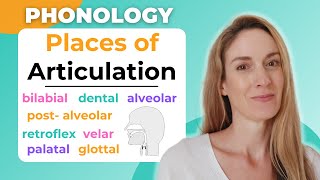
speeches in uh i'm i'm going i'm going to go i'm going to go i gotta go okay water and got in connected speech again as in gada okay gotta go all right these are all the consonants we're gonna go through them again but now thinking about their places of articulation okay so the first place i'll talk about is by label when you use both lips to pronounce uh the consonant so we have two bilabial plosives [Music] one by label nasal ma and one by label approximant one label dental when you use lower lip and upper
teeth we have two label dental fricatives dental when you use your your uh when your tongue is between your teeth okay so dental some people call it interdental okay so we have two dental fricatives in english [Music] alveolar uh when when um the tip of your tongue uh touches or get close to your alveolar ridge which is the back part of your gum right right where your upper teeth are inserted okay so we have two alveolar plosives and uh one alveolar nasal nah uh the flap tap is alveolar right uh two alveolar fricatives enza and
the lateral pre-vocal lateral it's completely alveolar and the post vocalic uh lateral has two places of articulation it is alveolar because the tip of your tongue is touching the oval ridge but since the back of your tongue is getting close to the velum it it's it's also velar right oh so it's alveolar and velar retroflex is a word referring to when you pronounce uh a consonant with uh the tip of your tongue twirling back okay so er okay the two pronunciations for are in english pre-vocalic and post-vocalic palatal when your tongue gets closer touch the
hard palate okay so we have a palatal approximant yeah we have two palatal fricatives sha and ja and the two affricates cha and jia okay in the ipa these two fricatives are called post alveolar and the affricates are called palatal alveolar all right but some people just call them palatal to simplify classification okay velar when the back of your tongue touches or get close to the soft palate which is also called the velum okay so we have two velar plosives kanga and one velar nasal na all right in glottal when you use the opening of
the vocal cords to pronounce the fricative all right so these are the places of articulation how do you name consonants okay you can't name them by letters because they're not letters as i said in the beginning and it's hard to keep pronouncing doing the sounds right you can't go like oh when you pronounce when you when you wanna cha and uh there is a or right and you need names to write about them so the way we classify consonants is that if we use these three classifications we talked about the voicing the place of articulation
and the manner of articulation and we use this order in english if you use these three classifications you get a unique vowel right because if i talk about a plosive there are six so a plosive i don't know which one if you talk about a voiced consonant there are many i can't you i can't know which one if you tell me it's a bi-label consonant which one right if you tell me it's a bilabial plosive i'm still in doubt there are two right so when you say the three uh classifications you get unique vowels so
if i tell you about the voiceless bilabial plosive then i know which constant you're talking about it's pa if if i tell you about the voiced uh alveolar fricative i know which constant you're talking about it's z all right so unless there are no counterparts you could eliminate one right for example the flap or the tap there's only one it's alveolar it's voiced but there is only one so you could say the tap or nasals nasals are all voiced right so you could talk about uh the bilabial nasal you don't need to to tell me
the voicing okay but only in those situations all right so naming consonants here's a little exercise okay i'll give you 10 seconds or you could pause the video here are three classifications and you you should read them and think about which consonant it is pause the video all right because i'm going to give you the answer in one two three the voiceless bilabial plosive is the voiced dental fricative is the and the palatal approximant is yeah i didn't use the voicing here because there is only uh one palatal approximate okay both all approximants are voiced
okay another one three more okay pause the video read the classification and see if you can think about the consonant in the symbol all right pause the video because i'll give you the answers in one two three the voiced alveolar plosive is the the velar nasal is no and it's voiced but i don't have to say it because there's only one velar nasal all nasals are voiced and the retroflex approximate okay now the opposite here are three consonants can you pause the video and see if you can come up with the three classifications voicing place
and manner in this order pause the video and write it down yeah and check your answers i'll give you the answers in one two three pa is a voiceless bilabial plosive ge is a voiced velar plosive and cha is a voiceless alveolar palatal affricate and these are the last ones three more okay so pause pause the video see if you can write the names of these consonants i'll give you the answers in one two three na is the alveolar nasal if you wrote voiced alveolar nasal it's fine but all nasals are voiced is the bilabial
approximate if you wrote voiced by label approximate it's fine the approximates are voiced and ha is the glottal fricative and if you wrote voiceless glottal fricative it's fine as well okay so that's it uh next presentation will be about uh specific difficulties that brazilian speakers have on english concept so see you then bye-bye