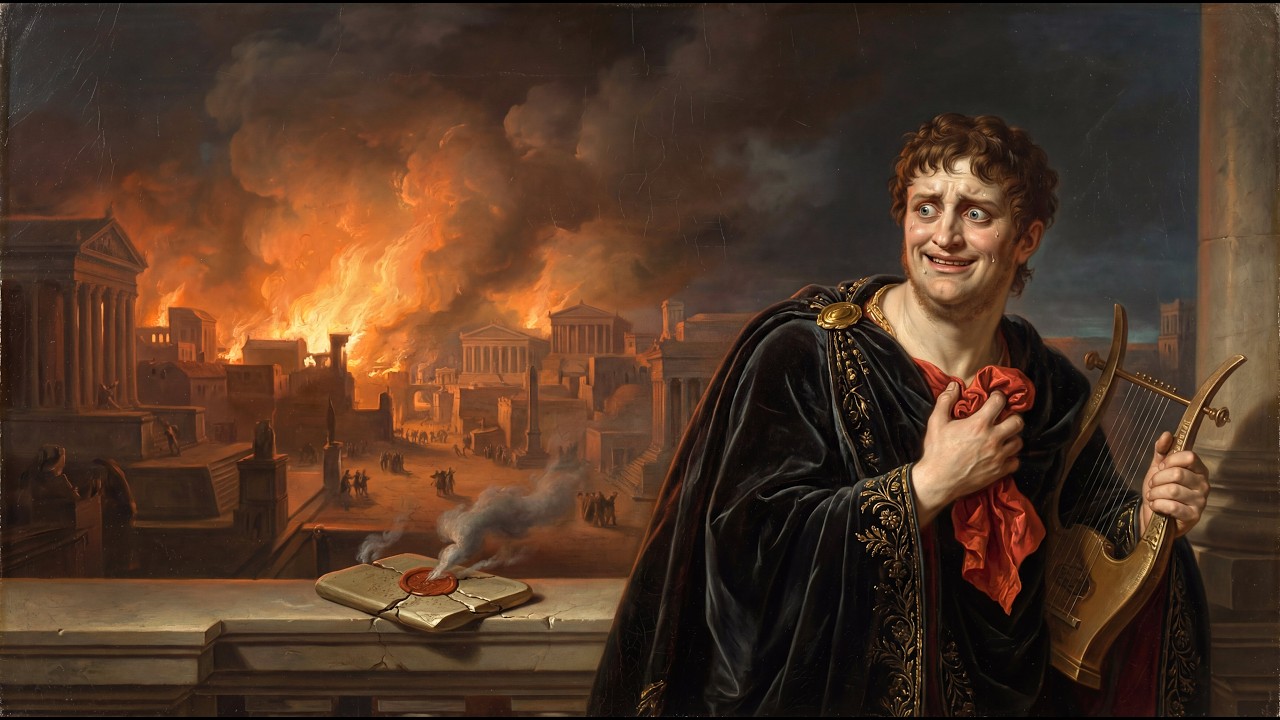
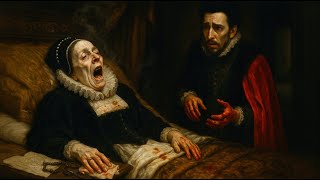
The most powerful man on earth spent his final night knocking on locked doors. One by one, Nero visited the chambers of his closest friends, men he had showered with gold, protected from enemies, elevated to unimaginable wealth. Every door was locked.
Every room was empty. They had all fled in the night, taking his bedding with them and his poison. Here's the thing about absolute power that history keeps proving over and over again.
It only exists as long as people believe in it. The moment they stop believing, you're not an emperor anymore. You're just a man in an empty palace, calling out into the darkness, receiving no answer.
Nero would discover this truth in the most brutal way imaginable. Within 48 hours of that lonely night, the ruler of the known world would be hiding in a slave's room covered by a dirty cloak, drinking lukewarm water while joking about his own death. June 8th, 68, CE, Rome.
Nero was 31 years old. He had ruled for 14 years, longer than most Roman emperors would ever manage. He had killed his own mother, murdered two wives, [music] executed senators by the dozen, built himself a palace so obscenely extravagant that later emperors would tear it down out of sheer embarrassment.
And now, on this particular night, he couldn't find a single person willing to help him die. The man who had ordered countless executions couldn't bring himself to drive a dagger into his own throat. He would need his secretary to do it for him.
And those final moments recorded by witnesses who were actually there remain some of the most pathetic and disturbing in all of Roman history. This is how absolute power really ends to understand how Nero ended up crawling through brambles in the middle of the night. We need to go back a few months to when the cracks in his empire first became impossible to ignore.
By early 68 CE, Rome was starving. Not metaphorically, literally starving. The grain supply system that fed the city had collapsed.
And while multiple factors contributed to this disaster, storms that sank ships, a fire at Austia that destroyed stockpiles, the great fire of Rome 4 years earlier that burned stored grain. There was one factor that overshadowed everything else. Nero had bankrupted the empire.
His spending was legendary and not in a good way. The dois ora, his golden house, sprawled across 2. 6 km of Rome.
That's roughly 640 acres of palatial excess featuring hundreds of rooms decorated with gold gems and mother of pearl. Rotating dining rooms, artificial lakes, gardens that stretched as far as the eye could see. The whole thing was built in just 4 years through relentless labor.
And it consumed resources that should have fed the populace. But the golden house was just the beginning. Nero threw games and spectacles that drained the treasury.
He staged naval battles for entertainment. He forced senators and knights, Rome's elite, to fight as gladiators for his amusement. He gave gifts to his favorites that reportedly totaled over 2 billion cisters.
To put that in perspective, that's several times the entire annual military budget of Rome. When the money ran out, Nero got creative. He fabricated treason charges against wealthy citizens and seized their estates.
He confiscated treasures from temples. And most dangerously, he did something that had never been done before in Roman history. He debased the currency.
The silver daenarius, the backbone of Roman commerce, was systematically reduced in silver content to stretch the imperial treasury further. The result was predictable. Inflation spiraled.
A loaf of bread that once cost one dinarius now cost two or three. The common people, already struggling with grain shortages, watched their savings evaporate. Rome was angry.
Rome was hungry. and Rome was about to turn on its emperor. Meanwhile, in Gaul, a man named Gas Julius Vindex had seen enough.
Vindex was the governor of Galia Lugdunences, roughly modern-day central France. Throughout the winter of 67 to 68 CE, he had been quietly circulating letters to his fellow governors. His grievances were extensive.
the excessive taxation crushing his province, Nero's systematic murder of senators, the emperor's shameful theatrical performances, his general unfitness to rule. When word of these letters reached Nero, the emperor's response was theatrical. I have only to appear and sing, Nero reportedly declared to have peace once more in Gaul.
It was the kind of arrogant dismissal that only a man completely disconnected from reality could deliver. Nero genuinely believed that his musical talents, the performances that Roman elites found humiliating and degrading to the imperial office, would somehow charm a rebellious province into submission. In March 68 CE, Vindex made his move.
He openly revolted, commanding roughly 100,000 supporters. But here's what made his rebellion different from typical power grabs. Vindex didn't want to be emperor himself.
Instead, he reached out to Servia Sulpicius Galba, the 70-year-old governor of Hispania Terrainis, Spain. Galba was everything Nero wasn't. Old, stern, respected by the military, a traditionalist who represented the old Roman virtues that Nero had spent 14 years trampling.
At first, Galba hesitated. Then, he received intelligence that changed everything. Nero had ordered his assassination.
In April 68 CE, Galba committed to the rebellion. Now, here's where things get complicated and where Nero might have actually survived if events had unfolded differently. The Rin Legion stationed along Rome's northern frontier were the most powerful military force in the empire, and initially they remained loyal to Nero, or at least they weren't willing to let some upstart from Gaul dictate who sat on the throne.
Lucius Virginia Rufus, commander of three Rin legions, marched against Vindex near the town of Besson. Their forces met. What happened next is still debated by historians.
It may have been a genuine battle or a tragic misunderstanding between forces that weren't supposed to fight at all. Either way, the result was decisive. Vindex's forces were routed.
Vindex himself, defeated and humiliated, committed suicide. Nero should have been celebrating. His enemy was dead.
The rebellion was crushed. The Rin legions had proven their loyalty. Except they hadn't proven their loyalty at all.
Within days of the battle, those same Rin legions discovered that their commanders had been playing political games behind their backs. Furious at being manipulated, they did something unprecedented. They proclaimed their own candidate for emperor.
Alice Fatellius, commander of the lower Rin armies, was their choice. The historian Tacitus would later identify this moment as the revelation of what he called the secret of empire. That emperors could be made not just in Rome, but anywhere that legions were stationed.
The provinces, the frontiers, the distant armies, they all held power that Rome itself could only pretend to control. The empire was fracturing, and Nero still didn't seem to understand the danger. By June 68 CE, Nero's psychological state was deteriorating rapidly.
The confident emperor who had toured Greece just months earlier, competing in artistic contests, accepting laurel crowns, reveling in applause, now faced a world that was collapsing around him. Ancient sources describe paranoia, erratic behavior, dramatic weight fluctuations. Some modern scholars have even hypothesized medical conditions like Cushing syndrome to explain his physical changes, though this remains speculation.
What we know for certain is that Nero was running out of allies fast. his former tutor, Senica, forced to commit suicide 3 years earlier after the Piso conspiracy. The conspirators themselves executed.
Dozens of senators dead or living in terror. His mother Agraina murdered on his orders. His first wife Octavia executed.
His second wife Poea dead allegedly kicked while pregnant. Though ancient sources disagree on the details, Nero had spent 14 years eliminating anyone who might challenge him. Now he discovered the fatal flaw in that strategy.
When you need help, there's no one left to give it. The provinces were in revolt. The legions were proclaiming their own emperors.
The Senate was growing bold in its hostility. And then came the blow that would finally destroy him. The Ptorian Guard.
The Ptorians were Rome's elite palace guard. the emperor's personal security force. They had protected Nero for 14 years.
They were supposed to be his most loyal defenders. Their prefect was a man named Nidious Sabinus. And Nidious had done the math.
On the night of June 8th, 68 CE, Sabinus made his move. He circulated a rumor among the guardsmen. Nero had fled to Egypt.
The emperor had abandoned Rome, abandoned them, abandoned everything. It was a lie. Nero was still in the palace, but the guardsmen didn't know that.
Then came the offer. Nidius promised each Pritorian 30,000 sisters if they would switch their allegiance to Galba. 30,000 sisters.
That was roughly 10 years wages for a soldier. A fortune. Life-changing money.
The Guardsman took the deal. In a single night, Nero lost the only military force standing between him and his enemies. The Senate, emboldened by the guard's defection, convened an emergency session.
By the morning of June 9th, they had voted unanimously. Nero was declared a public enemy of Rome. Galba was proclaimed the new emperor.
The sentence for a public enemy was specific and horrifying. Nero would be stripped naked, his neck fastened in a wooden fork, and he would be beaten to death with rods in public view. Panic in the palace.
When the dispatchers arrived informing Nero of the Senate's decree, something in him shattered. Sutonius, drawing on accounts from people who were actually there, describes what happened next in vivid detail. Nero tore up the dispatches in a rage.
He overturned his dining table. He ran through the palace, seizing daggers, testing their points against his skin, then putting them down again. At one point, he considered throwing himself into the Tyber.
He retrieved poison from Lusta, the notorious poisoner who had helped him murder his rivals over the years, and stored it in a golden box, an insurance policy, a way out. His mind raced through escape options. He could petition the Paththeon king, Rome's great enemy in the east, for asylum.
He could appeal to Galba directly, beg for mercy, offer to serve as a private citizen. He could flee to Egypt, where he still had supporters. He even drafted a speech to deliver before the Senate.
He would appear in black robes, humble himself, plead for his life. But then he imagined the crowd, the mob that had once cheered his performances, tearing him apart before he could finish speaking. He abandoned the plan.
Around midnight, Nero summoned his closest friends and advisers. He needed them now more than ever. He needed their counsel, their support, their protection.
No one answered. He went personally to their chambers. Door after door was locked.
Room after room was empty. His friends, the men he had enriched, protected, elevated, had fled into the night without a word. They had taken his bedding with them.
They had taken his golden box of poison. They had left him with nothing. In the empty corridors of his own palace, the most powerful man in the world called out into the darkness.
Have I then neither friend nor foe to kill me? One man remained. His name was Fyon, a freedman, a former slave who had earned his freedom.
Fyon owned a modest suburban villa about 4 miles outside Rome near the fourth milestone on the Via Nomana. It was a humble property, nothing like the splendor Nero was accustomed to. But it was somewhere to go.
Nero disguised himself as a fleeing slave, barefoot, simple tunic, a ragged cloak thrown over his shoulders, cloth covering his head, a handkerchief pressed against his face to hide his features. The emperor of Rome, master of the known world, reducing himself to this, he rode on horseback with only four attendants. One of them was Sporus, a young man Nero had castrated and married in an elaborate ceremony, treating him as a replacement for his dead wife, Pepea, whom Sporus allegedly resembled.
The journey was only 4 miles. It should have taken less than an hour. It felt like an eternity.
The night was full of omens, or at least that's how it seemed to terrified men fleeing for their lives. An earthquake shook the ground beneath them. Lightning cracked across the sky.
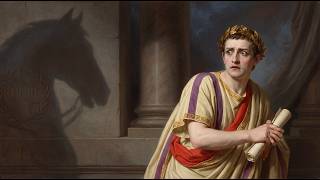
Along the road, they could hear soldiers shouting in the distance. Long live Galba. Nero's horse suddenly reared in terror.
The cause was mundane but horrible. The stench of a corpse dumped by the roadside. In the commotion, the cloth covering Nero's face slipped away.
A retired Pritorian soldier happened to be passing on the road. He recognized the emperor immediately, but instead of attacking, instead of raising the alarm, the old soldier did something almost sadder. He saluted, "Hail, emperor.
" The respectful greeting of a soldier to his commander, given to a man who was no longer emperor, no longer commander, no longer anything at all. It was a gesture of old loyalty that only emphasized how completely Nero's authority had evaporated. They rode on.
When they finally reached Fyon's villa, Nero couldn't bring himself to enter through the front door. Too exposed, too dangerous. Instead, Feyen led them around back through a reedcovered passage.
The emperor of Rome crawled through brambles and thorns. Feyen laid down a robe to protect his feet, but the thorns still tore at his skin. When they reached a narrow excavation, a sand pit where Nero could hide, he refused.
I will not go underground while still alive. So they entered the villa through the back. They found a small dark room, a slave's quarters with nothing but a simple mattress.
Nero collapsed onto it and pulled an old dirty cloak over himself. He was hungry. They offered him coarse bread.
The kind slaves ate. He refused it. He was thirsty.
They brought him water, but it was lukewarm. Nero looked at the cup and made a grim joke. This is Nero's distilled water.
It was a reference to his famous habit of drinking only the finest water chilled with snow, a luxury so expensive that ordinary Romans could never afford it. Now he was drinking tepid water from a slave's cup in a slave's room covered by a slave's cloak. The man who had built the golden house, the man who had entertained millions, the man who had murdered at will and spent without limit.
This was where it ended. As dawn broke on June 9th, Nero's companions urged him to flee further. The provinces in the east still loved him.
His reputation as a performer, his generosity during his Greek tour, these had earned him genuine affection among people who had never experienced his tyranny firsthand. If he could reach Egypt or Syria or Paththeia itself, he might survive. But Nero had given up.
He ordered Fyon to dig a grave. The dimension should match his body exactly, he insisted. He asked them to gather marble fragments for a burial marker.
He requested water and wood for washing his corpse and cremating what remained. While they worked, Nero wept. He kept repeating a phrase that would become one of history's most famous last words, or perhaps its most pathetic.
Quales artifacts pero. What an artist the world is losing. Not what a ruler, not what a military leader, not what a statesman, an artist.
Even at the end, facing death, Nero's primary identity, [music] his deepest sense of self was as a performer. The emperor business had just been a side gig. He begged Sporus to wail and lament, hoping that watching someone else's grief might inspire him to find the courage for what came next.
He talked himself through it, oscillating between despair and attempted resolve. to live as a scandal. This does not become Nero.
Rouse thyself. But he couldn't rouse himself. He picked up daggers and tested their points.
He put them down again. He picked them up. He put them down.
The fatal hour has not yet come, he muttered. Around midday, a courier arrived at Fyon's villa. He carried the Senate's final decree, detailing exactly how Nero would be executed.
The punishment was called more majorum in the manner of the ancestors. It was the ancient penalty reserved for the worst enemies of the Roman state. Nero would be stripped completely naked.
His neck would be locked in a wooden fork, a forked piece of timber that immobilized the head. Then he would be beaten with rods until he died in public before a crowd. The emperor who had performed for adoring audiences would have one final performance, but this time he would be the entertainment.
A naked, beaten animal dying for the mob's satisfaction. When Nero heard the details, something finally broke through his paralysis. Not courage exactly, but terror of the alternative.
He grabbed a dagger and then he heard something that froze his blood. Hoof beatats coming fast, coming closer. Cavalry.
The Senate's agents were coming to take him alive. Nero rose from his couch. In that moment, his theatrical education served him one last time.
He quoted Homer, the Iliad, book 10, line 535. Hark now strikes on my ear the trampling of swooted hunters. Even at the end he reached for poetry.
The hoof beats were getting closer. There was no more time for hesitation, no more time for speeches, no more time for anything. Nero seized the dagger and pressed it against his throat.
He couldn't do it. His hands shook. His courage failed.
14 years of ordering other people's deaths, and he couldn't manage his own. Standing beside him was Apaproditis, his secretary, one of the few who had stayed loyal to the end. Nero handed him the dagger.
He begged Apaproditis to strike. Apaproditis hesitated. Killing an emperor, even a fallen one, was no small thing.
But there was no time left. [music] With Nero's hand on his own, Epapraditis helped drive the blade into the emperor's throat. Blood poured from the wound immediately.
At that exact moment, the door burst open. A centurion named Stfanis rushed in. He was the first of the Senate's agents to reach the villa.
Seeing Nero bleeding out on the floor, Stfanis made a quick decision. he could claim credit for trying to save the emperor's life, positioning himself favorably with whoever ended up in power. He drew his cloak and pressed it against Nero's throat wound, pretending to stench the bleeding.
Nero's eyes were already glazing, his vision was dimming, [music] but he had enough consciousness left for one final line. He looked at the centurion pressing the cloak to his wound, the man pretending to save him, and gasped, "Too late. This is fidelity.
" Whether he meant it sarcastically, mocking the Centurion's false loyalty, or sincerely, noting that real fidelity had finally arrived too late to matter, is impossible to know. With those words, Nero died. The witnesses who saw his corpse would never forget it.
Sutonius records that Nero's eyes were bulging from their sockets, staring outward with an expression of absolute terror and pain. The image haunted everyone who saw it. He was 31 or 32 years old.
He had ruled for 14 years. He was the last emperor of the Julio Claudian dynasty, a family line that had begun with Augustus, the founder of the Roman Empire itself. And yet, despite being declared a public enemy, despite the Senate's decree that his body should be mutilated and cast into the Tyber, Nero received something approaching an honorable burial.
Two elderly nurses who had cared for him since childhood, Eglodge and Alexandria, joined with his longtime mistress, Actday, to prepare his body. They spent 200,000 sisters on the funeral. They dressed him in white robes embroidered with gold, the same robes he had worn during official ceremonies as emperor.
They didn't place him in the morselium of Augustus, where Julio Claudian emperors traditionally rested. Instead, they carried him to a modest family tomb on the Pinchio Hill, a private monument away from the grandeur he had once commanded. His sarcophagus was made of pfery, a precious stone.
An altar of lunar marble stood above it. A ballastrade of Thasian stone enclosed the site. For a condemned public enemy, it was remarkably respectful.
The chaos of the succession, the uncertainty about who would actually hold power, created a window for those who still loved him to honor his memory. Nero's death didn't bring peace to Rome. It brought the opposite.
What followed was the first civil war of the imperial period, a catastrophe so significant that historians call it the year of the four emperors. Galba, the 70-year-old who had been proclaimed the emperor, proved disastrously ineffective. He was stern, humilous, and made a fatal mistake.
He refused to pay the Ptorian guard the 30,000 sisters they had been promised for betraying Nero. [music] The same men who had sold out one emperor quickly sold out another. On January 15th, 69 CE, just 6 months after Nero's death, the Ptorians murdered Galba in the Roman forum.
They proclaimed Marcus Salvas O as the new emperor. Oo lasted 3 months. The Rin legions who had proclaimed Vatellius as their candidate marched on Italy.
At the battle of Bedriarchham in April 69 CE, OO's forces were defeated. Rather than prolong the bloodshed, Uo took his own life. Vitellius ruled for eight chaotic months before Vespasian's forces from the east defeated him in December 69 CE.
Four emperors in one year, civil war, the sacking of Rome itself, the burning of the temple of Jupiter, one of the most sacred sites in Roman religion. The empire nearly tore itself apart. Countless soldiers and civilians died.
The trauma would echo for generations. All of it traced back to that June night when a barefoot emperor crawled through brambles to hide in a slave's room. Here's the strangest part of Nero's story.
Stranger in some ways than his life or death. Within months of his suicide, rumors began spreading through the provinces. Nero wasn't really dead.
He had escaped to the east. He would return someday to reclaim his throne. These weren't just idol gossip.
They were serious enough to cause political instability. The first pseudo Nero appeared in 68 or 69 CE in Greece, the province Nero had loved most, where he had performed and competed and been genuinely popular. This impostor was a skilled musician who bore some physical resemblance to the dead emperor.
He attracted enough followers to cause alarm before authorities caught and executed him. A second pseudo Nero emerged around 79 CE, more than a decade after the real Nero's death. This one, named Torrentius Maximus, was actually sponsored by the Paththean Empire.
Rome's greatest rival saw propaganda value in keeping the Nero myth alive. A third pseudo Nero appeared around 89 to 90 CE, again with Paththeon backing. 20 years after Nero died in that slave's room, his name was still powerful enough to attract followers, inspire rebellion, and serve as a tool for Rome's enemies.
The very fact that his death was witnessed by so few people that it happened in an obscure villa rather than a public space created a vacuum that rumor and hope rushed to fill. Nero spent his reign building monuments to himself. The golden house, the colossal statue, the elaborate games and performances.
In the end, he died in a room meant for slaves, covered by a dirty cloak, drinking lukewarm water, unable to kill himself without help. His final words were either a profound statement about Fidelity arriving too late, or a bitter joke at his own expense. We'll never know which.
What we do know is this. The most powerful man in the world discovered in his final hours that absolute power is an illusion. The moment people stop believing in it, it vanishes and you're left alone in an empty palace, knocking on locked doors, calling out for friends who have already fled.
The year of the four emperors nearly destroyed [music] Rome. But the man who finally brought stability, Vespasian, would face his own terrible final days. And his death would be witnessed by something Nero never had to face.
A son waiting to take his place.