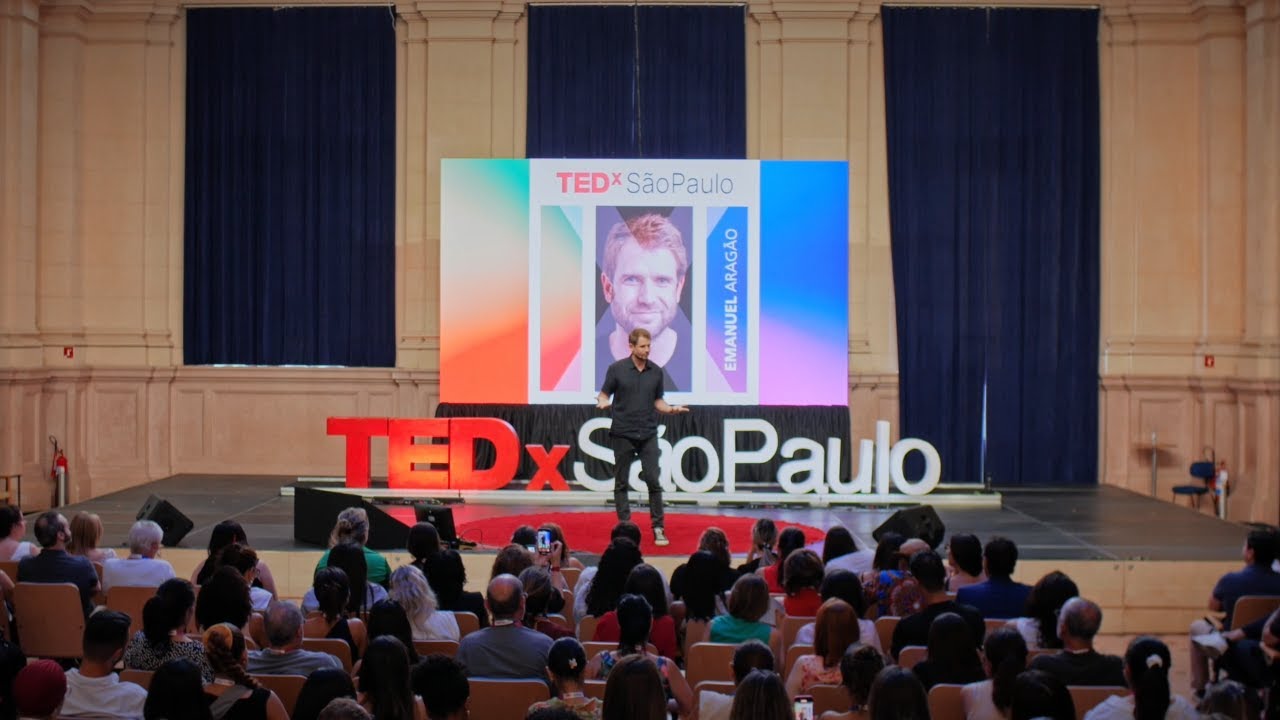
Translator: Maurício Kakuei Tanaka As a psychoanalyst, my daily routine involves listening to people’s problems. While they share the highlights on Instagram, they confide the difficulties to me. Over time, I have come to realize that people face many different kinds of issues.
They may want to find a partner and fail, or they may break up with one and struggle. They may aim to please their boss and fall short, or try to please their mother and miss the mark. The circumstances vary greatly.
However, there’s a common issue that seems to affect all of us, myself included: even though the essentials of life have become easier to obtain, we are feeling increasingly exhausted. Today, I will explain why that is. To do this, you will need to follow me through a story - not just any story, but your story, the narrative of your day today.
The title of this story is “The strange case of comfortable but meaningless existence,” or “How garlic and oil pasta can save your life. ” Here we go. It’s 7 a.
m. ; the alarm clock rings. You turn it off, but it rings again.
You turn it off again, yet it persists. With a heavy head and difficulty opening your eyes, you remember that yesterday’s you, unable to sleep, set five alarms on both of your cell phones because you knew today’s you would find it hard to wake up. “I have to go to work,” you think.
But you're working from home, and your office is just six steps away from your bed. Wonderful! After having some coffee, you open your computer screen, and there is your day: sitting, bored, and exhausted, without even moving.
Then you switch to another screen, your cell phone, while a meeting takes place on your computer. You scroll through YouTube and recipe channels. Okay, you’re feeling hungry.
Now you just have to wait until the restaurant opens. With a few taps on your phone, you place an order, and soon your food arrives. The day will pass, and you’ll find yourself trying to sleep with your phone glued to your face, leading to another sleepless night.
Tomorrow, everything will start again, just as it did today. In that moment, while your boss drones on about something boring in the meeting, you decide to scroll through your YouTube feed and stumble upon this video. You click on it, and here I am, explaining why you feel increasingly exhausted without even leaving your seat.
You mute your boss and listen to me, because it doesn’t really make sense. Life is difficult, I get it. Everything takes work and effort.
But if all the things we need to survive today are becoming easier to access - everything is just a click away - why do you still feel so drained? To understand this, we need to take a quick detour, back about 500 million years, to learn about something known as the dual pathway of pleasure. We need to realize that for pleasure to truly exist in our lives, and for the effort of living to feel bearable, two elements must coexist: the pursuit and the reward.
Think about how hard life can be when we need something, like food. When you’re hungry, something has to trigger in you to keep you from starving: it’s the motivation to seek out food. This process occurs in a part of the brain called the mesocortical and mesolimbic dopaminergic pathway.
In psychoanalysis, we refer to this as libido. This drive for seeking has been present since the emergence of reptiles, which was over 350 million years ago. Life has always been challenging, and effort has always been essential.
The mesocortical and mesolimbic dopaminergic pathways, which relate to libido, are quite interesting. On one hand, they motivate us to seek out what we need. This pathway creates a sense of positive expectation and anticipatory euphoria, that something good is going to happen.
This concept involves embracing the world’s uncertainties and finding joy in them. This motivation drives us to seek food, water, shelter, sex, and love. The desire to seek is inherently linked to the experience of pleasure.
But, on the other hand, when these dopaminergic pathways are not focused on what we currently need, they develop their own cravings. They become hungry for novelty, constantly needing new experiences. This is what compels us to venture into the world in search of new things, even if they aren’t things we actually need - driven by curiosity, interest, and the desire for discovery.
Please keep this information accessible, as it is very important. The pursuit of novelty. Our dopaminergic pathways crave it.
Returning to the earlier point, when you feel hungry, it’s this pathway in your brain that drives you to seek out food. At that moment, something comes to mind - what psychoanalysis refers to as the “object of desire,” and neuroscience terms a “mental solid. ” For example, an apple.
When you’re hungry, an apple comes to mind. It’s not a hamburger, pizza, or chocolate - just an apple. I’m not saying apple because it’s healthier; it’s significant because that same image could have also come to mind for Homo habilis, our distant ancestor, two billion years ago.
The idea of an apple appeared to him as well. At that moment, something very important happened: he envisioned a way to obtain that apple. Imagining a solution is a fundamental part of the pleasure of seeking and relies on the dopaminergic pathway - the brain’s ability to envision a path.
This dopaminergic pathway motivated Homo habilis to go in search of that apple. Now, this part is crucial for you, sitting there and listening to me. Homo habilis faced an extraordinary challenge, one that is hard to imagine today: he needed to stand up and walk.
The effort involved and the countless risks he faced to get that apple, such as rain, predators, and rival tribes, made his life incredibly challenging. Only after all that came the second part of this dual path of pleasure: the hedonistic reward system, or, simply put, the reward. This reward was experienced when he finally found the apple and took a bite out of it.
The fructose interacted with his taste buds, triggering a different part of his brain and a separate process. It was all about pursuit and reward, akin to foreplay and orgasm. The concept was the same: satisfaction completes the effort.
It made sense. As time passed, Homo habilis evolved into Homo erectus, Neanderthal, and eventually Homo sapiens. In the Neolithic period, around 12,000 years ago, people began to settle down and develop agriculture.
This shift led to the planting of apple trees. However, motivation was still necessary for planting, as the rewards only came with the harvest. Over time, the search for food and the reward began to drift apart.
Then, in the 7th century BC, money emerged, radically changing everything. From then on, there is a distinction between pursuit and reward. We no longer strive to obtain apples; instead, we pursue money.
which, in theory, could buy any apple in the world. In theory. This trend continued.
With money and the Industrial Revolution, our focus shifted to performing repetitive tasks, often without understanding what we were ultimately building, all in the pursuit of money. We simply repeated processes, hoping that the paycheck would arrive at the end of the month. As a result, we stopped pursuing and discovering.
Remember the dopamine pathway’s need for novelty? It doesn’t stand a chance. Everything becomes repetition, because repetition is more effective at making money.
By the 20th century, the situation was as follows: all efforts were devoted to producing money. The pursuit of wealth left us pondering how to obtain that money and how our lives would finally gain meaning from the items we could buy with it. The reward only came when the money was sufficient to buy those items.
Generally, it didn’t work out. You tried hard, envisioned everything, but achieved very little. It was frustrating, but it was the reality we faced.
Then something happened that changed everything: in 1960, the internet was created. In the 1990s, it became available to the public, and in 2007, the first iPhone was released, putting the internet in your pocket along with the iconic bitten apple logo. From that point on, everything changed.
Now, all the news in the world is at your fingertips, allowing you to stay informed without even getting out of bed. When you’re hungry, you simply press a button on food delivery apps, and the food you need arrives at your doorstep. The reward is immediate and effortless - there’s no uncertainty, no need for imagination, discovery, or risk; it’s all gone.
All our effort seems to focus on the repetitive and hollow pursuit of money. Since rewards arrive at our doorstep without any effort motivated by a desire to seek them out, our brain’s dopamine pathways become fixated on the addiction to novelty. This leads to endless scrolling through various distractions - kitten videos, beautiful beaches in Thailand, memes, gossip, the political climate of unfamiliar countries, the lives of people we will never meet, TikTok dances we will never perform - a futile search devoid of true engagement or rewards necessary for our survival.
We engage in searches without rewards, receive rewards without effort, and exert effort without experiencing anything new. The outcome is a growing sense of exhaustion in what has become an increasingly comfortable, repetitive, and meaningless life. This disconnection results from the search, reward, and effort being completely separate from one another.
You may find it hard to sleep at night or to feel awake during the day. You might be feeling depressed, burned out, anxious, or compulsive. You no longer find pleasure in your life because pleasure relies on the balance between pursuit and reward, making the effort of existing meaningful.
Okay, wonderful. Everything feels bleak. I’ve just shared why our lives can feel so unsatisfactory.
So, what comes next? Then you ask me if I want to return to being a Homo habilis. No, I don't think so.
The idea of foraging for apples and hunting small animals isn’t exciting. If they say I should grow my own food, I think it’s a nice idea, but I won’t do it; that’s the truth. However, we need to find a way to reconnect our pursuit of goals with the rewards we receive to restore genuine pleasure in our lives.
So, here’s a simple plan that you can implement right now - not in a month, not on vacation, not when you retire, but today. First, disconnect from work. Inform your boss on Teams, Slack, or WhatsApp that you need to leave the call.
You might say you have intestinal discomfort - most people won’t be too curious about that. Then, put on a T-shirt and sneakers, turn off your camera, and step away. This part is crucial and may be challenging: leave your cell phone at home.
I know it sounds difficult, but it’s essential for this experience. Leave your cell phone at home. Walk to the nearest market.
Do not call an Uber. Just walk. As you walk, try to imagine something to eat that’s easy to prepare, like pasta: spaghetti with garlic and oil.
That’s the dish I’m picturing. If you envision sautéed mushrooms in butter or black beans with bacon, that’s fine too. Focus on using your imagination while you walk.
Consider where you might find the ingredients in the market. When you arrive at the market, sticking with the spaghetti example, head to the pasta aisle and pick up a package of spaghetti. Got garlic and olive oil?
If not, buy some. Before you leave, remember to pick up just one apple. You don’t need a whole bag - just one apple.
As you head back home, you reflect on life and imagine the aroma of garlic sizzling in olive oil. Once you arrive, start by boiling some water and adding salt. When it boils, add the pasta.
While the pasta is almost done - check the cooking time on the package - heat some olive oil in a frying pan and add the garlic. Watch it closely. When it turns golden brown, take a moment to enjoy the aroma.
Breathe, drain the pasta and toss it into the pan with the garlic. Now, add the necessary salt and turn off the heat. Transfer the pasta to a plate.
Then, sit down to eat. Before you begin, take a moment to admire the plate of pasta. Please, for your own sake, avoid turning on any screens.
Focus on the plate of pasta in front of you. Take a deep breath and appreciate what you’ve just created. Even if it isn’t the best pasta in the world - and it probably isn’t - you made it yourself.
You felt hungry, thought of a solution, and made it happen. All of that was preparation. And now, finally, it’s time for the reward: enjoy your pasta.
Save the apple for dessert. Thank you very much.