You know that friend who always cancels plans? The one who's sick again, tired again, maybe next time? Yeah, that friend isn't avoiding you.
They're protecting something. If you're someone who genuinely gets more excited about a Friday night in pajamas than a Friday night out, welcome. You're about to feel very seen.
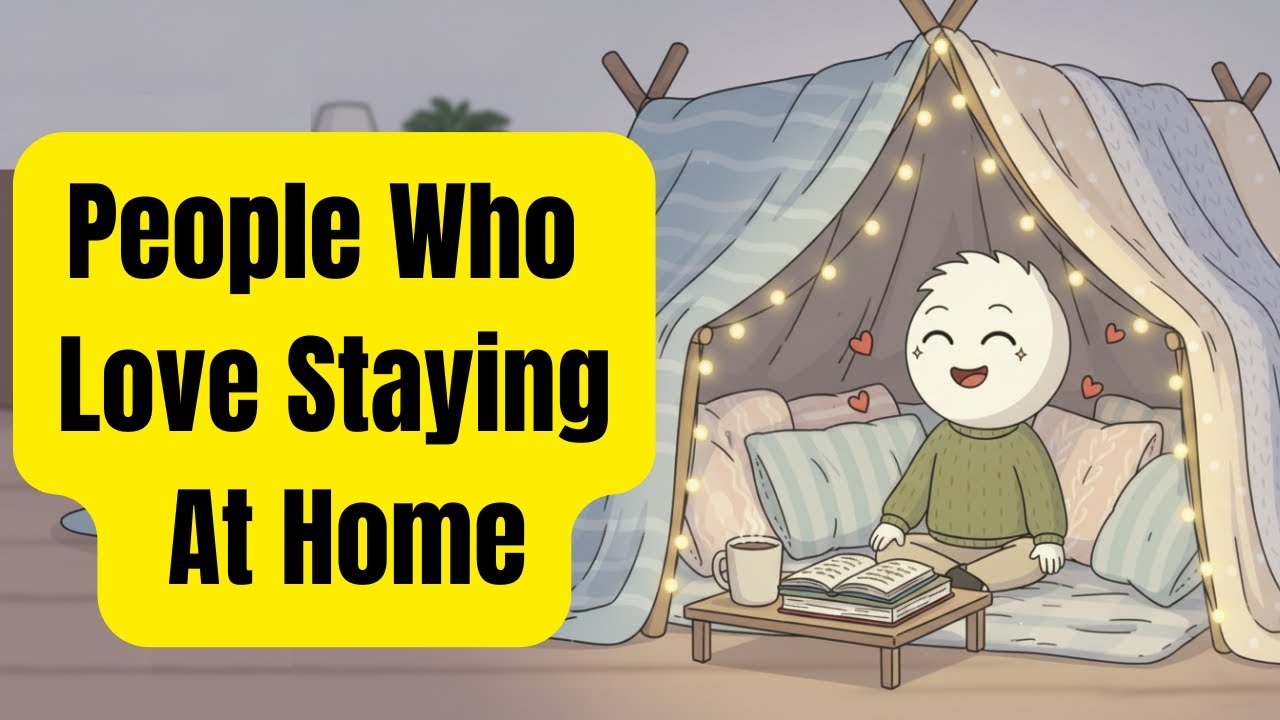
And today, we're breaking down the psychology of people who love staying at home. the one society calls boring, but science calls something else entirely. Here's the thing.
Extroverts recharge by being around people. Their energy comes from the noise, the movement, the chaos. But introverts and people who prefer solitude, they recharge in stillness.
Every social interaction, even a fun one, slowly drains their battery. And home is the only charger that actually works. Psychologists call this optimal arousal theory.
Some people need more stimulation to feel good. Others need less. It's not laziness or fear.
It's just how their nervous system is wired. But there's more going on than just introversion. Some people love staying home because their environment gives them a sense of control they don't get anywhere else.
Out there, the world is unpredictable. Loud strangers, last minute changes, small talk with people who don't care about your answer. But at home, you control the lighting, the noise, the vibe.
For people with anxiety or high sensitivity, that control isn't a luxury. It's survival. Here's something wild.
Studies show that people who enjoy solitude tend to be more creative, more introspective, and better at problem solving. Staying home isn't doing nothing. It's where the best ideas are born.
Not in a crowded bar, but in a quiet corner with a book or a thought spiral at 2 a. m. And let's be honest, society romanticizes being out there.
the influencers, the party picks, the live your best life culture. But what if your best life is a documentary, some soup, and zero obligations? That's not sad.
That's self-awareness. Now, some people stay home for a darker reason. Social anxiety, past trauma, depression that quietly whispers, "What's the point?
" And for them, home becomes both a refuge and a cage. So, it's important to know, do you stay home because it fills you up or because leaving feels too heavy? Because one is peace, the other is hiding.
But for those who truly love staying home, they're not missing out. They're just living differently. They find joy in small rituals, the morning coffee routine, the favorite spot on the couch, the way the light hits the room at sunset, things most people rush past.
Hit subscribe if you think you're this type. Psychologists say this is called low stimulation preference. These people don't need the world to entertain them.
Their inner world is rich enough. So, if you're someone who turns down invitations without guilt, who feels genuinely happy on a solo Saturday, who'd rather rewatch your comfort show than make memories, you're not broken. You're just wired for depth over noise, for peace over performance.
Tell me, do you prefer staying home, or do you think we're all just making excuses? And if you want the psychology that most people never hear about themselves, the next video is going to hit you harder than this one. Click it.
You'll understand why.