you know, he keeps lying and lying and lying. And one of the things that happens when you have that much lying is that people begin to ask, well, is anything true? You know, how do we know whether anything is ever true? And and that's something this is a this is an old Russian tactic. And if nothing is true and you can't know anything, then why should you be involved in politics at all? I mean, you're better off staying home, you know, because it's all like a big fog out there. Hello everyone and welcome to the
focus group podcast. I'm Sarah Longwell, publisher of the bull work and this week we're going to grapple with a central question often asked about Donald Trump. Is he an aspiring authoritarian to be feared or simply a corrupt demagogue looking to cash in on the presidency? Or a petty, incompetent clown whose focus on retribution over the health of the economy will ultimately cause a terminal backlash to his movement? Or is he some combination of all of those things and more? Trump is closing in on the often politically significant milestone of his first 100 days in office.
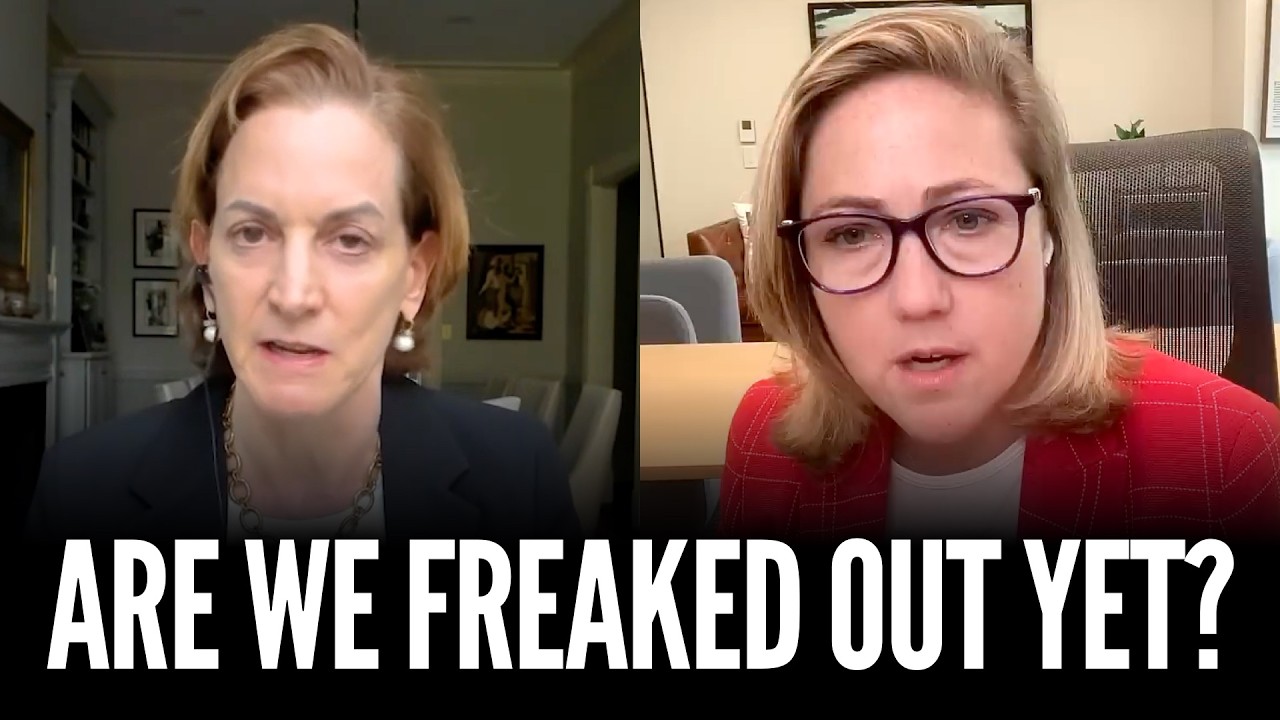
Those 100 days have been notable, but the speed with which Trump has taken a wrecking ball to the government, the rule of law, and the economy. Congress has ceased to function as a meaningful check on the executive branch, and Trump is teetering on the brink of fully ignoring the rulings of the Supreme Court. So, where are we 100 days in? Is there still hope to preserve American liberal democracy in the face of these unprecedented attacks, or are we sliding into authoritarianism? My guest today knows something about aspiring and full-blown autocrats. Anne Applebomb, staff writer at
The Atlantic and author of Twilight of Democracy and Autocracy Inc. The dictators who want to run the world. Ann, thanks for being here. Thanks for having me. Okay, so you're my favorite person to read when I'm trying to figure out are we too freaked out? like are we because people have been throwing the word authoritarianism around when it comes to Trump for a long time and I don't know if that makes it harder for us to know when we're like really there and I maybe it's not even a point in time where we say oh
now we're an authoritarian regime versus we used to be an de democracy but maybe you could just lay out uh because you study all these foreign authoritarians like where are we now in terms of our democratic slide so there's always a timeline line. Um I mean unless you have a coup d'eta and somebody you know gets in a tank and drives down the street and you know shoots up the presidential palace you know which does happen although less and less than it used to. Most of the time democratic decline is a process rather than a
moment. Um and so you know I actually think that in in in our country it began some time back. I mean I'd say a decade ago um if not more. Um as uh Congress became more and more ineffective uh as uh you know people lost um there there began to be more and more distrust in all kinds of institutions not just government ones but institutions that produced news and information and scientific research and all that was those were the beginnings of the decline. I mean I actually made a podcast last summer called Autocracy in America
before the election and it was about the things that were already declining. Um, so it's a it's it's been in play for a long time. I mean, and you have like a quick diagnosis on that. Is that the internet? Is it post Obama? What what why why a decade ago? It's profoundly connected to the internet. It it's connected to the way in which we get and process political information. But I think it's also it's also connected to the speed and pace of change. So economic change, demographic change, social change and then this change in the
way we learn about things. Um you know I think it left a lot of people very disoriented. Um and one of the things that happens whenever you have this speed of change is that you have some people becoming nostalgic and so people say we want to turn the clock back. We want to go back to a simpler time whatever time it is that they have in their head the 1950s or usually it's their childhood. you know, some other moment when everything was simpler and we didn't have all this new stuff. Um, and you can see
it. I mean, it's not the first time in history this has happened. I mean, you can there's a movement like this that happens in Germany at the end of the 19th century when people say, "Gosh, things were better a hundred years ago before we had all this industrial development." I mean, you can, you know, there have been there have been lots of other societies that have that have gone through this. Um, and I I I think it's connected to that. Um, and then there were some fluky things that happened. I mean, there was Trump deciding
to run for president um and to run for president explicitly as a someone who's nostalgic, you know, but also as someone who was a conspiracy theorist. So, he accelerated this questioning of institutions that was already coming from from the press. I mean that, you know, the first really big and important conspiracy theory that that was mouthed by a um, you know, about about the presidency, I guess, that was mouthed by a serious person was or more or less serious was Trump's um conspiracy that Obama wasn't born in America. Um, and that was something that we
didn't maybe take seriously enough at the time. Um, but something like 30% of Americans believed it. And if you take that seriously, you know, Obama's a fake president, you know, he's a he's not really American. He's a, you know, that means if that was true and you believe that, that means that you also believe that every American institution from Congress to the courts, uh, to the media, they're all lying and they've all created this fake president. Um, and that's a the fact that that was believed and that was that was Trump. He pushed it well
before he was even formerly in politics. That once people began to believe that, you know, then you're, you know, then people are right for something different. You know, all the institutions are are misleading us. We're being taken down a path. Um, and I think I think I think you can pinpoint that as a beginning. That's like that's that goes back, you know, 15 years. Yeah. And I know you listened to some of these focus groups and we're going to hear sound and we'll we'll go through it all. But was there anything that struck you about
these voters because I will say one of the things just in listening to people all the time when you say the word disoriented that is a word that lands really true uh with voters in that they often times maybe they feel strongly about things but they also do a lot of I'm not sure. I don't know what to believe. uh I saw this here but I don't really know because you have this historical perspective like you mentioned the fact that in Germany this has happened before just around the industrial revolution and you know you talk
to people and they say well during the time the printing press was invented people also felt disoriented. Does that make you feel better about things that people like eventually adjust to that disorientation and find their footing and go back to making reasonable like informed choices or when you were listening to people did you think man we're doomed? I mean, the problem with the two examples that you just cited is that in in both cases, people didn't go back to, you know, agreeing with each other and behaving sensibly until there were these horrific wars, you know.
So, Sure. Yeah. Right. We killed a lot of people first. That's a great point. That's right. I mean, the, you know, the the the printing press was invented. People began to argue about religion. What happened after that was you know many decades of religious wars in Europe that are only ended when they come up with this great idea called religious tolerance um you know in the 17th and 18th centuries and then it begins to subside. So you know there was a lot of chaos that before before people um agreed not to not to be so
angry at one another anymore. Yeah. I mean I agree with the disorientation. I I also find disturbing the the way in which people only know a part or a piece of the story. I mean, they've heard something about the man who, you know, who whose name they might have heard who was accidentally deported, but some people have heard that he's a gang member, and some people have heard that, you know, um he was an illegal immigrant. And some people have heard one piece of the story, some something about tattoos, and and you know, but they
don't seem to really know what happened. And the idea that someone who was someone was illegally sent out of the country and sent to a foreign camp where he's outside the jurisdiction of US law and that that's just illegal. You that doesn't seem clear to people. And maybe and of course I know how you run the group. You know, you're not giving people information. You're just asking them what they think. But I I kept wondering, you know, what happens if someone says, "Well, here here's the truth or here's what happened." Do they what happens then?
Do they say, "Well, I don't believe that." or or or or does the does the full story of the situation make them think differently? I just don't know. Yeah. Well, let's get into that because you're right. Uh we sort of started by asking about Kilmar, Abrego Garcia, the man who was wrongly deported to El Salvador. Um because what happened in the focus groups was kind of interesting, right? So, these are all Biden to Trump voters on the show today. Uh many of them were focused on whether or not he was a bad guy um and
exactly how bad me, you know, he might be. So, let's listen to the first wave of commentary we heard about Alrego Garcia. People are saying we shouldn't have sent him there. I feel like we should have. He's a criminal. I understand he's part of a gang and that's why he wasn't supposed to go there. Whatever. I mean, if you're a criminal, I don't know what to tell you, but I'd rather him not be in America. So, I don't I don't understand what the big deal is about it. But at the end of the day, you
know, we don't really know what's going on. They tell us what they want us to hear. Um, is it the truth? Who knows? You watch like Fox News or you watch CNN. Everything on CNN, it's a father of three, married, all the different things and everything he's like the perfect human being on earth. Then you watch Fox News. I I tend to watch both of them just to get two different perspectives on it. Then you hear Fox News with, you know, he was a gang member. He hung out with gang members. He beat his wife.
All these different things that are going on with this guy. So, I have zero problems with him being shipped over back to El Salvador in that prison and then with that senator from where is it? Maryland, I think it is where he's originally from. Looks like a complete going over there and expecting Venezuela to open up the prison to let him talk to him and bring him home, which is ridiculous. So, I think that's kind of funny. But it's just interesting how you see two different programs spinning it the way they want to spin it.
And I'm getting to the point now where it has come out that he did beat his wife with the records that were shown. This was one of the things that turned me off on Democrats. Who's this guy? James Carver. That's like a political uh grandstander, you know, James Carell. Carell. Carell. Yeah. So he's saying that this should be the the Democrat's main focus. I mean, all the issues that we are going on in this country and this should be your main focus and and it just makes me feel like it's production value. I've read reports
this guy was busted. It's called the Coyote, something here in Arizona where they bring people across the border and they get paid. I mean, this guy obviously has ties to these gangs and and then this is your main concern. I honestly I don't think he should come back. Uh maybe they could look into it more, but this is not the main problem in America right now. Actually, he was not here legally. He had two orders of deportation that were entered by a judge and then was appealed and still had to leave. They had evidence that
he's part of the MS-13 gang. The only thing that they couldn't do was send him back to El Salvador because he was afraid of of being killed by a rival gang. Right? So, that tells you something right there. If he's not in a gang, why would this other gang be a rival? Right? That was the only thing that they did. And then even at that, once once they determine that that MS-13 was a terrorist group, then even that that protection of not having to go to El Salvador kind of falls by the wayside. So there's
a lot going on here with this with this showman. And yes, they're holding it up as as a breach of of due process when when really it was not. He was already he already got his his turn in court by two different judges and was ruled that he needed to leave. So, it is it is a distraction, another uh roadblock, another another pitfall to try and trip things up and and cast doubt on what's going on. Could things have been done better? Yes. Could they have been cleaner and not send him to El Salvador to
make sure that they were totally clear on that and avoided this? Yes. But now, it's turned out that his his wife, who is an American citizen, still doesn't give him a right to be here. There are two two things that have come out in the courts where she had filed domestic abuse against him over the past several years. So, you know, this is not a good person. So, first of all, let me just say um you heard people speaking who were people who had heard about this case. So, there were lots plenty of people in
the group who actually had not heard of this guy. They hadn't heard about Ambrego Garcia. They weren't following it. For for the people who had, they were steeped in essentially what has become the talking points from Trump, the administration, uh and sort of the right-wing media ecosystem because you study authoritarian in other countries. Isn't I guess maybe talk about the way that the demagoguing of these out groupoups or unpopular groups get used as a way to make people decide that like yeah this is fine like we don't have to abide by the rules that we
used to abide by. When you hear the way that people talk about ago Garcia um how do how do how do you think about it? So there are two things that strike me. I mean, one is the one that you've mentioned. Um, you know, Trump creates or the people around him create a, you know, a group that is legitimate to be be, you know, to to attack and insult and smear and, uh, you know, and undermine and then deport to, you know, a prison that we know nothing about. Um, you know, that, you know, that's
a that's a tactic as old as humanity. I mean, you know, you you know, you you give people an out group to hate or you give them a minority to dislike or you give them an enemy. Uh and it's a way of unifying your side, you know. So then your side is unified by the knowledge that we are not them and they are to be expelled from our midst and they are not subject to our rules and our laws. Those are only for us. I mean, that's kind of a classic thing. I mean, I was
also struck in one of those responses by people expressing that they hear conflicting views and they don't know what's true. All right, focus group listeners. Have I got a podcast wreck for you? In wild times like these, do you ever want to just break fake rules? It's important to rethink some of the dumb rules we follow for no good reason. Well, that's exactly what Friend of the Bull work Glenn Gaelic gets into in his show, Break Fake Rules. Here, Glenn and his guests dig into the self-imposed rules that hold us back, particularly in the world
of America's ultra wealthy philanthropists to uncover which rules we should commit to breaking together for a better society. Just be sure to break rules in a cool way, not in like an Elon way or in a planning drone strikes over signal way, like a legal way. Check out a recent episode of the podcast where Glenn and I sat down to talk about how philanthropists can use their FU money to defend democracy because what is the point of having FU money if you can't say FU when people come and try to take over our democracy? So,
if you've ever wondered why we live by certain rules or dreamed of what becomes possible when we do things a little bit differently, tune in to Break Fake Rules wherever you get your podcasts. Um, and there's another authoritarian tactic that Trump also uses, which is this constant repetitive lying. You know, he lies even when he doesn't have to lie. He lies um, you know, about almost everything all day long. He's lied about this guy. He's lied about other aspects of his policy. You know, he keeps lying and lying and lying. And one of the things
that happens when you have that much lying is that people begin to ask, well, is anything true? You know, how do we know whether anything is ever true? Uh, and and that's something this is a this is an old Russian tactic. And if nothing is true and you can't know anything, then why should you be involved in politics at all? I mean, you're better off staying home, you know, because it's all like a big fog out there and you know, nothing's true. Actually, there's a Hana Arent quote that was the title of a friend of
mine's book. Nothing is true and everything is possible. You know, nothing is true. You don't know what's what's real. Might as well stay home. you there's no such thing as a as an informed citizen or uh as a political somebody who's politically active if you can't know anything. And so what they have successfully done around this guy, you know, and around so many other things, but this guy in particular is undermine any sense of reality. So there's we're not even having a real conversation about it. Um and I think that that comes out in those
comments as well. There was always kind of a propaganda apparatus that would have these fights. What's interesting today is that like JD Vance is on Twitter saying that he's a convicted MS13 gang member. That is a flatout lie. Now, I'm not we do not know everything about this guy. And I think the question of whether or not he's a good guy um or you know that because that was in their comments too, right? this idea of, well, they're trying to make him sound like he's a great father and he's a Maryland, but no, he's an
illegal immigrant and he beats his wife and he's a MS-13 gang member. Uh, and I think that Van Holland, who has been out there, you know, after Senator Van Holland, who went to um El Salvador and met this guy, uh, you know, when he came back, he said, "Look, this this isn't about him. Uh, really, this is about us. It's about our rules and whether or not we do these things." uh the correct way. But, you know, I always I always feel sorry for the voters in a way that people get mad at me for
because they're like, you you know, let these guys off the hook. And it's not that. When you have the vice president actively lying and saying that they're convicted gang members, and then you have an entire media ecosystem that runs with that. Every Fox News headline just calls him unequivocally an MS-13 gang member. When you have that, what are voters supposed to do? How are they supposed to figure out the truth? Cuz that line you said where someone was like, I don't know what's true. That is a feature of focus groups of like people who are
trying to make sense of what you're asking them, but they just want to tell you like they don't really know. It's so hard to know. But but that's deliberate. I mean, Vance and Trump and others around them have deliberately created a world in which people don't know what's true. And that is a tactic. That's not an accident. And they're not doing it, you know, just because they, you know, for momentary gain. I mean, it's a it's a repetitive long-term permanent tactic, and it, you know, as I said, it and it pollutes the public sphere. So,
eventually, um, you know, people like that voter will say, well, I have no idea what's true. There's no way I can ever know. Uh, you know, get me away from here. You know, it's all dirty. Everyone's a crook. You know, keep me away. Um, and that's a that is a tactic. It's not an accident. It's a it's, you know, Vance lying like that is on purpose. the America I used to know a vice president would feel shame about doing that. Uh like Trump does it and but and it was sort of new when Trump did
it like the brazen lying. Yeah. And now it is a feature of Trump and his minions, right? You say if Trump says they're eating the dogs and cats, Vance says they're eating the dogs and cats uh in Springfield, even when there's no truth to it. So what are in in these other countries where you have these demagogues or these authoritarians who who lie um they use social media to lie, they have their own sort of controlled media apparatuses that that will repeat the lies. What are voters supposed to do? What do they do in that
environment? Well, I mean, in in a lot of those environments, I mean, in Russia, for example, what happens is that people become apathetic and they leave they stay away and they don't not only do they not vote. I mean, not that voting matters who you vote for in Russia, but um they just they don't they stop reading the news, they check out, you know, they they they leave. I mean, that's that and that's what the authoritarians want. That's the goal, you know, get people to stay home. Um, you know, so the the the opposite, the
thing that voters should do is make efforts to find out what's true and what's not. And I, you know, I I concede, I agree with you that it's very difficult now. Um, you know, people people look for trusted sources. Um, if the vice president's not one of them and Fox News isn't one of them, um, then what are they supposed to do? I mean, the the answer is to try to understand what makes a good source. You know, is it is it a a newspaper that fact checks? Is it somebody who has a background in
the subject? Um, is it somebody whose record on telling the truth goes back a long way? Um, is it someone who when they mistakes makes mistakes, correct them? I mean, there's a, you know, there's a series of things you can do to ask whether the sources you're looking at are good. But, um, you know, most people either don't have the time for that or they don't care enough about it. Um, you know, or they've checked out already. I mean, some large percentage of Americans don't get their news anymore from journalism. And by that, I mean
any journalism, good journalism, bad journalism, Fox News or CNN. They just don't read any journalism. They get their information from, you know, Vibes and entertainment shows and, you know, they watch weightlifting shows and the podcast guide says something about Trump or or or Biden or Vance or whatever. So, a lot of people just don't get any information. Um, and if you want to be a responsible citizen, you need to be informed. And and I I I don't have a I don't have a a better solution than that. I mean, the reason why authoritarians do this,
why do they lie? Why do they create their own media? Why do they try to destroy independent media? Um, why do they do they all do it? Why do they do it? They do it because it works. you know, if you can get a sign, you know, a sufficient number of people living in an alternate reality where the only things that are true are the things that Trump says, um, then they win. Um, you know, you know, h, you know, Trump, you you started this program by asking, you know, what is Trumpism? You know, is
it just corruption? Is it authoritarianism? And, you know, there these are often the same thing. I mean, you can be corrupt if you live in a political system where no one holds you to account because there is no media and there are no government ethics offices and the courts, you know, aren't able to hold you to account and then you can steal a lot of money. I mean, there's a there's an absolutely, you know, 100% compatibility between corruption and authoritarianism. So, that's a, you know, you know, so the the reason to do that is both
to stay in power and to be able to steal down the road. Obviously, I think it's a it's a mixture of all three of the things that I was uh listing. Sort of we're in an we're sliding into autocracy and kleptocracy, and those things can exist together. And also, he's an incompetent uh he can also be an incompetent clown uh who makes things so bad that that maybe people don't want him there, but it may be too late at that point. He may have consolidated so much uh power. But here's the thing. You mentioned the
court and so one of the things and and it is to this point of trusted messengers. All right. So you think, okay, well, won't these Trump voters respect like if you tell them that the Supreme Court just ruled 90 against Trump on the Abrego Garcia case, will they take that as valid? And let's listen to what they said. I don't even understand why they are like intervening with this. Honestly, it doesn't make any sense to me. Like I don't even know why we're wasting money on this stuff. I mean, we're spending a fortune on all
of this and it's like the guy's a criminal. What do you want? So, I don't understand why they're trying to intervene with all of this stuff or why they're even involved. Honestly, I think like the reason we have these branches for checks and balances just to make sure one person doesn't take advantage of like their authority. And I think the way that Trump expects everyone to follow the law and he's doing this stuff so that he can help decrease the amount of people who might be doing things illegally, but he can't maybe kind of go
against that himself and not take into account the Supreme Court's say like he is enforcing all these things trying to get people on track and to follow it, but that also goes for him as well. And I don't think that he should be taking advantage of that just to kind of get what he wants even if it is for a good purpose. You know, it is a little bit disturbing like the I guess the the lack of administration respect for the court system or the Supreme Court. So, you know, I mean there's a reason that
we have these like checks and balance system and if we don't listen to the courts, you know, I think it just sets a bad precedent. And yes, it was this time it was not a great person, but they scooped him up because they saw his tattoo. I mean, there could be somebody who used to be a gang member and is now changed their lives and come here legally and can we scoop them up and send them away just cuz they have this tattoo? There there needs to be more of a a better process for this.
I think it's a little bit scary that it happened in this country. The Supreme Court is has the highest say. So to just ignore that I think sets a bad precedent. I think if they disagree with it, I think you bring him back and then you can jail him and you can put him through the process the correct way. But I think you know just ignoring the Supreme Court should not be an option. You turn to CNN, he's this great family guy. You turn to Fox, he's this criminal. So we don't know what is the
truth. And if that's the case, a middle school civics class says we all have due process by the law. So I'm like he did not deserve that. And then another question I was going to say too is um I I I really think everyone deserves, you know, due process regardless of what we think. Fox says that the Supreme Court said you need to facilitate taking him back. Okay, I'll facilitate it. I'm not going to do anything. They didn't tell me to bring him back. They didn't say physically go there and bring him back. Facilitate it.
And then you got CNN saying the complete opposite. So the first couple days I had no idea what was right or what what was Supreme Court was saying, but it's just who's spinning what. Okay. So here's what was interesting to me about asking about the Supreme Court. So we had to raise it and when we raised it like hey you know the Supreme Court uh said I know he has to return this guy. Some people were like hey who cares what the Supreme Court says or I don't even know why they're getting involved in this.
But there were a few other people when they heard it went, "Oh yeah, he shouldn't ignore the Supreme Court." We are in this moment of a showdown between Trump and the Supreme Court and whether or not this administration is going to listen to the Supreme Court when it comes to author authoritarian countries. But I guess I wonder how big of a moment you think it is when or if Trump outright defies the Supreme Court um a Supreme Court order. Oh, no. if he does, it's a huge moment. I mean, in in American history specifically, the
uh you know, the role of the Supreme Court, which I think is actually it's it's it's even different from in in many other parts of the world, um is is something that you heard even those voters saying. It's something people remember from middle school. You know, when you learn American history, part of learning American history is learning various big Supreme Court cases, right? You know, Brown v. Board of Education, you know, Marberry Madison, you know, they're they're kind of part of the curriculum and the court in the United States partly because of the political battles
over it is well known and its role is well understood in a way that for example the the equivalent constitutional court in Poland which was attacked some years back or was undermined and there was a there was a successful actually attempt to pack the court that wasn't as well understood because the court just wasn't something people had ever talked about or thought about before. So I do think that that first of all not I mean absolutely refusing the court or refusing to obey a court order or court directive will be a really important and very
major legal break and it will cause you know a lot of you know an an enormous ripple um effect in the entire legal community and in the entire judicial community. The whole federal bench will know it. I mean it will be a it will be a major thing. Um I also think it is something that Americans will understand. Maybe not every single American will you know a lot of them have checked out or don't care or so on. But the you know that that will be a thing that is a makes sense to them. You
know that this is a you know the court is supposed to have the last word and how you know and the president has always done what the court says. Um how come he's not doing it this time? So I think that would be a really important break. All right guys this show is sponsored by Quint. Mother's Day is coming up and if you have a chronic case of what am I gonna buy? Try Quint on for size. Like cashmere sweaters from $50. Italian leather bags, fragrances, and more. The best part, all Quint items are priced
50 to 80% less than similar brands. By partnering directly with top factories, Quint cuts out the cost of the middleman and passes the savings on to us. And Quint only works with factories that use safe, ethical, and responsible manufacturing practices and premium fabrics and finishes. I love that. And I even got my favorite leather jacket from them before they were even sponsors of this show. And some of my friends have some of their cool stuff, too. Uh because Quint is great. Thoughtful, timeless, and totally her. Shop Mother's Day at quint. Go to quint.comthefocusg groupoup for
free shipping on your order and 365day returns. That's quince.com/thefocusg groupoup to get free shipping and 365day returns. quint.comthefocusgroup. Go check it out. Their stuff is good. Um, it seems to me that it's one of the reasons why Trump himself, I mean, you correct me if I'm wrong, but I he does undermine courts and he insults judges and so on, but he also has said a couple of times, I'll always do what the Supreme Court says. I mean, he's he he's gone under his way because I think he may instinctively understand that that an open and
outward break with the court would be a would be a crisis for his administration and for how he's perceived. And you know, I think that's also why they were playing this game with the word facilitate because they were just saying, "No, we're going to interpret it in a way that it doesn't mean what the judge meant it to mean because that, you know, that's one way of getting around it." But they didn't want to say outright, "We're not going to obey it." I think that's 100% right. I do think Trump is is nervous about the
idea of uh outright defying them in part because he nominated three of them and everybody knows he's got a 63 majority in terms of conservatives versus liberals on the Supreme Court. Um, and but I I don't know if he's nervous about it because it provokes a constitutional crisis so much as if he gets them if they if they start to consistently rule against him. Uh, that's going to create because there's everything is being litigated now. So that would that would create a lot of showdowns. Even now getting into this fight over the facilitate versus uh
you know not what does that word even mean to me seems a little bit like a slap in their face. Um, and you know, they gave him a 7-2 ruling on the Venezuelans, too. And so, like, he is now in a moment where he's going to have to decide whether he's going to abide by the Supreme Court or not. Um, but anyway, you brought up just be because you brought up um, you know, he's waging war against the law in general. We did ask these voters um about sort of the punishment tour that Trump has
been exacting on the law firms uh like the the executive orders against the law firms who are connected specifically to his political enemies. Right? He went and he signed orders pulling security clearances limiting these lawyers contacts with the government and generally threatening their ability to do business. Uh some of the law firms are fighting these orders in court, but others immediately gave in and agreed to do a bunch of pro bono work on behalf of Trump and to make other concessions to him in exchange for Trump repealing the orders. Um so we asked about this
and what was interesting is most of them had not heard about the attacks on the law firms. Um so let's listen to what people said who had heard about it. Well, I think it's being overblown because, you know, when you think of everything that was done during the Biden administration to, you know, I won't say innocent people because I don't think any of them are innocent people, but oh my gosh, you know, if I were Trump in the administration, I wouldn't want those people in or around doing anything. I wouldn't want their hands in anything
because look at everything that came out like with even with you know director Comey like he went in and you know right after Trump was inaugurated the first time because you know he knew that they didn't know the the steps or whatever and he could get something that normally he couldn't get you know if you knew better like there was so many dirty tricks and dirty things done not that I think Trump should be doing it or the administration but I wouldn't want those people in my business and sticking their nose in things. God only
knows what trouble they cause. This is news to me, too. So, still processing here, I would say. But I think executive orders, they're it's just like a cheat code in general, just to get whatever you want. So, it's interesting how they're utilized between administrations. Trump was getting back at the people that were going after him. I I can't remember exactly why those law firms were going against him, but everyone's spinning it that he's taking revenge on those law firms. That's all I really heard. I don't I forgot the specific of why he was going after
them. If he thought he was mistreated and even the way he was treated on his first term, he deserves some of it. And then the second term, the stuff that he's doing, they're I think they're kind of doing a lot of stuff to fight against him on everything. And I think him doing that is a way of maybe trying to correct the system so they don't go after people in the future. Now I know what you're talking about. And I think in total there's like maybe five that have agreed to do $125 million pro bono
to kind of like keep them from losing out on contracts and their ability to work. Like Williams said it is good to get your payback, but it's he's the president of the United States. He really like come on man, you proved your point. You didn't get sued. It's nice to get your lick back, but like when you're like in charge of the whole country and I know you were he was saying that he was going to come after these people. I think that once he won the presidency, he approved his point. So, in my opinion,
I think it's just kind of like like I said, I I'm hoping the CO level stays, but it might drop back. When the Biden administration took Trump's own clearance away shortly after after after he took over, I think that opened the door to a lot of ugly things, right? And I think that it was downhill and of that in and of itself isn't enough to try and and just counteract and do the same thing on the other side. However, with all of the lawfare and everything that happened subsequent to that, I think there is I'm
personally of a mind where now it's like, you know, if you're going to do this stuff, then it's going to come back and bite you again. I wasn't as trenched in this as I was the uh the guy that got deported. But what he just said is perfect. Like, you know, and I know these guys did a lot of unethical things during the Biden administration. So, I mean, I can understand, you know, taking their security clearance, especially if they're not, you know, doing work for the government right now. Anyways, so you were talking before about
uh the kind of apathy that runs uh through people um or the or the way that sort of the authoritarianism can be built on that apathy. Uh so, for example, right, you know, yeah, sure, Russia's bad, but you know, Ukraine's not that great either. Uh there's also though this deflection that uh and I hear this we call it what aboutism colloquially from from them but it is uh you know that you can sort of defend the ruling party's corruption because of the real or perceived sins of the opposition. Is that something you see often in
other countries to sort of justify this death spiral? Yeah. I mean I was struck by another thing which is that um almost well nobody said uh oh everybody has the right to a lawyer. You know in other words you know of course of course lawyers represent other people. Of course they represent people who sue Trump and people who are sued by Trump and you know they've represented the Trump administration and the B. That's what lawyers do. They're there to represent everybody. Not one person said that, you know, that that's the function of law in our
society and that the president going after private law firms is undermining that principle. So that was very striking. I mean that was kind of completely absent. Um uh you know but but but but your point about what aboutism I mean this is again I mean Putin's whole kind of modus operande for the last two decades really um has been to I mean he doesn't say it like this but more or less his argument to the Russian people has been okay I'm really corrupt and our billionaires have stolen a lot of money and they live a
lot better than you do but look how bad things are in Europe and look how terrible everything is in America. America and look how degenerate and declining and sad those places are. Um, would you want to be over there? No. So, you better just, you know, stick, you know, suck it up and live here because it's not like there's anything better anywhere else. And that is a um you know that's a way of whatever they've done that's evil or bad or what you know they and and this of course is something that they do but
it's a it's also a way of for voters who support them or for anybody who supports them of saying you know of of explaining to themselves why I don't object. I mean, I actually have a a friend who falls into this category who's who became very worked up about Hunter Biden and so on and and became very angry about her the perceived um bad doings of the Biden administration. And I gradually realized that in her case it was because she wanted to support Trump for various reasons and she needed to explain to herself and to
me why she was going to do it. I mean, I think her real reasons lay elsewhere, but it's a Yeah, of course, it's it's it's a tactic for justifying yourself. I mean, if you've, you know, if you if you if you are supporting something that's clearly bad. In the case of Trump, it's corruption. Um, how do you how do you make yourself Everybody wants to feel like they're a good person. So, they don't want to say, "I'm pro-corruption." And so, in order to justify it, they say, "Well, look how bad Biden was." And so, that
that's a that's classic. I mean, that's in, you know, everywhere. I think about how you deal with this all the time just in terms of there were things that Biden did uh including how he handled Hunter Biden especially at the end that I thought were really terrible uh and that I wouldn't have supported at all. But I also can't ever understand how somebody could sort of compare the two because a lot of people do this, right? They're like, "Well, but the libs are worse." And I'm like, "No, they're not." like just as a I'm sorry,
just as an objective matter, they're not. And like what we are living through right now with Trump, there is not uh an analogous thing that the left has done or that Biden has done. Like if you want to go cherrypick one bad thing that one Democrat said somewhere, but in terms of a having a a Democratic administration behave the way this administration, it's just absolutely untrue. Um, but not only do voters believe it, but a lot of elites, because it's interesting, you talk about your friend. This is where I live in terms of the people
I know, the the people that I used to run around with um in sort of conservative circles where they nothing that Trump can does on this front makes them say like, "Oh, yeah, you know what? Literally any Democrat like Kla Harris would have been just fine. She would not be doing this right now." There's also another thing that happens which is that once people have made a a morally wrong choice, I mean once they've chosen corruption or they've chosen authoritarianism, um once they've made that decision, um you know, and for thinking people it was often
a pretty big decision, you know, they had to they had to absorb a lot of information and and reject it or justify it or something. It's I I find that it's pretty rare for them to change their minds. It's a sunk cost. It's a cost and then they have to defend it right you know and to defend it and they will you know you know read Bill Aman's Twitter feed you know what you know to defend it they will have to contort themselves in various directions they'll have to say you know this is okay because
of that they'll have to find a reason you know I I there just amazingly few particularly I mean and the more intelligent and the better informed and better educated the Trump supporter is it seems to me the less likely that they'll they'll they'll back down because the more they've put into it and the more they're going to need to find explanations for why it's good. Um I mean actually funny enough I would think it's more the the less informed voters for whom this matters less you know for whom it's was not such a big decision.
Um they're the ones who might say well I don't like the fact that he's done these tariffs and screwed up the economy and they might switch sides. But but but the but the the better educated voters I think they made a choice and they're going to stick with it. Wait. I mean, we'll see, but that would be my guess. Yeah. You know, it's funny. I I would love to not know what Bill Aman thinks about anything, but the Elon algorithm feeds him to me constantly. So, uh I do see him. But, you know, uh here's
another really good example of what we're talking about for these thinking people. Um, Donald Trump is now talking about like they've frozen Harvard's federal funding and they're talking about revoking their 501c3 taxexempt status. Uh, this is an interesting one for me because I remember and immediately went and just like dug up a hundred clips of Marco Rubio and JD Vance and every Republican talking about how it was literally the end of America if you could target people based on their politics or what they thought uh and and go after their tax exempt status because of
course they accused um the Obama administration's IRS of doing this to some of the Tea Party groups. And so, uh, and I, you know, I remember not being able to conclusively know at the time whether or not they had actually definitely done it, but I certainly thought if they had done it, people should be punished for that. That was like a really bad thing and you shouldn't do it. And Republicans believed that right up until the point that Trump said he was going to go after Harvard. So, we asked these voters about it. Let's listen
to what they said. I get where they're coming from and why they're wanting to do that, but there's a lot of things that Harvard does when it comes to research, especially with medicine, that funding is really critical and having that tax exempt status helps them be able to invest more in uh research and studies and things like that. So, I get what they're trying to do and I don't necessarily agree with what Harvard is doing, but at the same time, I don't agree with pulling all their funding and pulling their tax exemption status. Harvard has
$60 billion in assets, sitting off to the side in cash. Why we're subsidizing that school in the first place, I don't get it. You know, uh tax exempt status is where they're they're funneling all this money through their foundations and things through other ways. I don't think they need the money. I think they're well, you know, here we are paying off people's tuitions and then we're giving the colleges money. I mean, where does it all end? I mean, they are for-profit companies. They should be paying taxes. I think that if you want to continue getting
money from the government, then you should be following their specifications. If you don't want to, that's great. Don't take the money. Go off on your own. That's my way of thinking. Whether it's Harvard, Colombia, whether it's a state co, you know, no matter who it is, I think everyone should be treated fairly. And I think the administration and the staff at any college should certainly not be promoting ill against any ethnic group, period, any nationality. And we saw the testimony during the third the campus riots where they couldn't even they couldn't even say when if
it would be a bad thing to have anti-semitic behavior happening on their campus. They just couldn't couldn't say that that was a bad thing just flat outright. It depends on the context. No, I don't think so. So, I think it shows the shift and I think it's it's only fair that if you know you don't have the fair for everybody then then really you don't need to be taking government money. The amount of money some of these universities are getting from the government is insane and seems, you know, ridiculous with, you know, the amount of
money they're charging tuition, whatnot. But, um, as far as auditing the viewpoints, I'm kind of torn on this because I I do see where, especially with the protest been going on recently, there's a lot of Jewish students are even afraid to be on campus and some of these more and a lot of universities tend to be more liberal. Like Julie said, it's like that's the environment. a lot of time in higher education. But alternatively, I do think, you know, we have free speech. We have a right to feel how, you know, we feel and make
up our own minds. So auditing to make sure that there's people that you know have a diverse I don't know when when we have a government who's saying DEI is not right and fair and we can't hire whatever certain people because of their you know their gender or their sex or whatever but then we have to audit and make sure you have a viewpoint variation seems a little backwards to me. I think that comes from the viewpoint being tilted too far in one direction and and not in the other. I think that what we we
tend to overlook how how the shift has happened. I think what it's almost 70% of all university faculty say that they lean liberal with the 30% being in only in STEM where all the other all the other disciplines are are on the other side. And I think that the fact is that when we when we talk about diversity, equity, and inclusion, we tend to not apply that to different thoughts. So a surprising number of the people in the focus groups had heard about the Harvard stuff um for whatever reason. Um, but when we've talked about
the various ways Trump is punishing his enemies, we just heard that people kind of flatten it into, well, that's what the other side did to him uh last time, especially with the law firms. But you've drawn a parallel between Trump and Orban, Victor Orban in Hungary, who's also made academia a major target. Tease those parallels out for us in light of what we've seen for the last couple months. What Orban understood was that academia could be made unpopular. uh because these are smart, clever people. They were the people who were annoying in school and they
got A's. And if you're from a provincial part, if you're from a provincial town, they probably left your town and went to a bigger one to go to university and then they didn't come back. Um and there's a they don't they they've our universities in particular have done a really bad job of explaining themselves to ordinary Americans and explaining what it is that they do. Why do they need this money? what do they use it for? Um, of course, most of it is for scientific research. It has nothing to do with DEI or um, you
know, the history department or the English department doesn't need billions of dollars of government money, but actually biomedical research does. Um, and they've done a poor job of excelling that and explaining it. I hope they have worked out now that that's something um, that they need to do. But but as I said going back to Orban, he understood that they were a useful target and that they were you know that when you because what what authoritarians do is they look at each issue and they say can if if we we want to divide people we
want to polarize them but we want to polarize them in such a way that the majority are on our side. And so if you so every issue that Trump picks whether it's immigration or whether it's universities um it's over an issue that um they reckon they have the majority. So the larger number of people probably don't like Harvard or don't like universities and so we can attack universities and of course there'll be resistance but the majority are with us and I'm guessing that I mean that was the decision that Orban made and I'm guessing that's
the decision that that Trump administration is making too. There is another thing going on which also in both cases both in Hungary and in the US the leaders around Orban and also some of the people around Trump have understood that they're most you know that what they're really at war with they're at war with education they're at war with knowledge they're at war with the kinds of things that universities do and teach people quite apart from politics just critical thinking um and so they've understood that if they can undermine those institutions and um pre I
think preferably replace them with new ones. I mean what you know ideally what they would have liked to do and that was what that letter to Harvard said. You know they'd like to decide who was on the faculty and decide what courses are taught. If they can do that then over the long term they can make Americans more malleable and more likely to to to to go along with what they want. I mean I I think there's a there's a there's an aspect of real cultural revolution in in their thinking. you know that they want
to change the culture. They want to alter the nature of America. They want to change who who are the elites. They want to have, you know, alter that forever. And that requires getting rid of the professors, which by the way is not just what Orban did. It's what, you know, Mao did in China, except that Mao used violence and he sent the professors to concentration camps in Mongolia. Presumably, we're not going to get to that. But but the instinct and the impulse is the same. You know, we want a revolution. We need to replace the
elites. Um you know carry out the march through the institutions as Graham she said. You know this is a I mean it's actually a bolevik idea too. It's a communist idea. We need to transform society and so we need to get rid of people who know things and people who are educated in the old system. Um I don't know whether they can achieve that. Probably not. But in trying to do so they can do a lot of damage. Finally, we asked these voters about Trump's revenge tour more broadly, whether this administration wants to treat its
opponents fairly. Like we asked people, do you think they want to? Uh, and there were plenty of people in the group who were cleareyed about this administration not wanting to treat his enemies fairly. Then there were others who think he is just evening the score. So, let's listen to people to how people talked about revenge. It's retaliatory, I guess, a little bit because they didn't treat Trump right. But I was worried that he was going to do something like that and and I don't agree with it, but I don't have to agree with everything. I'm
of two lines of this kind of thing. But I think at some point, you know, the tables turned and then, you know, it'll it'll kind of come back to middle. He turned on people pretty quickly in his first administration that were really close to him if you defy him. And it gets a little bit scary that I feel like a lot of time and effort in our government is spent on retaliating on our opponents. I mean, and it goes both ways. It's like the first term of Trump the whole time all the Democrats were worried
about was trying to impeach him and trying to you know show that he was corrupt or he had some issue with the Russians and you know and and then all the efforts to um pursue convictions against him you know so that he couldn't run again and it just and and so you know I feel like he's kind of doing the same backwards. So I don't know it just seems kind of like a waste of resources to me. I don't think that any administration is fair with their political opponents, which is like what has driven I
think it's escalated over time to get where it is now, which is why there's such a deep divide on everything because it's always retaliatory and tit for tat every with social media and everything. I think these things come to the forefront. We see them more so than we did in the past. But I think it's always happened to Drew's point. It's it's always happened. We just haven't been privy to it as much as we are now. He doesn't seem to have a tolerance for anything that goes against him. And sometimes it seems like he refuses
to listen to the other side. A lot of the times he's right about the things he believes in and what he wants to get done. But the way that he goes about it or just anyone goes about it, I feel like because the country is so divided and will never have a candidate that pleases most people, you know, his lawsuits he's been convicted of and been charged with. I think it's only natural to hold resentments for all that and to and to I don't know if I'd use the word punish my enemies, but you know,
make sure that they couldn't do it to them again. But, uh, I'm kind of torn. I mean, I I don't hate Donald Trump, but I'm I'm not as big a fan either. Um, I just, this is really why I try to steer clear of politics because it's so complicated for me to put my uh feel into it into words. I think the way Trump approaches things may make him seem like he is more vindictive than he is because with him he's always I mean you know what's going through his mind. I mean he's it's got
to come out of his mouth. It's like a 5-year-old kid you know it's got to come out. And so if he's going after somebody they know it. Whereas I think previous presidents maybe they're more under the table type getting back or getting even. As someone said earlier, Trump is going to be Trump. We all kind of knew that going in. So I kind of prepared myself. The guy was like, he's it's going to be a revenge tour. Anybody that made him mad, he is going to get his lick back, so to speak. So it doesn't
help that we elected a lame duck president, so he does not have to earn our vote again. So he's really going to run them up. So Trump being Trump, I knew he was going to go for revenge. Okay. So, I'm going to end us kind of where we began. Um, which is one of the things that's interesting to me as I listen to voters, not just these groups, but all of them. And these are swing voters to I mean, these are people who voted for Biden last time and Trump this time. They don't care. They
do not think we are in an existential crisis. They don't use words like authoritarianism. They think we're in a politics as usual. Tit fortat. Dems do it. Trump does it, but maybe Trump's a little more overt about it. So to end, in terms of where we are in the progression, you say it started 10 years ago, but where are we now? 100 days in. Trump's move fast uh and has broken a lot of things uh in the in the first 100 days, issued a lot of executive orders. He's going after the law firms. Um he's
going after judges. like on a scale of of one to Orban where are we? It's funny because we are moving faster than Orban did in some ways. I mean Orban never had teams of people who went into government ministries and changed the uh you know ch got into the computer systems and and and you know reoriented programs. Um he never actually went after uh law firms in the way that this has happened. I mean there there a lot of things that Trump is doing in a full frontal way. You know the you know in your
face are things that Orban did over many years and very slowly. Um but I think your point that people don't recognize it because they're already used to this level of political chaos and they're already used to the way that Trump talks and they're already used to the lying and the fact that they don't know anything. I mean I think that puts us pretty far along. I mean I don't know what number we are you know six seven. I mean, but but the um you know, the the fact that people are already prepared to accept stuff
that would have shocked them a decade ago um because of everything that's happened over the last you know, in the last several years. Um you know, I think that's I think that's that's already uh that's already an authoritarian sign. I think that is both true. It also it remains difficult to absorb. But man, having done focus groups now for a lot of years straight, I have watched people normalize this people who would have and I'll tell you, sometimes we get repeat people. Uh, and there was one in this group who we saw way back during,
you know, before the last election. Uh, and you watch people change. You watch people get used to it. You watch them become accustomed to it. Um, and they are not as shocked now as they were back in 2017, 2018 when I was talking to them about what was going on. All right, and Applebomb, thank you so much for joining us and thanks to all of you for listening to the Focus Group podcast. We'll be back next week, but in the meantime, remember to rate and review us on Apple podcast, subscribe to the Bullwork on YouTube,
and become a Bullwork Plus member at the bullwork.com. And we will see you next week. Bye.